Key Takeaways
- →Ruling: A Ninth Circuit panel affirmed dismissal of Richards v. Newsom on August 27, 2026, leaving California Penal Code section 26806 fully in force. Judge Lucy Koh wrote for the majority, joined by Judge Ana de Alba.
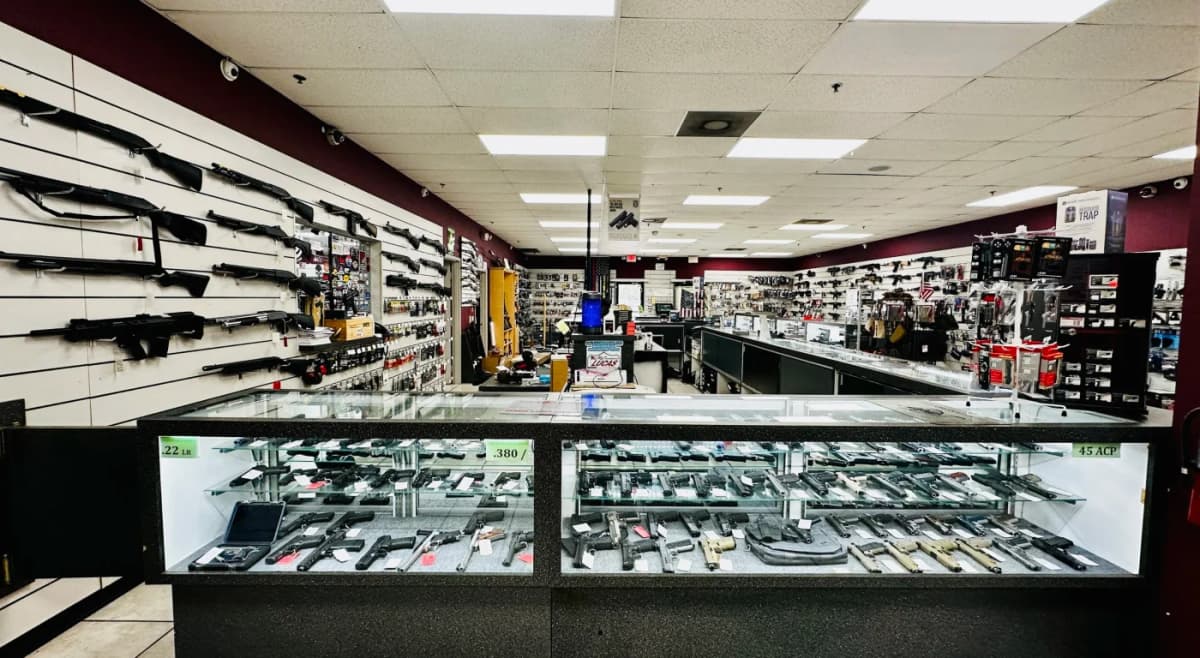
- →The rule: Every California FFL must run a digital surveillance system recording continuously 24 hours a day at 15 frames per second or better, covering all entries and exits, all firearm display areas, and all points of sale. Interior systems must capture audio.
- →Retention: One year minimum, on tamper-protected storage, with a date and time stamp, a failure notification system, and annual certification to the California DOJ. The law took effect January 1, 2024.
- →Not a Second Amendment ruling: The operative complaint pleaded only First, Fourth, and Fifth Amendment claims; an original Second Amendment count was stipulated away in June 2024. The panel held that a dealer making its own recording is not a government search, that the mandate is neither a physical nor a regulatory taking, and that the speech theories failed at the pleading stage.
- →Dissent: Judge Kenneth Lee dissented in part, writing that continuous audio recording chills the exchange of political speech and that inspections of home-based dealers carry no timing or scope limits. He argued no other state mandates comparable audio recording for any business.
What Section 26806 Actually Requires
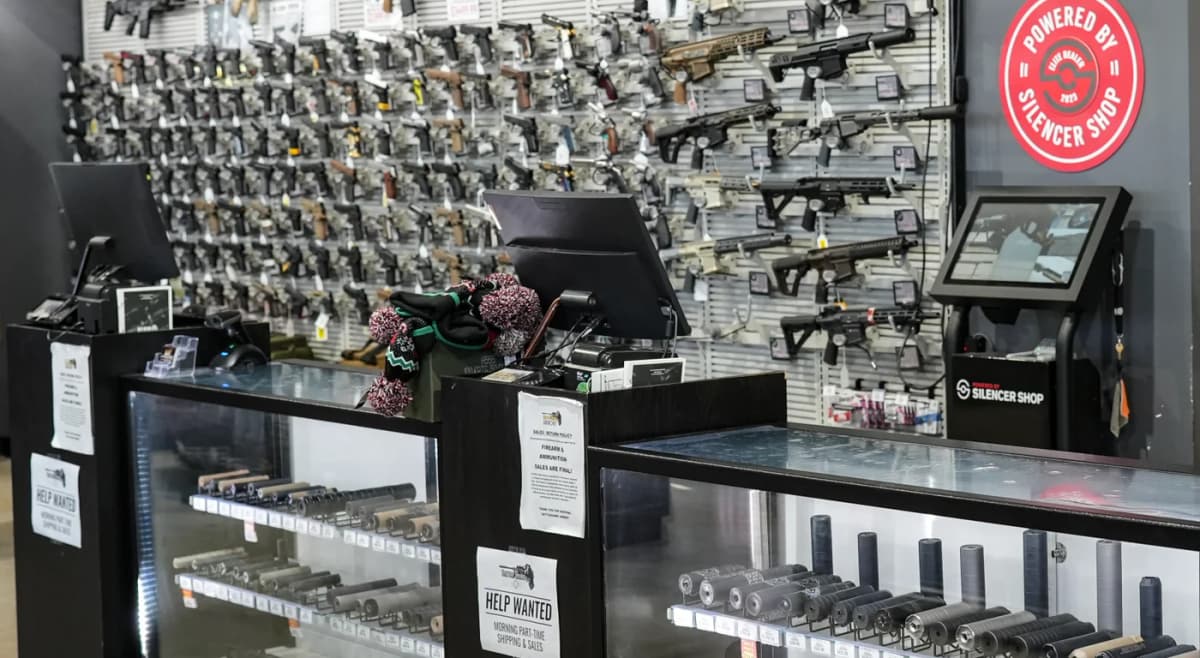
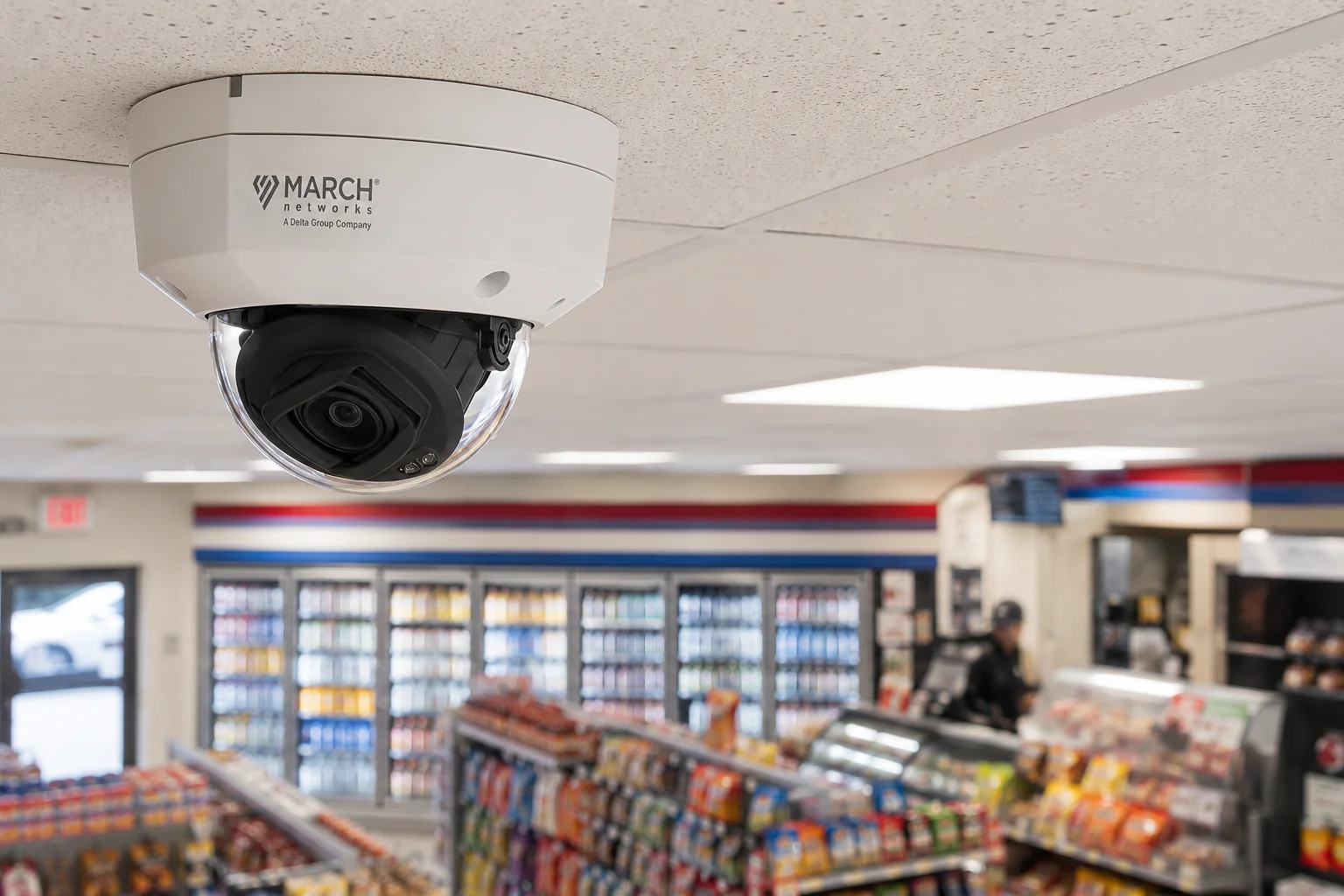
California Penal Code section 26806 requires every federally licensed firearms dealer in the state to monitor its business premises with a digital video surveillance system that meets eight specific requirements. Cameras must be permanently mounted in fixed locations and placed so they can identify any person on camera. The areas covered include interior views of all entries and exits, all areas where firearms are displayed, and all points of sale in enough detail to identify the parties to the transaction. The system has to record continuously, 24 hours per day, at no less than 15 frames per second. Systems located inside the premises must record audio along with images.
The retention floor is one year. Storage media must be secured against tampering, unauthorized access, and theft. Recorded images must carry an accurate date and time, and the system needs a failure notification feature that tells the dealer when the recorder or the storage device goes down. Dealers certify annually to the California Department of Justice that the system works.
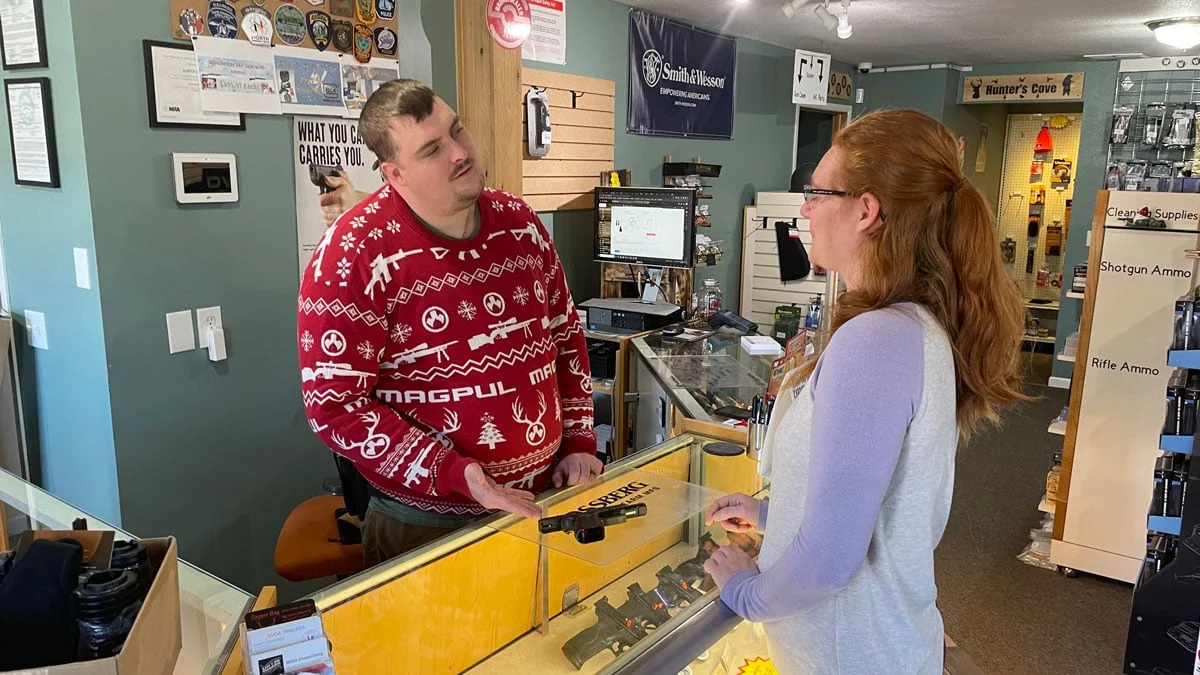
Section 26806(c) adds the part customers actually see. Each entrance needs a sign in block letters not less than one inch high reading THESE PREMISES ARE UNDER VIDEO AND AUDIO SURVEILLANCE. YOUR IMAGE AND CONVERSATIONS MAY BE RECORDED. Subsection (b) then bars dealers from sharing the recordings with anyone, subject to three carve-outs: an inspector already conducting a premises inspection, where no warrant would generally be required for that access; anyone acting under a search warrant or court order; and insurance claims or civil discovery.
The statute arrived through Senate Bill 1384, which Governor Gavin Newsom signed on September 30, 2022. Section 26806 took effect January 1, 2024. The legislative record points at two problems. ATF data cited in the opinion counts 34,339 firearms stolen from FFLs between 2017 and 2021, roughly 80 percent of them in burglaries, which is why the mandate is not limited to business hours. Committee reports also flagged straw purchasing, citing more than 30,000 attempted straw purchases nationally each year.
What the Ninth Circuit Decided
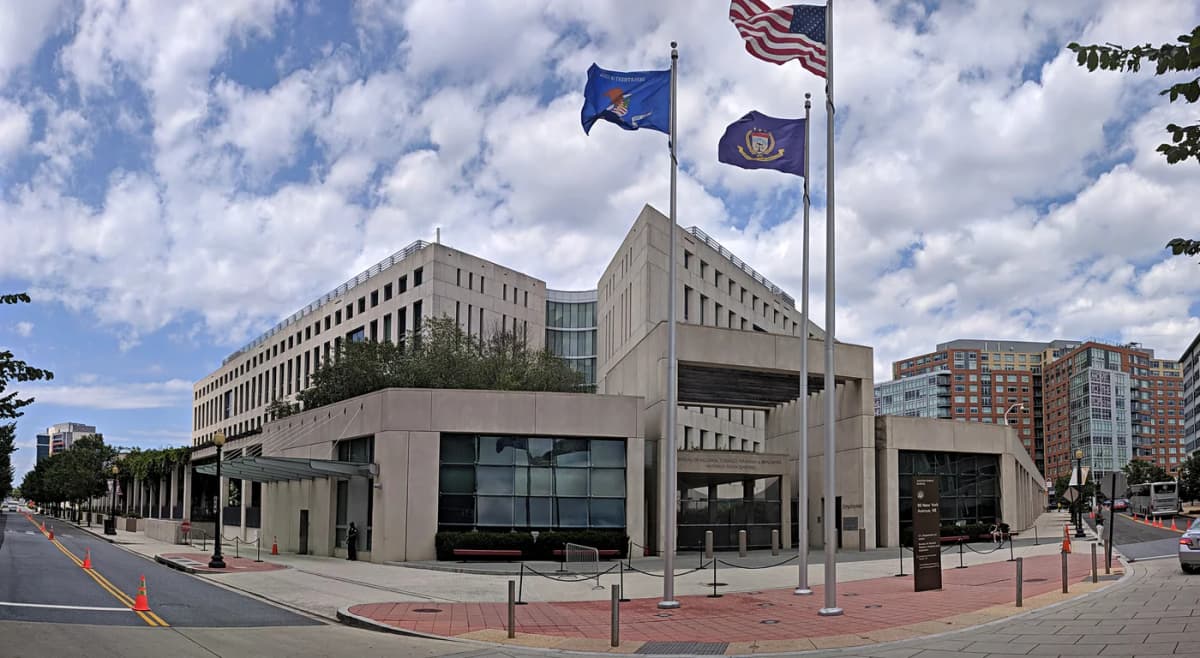
The panel affirmed the district court's dismissal of the complaint for failure to state a claim, which means the challenge died at the pleading stage without a trial record. Judge Lucy Koh wrote the published opinion, joined by Judge Ana de Alba. Judge Kenneth Lee dissented in part. The case came up from the Central District of California, where Judge James Selna dismissed it, and was argued in Pasadena on February 2, 2026.
On the Fourth Amendment, the plaintiffs argued that a search occurs the moment a dealer's system starts recording. The panel rejected that. The dealers own and install the equipment, the state never physically intrudes and never accesses the recordings, and mere compliance with a recording mandate does not turn a private business into a state actor. Without a government intrusion or a government look at the footage, there is no search to analyze.
On the Fifth Amendment, the panel found neither a physical nor a regulatory taking. There is no per se physical taking because the government does not acquire or possess any interest in the dealer's property; the dealers pick their own hardware, install it themselves, and control placement by deciding where firearms get displayed and where sales happen. The majority analogized the mandate to requirements for mailboxes, smoke detectors, and fire extinguishers. It distinguished Cedar Point Nursery on the ground that a gun store is already open to the public, so the law is not appropriating a right to invade closed property. The regulatory taking analysis failed on all three factors.
The First Amendment theories failed as pleaded. Overbreadth failed because the plaintiffs alleged no facts showing the statute regulates speech or conduct necessarily tied to speech. The anonymity and association theories failed because nothing in section 26806 requires anyone to disclose a name or any identifying information, and the statute mandates no forced disclosure at all. The chilled-speech theory failed because the complaint alleged only a subjective fear that the state might someday misuse recordings, not that a person of ordinary firmness would fear adverse government action.
One point deserves emphasis because it is easy to get wrong. This was not a Second Amendment ruling. The original complaint, filed in December 2023, did include a Second Amendment count, but the parties jointly stipulated to dismiss it in June 2024 along with the Fourteenth Amendment claim and all claims against the Governor. The operative First Amended Complaint pleaded three causes of action against the Attorney General, none of them a Second Amendment claim, so the panel never reached one. If you are tracking California litigation more broadly, the pending Glock ban injunction fight in Renna v. Bonta is where the Second Amendment questions are actually being argued.

The Home-Based Dealer Question
Section 26806 applies to home-based dealers the same way it applies to storefronts, and two plaintiffs run their businesses out of their residences. Adam Richards operates his FFL from a separate structure at his home where his family visits him mornings and evenings. Jeffrey Vandermeulen runs a retail and online firearm business out of his house alongside other enterprises.
The plaintiffs estimated that home-based dealers would end up installing surveillance in virtually every corner of the home. The majority read the statute narrowly against that. Section 26806 reaches the business premises only, and the enumerated coverage areas are entries and exits, firearm display areas, and points of sale. It does not follow a dealer into the kitchen.
The harder question is inspections, and the majority resolved it on a textual point that matters for anyone reading this law. Section 26806 does not authorize compliance inspections at all. Subsection (b) is a sharing prohibition; subsection (b)(1) carves out an inspector who is already lawfully on the premises under some other authority. That authority lives in Penal Code sections 26720(a) and 28480(a) and title 11 California Code of Regulations section 4022(a), none of which the plaintiffs challenged. The state conceded the point at oral argument. The panel added that even if section 26806 did authorize inspections, it would be facially valid under New York v. Burger, and that the two home-based plaintiffs lacked standing to challenge hypothetical future searches.
Judge Lee's Dissent and the Audio Problem
Judge Lee accepted the video mandate's logic and drew the line at audio. Video recording plausibly helps identify a burglar or a straw purchaser, he wrote; audio recording of every conversation in a gun store does not. Law enforcement circulates images of suspects, not voice recordings. On his reading, the audio requirement carries a real First Amendment cost with no matching law enforcement payoff.
The cost he identified is the right to receive and exchange information, drawing on Lamont v. Postmaster General. Gun stores, the complaint alleged, function as hubs of political discussion where owners and customers talk about legislation and rights litigation. A customer walks past a government-mandated sign announcing that conversations may be recorded, knowing the recording sits on a drive for at least a year and that a compliance inspector could listen to it. Judge Lee cited the Ninth Circuit's en banc decision in Project Veritas v. Schmidt for the proposition that knowing any conversation can be recorded has a deleterious effect on the uninhibited exchange of ideas.
His Fourth Amendment argument targeted home-based dealers. Because the compliance-inspection scheme carries no stated limits on timing or scope, he wrote, an agent could arrive at a residence at 2 a.m. or on Christmas Day to check whether the recorder works. He pointed to Rush v. Obledo, where the Ninth Circuit struck down a warrantless inspection scheme for at-home family day care because it ignored the fact that the home is a business only part of the day and only in part of the house. The majority distinguished Rush on the ground that firearms, and therefore the theft risk, are present at all hours, and that neither home-based plaintiff alleged they keep normal business hours.
The majority also declined to reach most of this on procedural grounds. The dissent's compliance-inspection theory and its right-to-receive-information theory were not the theories the plaintiffs actually pleaded, so the state had no occasion to respond to them. That is a meaningful detail for anyone hoping this case gets revisited: the sharpest arguments against section 26806 have not yet been squarely litigated.
How California Compares to Other States
California is not alone in mandating cameras, but it appears to be alone in mandating microphones. Illinois, New York, and Washington all require licensed dealers to maintain recording systems with cameras covering points of sale, entrances, and exits, and Illinois and Washington also require a posted surveillance notice. Maryland gives dealers a choice: lock every firearm in a vault or safe after hours, or maintain a recording system covering the building where firearms are stored. None of those state laws limit recording to business hours; Washington's statute expressly requires a system capable of recording 24 hours a day.
The audio provision is where California departs. Judge Lee wrote that neither the federal government nor any of the other 49 states has enacted a comparable audio-recording mandate for any business, banks and dispensaries included. The majority's own survey of other state laws describes video requirements, not audio ones, which is consistent with that characterization. For context on the federal baseline, the ATF recommends that dealers run cameras positioned to capture faces and record at all times, and the National Shooting Sports Foundation calls camera systems essential for every FFL. Neither recommends recording audio.
Featureless AR Grips for California Builds

Juggernaut Tactical Featureless Grip
- Billet 6061-T6 aluminum
- Hard-anodized finish
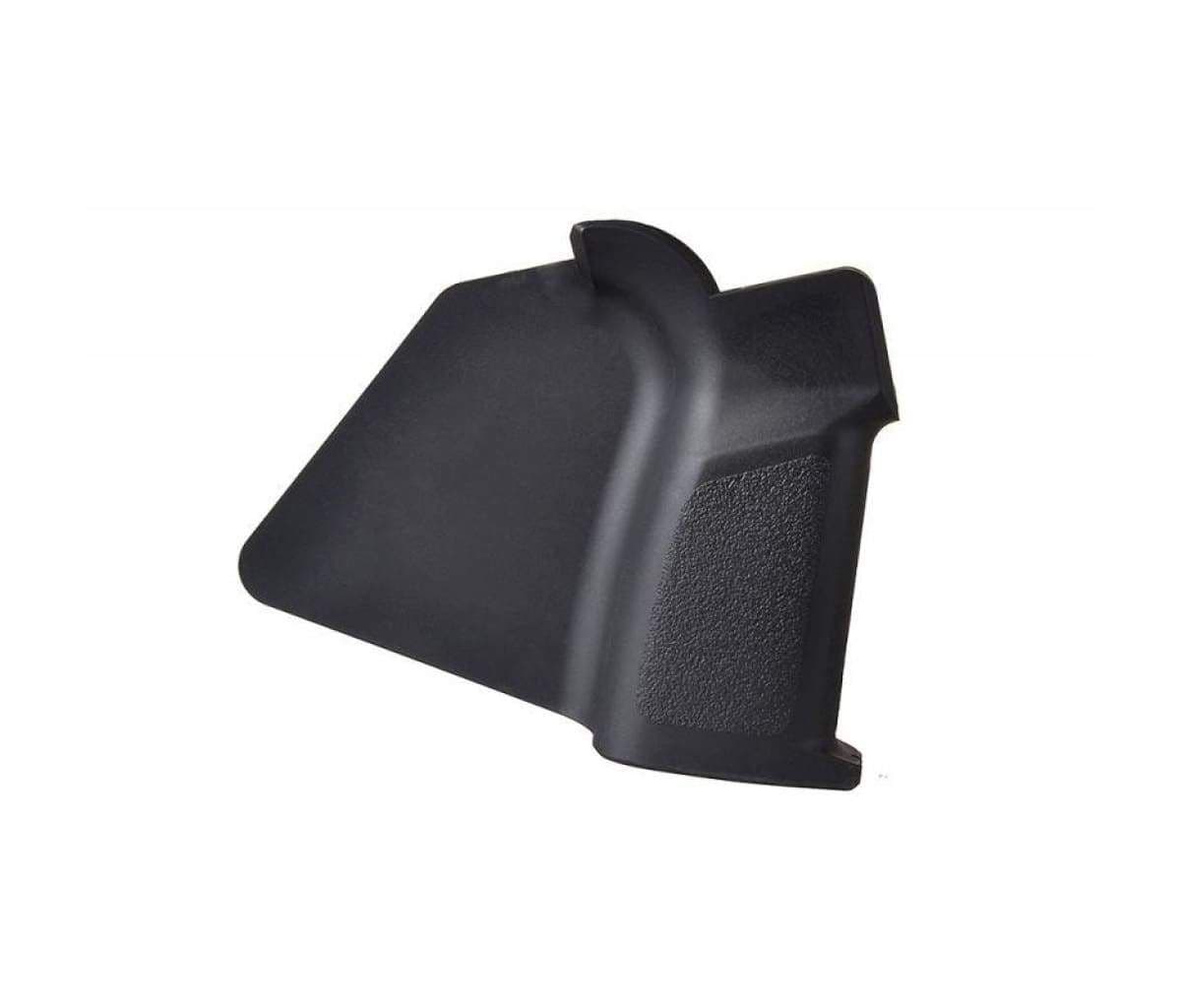
Strike Industries Simple Featureless AR Grip (SI-AR-SFG)
- Reinforced polymer
- Matches the Strike Enhanced Pistol Grip contour
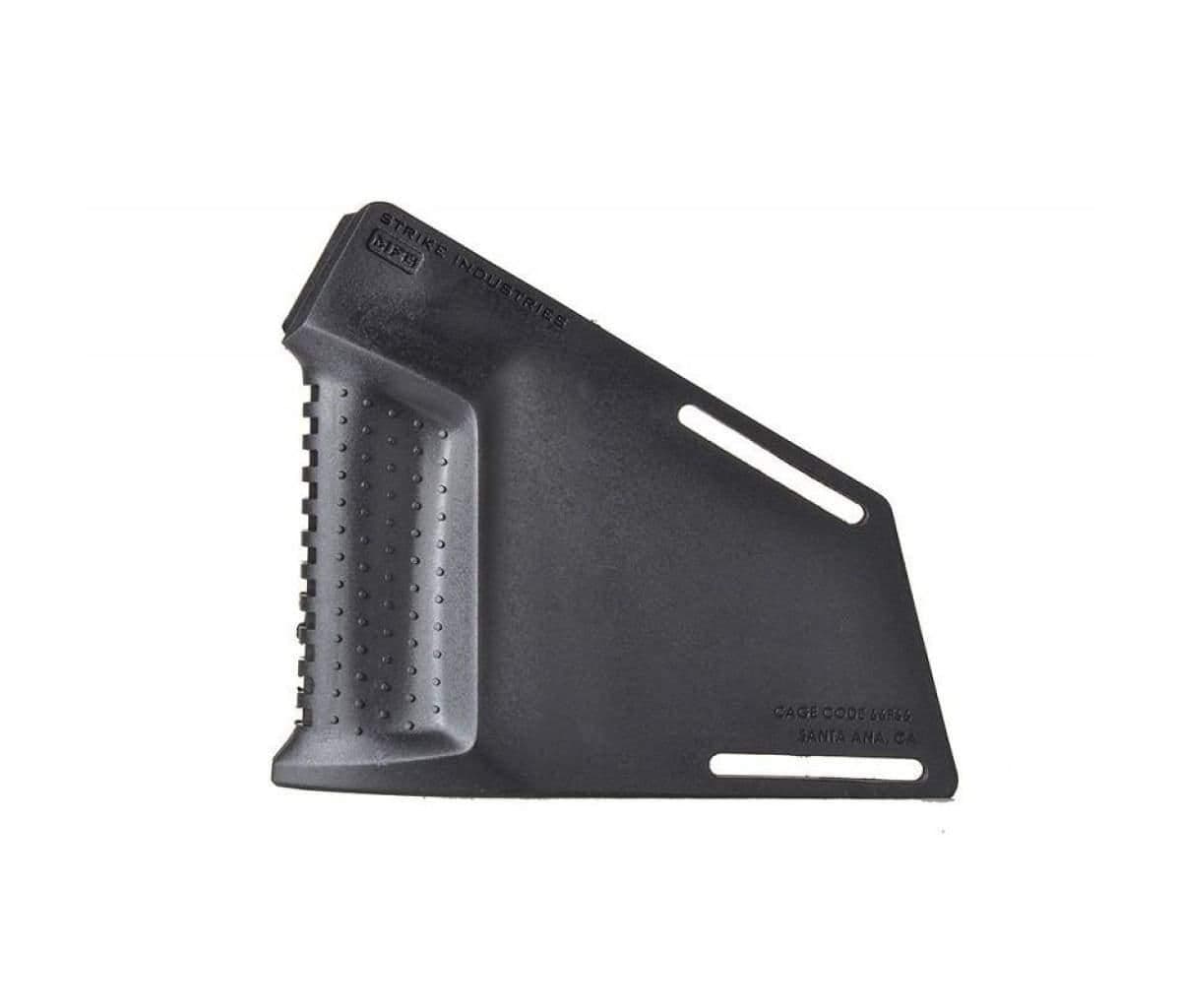
Strike Industries Megafin Featureless AR Grip (SI-AR-MFG)
- Reinforced polymer
- Wider fin with palm shelf
Affiliate links (?)
What This Means If You Buy Guns in California
Nothing changes at the counter, because nothing changed. Section 26806 has been in force since January 1, 2024, and this ruling leaves it exactly where it was. The practical read is that a conversation you have in any area an interior system covers, which by statute includes every point of sale, is on a recording the dealer must keep for at least a year. An inspector already conducting a lawful compliance inspection can be given access to that system where a warrant or court order would not generally be required, though section 26806 does not itself authorize the inspection. The sign at the door is telling you the truth.
For dealers, the compliance checklist is unchanged and worth re-reading: fixed-mount cameras on entries, exits, display areas, and every point of sale; continuous recording at 15 frames per second or better; interior audio; secured storage with accurate timestamps; failure alerts; one year of retention; annual certification to the California DOJ; and the entrance signage in one-inch block letters.
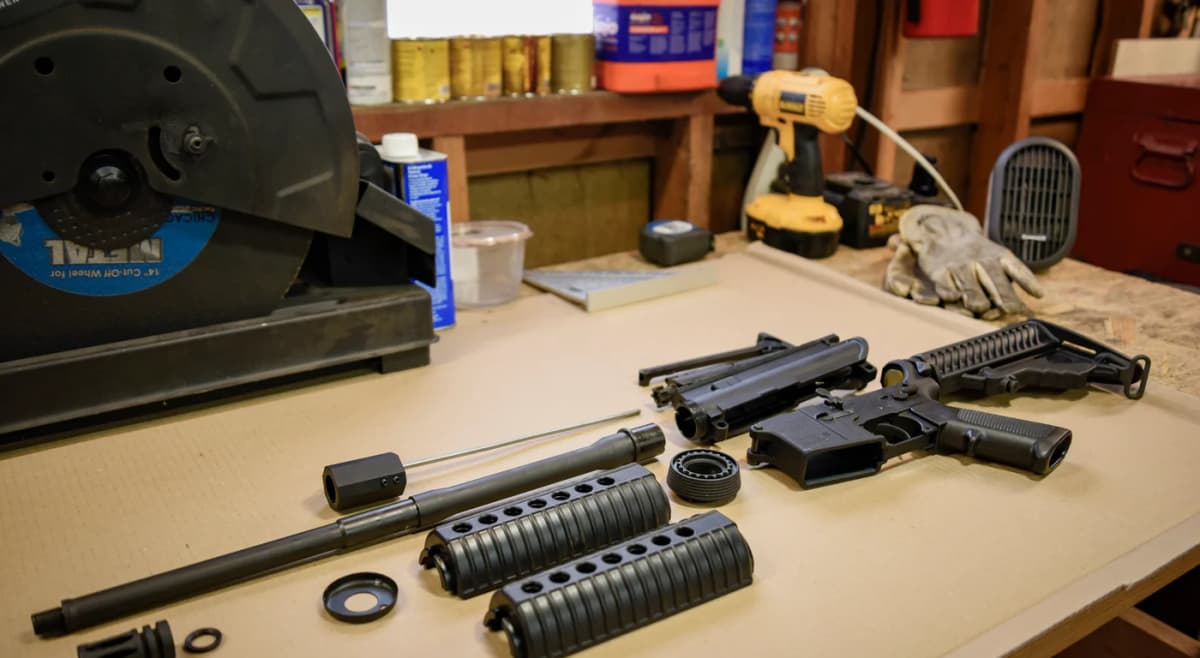
The buying side of California law is the part most shooters actually navigate, and it has not moved either. Our California-legal tactical firearms guide covers what is on the roster and what ships compliant from the factory, and the featureless AR-15 build guide walks through the grip, stock, and magazine configuration that keeps a rifle legal in the state. You can spec either approach in the rifle builder before you walk into a shop. If you are following the litigation docket, the federal challenges to California and Virginia gun laws are the other active front.
As for what comes next in this case, the plaintiffs have the usual options after a panel loss: petition for rehearing en banc or seek certiorari. Judge Lee's partial dissent gives a future petition a ready-made framing, and his observation that the panel never reached the compliance-inspection and right-to-receive-information theories is an invitation to plead them directly in a new suit.
Stay Updated on California Gun Law
Rulings, injunctions, and compliance changes that affect what you can buy and build in California, delivered weekly.