Key Takeaways
- →September 18, 2026: DOJ announced that the federal handgun sales ban for otherwise law-abiding adults ages 18–20 violates the Second Amendment.
- →Dealer enforcement: OLC concludes that Sections 922(b)(1) and (c)(1) cannot support criminal penalties for those handgun sales.
- →Opinion dated September 17: The 49-page analysis addresses access to handguns through licensed dealers.
- →Under-21 checks remain separate: The FBI's enhanced background-check process comes from the 2022 Bipartisan Safer Communities Act.
Buy a Handgun at 18: What DOJ Changed
The Justice Department says the federal ban on licensed dealers selling handguns to lawful adults ages 18–20 is unconstitutional and cannot be criminally enforced. Its September 18 announcement challenges the federal age barrier that has kept young adults from buying handguns through licensed dealers.
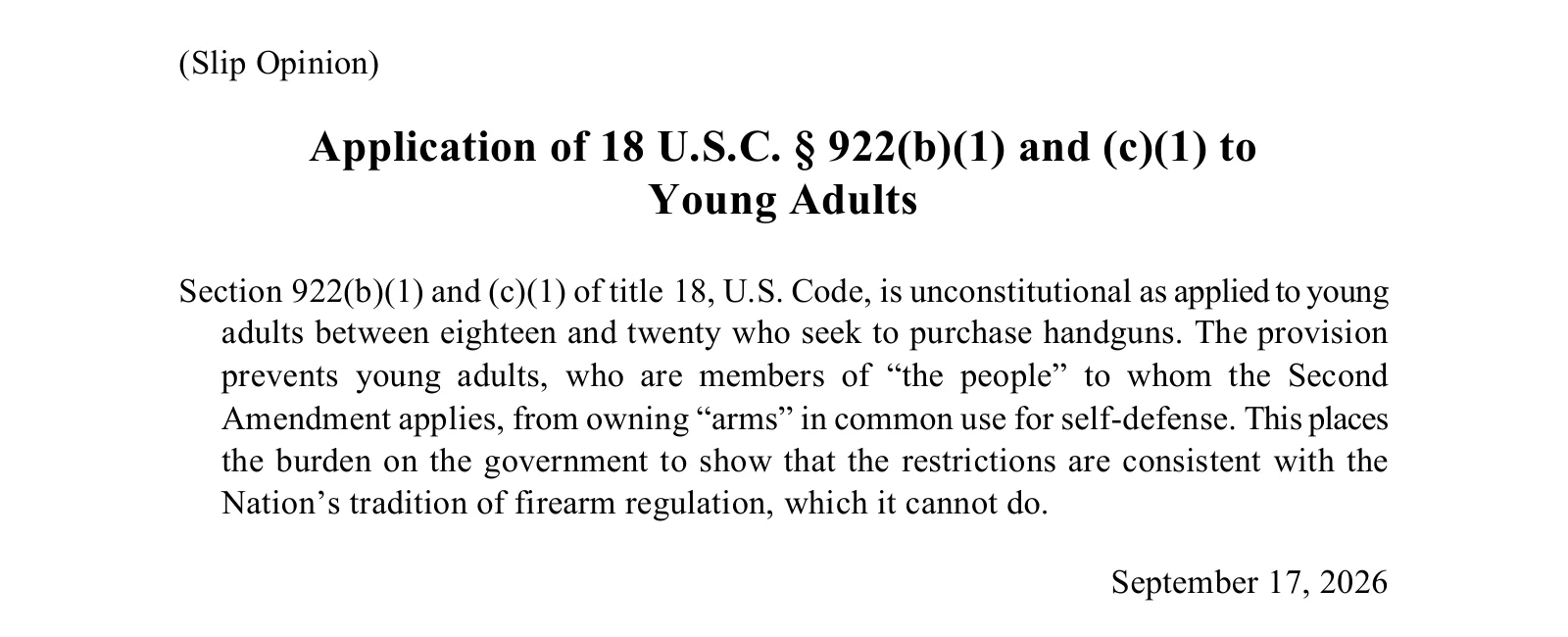
The Office of Legal Counsel, which advises the executive branch on legal questions, issued the opinion to the attorney general on September 17. It addresses two provisions of federal law: Section 922(b)(1), the dealer sales restriction, and Section 922(c)(1), which requires an age statement for certain transactions away from a dealer's premises.
This is DOJ's constitutional and enforcement position. Congress has not repealed those provisions through this announcement, and the opinion is not a new Supreme Court ruling. Its immediate significance is the department's conclusion that dealers cannot face federal criminal punishment under these provisions for the handgun sales it covers.
Why OLC Says the Age Ban Fails
OLC concludes that adults ages 18–20 belong to the people protected by the Second Amendment. Its analysis applies the Supreme Court's text-and-history framework: once the right covers the person and conduct, the government must show a matching tradition of firearm regulation.
DOJ points to founding-era militia laws that required service at 18 and required members to supply their own arms. OLC finds no historical tradition that justifies barring today's legal adults from buying handguns. The opinion also rejects treating access to private transfers as an adequate substitute for access to licensed dealers.
State Law and Background Checks Still Apply
State purchase restrictions still govern a buyer's eligibility. Section 922(b)(2) separately restricts dealer transfers that violate applicable state law. The OLC opinion addresses the federal age ban; it does not strike down state age limits or issue a concealed-carry permit.
Buyers under 21 also remain subject to the separate enhanced background checks created by the Bipartisan Safer Communities Act. The FBI explains that these checks reach beyond the usual databases to juvenile justice, mental health, and local law-enforcement records. When cause for further investigation exists, the review period can extend to 10 business days.
DOJ's release does not give a timetable for changes to dealer forms or transfer systems. Before arranging a purchase, ask a licensed dealer how it is handling the opinion under your state's law. The announcement alone does not establish that a particular transfer can be completed today.
Handgun Storage Options
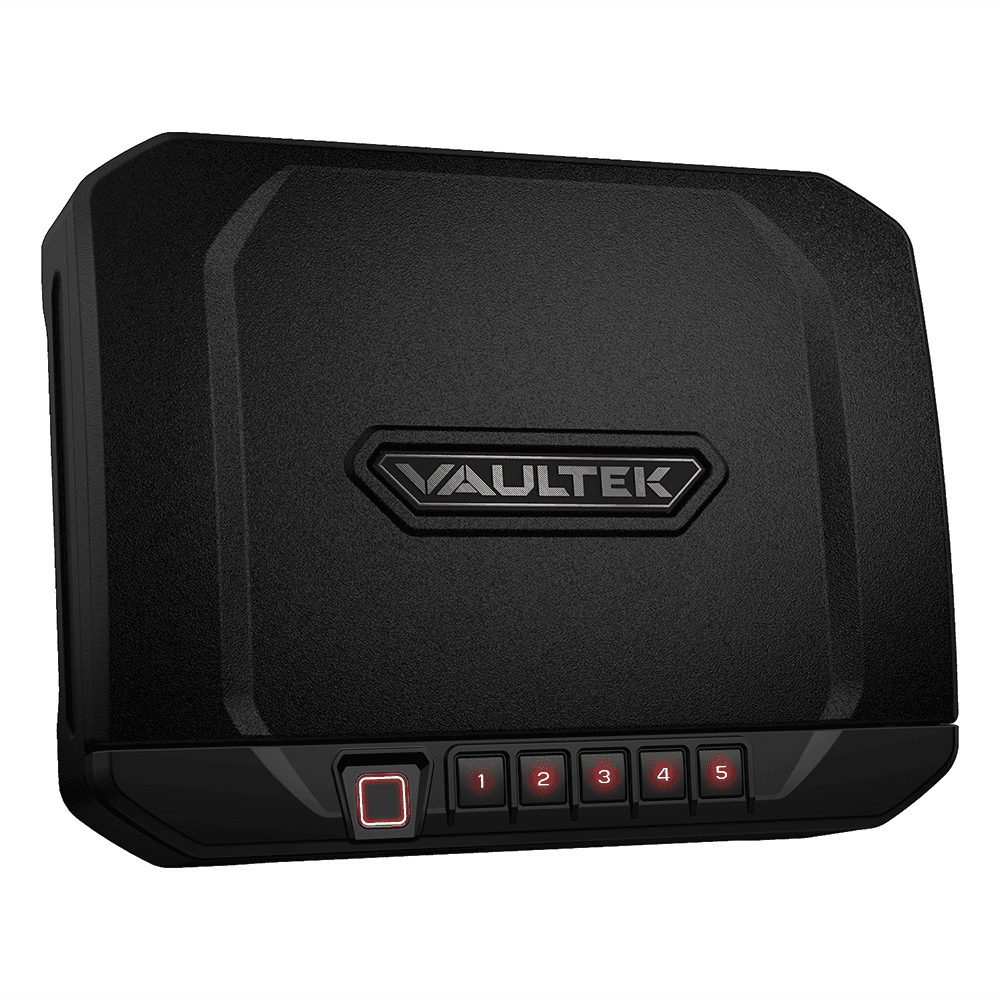
Vaultek VS20i (Biometric)
- 1 full-size handgun + magazine
- No fire rating
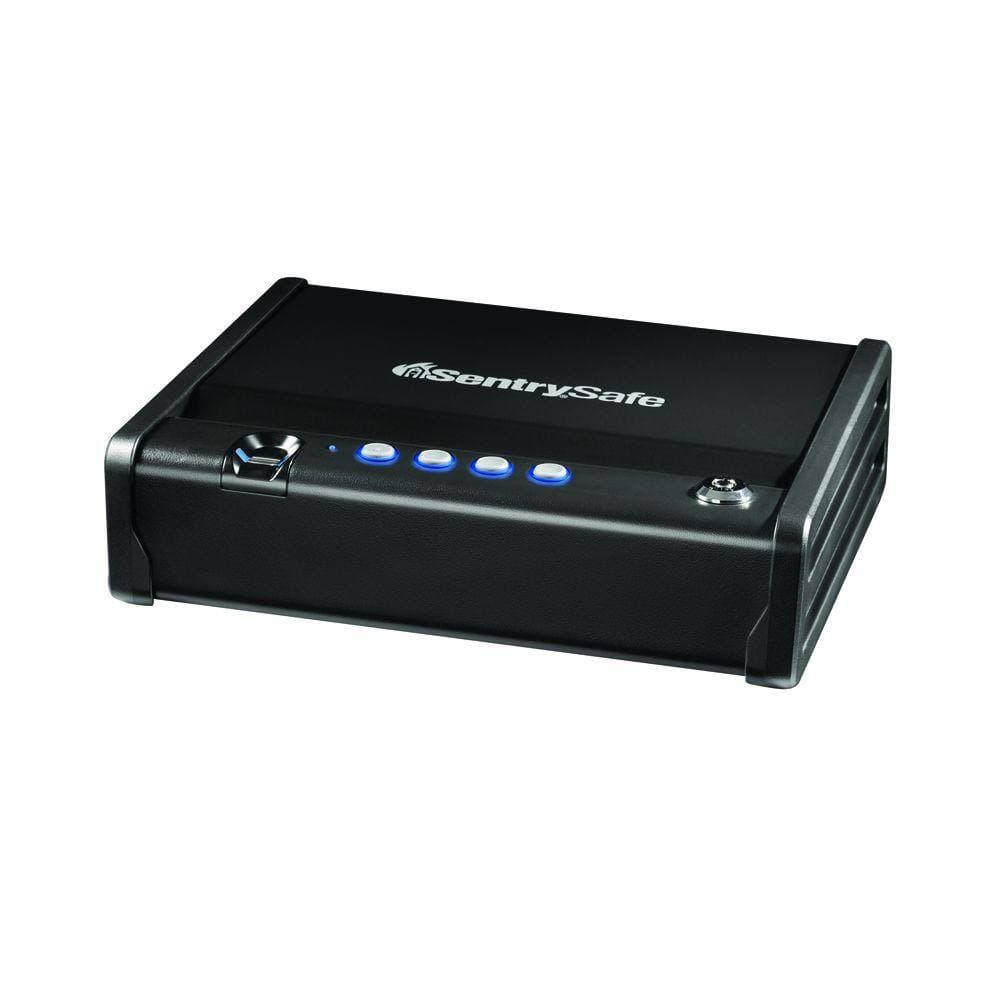
SentrySafe QAP1BE Biometric Pistol Safe
- 1 handgun
- No fire rating
Affiliate links (?)
A Separate Ruling on Interstate Handgun Sales
Also on September 18, the Fifth Circuit ruled 2–1 that the federal ban on direct interstate handgun purchases violates the Second Amendment. Our Elite Precision v. ATF coverage explains that decision. It concerns purchases across state lines; the DOJ opinion covered here addresses the buyer's age.
Planning for a First Handgun
Plan secure storage before bringing a handgun home. Our handgun safe guide compares lock types and storage layouts. The first-gun guide covers fit and intended use, while the comparison tool puts catalog specifications side by side.
Follow Federal Firearm Law Changes
Get the latest firearm policy news and practical explanations of major rulings.