Key Takeaways
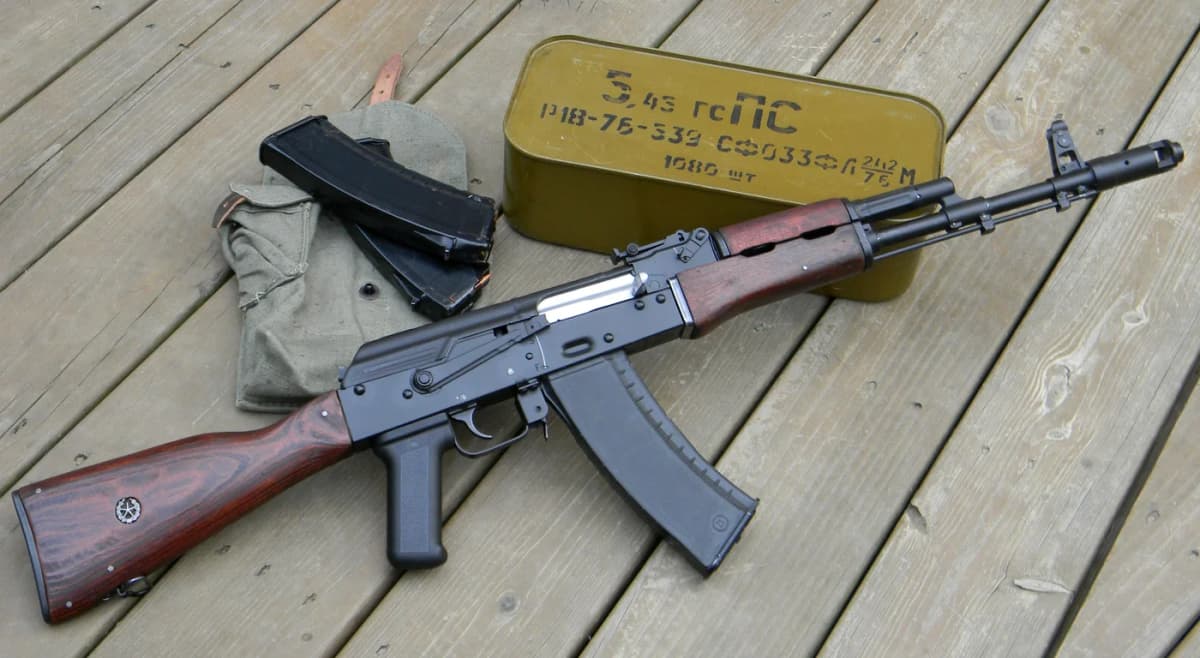
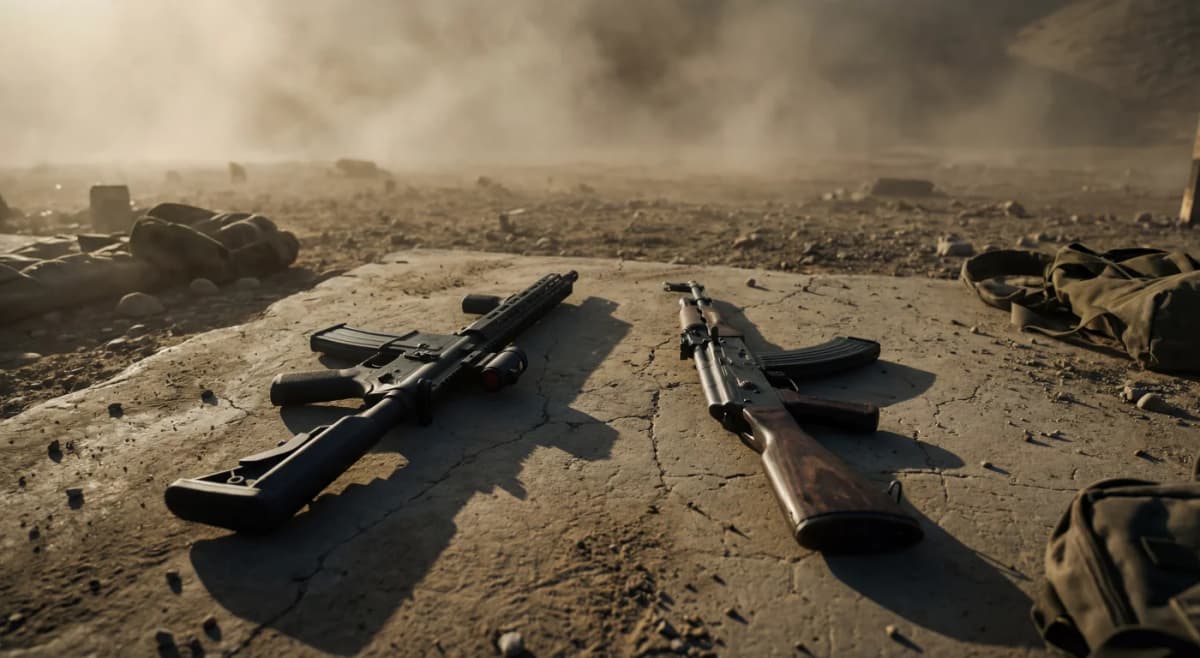
- →Both armies run the same rifle: the AK-74 in 5.45x39mm is standard-issue on both sides of the line, a direct consequence of both militaries inheriting the Soviet arsenal.
- →Russia's newest rifle got simpler: the AK-12 lost its two-round burst mode in the 2023 revision and traded its expansion-chamber brake for a slotted flash hider that accepts quick-detach suppressors.
- →Ukraine went two directions at once: the domestically built UAR-15 in 5.56 NATO was adopted in 2023 and is roughly 95 percent locally produced, while the Malyuk bullpup and license-built Tavors serve special operations units.
- →Heavy small arms became air defense: Soviet DShKs and American Browning M2s on pickups now spend their nights shooting at Shahed-type drones rather than at ground targets.
- →Civilian analogues exist for the rifles, not the rest: semi-automatic AK-74, M4-pattern, and Bren 2 rifles are ordinary commercial purchases; the 12.7mm and 14.5mm systems and the belt-feds are not.
Russia's Standard Rifles: AK-74M and AK-12
Russia issues the AK-74M as its baseline infantry rifle and the AK-12 as its modern replacement, and combat has pushed the newer gun backward rather than forward. The AK-12 was accepted into service in January 2018 as the Ratnik program's 5.45x39mm rifle, weighing 3.7 kg empty, with a 7.62x39mm sibling designated the AK-15. The first year of the full-scale invasion produced enough complaints about the design that the Russian defense ministry asked Kalashnikov for another revision.
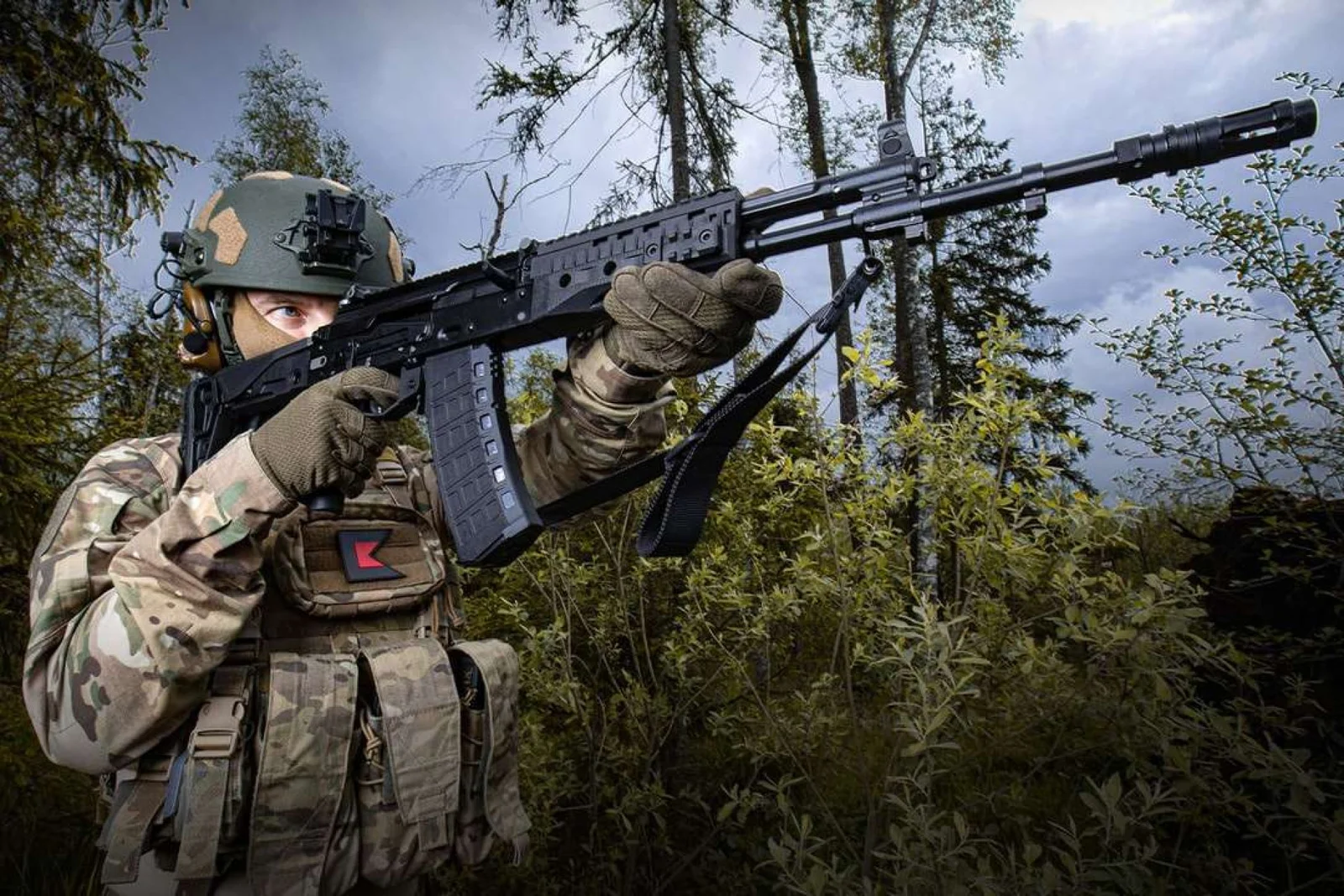
The result, presented in May 2023 and generally called the AK-12 2023 model, is notable for what it removed. The two-round burst mode went away entirely, with the developers concluding it contributed nothing to the rifle's effectiveness in the field. The expansion-chamber muzzle brake was replaced with a slotted flash hider that accepts quick-detach sound suppressors, the handguard was strengthened against heat and impact, a new ambidextrous safety flag replaced the previous lever, and a third iteration of the iron sights was fitted. Serial production of the revised rifle began in December 2023, and Kalashnikov announced on November 24, 2025 that it had completed its 2025 state contract for the 2023-model AK-12.
The AK-12 also became the war's signature trophy. Captured examples turned up in the hands of Ukrainian officials to the point of becoming a genre of photograph, including Mykolaiv Oblast governor Vitaliy Kim and defense intelligence chief Kyrylo Budanov, and they circulate through Ukrainian special operations units on the strength of shared 5.45 magazines and ammunition.
Ukraine's Rifles: Kalashnikovs, Bullpups, and the UAR-15
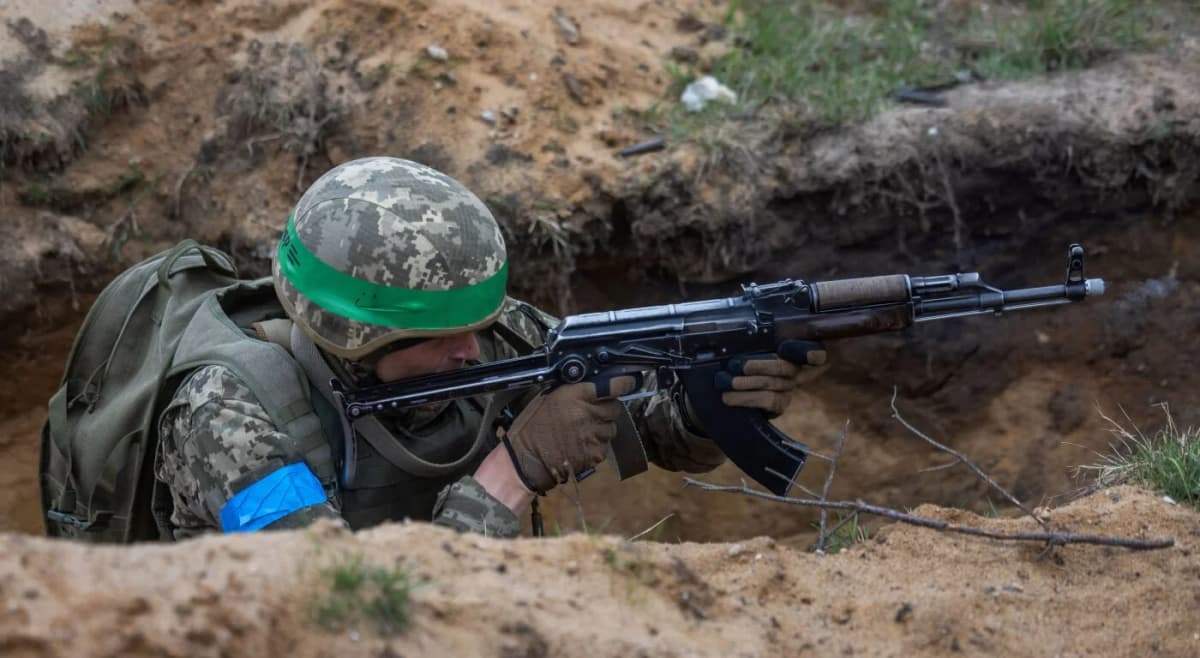
Ukraine is running three rifle programs at once: Soviet Kalashnikovs for the bulk of the force, a domestic AR-15 as the replacement, and two indigenous or licensed designs for special operations. The AK-74 and AK-74M remain standard issue for the bulk of the army, with 7.62x39mm AKM-pattern guns filling out territorial defense units where the newer 5.45 rifles never reached.
The replacement is the UAR-15, a 5.56x45mm AR-15-pattern rifle built by Zbroyar. It was formally adopted in 2023 after years of unit-level use and has gone to army, National Guard, and State Border Guard units. Its more interesting story is industrial: Ukraine has localized roughly 95 percent of the rifle, including upper and lower receivers, bolt carrier group, gas block, trigger, and magazines, with rifled barrels still imported from several US manufacturers and domestic barrel production expected to come online by 2026. Ukrainian National Guard servicemen training on it in 2025 described it as roughly 600 grams lighter than the AK it replaces, which buys either more ammunition or less fatigue on a long approach.
The Malyuk, marketed by its maker InterProInvest as the Vulcan, is the rifle most associated with Ukrainian special operations. It is an AK repackaged as a bullpup: the standard long-stroke piston action sits in a polymer chassis behind the trigger, producing a 16.3-inch barrel inside a rifle about 28 inches long and weighing just under 8.4 pounds empty. It has been built in 5.45x39mm, 5.56x45mm NATO, and 7.62x39mm. It passed Ukrainian state trials in 2016 without ever becoming a general-issue rifle, which is the usual fate of a bullpup competing against a warehouse full of free Kalashnikovs.
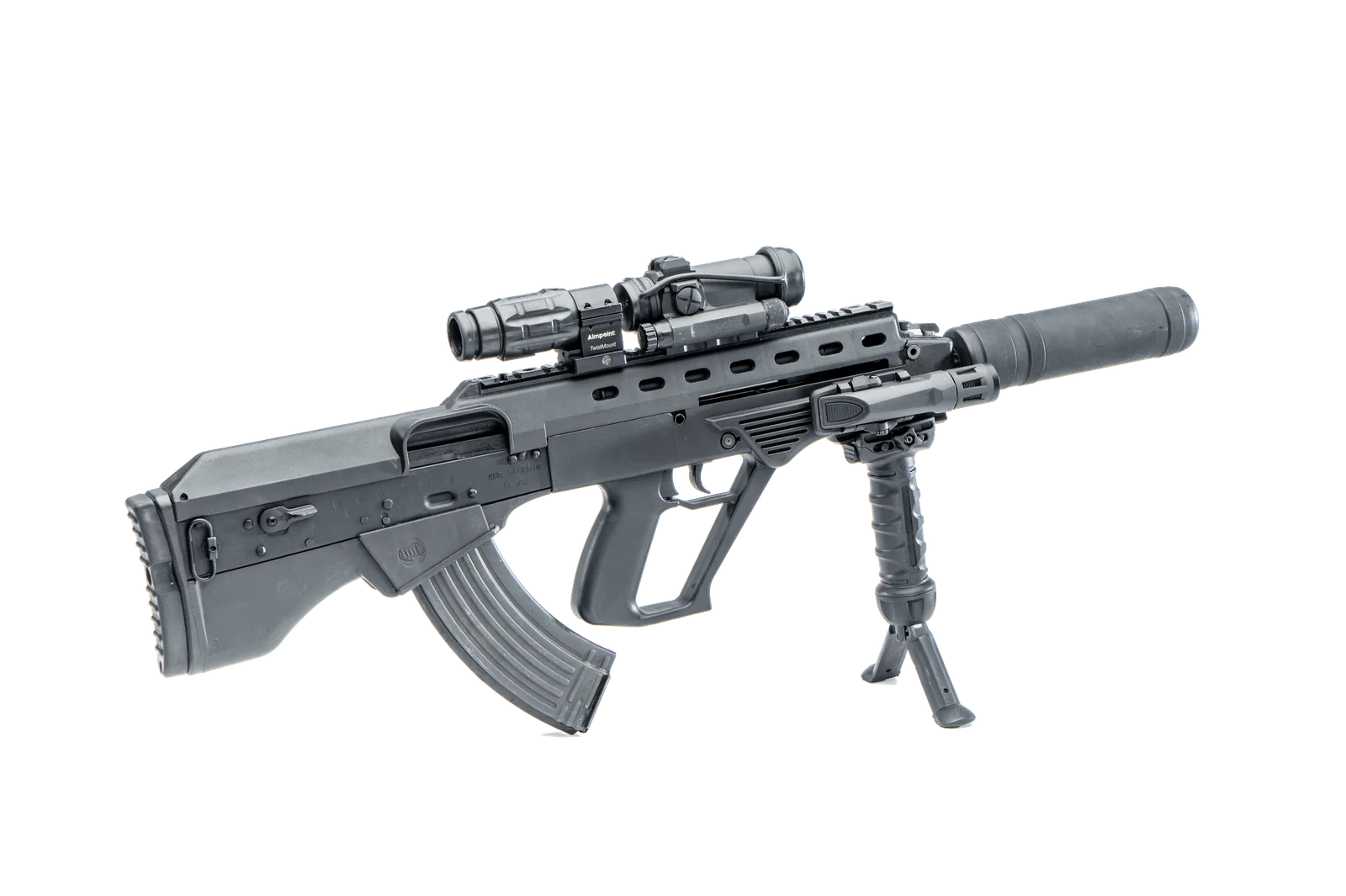
The fourth path is licensed Israeli hardware. RPC Fort in Vinnytsia builds the IWI TAR-21 as the Fort-221, with an 18.4-inch barrel, and the compact X95 as the Fort-224, with a 13-inch barrel, in 5.56x45mm and 5.45x39mm. Ukraine adopted them in 2014 with an initial order of 500 rifles, and they serve with National Guard special operations, internal security forces, and army special forces detachments.
Western Rifles in Ukrainian Hands
The donated-rifle picture is narrower than the early-war headlines suggested, and the two that matter most are Czech and Polish. Poland transferred roughly 10,000 FB Grot rifles in 5.56 NATO starting in spring 2022, a free handover announced by Fabryka Broni “Łucznik” president Wojciech Arndt in September 2022; Polish defense minister Mariusz Błaszczak said in March 2023 that Ukraine had ordered more, without disclosing a number.
The Czech CZ BREN 2 went further than a donation. Česká zbrojovka and Ukroboronprom signed an assembly agreement on July 16, 2024, and announced on December 13, 2024 that BREN 2 rifles were being assembled in Ukraine, the first foreign small-arms assembly line established in the country since the full-scale invasion. “Ukraine is now able to deliver to its Armed Forces the CZ BREN 2 rifles assembled in Ukraine according to Česká zbrojovka's strict quality standards,” said Česká zbrojovka CEO Jan Zajíc. The United States has supplied M4 carbines, and the practical consequence of all of it is a logistics problem: a force that ran on one cartridge now runs on two, and 5.56 has to be pushed forward alongside 5.45 and 7.62x39.
Designated Marksman and Anti-Materiel Rifles
The SVD Dragunov remains the baseline marksman rifle on both sides, and everything else in this category is an attempt to get past it. The semi-automatic SVD in 7.62x54R is a squad-level precision rifle rather than a bolt-action sniper system, and it is old enough that both armies have programs to replace it. Russia's answer is the SVCh Chukavin, which entered serial production in 2023.
Ukraine's answer arrived earlier. The UAR-10, built by Zbroyar as the Z-10, is an AR-10-pattern semi-automatic in 7.62x51mm NATO with a 24-inch barrel and a 10-round magazine, adopted in 2018 with about 600 rifles delivered. The Ukrainian army credits it with useful range out to 1,200 meters against the SVD's 800, and the more concrete advantage is the Picatinny rail: Western optics, mounts, and night vision bolt straight on where the SVD needs a side-rail adapter.
Above that sit the .50-caliber rifles. Ukraine bought and received Barrett M82 and M107A1 rifles in 12.7x99mm and used them heavily in the Severodonetsk and Lysychansk fighting; Ukrainian accounts include an 8th Special Operations Regiment sniper disabling two armored vehicles with an M82 at 750 meters. Above even that is a Ukrainian design with no Western equivalent in service.
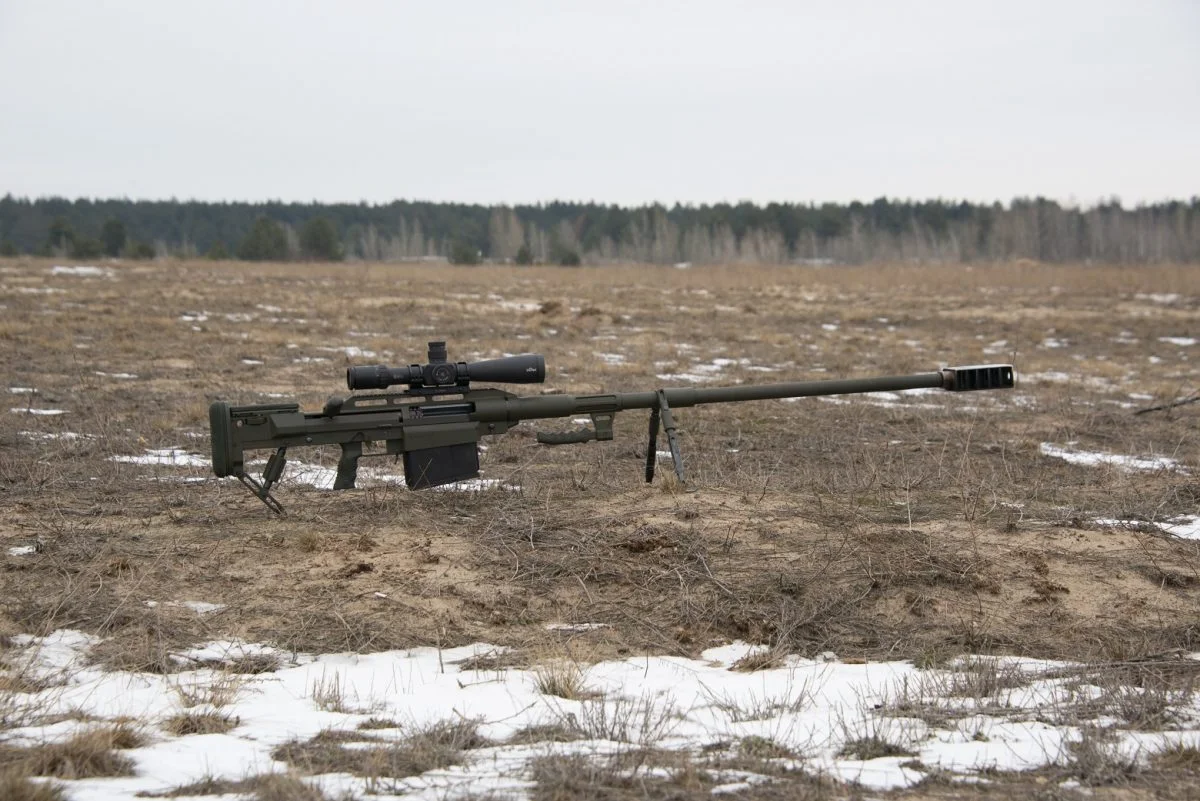
The Snipex Alligator is a 14.5x114mm bolt-action built by XADO-Holding, fed from five-round detachable magazines, weighing roughly 25 kg (55 lb) with a 1,200 mm barrel in a rifle two meters long. The Armed Forces of Ukraine adopted it on March 2, 2021, and it has been used extensively since 2022, particularly by special operations units. Snipex rates it to punch through a 10 mm armor plate at 1,500 meters. A single-shot sibling, the T-Rex, uses the same cartridge. The cartridge itself is the tell: 14.5x114mm is the round Soviet designers built for anti-tank rifles and heavy machine guns, and putting it in a shoulder-fired rifle is a deliberate step past what a .50 BMG will do to a hardened position.
Russian special operations bring a rifle from the opposite end of the design space. The VSS Vintorez and its AS Val carbine sibling are integrally suppressed 9x39mm weapons firing heavy subsonic SP-5 and armor-piercing SP-6 projectiles, and considerable numbers have been documented with Russian forces in Ukraine. They trade range for a signature so low that a shot at a couple hundred meters is difficult to locate.
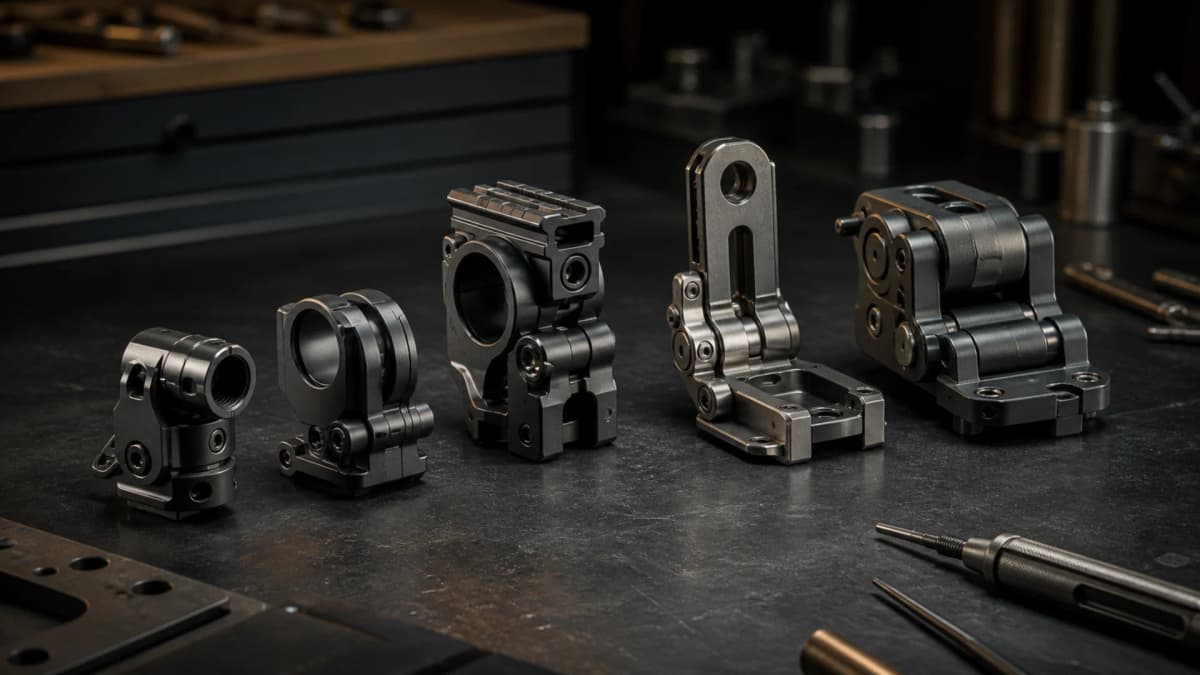
AK-Pattern Optics and Mounts
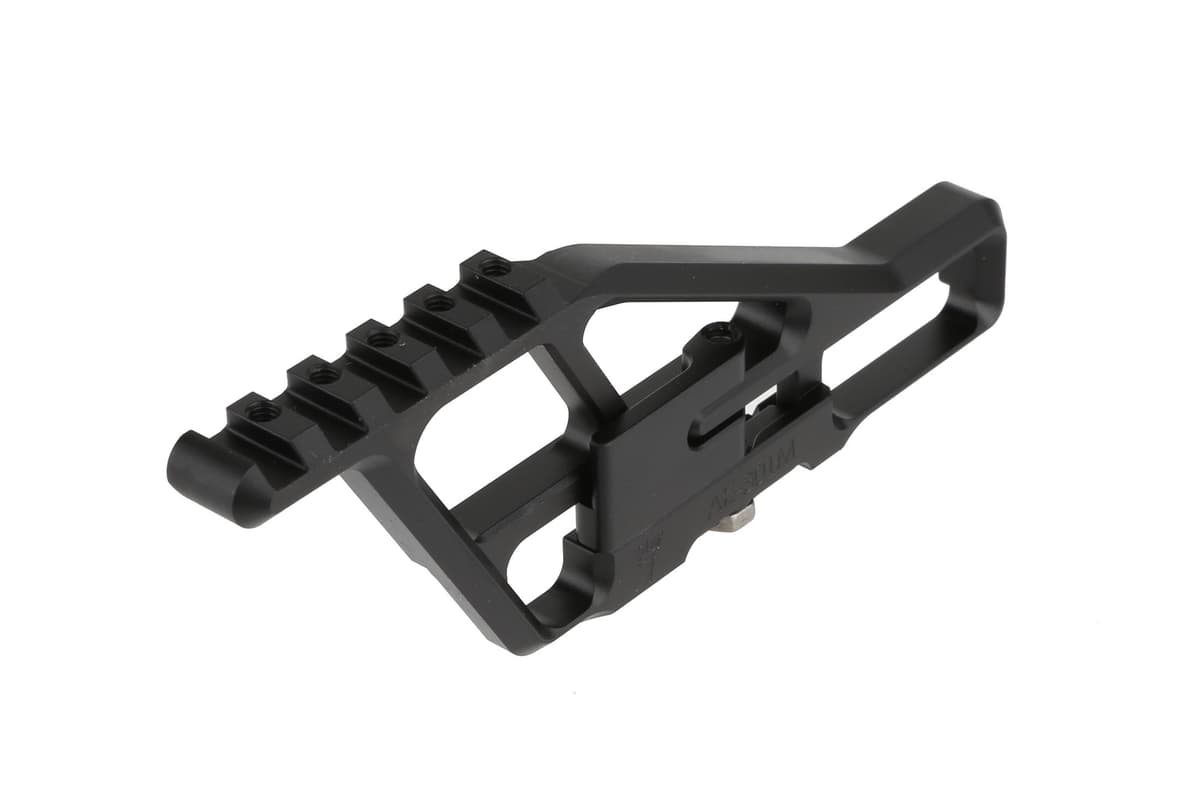
RS Regulate AK-301M Front Biased Lower Side Mount
- AKM side-rail lower
- Front biased
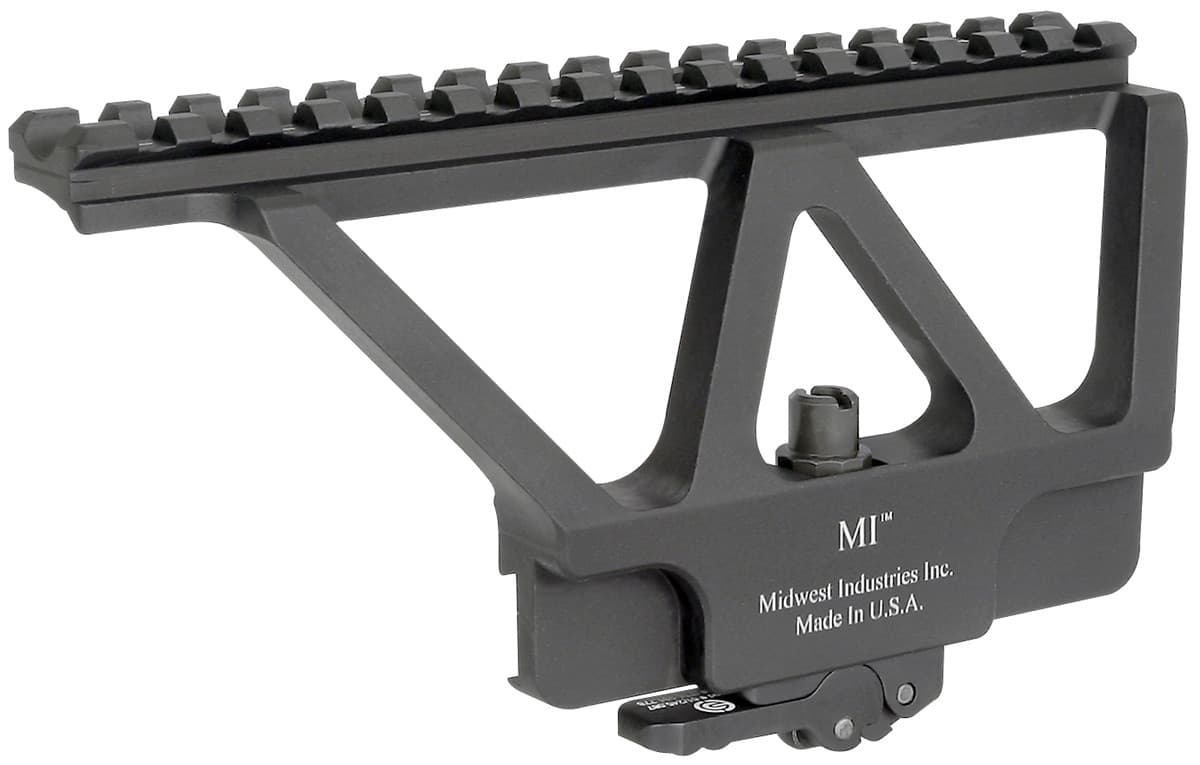
Midwest Industries MI-AKSM AK Side Railed Scope Mount
- 1913 T-marked rail
- 6.75 inches
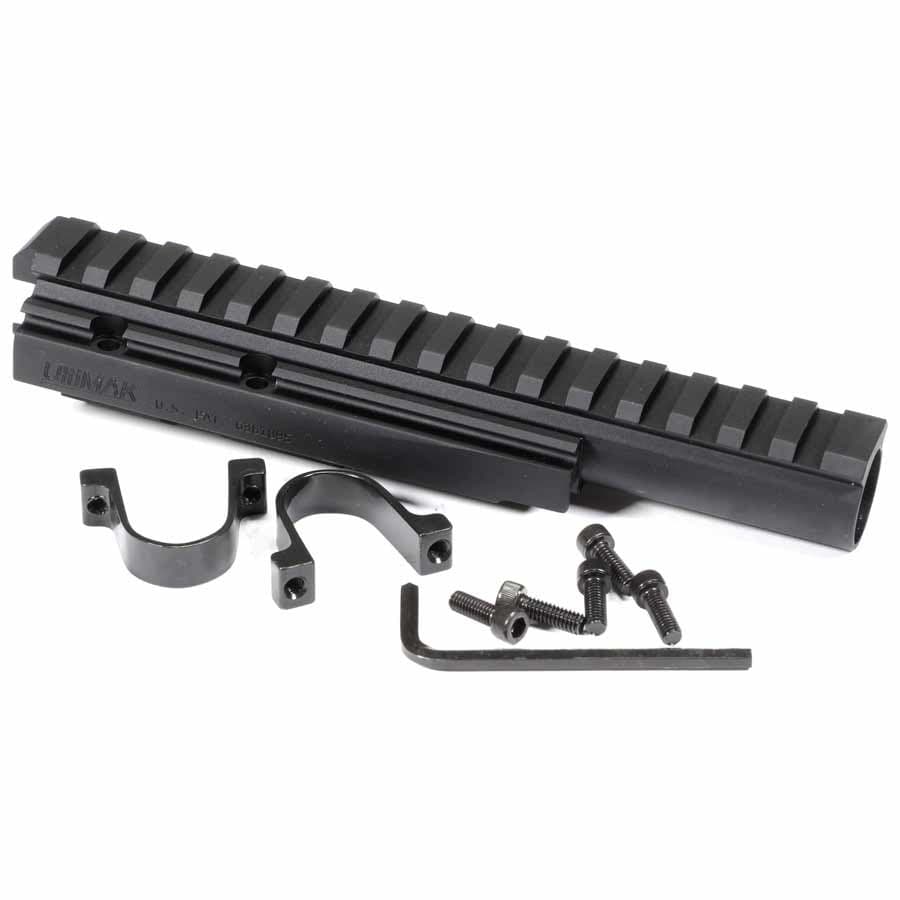
UltiMAK M1-B AK Optic Mount
- 16-slot Picatinny rail
- 6.875 inches
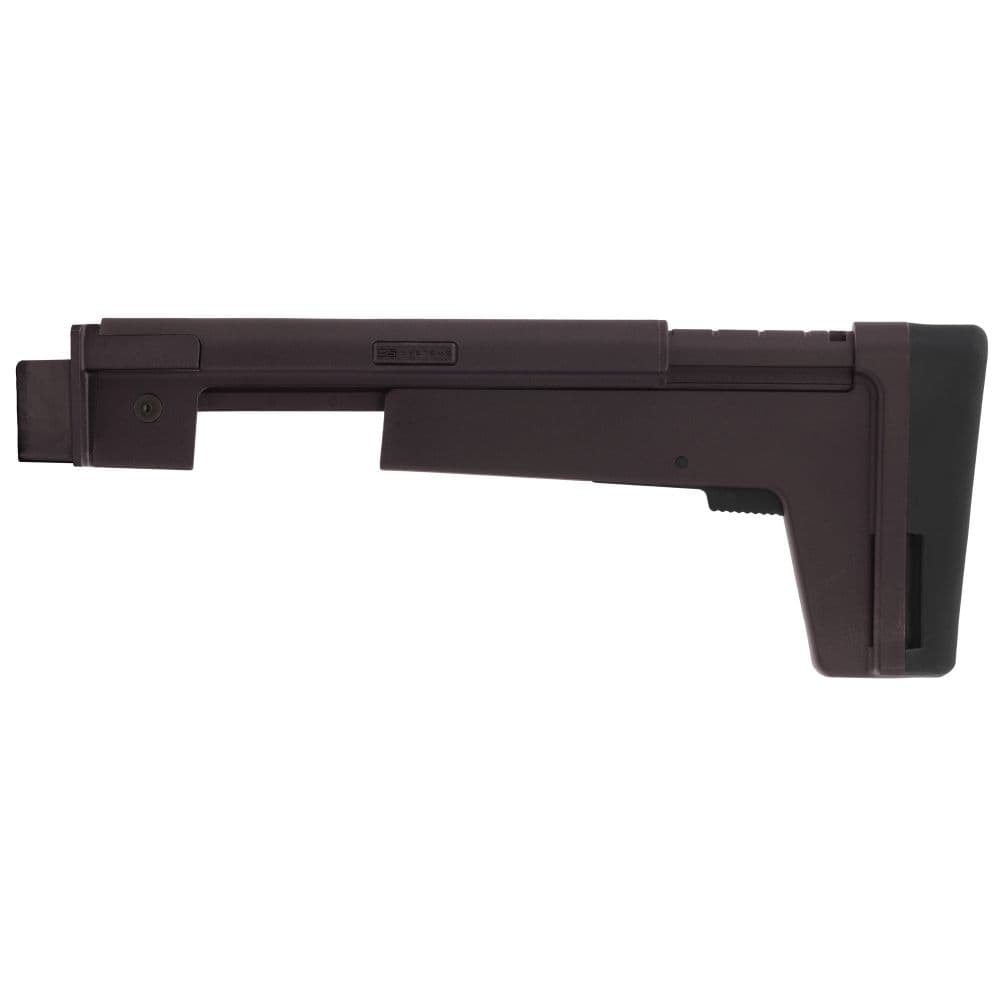
B5 Systems AK Stock Fixed Plum
- Standard AKM-pattern stamped receivers
- Collapsible 5-position length-of-pull adjustment
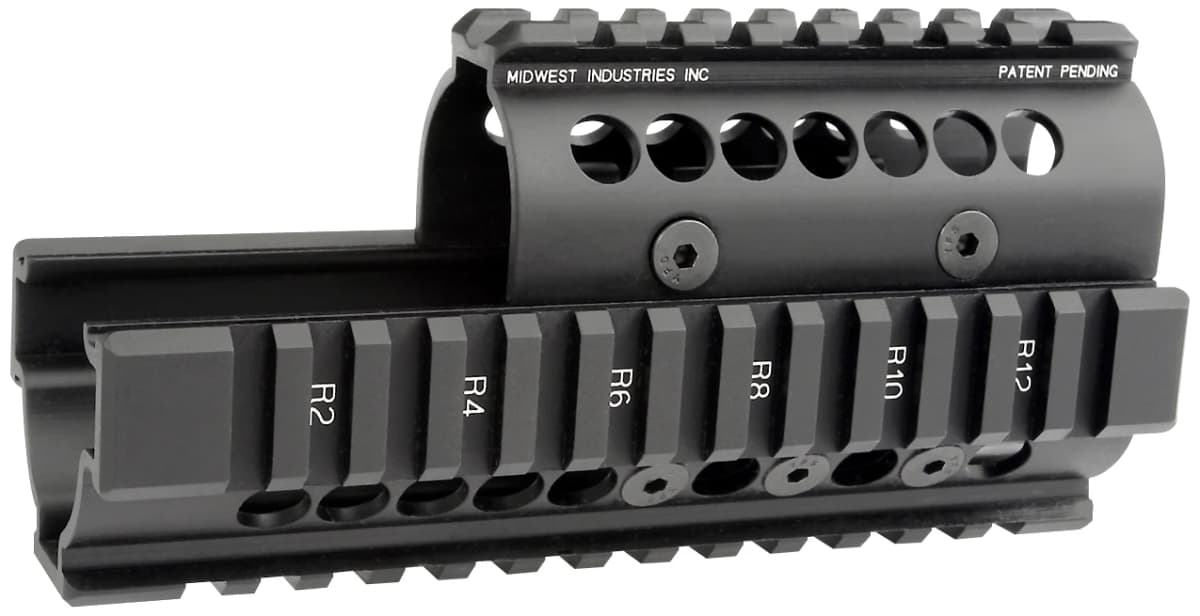
Midwest Industries Universal AK47/74 Quad-Rail Handguard
- Most stamped and milled AK-47/AK-74 variants
- T-marked MIL-STD-1913 rails
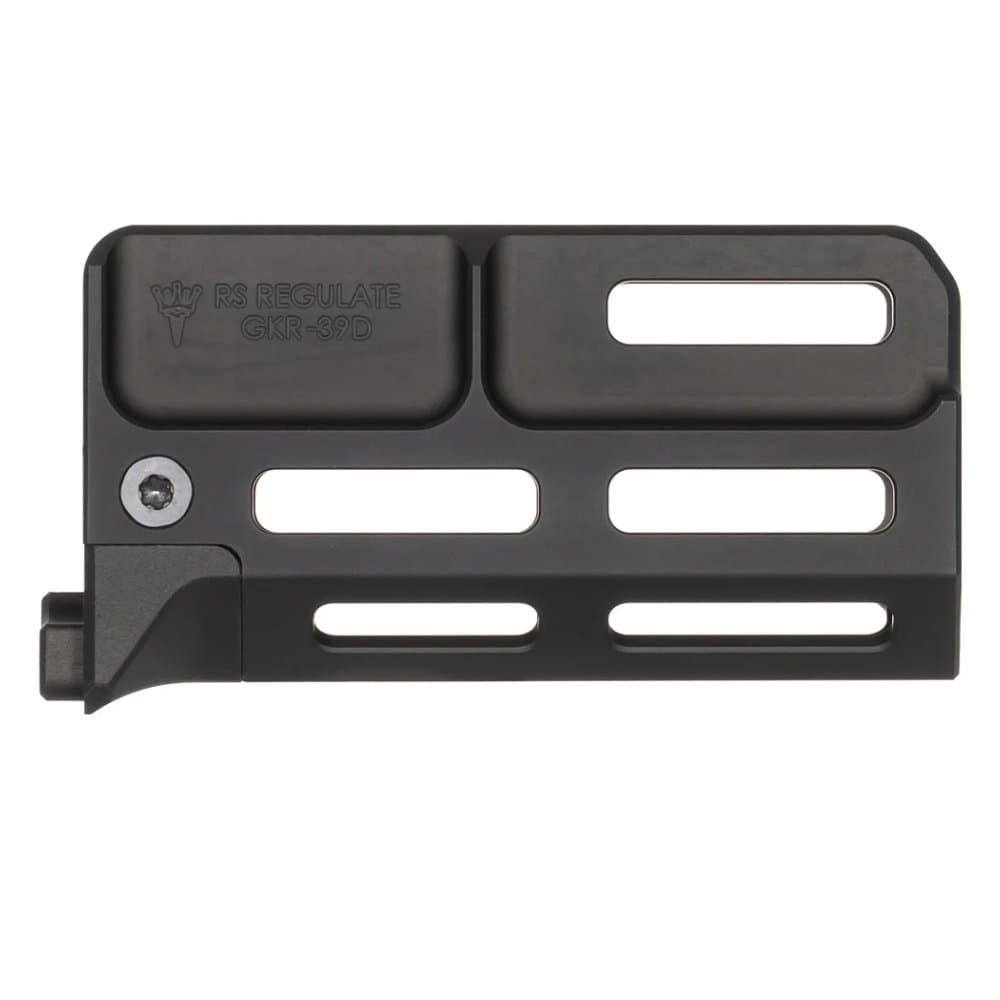
RS Regulate GKR-39D Draco Micro M-LOK Rail
- Micro Draco / Draco Micro only
- M-LOK slots
Affiliate links (?)
Machine Guns: The PKM, and Why the Fifties Went Skyward
The PKM in 7.62x54R is the general-purpose machine gun on both sides, and the Russian PKP Pecheneg is the interesting variant. Introduced in 2001, the Pecheneg deletes the PKM's quick-change barrel entirely in favor of a heavier fixed barrel with radial cooling ribs and a forced-air shroud, trading the ability to swap a hot barrel for better sustained accuracy and a handguard that does not shimmer the sight picture with heat haze. It is in wide Russian service, including with Spetsnaz.
The squad automatic slot is where Russian modernization visibly stalled. The RPK-74 has nearly vanished from the current war, with the PKM absorbing the role, and the RPK-16 that was contracted in 2018 to replace it failed to meet the defense ministry's requirements. Kalashnikov was pushed into designing a new belt-fed light machine gun instead, the RPL-20, which completed preliminary factory tests in 2024.
The heavy machine guns are where this war rewrote the job description. Russia fields the Kord in 12.7x108mm, accepted into service in 1998 as the replacement for the NSV, which had itself replaced the World War II era DShK. Ukraine fields all three generations plus the American Browning M2 in 12.7x99mm, and their primary night job is now air defense. Mobile fire groups, small teams on pickups with a heavy machine gun and a thermal sight, engage Shahed-type attack drones flying low enough to slip under radar coverage. The M2 with thermal optics is the weapon those teams rate highest; Soviet DShKs get pressed into the same role, sometimes with a searchlight bolted on. In April 2025 Ukraine's Odesa anti-aircraft missile brigade released the first video of a crew downing a Shahed with the .50-caliber machine gun on an American Avenger system.
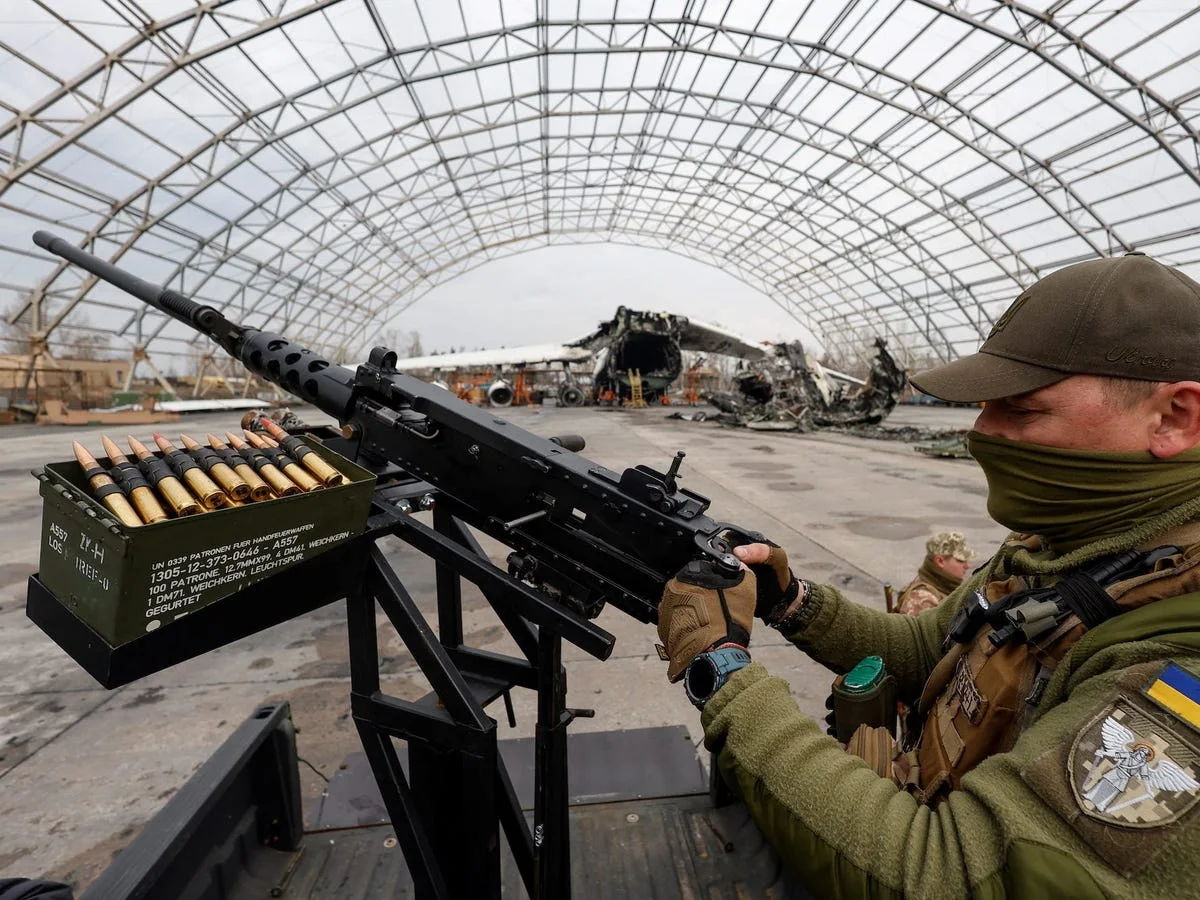
The counter-drone problem has started reshaping optics as well as weapons. EOTech's HWS CUAS holographic sight is a reticle built specifically around leading a small aircraft crossing at 30 mph, which is the same fire-control problem a mobile fire group solves with tracers and volume.
Sidearms
Pistols matter less than anything else on this list, and the distribution still tells you something. Russian troops carry the MP-443 Grach, an 18-round 9x19mm service pistol, alongside substantial numbers of Soviet Makarov PMs in 9x18mm and a scattering of Stechkin APS machine pistols. Ukraine started the war in the same place, with Makarovs everywhere and RPC Fort's domestic Fort-17, a 13-round pistol in 9x18mm Makarov or 9x17mm designed in 2004, filling the modern slot.
The interesting movement is in Ukrainian special operations, which standardized on Western striker-fired guns. Glock 17 and Glock 19 pistols circulate widely, and Germany supplied 3,500 Heckler & Koch SFP9 pistols between March 2023 and 2024, drawn from industry stock and paid for with German government funds rather than pulled from Bundeswehr inventory. Some arrived marked VP9, the US-market name for the same pistol. They have been documented with military intelligence direct action teams, the Special Operations Forces, the 73rd Naval Special Operations Center, and the Kraken Regiment, with later deliveries including optics-ready frames.
What a US Civilian Can Actually Buy
Three of the rifles above have direct semi-automatic commercial counterparts, and the distinction is fire control, not the rest of the gun. A civilian AK-74-pattern rifle uses the same 5.45x39mm cartridge, the same magazines, the same long-stroke piston action, and the same 24x1.5 RH muzzle threads as the service rifle; what it does not have is a selector position past semi-automatic. The same holds for the M4 and the Bren 2.
The 5.45 branch is the thin one. Palmetto State Armory's AK-74 is the accessible US-made rifle in that chambering at $999.99, and its practical drawback is the one you would expect: 5.45x39mm is a narrower ammunition market here than 7.62x39 or 5.56. If you want the Kalashnikov experience without that supply constraint, the 7.62x39 rifles in our AK rifle rankings are the easier ownership path, and the AK upgrade guide covers the side-rail optic mounting that Ukrainian and Russian units solve the same way.
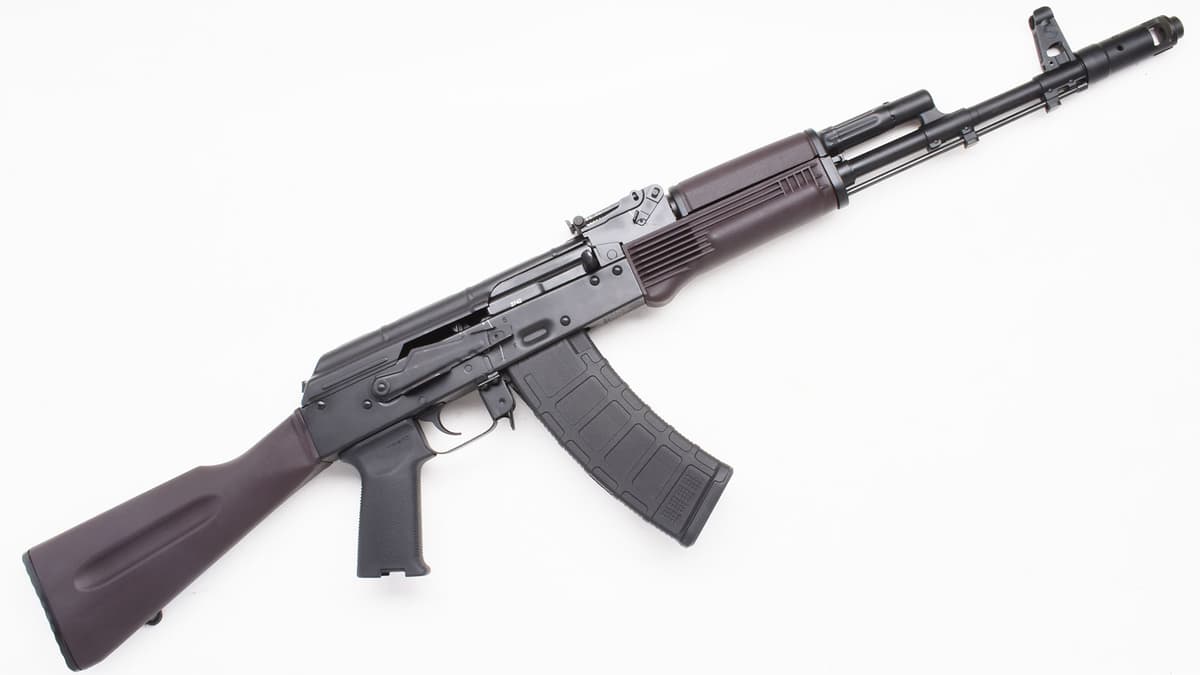
PSA AK-74
Closest civilian analogue to the AK-74 both armies field
American-made AK-74-pattern rifle from Palmetto State Armory chambered in 5.45x39.
- +Adds a real 5.45x39 AK branch to the builder
- +AK-74 muzzle and magazine path stays separate from AKM fitment
- +Domestic warranty and parts support
- −5.45x39 ammunition availability is narrower than 7.62x39 or 5.56
- −Furniture and magazine compatibility should be checked against AK-74-specific fitment
- −Variant-specific price and furniture depend on the selected PSA SKU
Affiliate links (?)
The M4 analogue is the least exotic gun in this article and the most widely owned. Colt's CR6920 is the commercial 6920-pattern carbine with a 16.1-inch chrome-lined M4-profile barrel, carbine-length direct impingement gas, and M4 feed ramps, at $1,099. The military M4 differs in its 14.5-inch barrel and select-fire control group, not in the operating system.
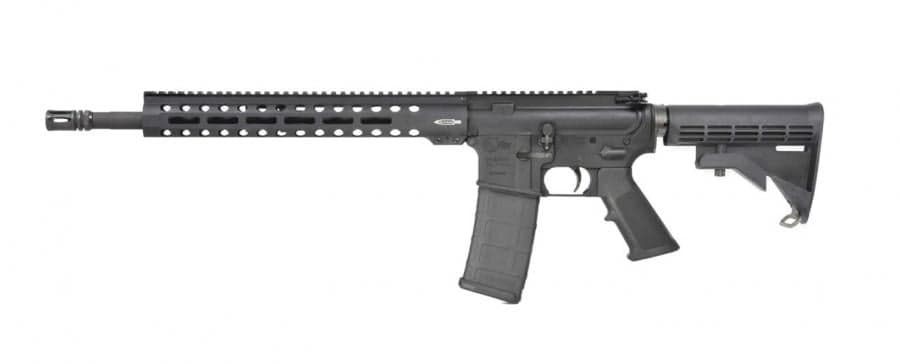
Colt CR6920 / 6920 Carbine
Commercial 6920-pattern carbine closest to the issued M4
Current Colt 6920-pattern commercial carbine with 16.1-inch chrome-lined M4-profile barrel, fixed A2 front sight, MBUS rear sight, and direct-gas operating system.
- +Colt commercial 6920-pattern carbine with proven M4 lineage
- +Chrome-lined 4150 CMV barrel with familiar M4-profile handling
- +Fixed A2 front sight and MBUS rear sight are usable out of the box
- −MOE polymer handguards are not free-float and have no M-LOK
- −Heavier (6.9 lbs) than current free-float carbines like BCM RECCE-16
- −A2-style fixed front sight base limits free-float rail length options
Affiliate links (?)
The Bren 2 is the one case where the commercial rifle and the service rifle are the same current-production design from the same company. CZ sells the Bren 2 Ms carbine with a 16.5-inch cold-hammer-forged barrel, a three-position adjustable short-stroke piston, and a folding stock at $1,999, while Ukroboronprom assembles the military variant in Ukraine under license. You can build any of these out in the configurator to check optic, light, and suppressor fitment before committing to a chambering.
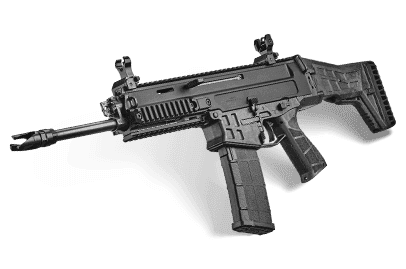
CZ Bren 2 Ms 16.5" Rifle
Same current-production design Ukraine now assembles under license
Full-length piston rifle balancing ballistics and handling
- +Outstanding accuracy - 0.75 MOA groups achievable
- +Full 16.5-inch 5.56 performance in a folding-stock package
- +Slickest-running action in class per professional reviewers
- −Premium pricing reflects European manufacturing
- −Stock comb height could be improved for optic use
- −Heavier than the pistol variants
Affiliate links (?)
What the Inventory Actually Shows
Read the list as a whole and the pattern is that neither side got the rifle transition it planned. Russia's modernization program produced a rifle it then had to simplify, and its squad automatic replacement failed outright. Ukraine's transition is real but partial, adding a second and third cartridge to a supply chain built for one. The Kalashnikov both sides were issued fifty years ago is still standard-issue on both sides of the war.
The genuinely new development is not a rifle at all. It is that twelve-point-seven millimeter machine guns designed between 1938 and 1998 turned into frontline air defense, because a heavy machine gun round costing a few dollars is the correct economic answer to a five-figure one-way attack drone. That is the small-arms lesson of this war with the clearest reach beyond it.
Stay Updated on Military Small Arms
We cover service rifle programs, counter-drone weapons, and the civilian-legal equivalents as they land.