Key Takeaways
- →What it is: the Shahed-136 is an Iranian one-way attack drone, built in Russia as the Geran-2. It flies into a fixed target and detonates. There is no recovery and no operator in the loop for most of the flight.
- →The numbers: 3.5 m long, 2.5 m wingspan, about 200 kg gross with a 50 kg warhead, a 50 hp two-stroke piston engine, roughly 185 km/h, and a published range band of 1,000 to 2,500 km.
- →Cost is the weapon: CSIS estimates $20,000 to $50,000 per airframe. A Patriot PAC-3 MSE shot runs above $4 million, which is the exchange rate the design is built to exploit.
- →Volume is the tactic: Russia launched 5,181 Shahed-type strike UAVs against Ukraine in May 2026, and a single 24-hour cycle in March 2026 carried 948 of them alongside 35 missiles.
- →Why defenses leak: the drone has a small radar signature, flies low or high depending on the threat, and arrives mixed with cheap decoys. Guns miss, missiles cost too much, and magazine depth runs out before the raid does.
What a Shahed Drone Actually Is
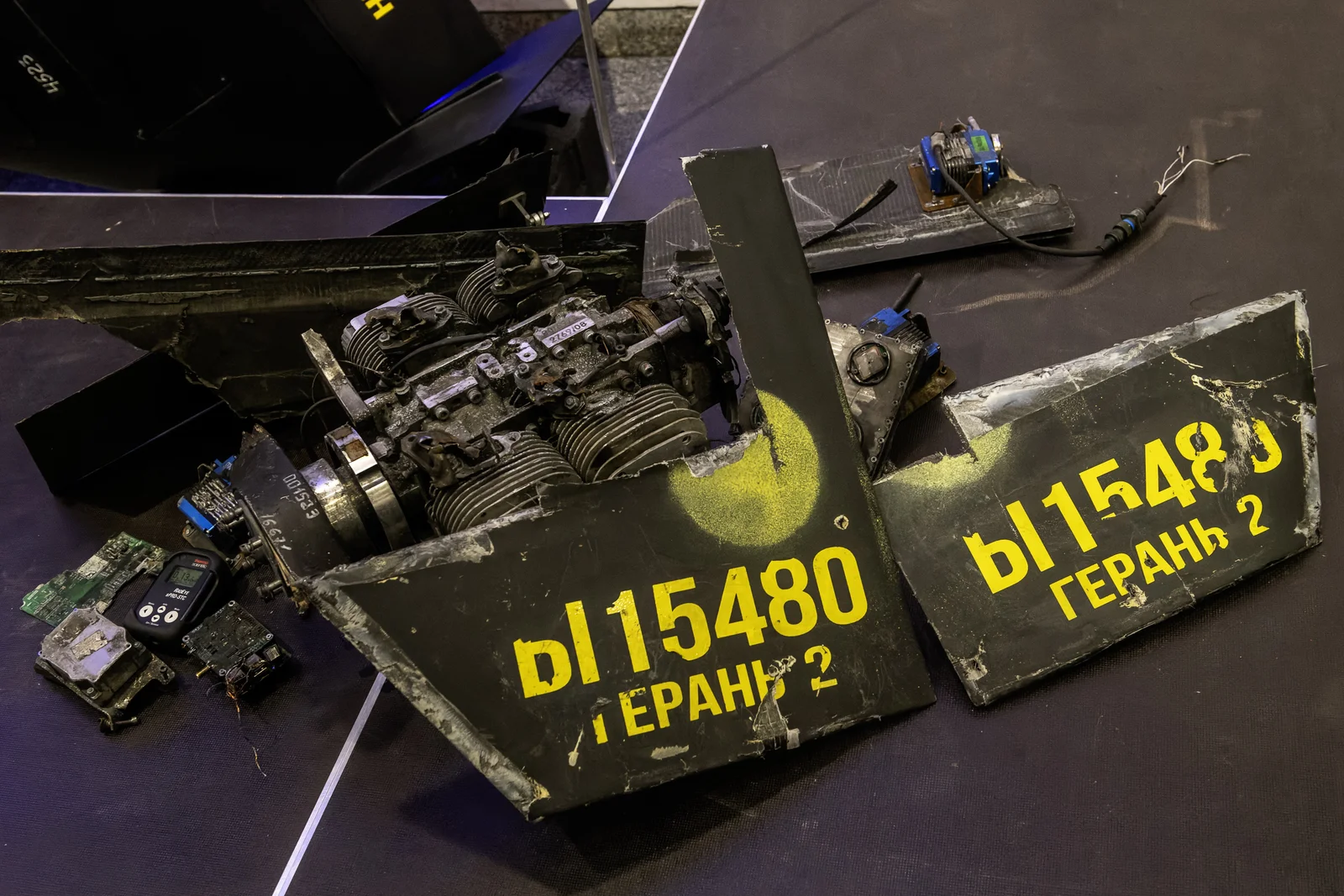
A Shahed drone is a one-way attack aircraft: a small propeller-driven airframe that carries a warhead to a set of coordinates and destroys itself on impact. The family is built by Iran's Shahed Aviation Industries, and the two versions that matter in the Ukraine war are the Shahed-131 and the larger Shahed-136. Russia produces both domestically at the Alabuga Special Economic Zone in Tatarstan and calls them Geran-1 and Geran-2, from the Russian word for geranium.
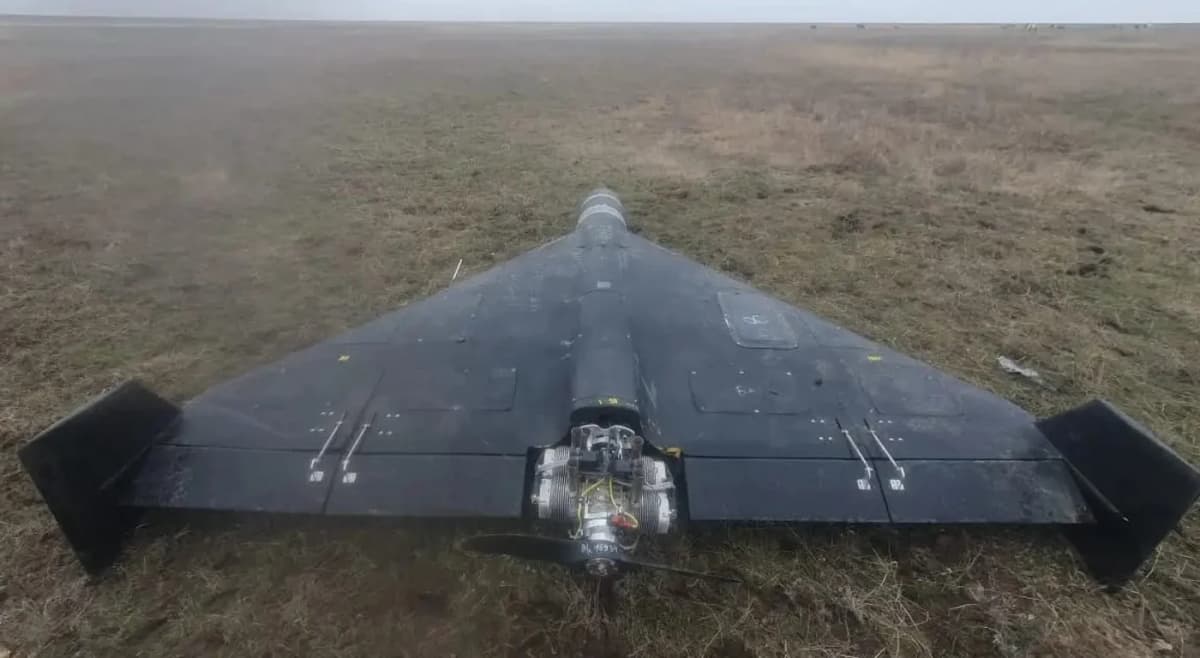
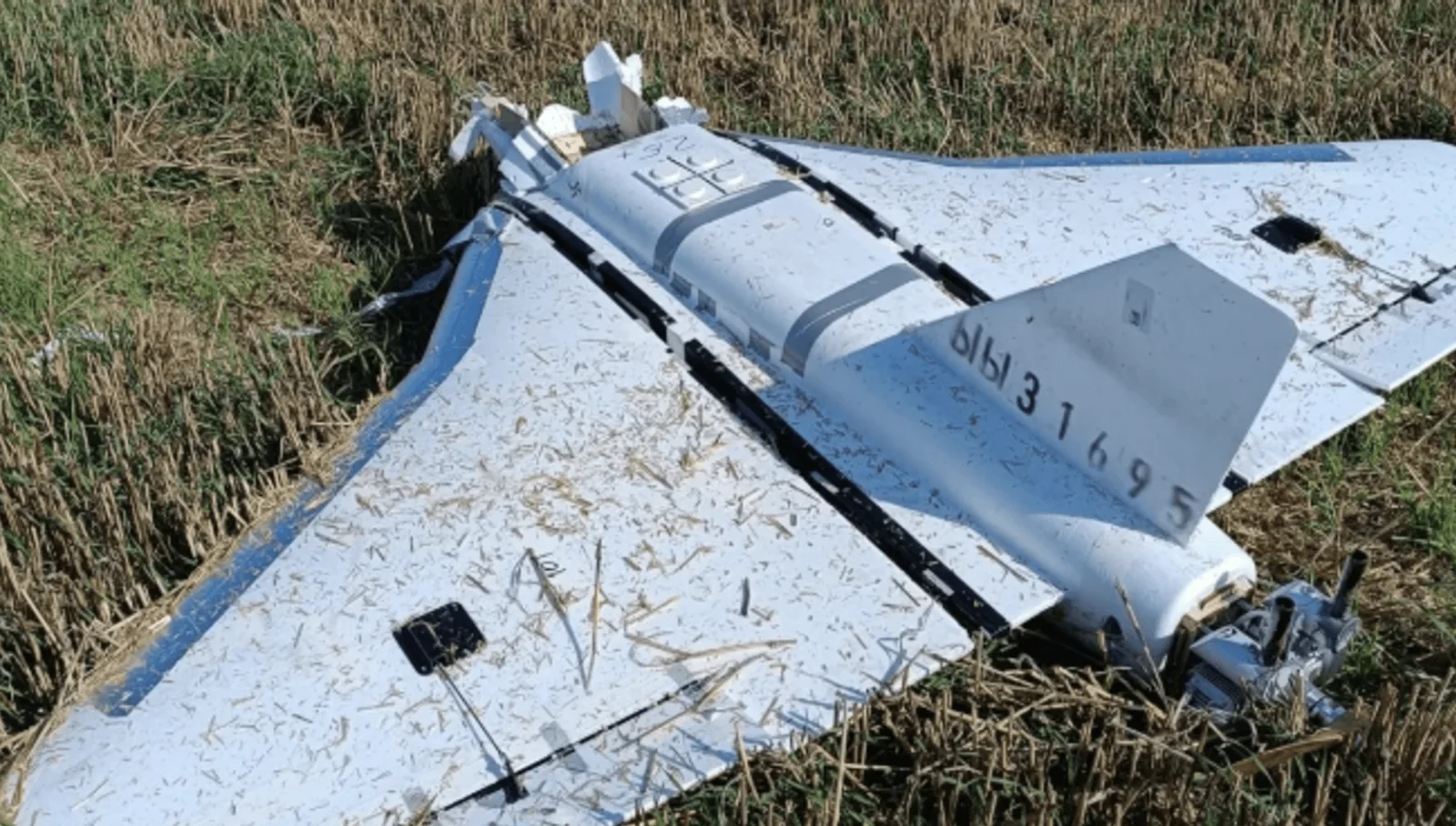
The airframe is a tailless delta wing about 3.5 meters long with a 2.5 meter span, molded from fiberglass reinforced with carbon fiber, with vertical fins at each wingtip that extend both up and down. The Shahed-131 is the same idea at smaller scale, 2.6 meters long with a 2.2 meter span and fins that extend upward only, which is the fastest way to tell wreckage of the two apart. Gross weight is about 200 kg for the -136 and 135 kg for the -131.
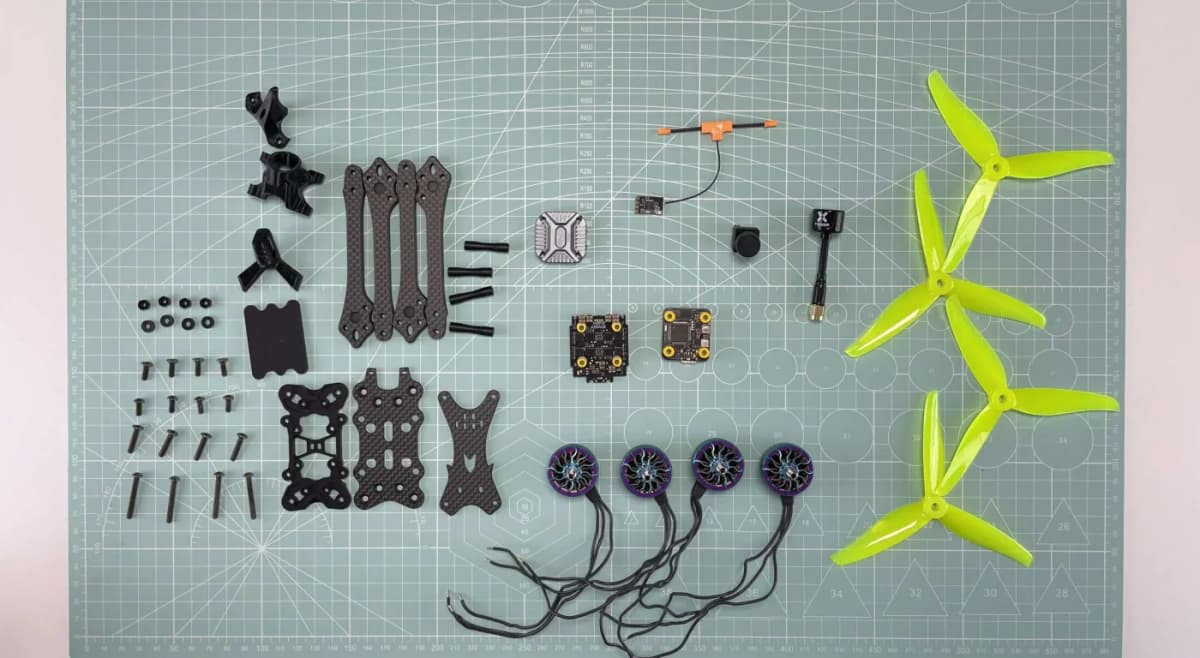
The term that gets used loosely is “kamikaze drone” or “loitering munition.” The Shahed-136 does not really loiter in the sense of a Switchblade circling over a battlefield waiting for a target. It is programmed before launch, flies a route, and hits a coordinate. It is closer to a very slow, very cheap cruise missile than to a reconnaissance-strike drone or a piloted fiber optic FPV. The two sit at opposite ends of the same war, which our drone warfare overview lays out class by class.
How the Shahed-136 Flies: Engine, Airframe, and Launch
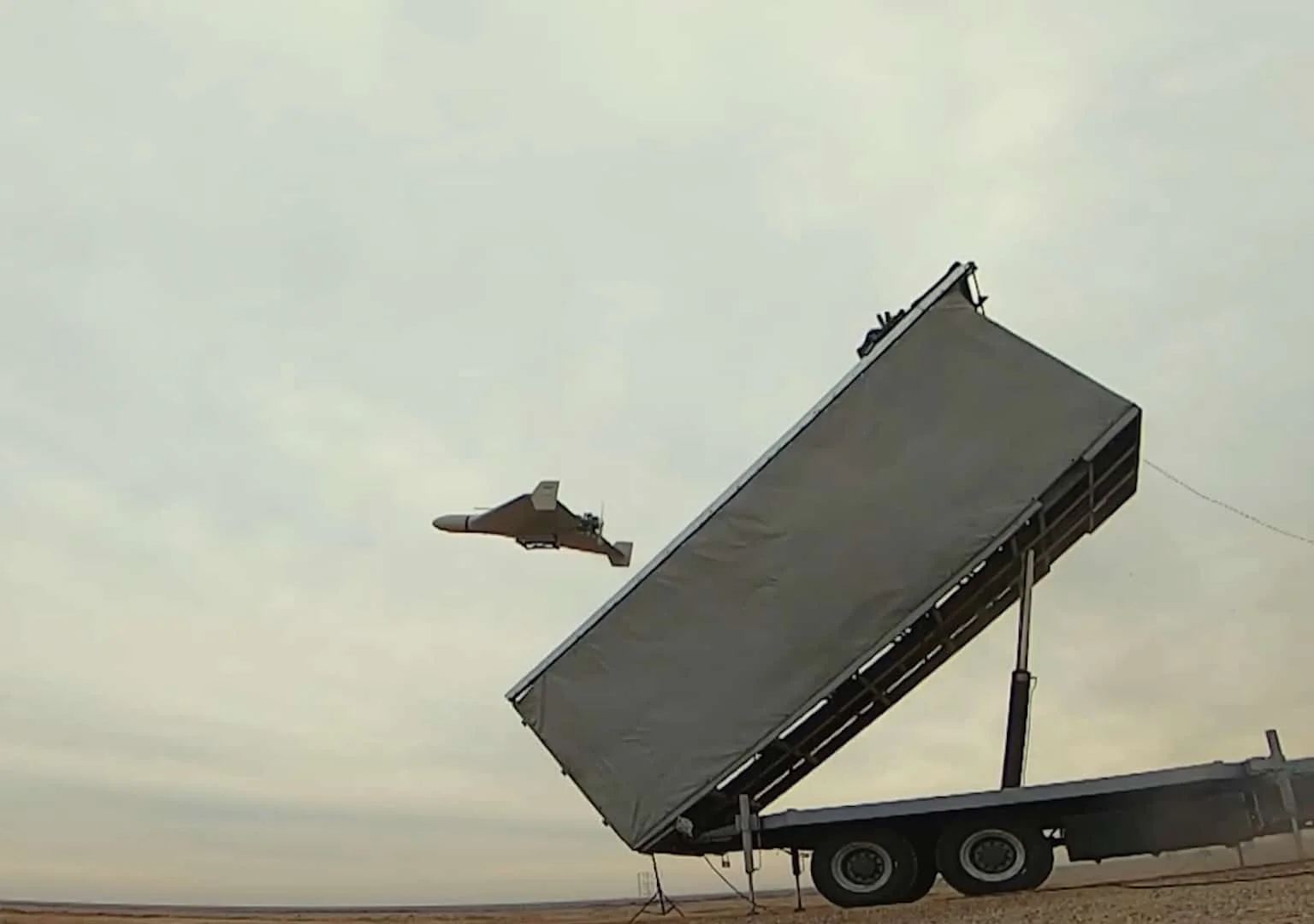
The Shahed-136 is pushed into the air off a truck-mounted rack by a jettisonable rocket booster, then flies the rest of the mission on a 50-horsepower piston engine turning a two-blade pusher propeller. The engine is the MD-550, a four-cylinder two-stroke reverse-engineered from the German Limbach L550E, an off-the-shelf light-aircraft powerplant. The Shahed-131 uses a different unit, the 38-horsepower Serat-1 Wankel rotary derived from a British design.
Launch is deliberately austere. The rack tilts up on a flatbed or a commercial truck, the booster fires, the drone leaves the rail at a shallow upward angle, and the booster falls away. There is no runway, no catapult building, and no crew requirement beyond a small team. Rail launchers have also been mounted on railcars and on ships. That launch profile is why counter-battery targeting rarely finds a Shahed launch site: the truck moves.
The engine choice explains most of the drone's behavior. A two-stroke of that size gives it endurance measured in hours rather than minutes, a loud and distinctive acoustic signature, and a thermal signature large enough that infrared sensors pick it up well before the naked eye does. It also caps speed at roughly 185 km/h, which is what keeps machine guns and interceptor drones in the fight against it.
How Far Can a Shahed Drone Fly?
Published range figures for the Shahed-136 span 1,000 km to 2,500 km, and the spread is real rather than sloppy reporting. CSIS Missile Threat gives the band and notes that the Defense Intelligence Agency sits at the 2,500 km end, about 1,550 miles. Fuel and warhead trade against each other directly: variants carrying a 90 kg warhead instead of the standard 50 kg have been reported at roughly 650 km. The Shahed-131 is credited with about 900 km.
Cruise speed is roughly 180 to 185 km/h, about 110 to 115 mph, with endurance up to 12 hours. Flight altitude is the parameter Russia manipulates most. Published figures put the Geran-2's usable band at 60 to 4,000 meters, and Russian crews work both ends of it. Extremely low ingress, sometimes under 100 feet and through terrain or between buildings, defeats radar line of sight and shortens the engagement window to seconds. High ingress above four kilometers puts the drone out of reach of machine guns and small arms entirely and forces Ukraine to spend a guided interceptor instead.
That altitude switching is the single most consequential tactical change since 2022. Every layer of a modern air defense has an altitude band it is good at, and alternating the ingress profile across a single raid forces the defender to keep all of those layers manned and stocked at once.
Shahed-136 and Shahed-131 Specifications
Shahed-136 (Geran-2) and Shahed-131 (Geran-1)
| Type | One-way attack drone / loitering munition |
| Russian designation | Geran-2 (-136), Geran-1 (-131) |
| Length (-136 / -131) | 3.5 m / 2.6 m |
| Wingspan (-136 / -131) | 2.5 m / 2.2 m |
| Gross weight (-136 / -131) | 200 kg / 135 kg |
| Warhead | 50 kg standard (-136); 90 kg on some Russian variants; ~15 kg (-131) |
| Engine (-136) | MD-550 four-cylinder two-stroke, ~50 hp, pusher propeller |
| Engine (-131) | Serat-1 Wankel rotary, 38 hp |
| Cruise speed | ~180-185 km/h (110-115 mph) |
| Range (-136) | 1,000-2,500 km (DIA estimate 2,500 km) |
| Range (-131) | ~900 km |
| Flight altitude | 60-4,000 m |
| Endurance | Up to 12 hours |
| Guidance | Commercial-grade INS with GPS/GLONASS correction |
| Launch | Rocket-boosted rail on a truck, railcar, or ship |
| Structure | Fiberglass reinforced with carbon fiber |
| In service | 2021-present (-136), 2019-present (-131) |
How the Shahed Guidance System Works
The Shahed-136 navigates on a commercial-grade inertial measurement unit corrected by a civilian satellite receiver reading GPS and GLONASS. There is no terminal seeker on the baseline airframe and no operator flying it. The route and the impact coordinates are loaded before launch, the inertial unit holds heading between fixes, and satellite updates keep the accumulated drift bounded. That is a hobby-grade navigation stack in an ordnance application, and it is why the weapon is only accurate against buildings and infrastructure rather than moving targets.
The interesting part is what Russia bolted on afterward. Ukrainian electronic warfare degraded the original Iranian receiver badly enough that Russian-built Geran-2 airframes moved to the Kometa-M, a controlled reception pattern antenna that steers nulls toward jamming sources rather than simply listening in all directions. The Institute for Science and International Security has documented 16-element CRPA arrays on recovered airframes, along with attempts to add cellular modems, satellite communications relays, and even relay drones carrying radio modems to extend command reach.
Every one of those additions costs money and complexity, which is the quiet story of the Shahed program: the cheap drone is not staying cheap. Russian domestic unit cost estimates rose toward roughly $80,000 by April 2024 as the anti-jamming and communications hardware went in.
What Does a Shahed Drone Cost?
Published estimates run from about $20,000 to nearly $200,000 per drone, and the spread is a function of what is being counted. CSIS Missile Threat puts the Shahed-131 and -136 at $20,000 to $50,000 each, the airframe-and-components view and the number most often quoted. The flat $20,000 figure that circulated in early Western coverage sits at the floor of that band and has been disputed as too low.
The contract view is very different. Documents taken in the February 2024 hack of the Iranian firm Sahara Thunder show Iran opening at $375,000 per drone and settling at $193,000 per unit for a 6,000-airframe order, or $290,000 each for a 2,000-unit batch, inside a package valued near $1.75 billion that also bought tooling, software, and the production line itself. The same documents put Alabuga's own projected cost for a fully localized Russian-built airframe at $48,800.
All of those numbers are small against what it takes to shoot one down. A Patriot PAC-3 MSE interceptor runs above $4 million per round, and a THAAD interceptor is several times that again. An AMRAAM fired from a NASAMS launcher or a fighter sits somewhere between $500,000 and $1 million. Firing any of them at a $50,000 airframe wins the engagement and loses the campaign, which is precisely the design intent. The cheapest effective answers are at the other end of the scale: laser-guided APKWS rockets at roughly $25,000 to $35,000 a shot, gun systems like Rheinmetall's Skynex at a few hundred dollars per burst, and Ukrainian-built interceptor drones in the $2,000 to $5,000 range.
How Russia Uses Shaheds in Strike Packages
Russia does not send Shaheds one at a time. It sends them in hundreds, mixed with decoys, timed around cruise and ballistic missiles, and routed along separate corridors so that the defense has to solve several problems at once. The Institute for Science and International Security counted 5,181 Shahed-type strike UAVs launched against Ukraine in May 2026, an average of 167 per day, inside a month that saw 8,161 total UAV launches. A single 24-hour cycle on March 23 and 24, 2026 carried 948 Shahed-type UAVs and 35 missiles. The night of May 13 and 14, 2026 involved 1,567 UAVs alongside Kinzhal, Kh-101, Iskander, and S-400 missiles.
A large share of those airframes are not carrying warheads at all. Gerbera, Italmas, and Garpiya airframes fly the same profiles as the strike drones, some as outright decoys and some as auxiliaries, and they force radars to radiate, crews to commit, and interceptors to be spent before the armed wave arrives. In February 2026 roughly 36 percent of the Shahed-type systems launched were non-strike variants. A decoy is not a trick here, it is a munition in its own right: what it destroys is the defender's magazine.
The effectiveness numbers show what this buys. The same monitoring put Ukrainian interception of Shahed-type UAVs at 58 percent in September 2025, 62 percent in November, and 66 percent in January 2026, while the share of launched drones that actually reached and damaged a target stayed in the single digits to low teens through 2026, bottoming at 6.65 percent in May. Russia is trading per-drone efficiency for volume, and the volume is what breaks the defense: a battery that stops 90 percent of a 40-drone raid lets four through, and the same battery against a 500-drone night lets 50 through.
Why Gatling Guns Are Not Stopping Shahed Drones
The Centurion C-RAM, the land-based version of the Navy's Phalanx close-in weapon system, was designed to shred rockets, artillery shells, and mortar bombs, all of which follow predictable ballistic arcs the fire-control radar can solve in a fraction of a second. A Shahed is a powered aircraft made of composite with a small radar return, and it can fly under 100 feet, hug terrain, and thread between buildings. The tracking problem the C-RAM was built to solve is not the problem it is being handed.
The ammunition math is worse than the tracking math. The 20mm M61A1 fires 3,000 to 4,500 rounds per minute, roughly 50 to 75 per second, from a 1,500-round magazine. Each M940 self-destruct round costs $168, so a 150-round burst is about $25,000, comparable to the price of the drone it is trying to hit. Historical performance against rockets and mortars is reported at 70 to 80 percent on an average of 300 rounds per engagement, which is four or five before the magazine is empty and a roughly 30-minute manual reload begins. Against a raid of several hundred airframes, that is not a defense, it is a speed bump.
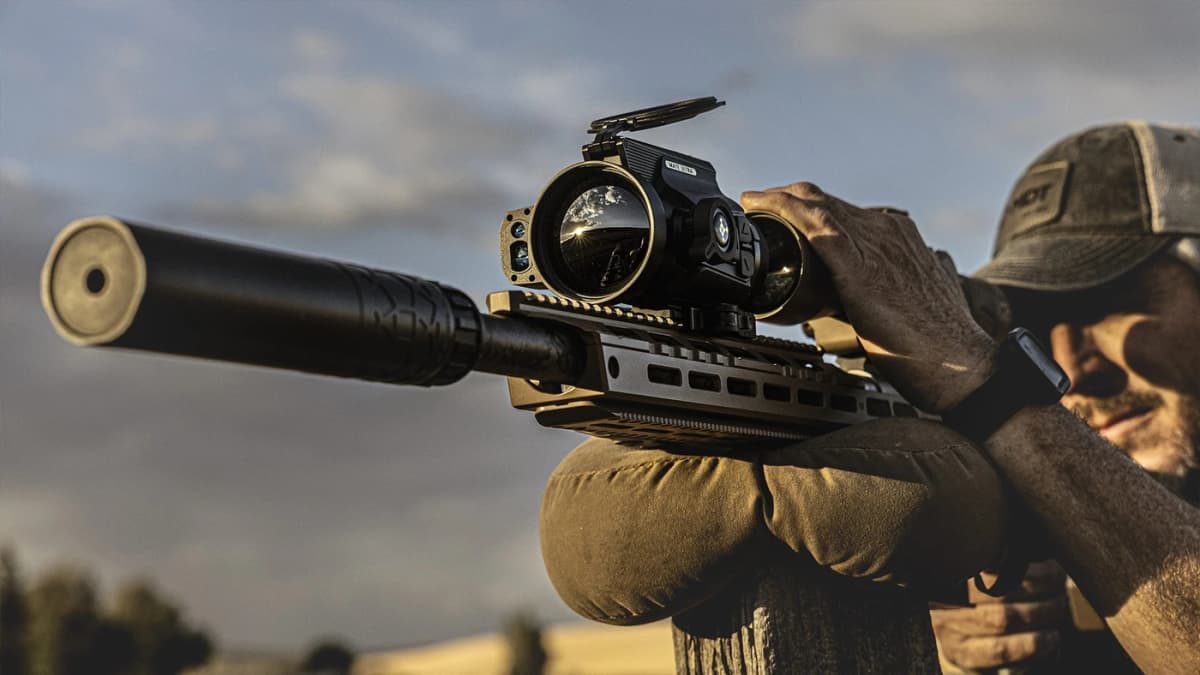
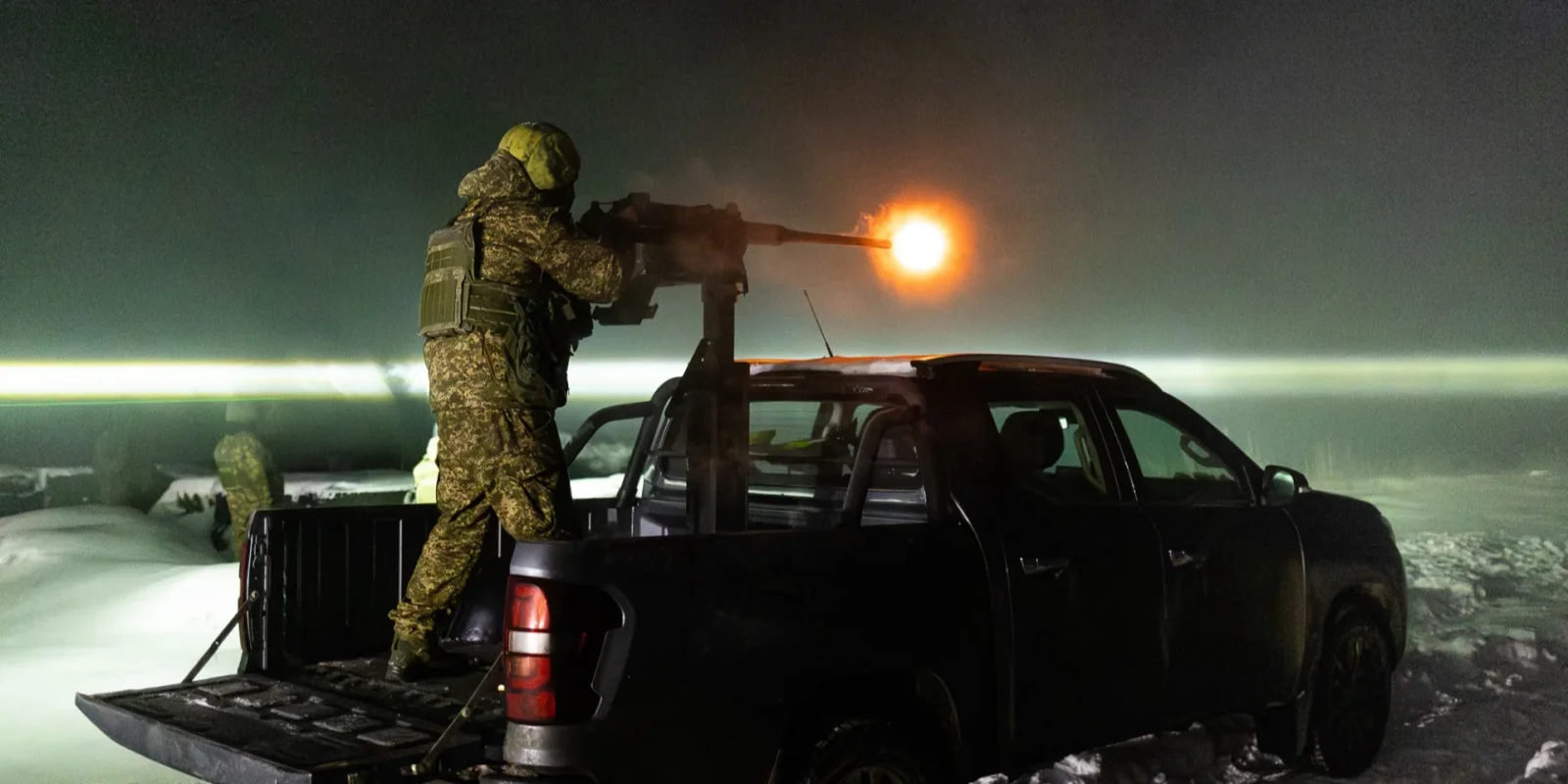
What actually works is cheaper and lower down the stack. Ukraine fields mobile fire groups running heavy machine guns off pickup beds, AI-directed gun mounts that solve the lead problem human gunners cannot, laser-guided APKWS rockets fired from ground launchers and F-16s, and purpose-built interceptor drones costing a few thousand dollars each. The optics side of that fight is moving too: EOTech announced the HWS CUAS counter-drone holographic sight in August 2026, with lead references baked into the reticle for a drone crossing at 30 mph at 50 and 90 meters.
Detection Is the Hard Part, Not the Shot
A Shahed at 180 km/h is not a difficult target once you can see it; the difficulty is seeing it in time. Raids run overnight, open estimates put the airframe's X-band radar cross section between 0.01 and 0.05 square meters depending on aspect, and low-altitude ingress keeps it under the radar horizon for most of its run. What gives it away is the engine. A two-stroke at cruise is loud and hot, and Ukrainian residents learned to recognize the low continuous note of an old moped long before any siren sounded.
Ukraine turned that into a sensor network. Sky Fortress fields more than 14,000 acoustic nodes built from microphones and smartphones on poles, each unit built for roughly $400 to $1,000, feeding an AI classifier over the mobile network. In one mass raid the network was credited with helping intercept 80 of 84 incoming drones, and it hears low-altitude targets where radar has no line of sight. The cheap drone met a cheaper sensor.
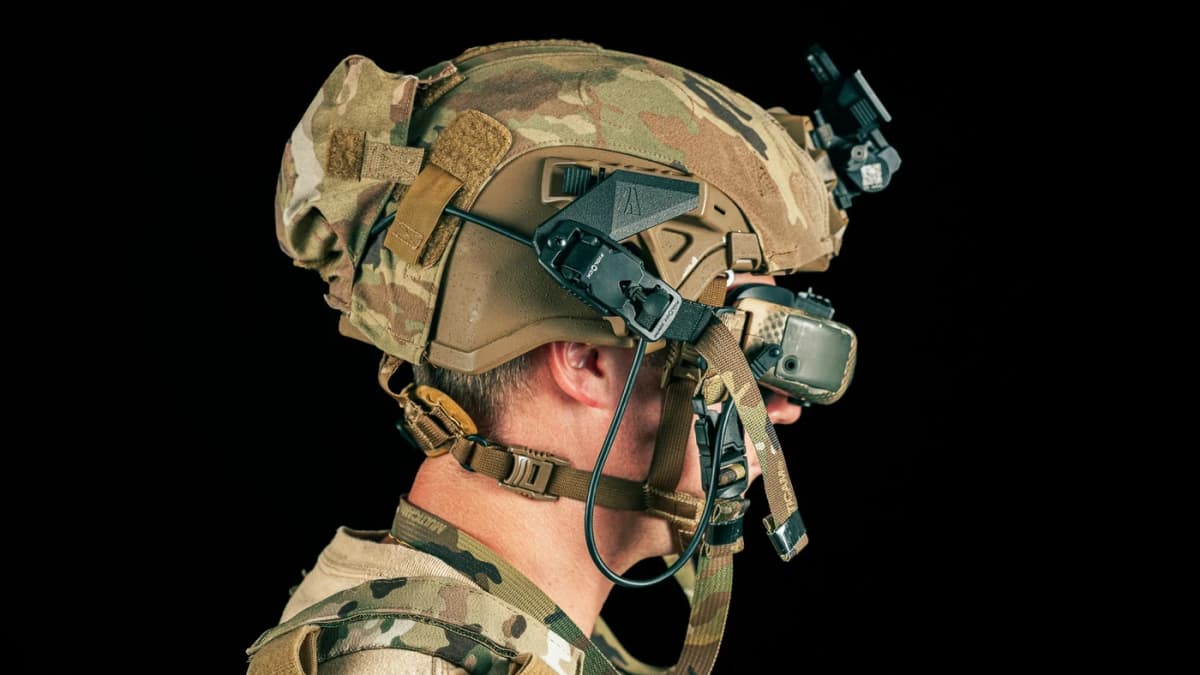
The shooter-side stack is the one civilian buyers already recognize. Thermal picks up a warm engine against cold sky at ranges where image intensification shows nothing, and a Gen 3 tube gives the wide field of view and situational awareness a narrow thermal window does not. Our thermal and night vision comparison covers where each sensor type wins, and the PVS-14 buyer's guide covers tube grades and what each price tier actually buys.
On the aiming side, holographic sights versus red dots explains why a large-pattern reticle needs holography to keep every aiming reference in the target plane, and the rifle builder shows how sight, magnifier, and night vision heights stack on one rail.
Sighting and Low-Light Optics

EOTech EXPS3
- 68 MOA ring with a 1 MOA center dot, the pattern the CUAS reticle replaces
- Holographic reticle stays in the target plane with unlimited eye relief
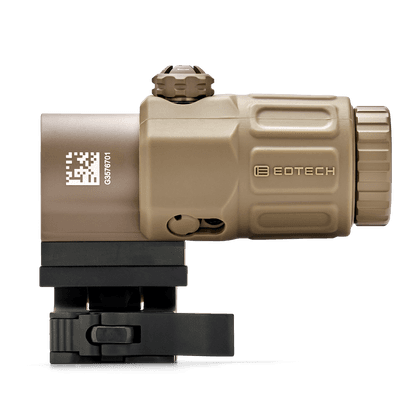
EOTech G33 3X Magnifier
- 3x magnification on an STS flip-to-side mount
- 7.3 degree field of view with 2.2 inches of eye relief
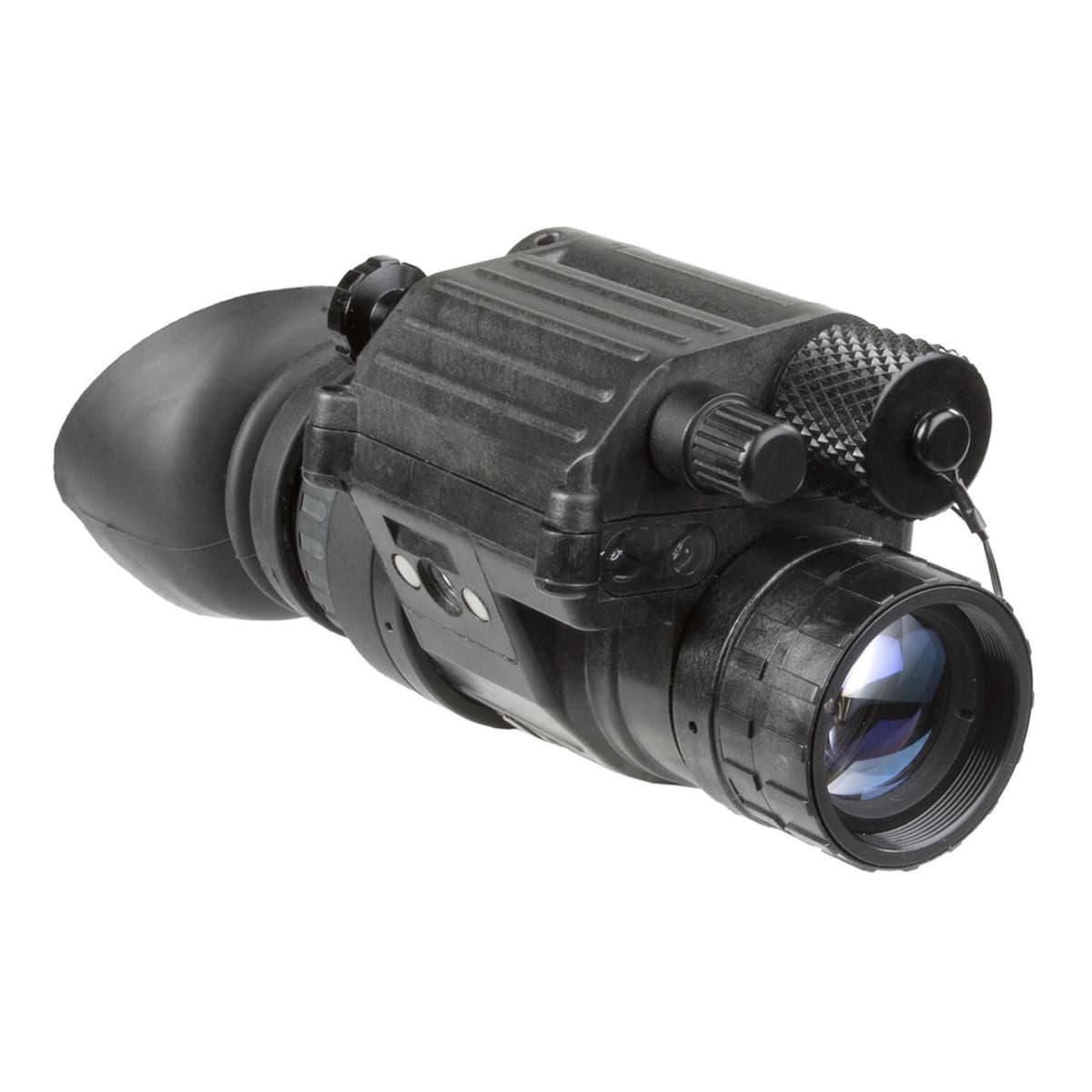
AGM PVS-14 3AW3 (White Phosphor)
- Gen 3 Level 3 autogated tube with a P45 white phosphor screen
- Standard PVS-14 housing, so every common helmet mount fits
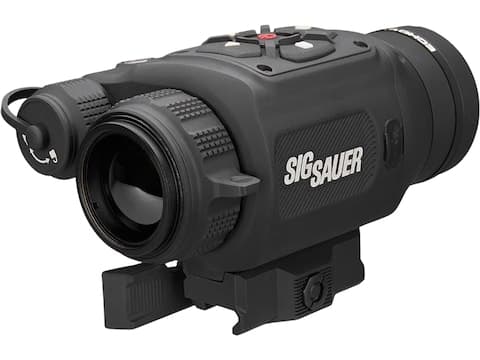
Sig Sauer Echo CV25 Clip-On Thermal
- 640x512 LWIR core at 12 um, 50 Hz refresh, 20 mK sensitivity
- 25mm objective with a 17 degree field of view
Affiliate links (?)
What Is the US Equivalent of the Shahed Drone?
The direct American answer is LUCAS, the Low-Cost Uncrewed Combat Attack System from SpektreWorks in Arizona. It is an 8-foot-wingspan one-way attack drone with roughly 500 miles of range, launchable by catapult, rocket-assisted takeoff, or a vehicle-mounted system, and built explicitly to improve on the Shahed-136. Reported unit costs fall between about $35,000 and $55,000. Shield AI was contracted to put its Hivemind autonomy stack on the airframe, which is the capability the Iranian design does not have: swarming and autonomous behavior in a GPS-denied environment rather than a pre-loaded route.
LUCAS made its combat debut during Operation Epic Fury against Iran beginning February 28, 2026. Pentagon chief technology officer Emil Michael said in March 2026 that the US inventory was still “in the dozens” and that the department was not producing tens of thousands of them. That gap is the whole point of the comparison: Russia was launching more Shahed-type airframes at Ukraine per day in May 2026 than the United States owned of its nearest equivalent. The Defense Innovation Unit's Artemis project is funding four additional companies to build long-range one-way platforms on designs that do not copy the Shahed, with explicit requirements for operation under electronic warfare and satellite-navigation denial.
Stay Updated on Counter-Drone Gear
We cover counter-drone optics, thermal and night vision releases, and the hardware coming out of the drone war as it lands.