Key Takeaways
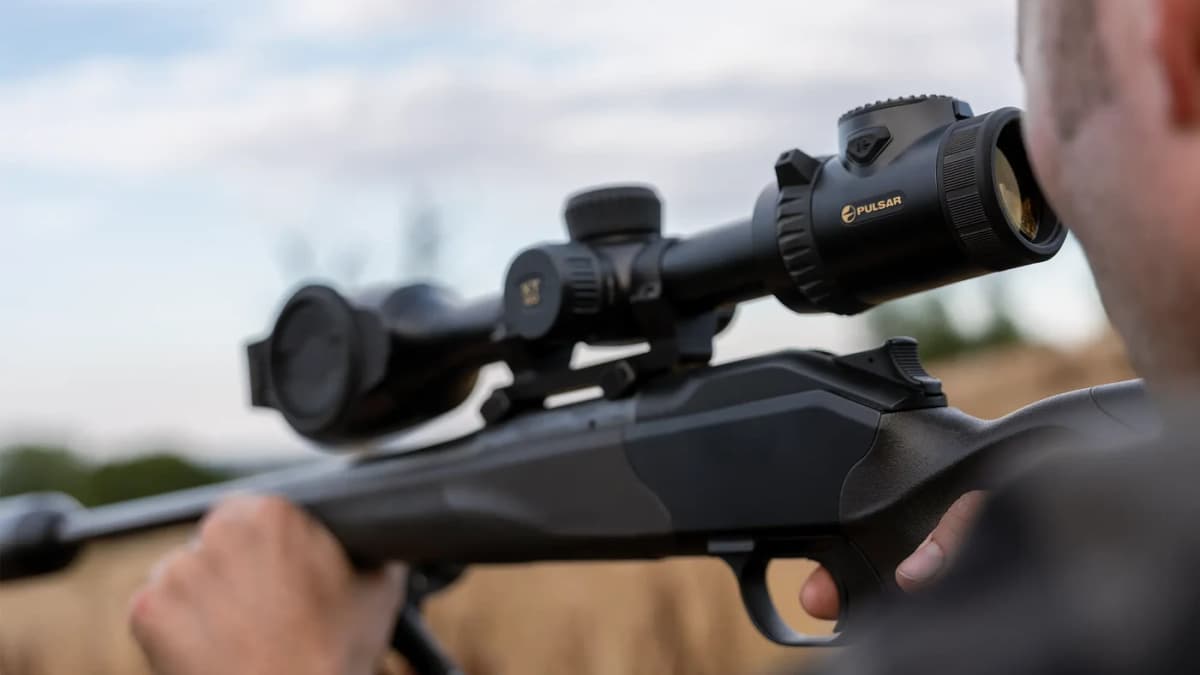
- →Two models: The Pulsar Thermion 3 LRF XT60 (1280x1024, $6,499.97) and XR60 (640x480, $4,499.97) share a 60mm F1.0 lens and a 30mm tube.
- →Most detailed Thermion: The XT60's 1280x1024 12-micron sensor runs at 50 Hz with system NETD below 20 mK and a 14.6-degree view at 2x.
- →1200 m rangefinder in the housing: The 905 nm laser moved out of the thermal lens, ranges to plus or minus 1 m, and feeds a ballistic calculator with a suggested point of aim.
- →Day-scope handling: Standard 30 mm rings, a classic zoom ring with a throw lever, a turret-style focus, 65 mm of eye relief, and a 6000 J recoil rating.
- →Runtime split: Up to 8.5 hours on the XT60 and up to 14 hours on the XR60, on a removable APS5 pack plus a built-in battery.
Pulsar Thermion 3 LRF XT60
Hunters who want 1280 HD identification and a built-in rangefinder on a traditional 30mm scope
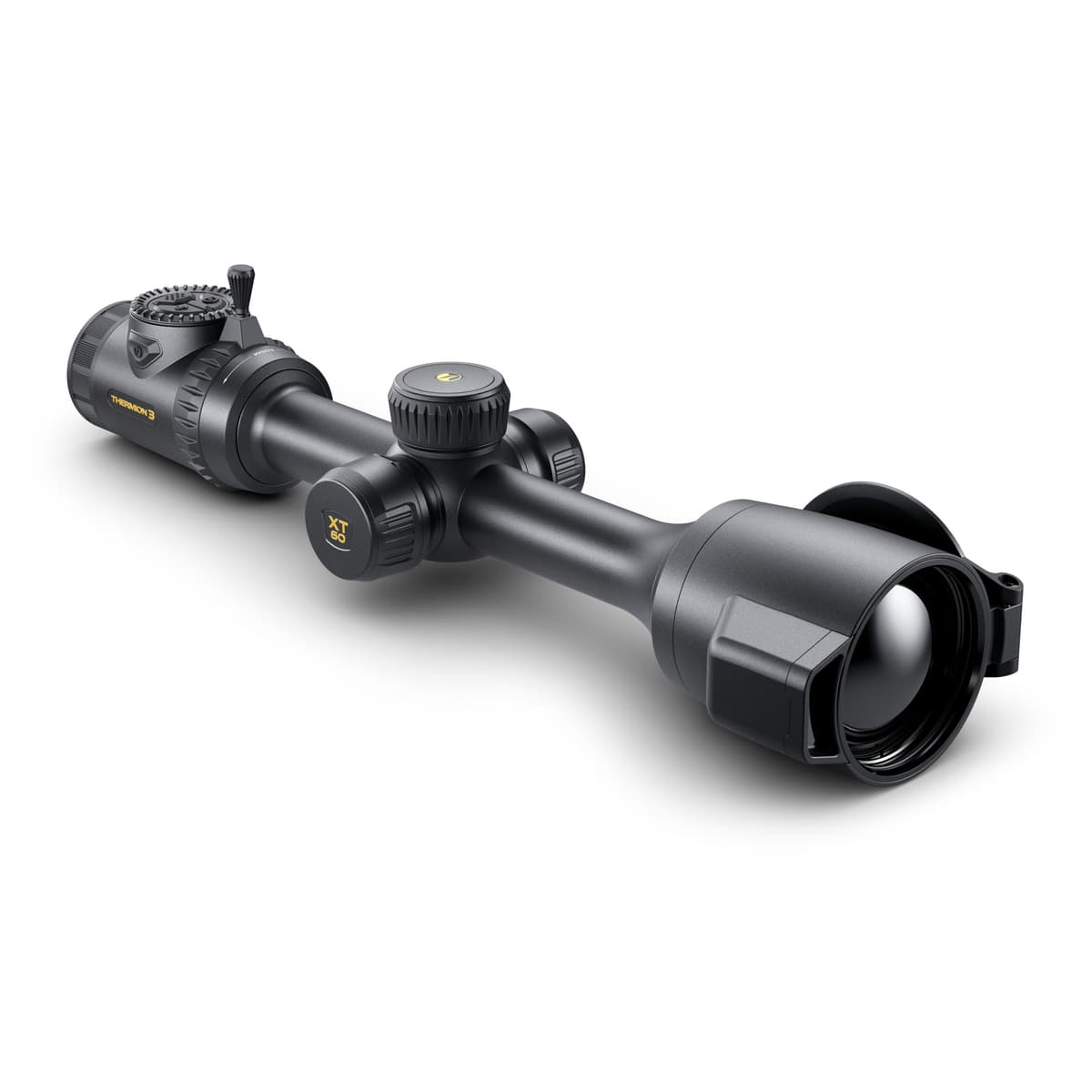
Flagship 1280x1024 thermal riflescope with a 60mm lens, 1200 m rangefinder, and 30mm tube mounting
- +1280x1024 sensor is the most detailed Thermion for identification at range
- +14.6-degree view at 2x is twice as wide as the XR60 for scanning
- +Rangefinder and ballistic calculator remove the separate rangefinder
- −Up to 8.5 hr runtime is the shortest in the Thermion 3 and Trail 3 lineups
- −1.3 kg is heavy on a light hunting rifle
- −Sold without a mount, so rings are an added cost
- Sensor
- 1280x102412 um, <20 mK, 50 Hz
- Field of view
- 14.6deg25.7 m at 100 m
- LRF
- 1200m905 nm, +/-1 m
- Eye relief
- 65mm6000 J recoil rating
What Pulsar Launched With Thermion 3
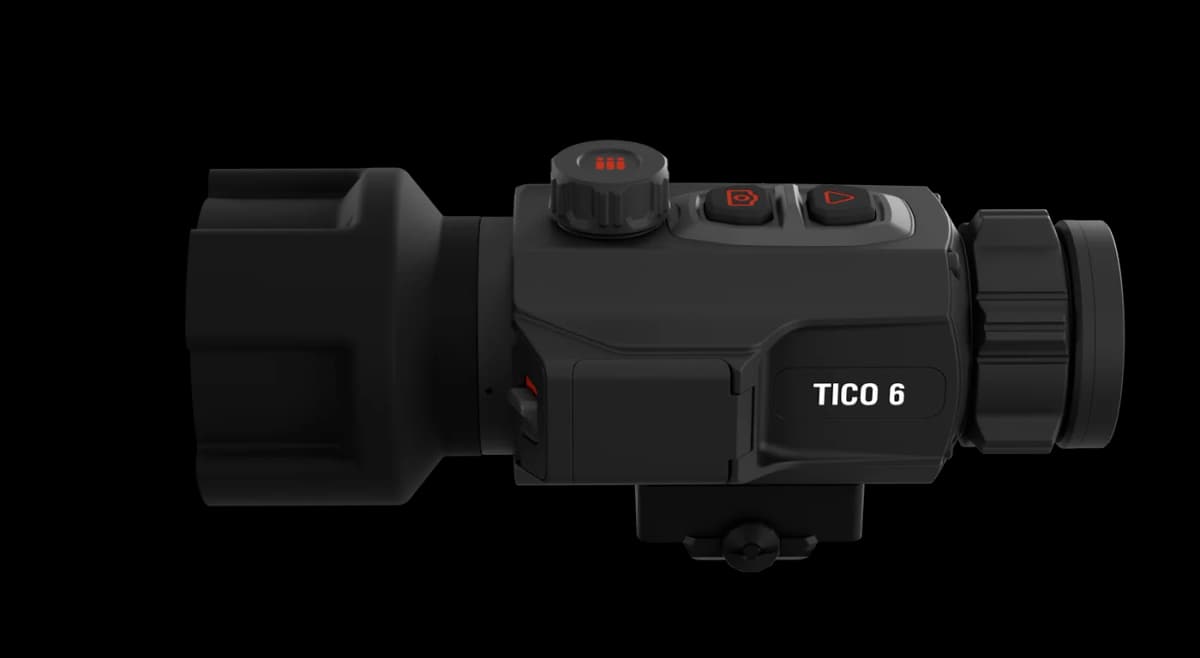
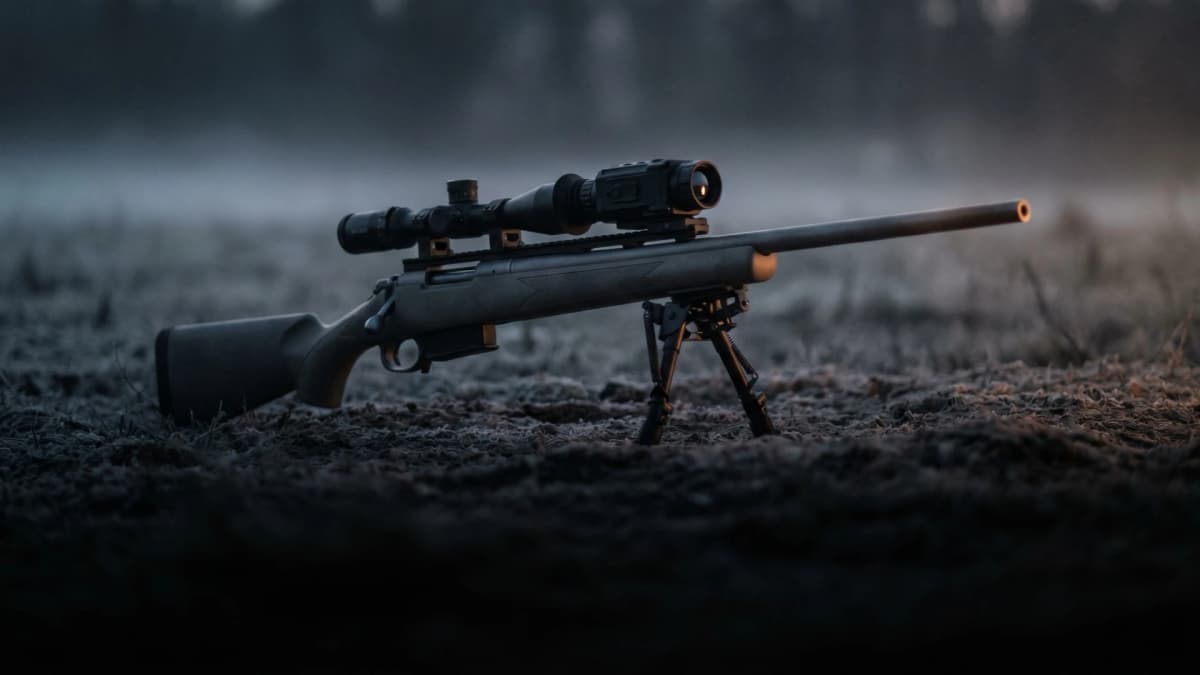
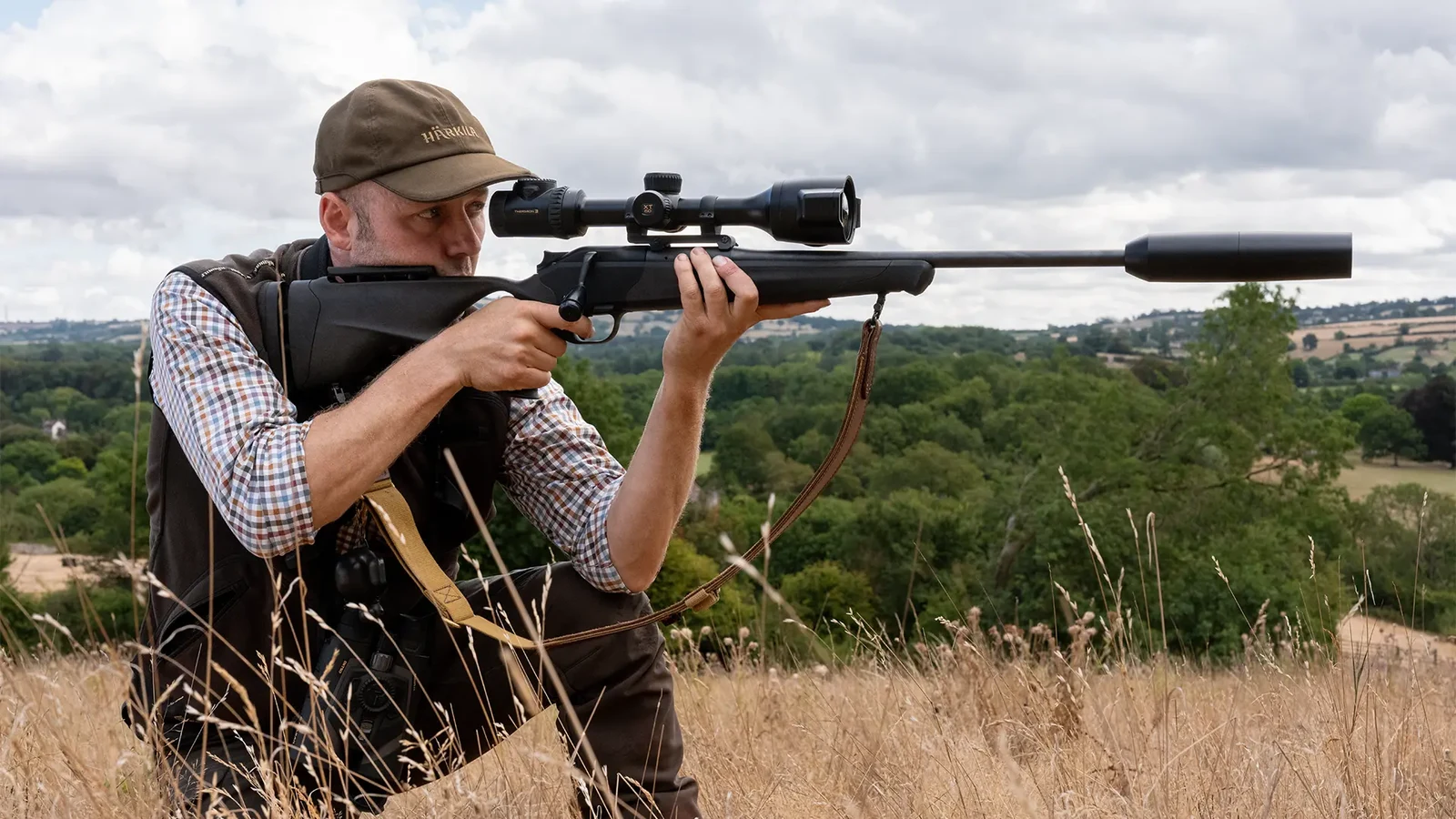
The Pulsar Thermion 3 LRF is the third generation of the thermal riflescope that put a thermal core inside the shape of a traditional 30mm hunting scope. It ships in two models: the XT60, with a 1280x1024 sensor and 2-24x zoom, and the XR60, with a 640x480 sensor and 4-40x zoom. Both carry a 60mm F1.0 lens, a 1200 m laser rangefinder, an integrated ballistic calculator, and a 2560x2560 AMOLED display.
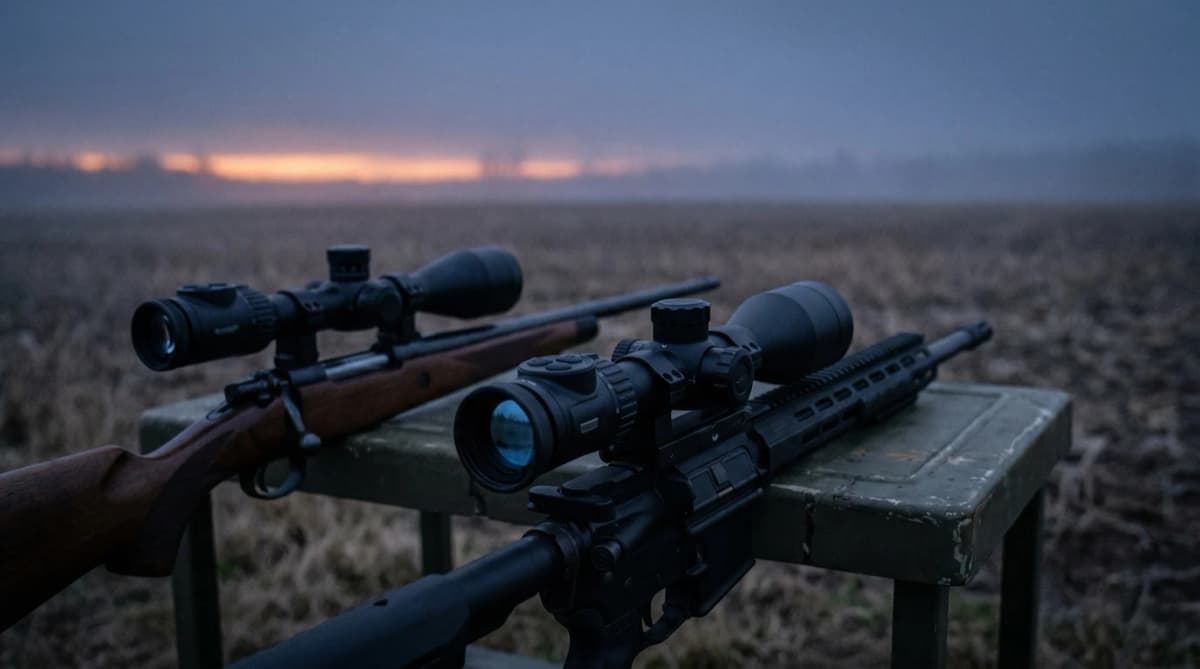
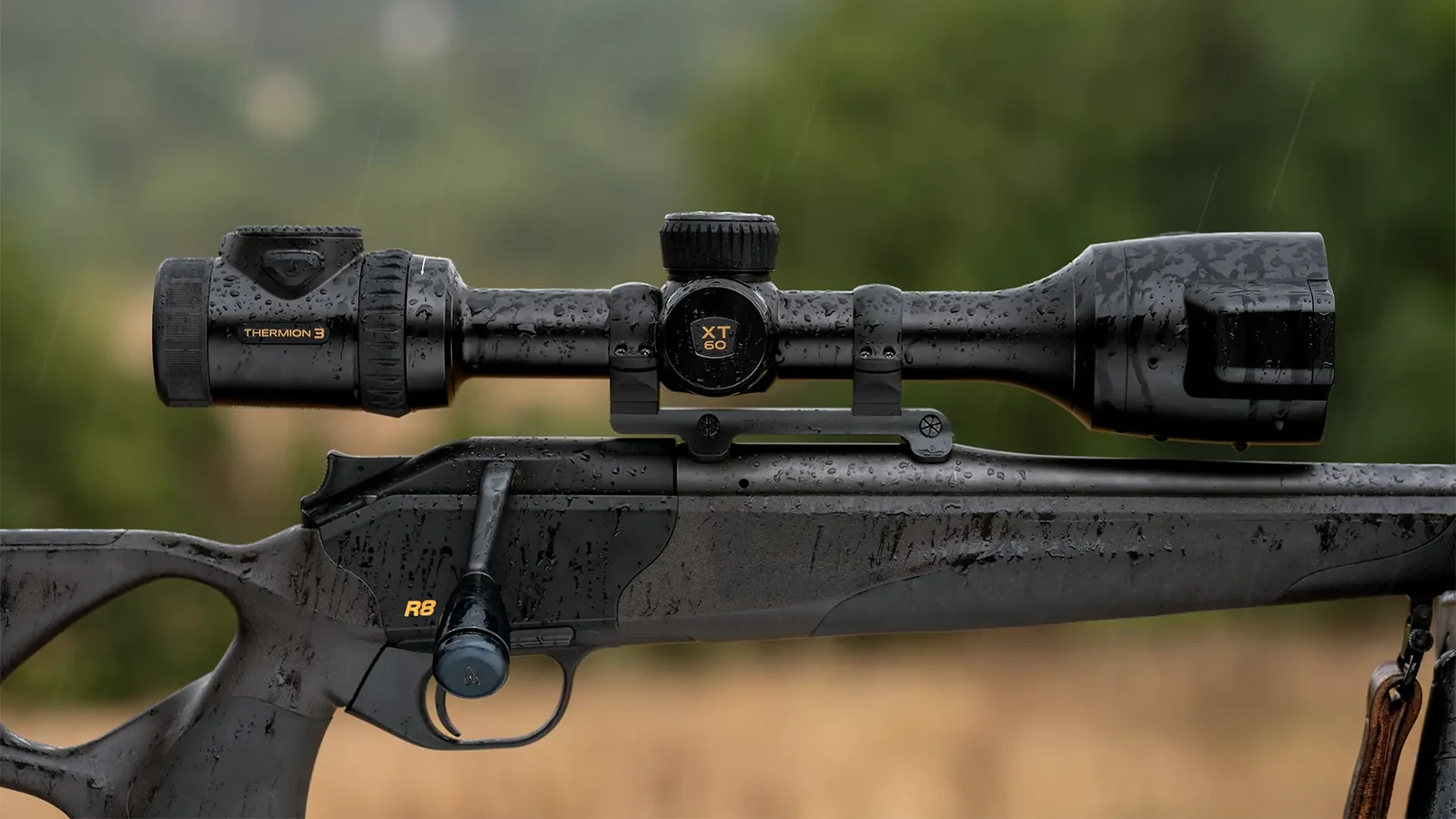
Pulsar's pitch for this generation is refinement rather than a new form. The scope still mounts in ordinary rings and still looks like a day optic on the rifle; what changed is the sensor, the rangefinder's placement, the controls, and the battery system.
Thermion 3 XT60 vs XR60: Field of View or Reach
Pick the Thermion 3 XT60 for detail across a wide view and the XR60 for magnification and runtime. The two sensors put the same angular detail on target: 1,280 pixels across 14.6 degrees and 640 pixels across 7.3 degrees both work out to about 88 pixels per degree. So the XT60 does not show a given animal sharper than the XR60 at the same magnification; it shows twice as much ground around it, which means fewer sweeps to find the animal and more context once you do.
The XR60 trades that width for reach and battery. It starts at 4x and zooms to 40x, so a small or distant heat signature fills more of the screen, and its system NETD is slightly lower (below 18 mK versus below 20 mK). Its lower-resolution core also draws less power: up to 14 hours of runtime against 8.5 for the XT60. A predator caller covering open fields wants the XT60; a hunter who sits a feeder or a fence line all night and shoots at distance gets more from the XR60. Our thermal sensor cutaway shows how digital zoom enlarges sensor pixels rather than adding them, which is why native resolution sets the ceiling.
1200 m Rangefinder and Ballistic Calculator
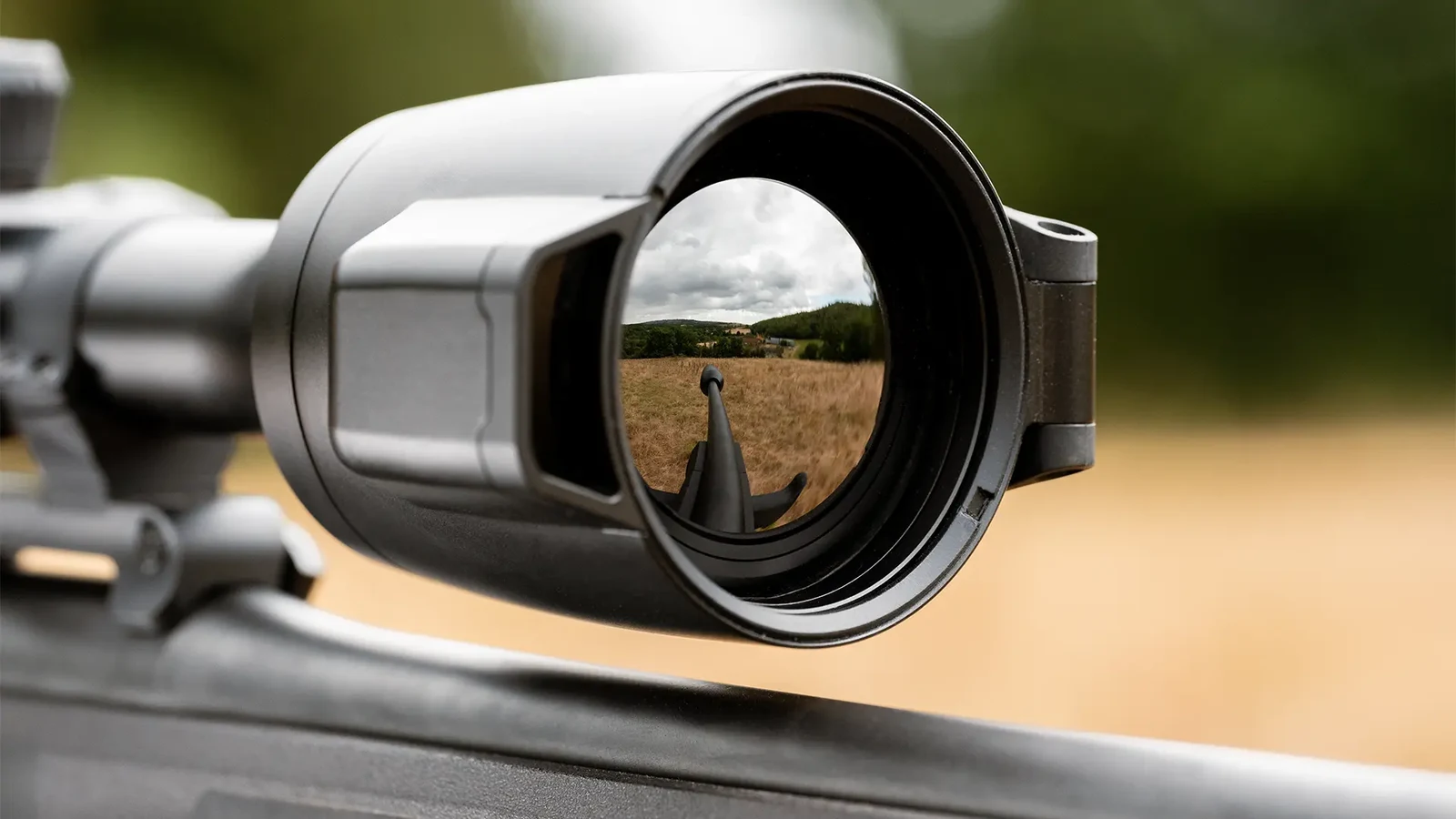
Both Thermion 3 models range to 1200 m at plus or minus 1 m with a 905 nm Class 1 laser, in single, scan, and true horizontal distance (THD) modes. Pulsar moved the rangefinder out of the thermal lens and into the housing, so the objective keeps its full F1.0 light path and there is no rangefinder glass in the lens to crack under recoil.
Range feeds an integrated ballistic calculator that displays drop and drift for the active profile and places a Suggested Point of Aim on the reticle. Profiles load from the Stream Vision Ballistics app, and each range reading also shows the shot angle with arrows for leveling the rifle. Ten electronic reticles scale with magnification like a first focal plane day scope, so holdovers stay true at any zoom. Zeroing works three ways (one-shot, zoom zeroing for finer clicks, and freeze), with ten zeroing profiles that each store up to ten distances.
Stay Updated on Thermal Optics
Get new thermal riflescope, monocular, and clip-on coverage as it ships.
Zoom Ring, Focus Turret, and 65 mm Eye Relief
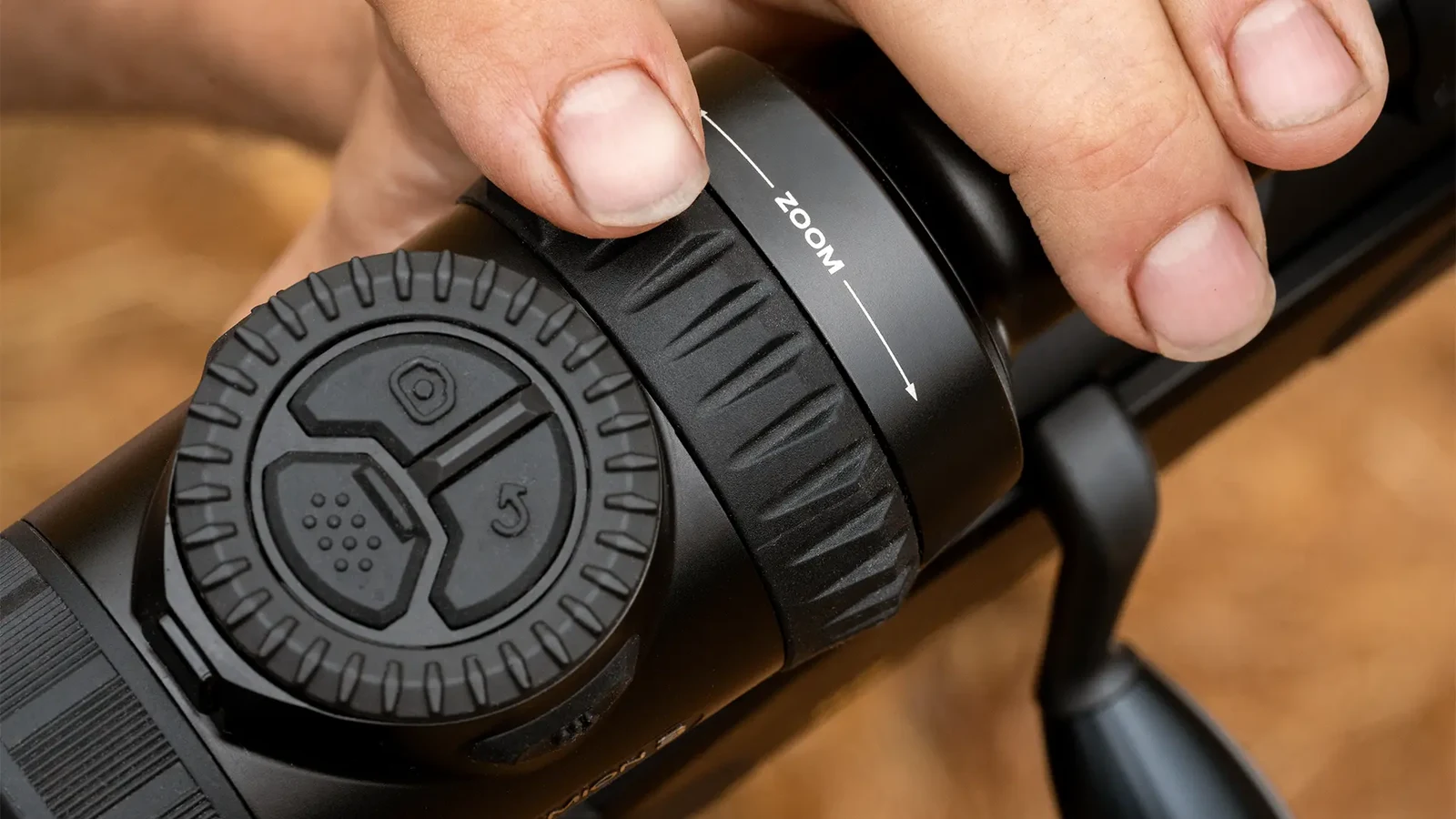
Thermion 3 runs like a day scope. Magnification changes with a classic zoom ring and throw lever instead of a menu, and you can set it to turn clockwise or counterclockwise to match the scope you already use. Focus moved to a turret where a day scope's elevation turret would sit, and it works with either hand. The main functions sit on the eyepiece in a new interface built around rotary navigation and grouped settings, and a proximity sensor turns the display off when you lift your eye.
The 2560x2560 AMOLED sits behind 65 mm (2.6 in) of eye relief, and the housing is rated for 6000 J of recoil on rifled barrels. Image tools carry over from Pulsar's current line: three sensitivity amplification levels (Normal, High, Ultra-High), a smoothing filter, nine color palettes, and two picture-in-picture modes, one rectangular and one round over the point of aim.
Battery, Recording, and Weatherproofing
Each Thermion 3 runs a removable 4900 mAh APS5 pack together with a built-in battery, and both are user-replaceable. Pulsar rates the XT60 at up to 8.5 hours and the XR60 at up to 14 hours; the higher the sensor resolution, the more power it takes to run the core and process the image. USB-C accepts 5 V or 9 V Power Delivery for external power on a long sit.
Recording goes to 128 GB of built-in memory as 1440x1080 MP4 video with sound or JPEG stills, and recoil-activated video starts recording on the shot. Stream Vision 2 handles live view, remote control, file transfer, and firmware over 2.4/5 GHz Wi-Fi and Bluetooth. The metal housing is IP67 rated and operates from -25 to +50 C. Both models weigh 1.3 kg (45.9 oz) with the removable battery.
What Changed From the Thermion 2 LRF
The Thermion 3 LRF XT60 succeeds the Thermion 2 LRF XL60 as Pulsar's flagship 60mm scope, and the gains are resolution, width, and the lens. The sensor moves from 1024x768 to 1280x1024 at the same 12-micron pitch, the field of view widens from 11.7 to 14.6 degrees (25 percent more ground), the objective goes from F1.1 to F1.0, rated detection rises from 2800 m to 2950 m, and the rangefinder reaches 1200 m instead of 800 m. Angular detail holds at about 88 pixels per degree on both, so the XT60 matches the XL60's sharpness across a wider view.
- SensorThermion 3 LRF XT601280x1024 / 12 umThermion 3 LRF XR60640x480 / 12 umThermion 2 LRF XL601024x768 / 12 um
- System NETDThermion 3 LRF XT60<20 mKThermion 3 LRF XR60<18 mKThermion 2 LRF XL60<20 mK
- ObjectiveThermion 3 LRF XT6060 mm F1.0Thermion 3 LRF XR6060 mm F1.0Thermion 2 LRF XL6060 mm F1.1
- MagnificationThermion 3 LRF XT602-24xThermion 3 LRF XR604-40xThermion 2 LRF XL602.5-20x
- Horizontal FOVThermion 3 LRF XT6014.6 deg / 25.7 mThermion 3 LRF XR607.3 deg / 12.8 mThermion 2 LRF XL6011.7 deg / 20.5 m
- Detection rangeThermion 3 LRF XT602950 mThermion 3 LRF XR602950 mThermion 2 LRF XL602800 m
- RangefinderThermion 3 LRF XT601200 mThermion 3 LRF XR601200 mThermion 2 LRF XL60800 m
- RuntimeThermion 3 LRF XT60Up to 8.5 hThermion 3 LRF XR60Up to 14 hThermion 2 LRF XL608 h
| Spec | Thermion 3 LRF XT60 | Thermion 3 LRF XR60 | Thermion 2 LRF XL60 |
|---|---|---|---|
| Sensor | 1280x1024 / 12 um | 640x480 / 12 um | 1024x768 / 12 um |
| System NETD | <20 mK | <18 mK | <20 mK |
| Objective | 60 mm F1.0 | 60 mm F1.0 | 60 mm F1.1 |
| Magnification | 2-24x | 4-40x | 2.5-20x |
| Horizontal FOV | 14.6 deg / 25.7 m | 7.3 deg / 12.8 m | 11.7 deg / 20.5 m |
| Detection range | 2950 m | 2950 m | 2800 m |
| Rangefinder | 1200 m | 1200 m | 800 m |
| Runtime | Up to 8.5 h | Up to 14 h | 8 h |
Pulsar's 50mm Thermion 2 XG50 is the lower-cost 640 option without a rangefinder; it ranks first in our best thermal scope guide on value, with the Thermion 3 XT60 ranked second as the premium HD pick.
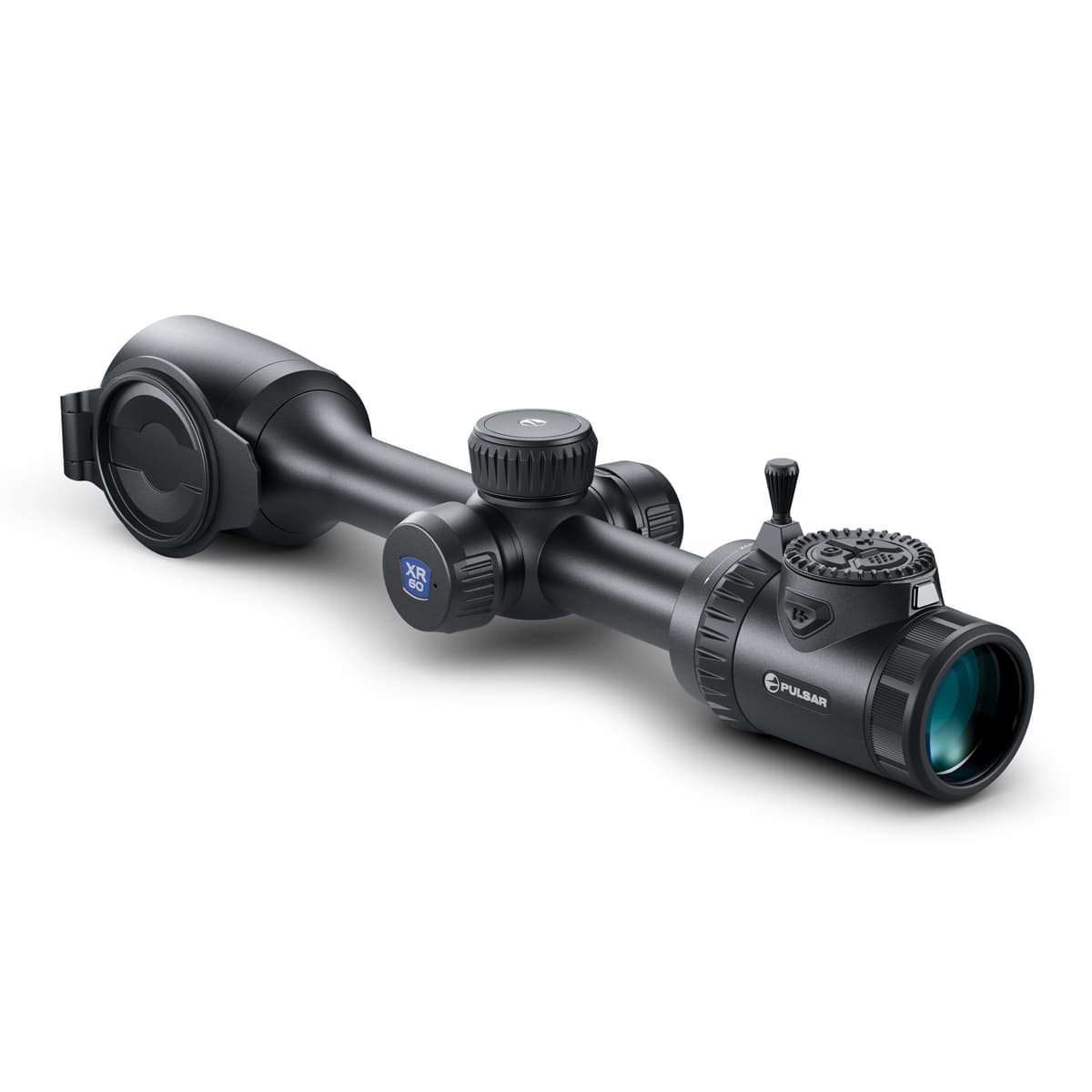
Pulsar Thermion 3 LRF XR60
Long sits and distance shooting where magnification and runtime matter more than field of view
Long-reach 640 thermal riflescope with 4-40x zoom, a 1200 m rangefinder, and up to 14 hours of runtime
- +Up to 14 hr runtime covers the longest nights without a swap
- +4-40x reach puts more magnification on small, distant targets
- +Lower system NETD (<18 mK) than the XT60
- −640x480 sensor has a quarter of the XT60's pixels
- −7.3-degree view at 4x is narrow for scanning open ground
- −Sold without a mount, so rings are an added cost
Shop Current Pulsar Thermal
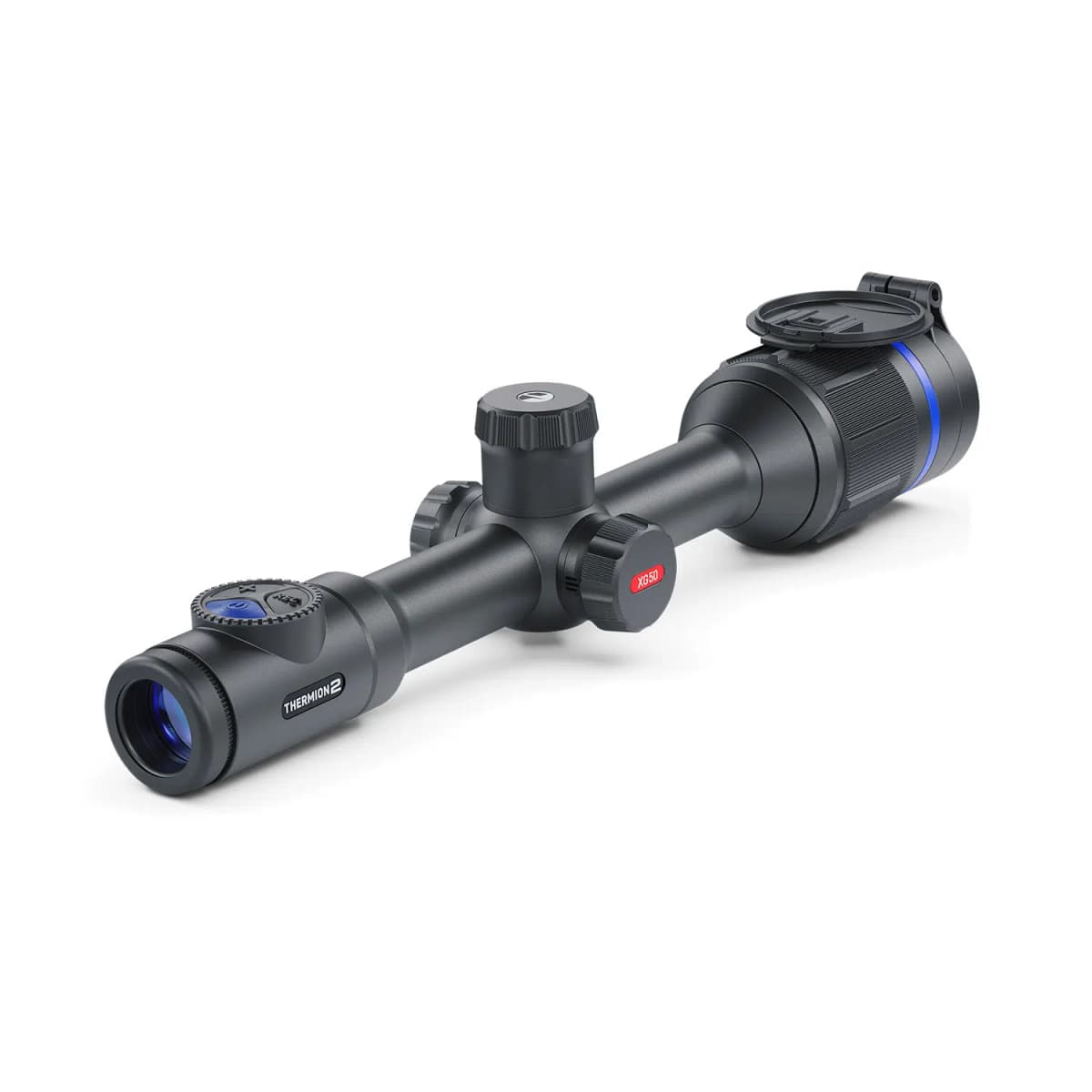
Pulsar Thermion 2 XG50
- 640x480 sensor (12um, 50Hz, <40mK)
- 50mm f/1.0 lens, 2500 yd detection
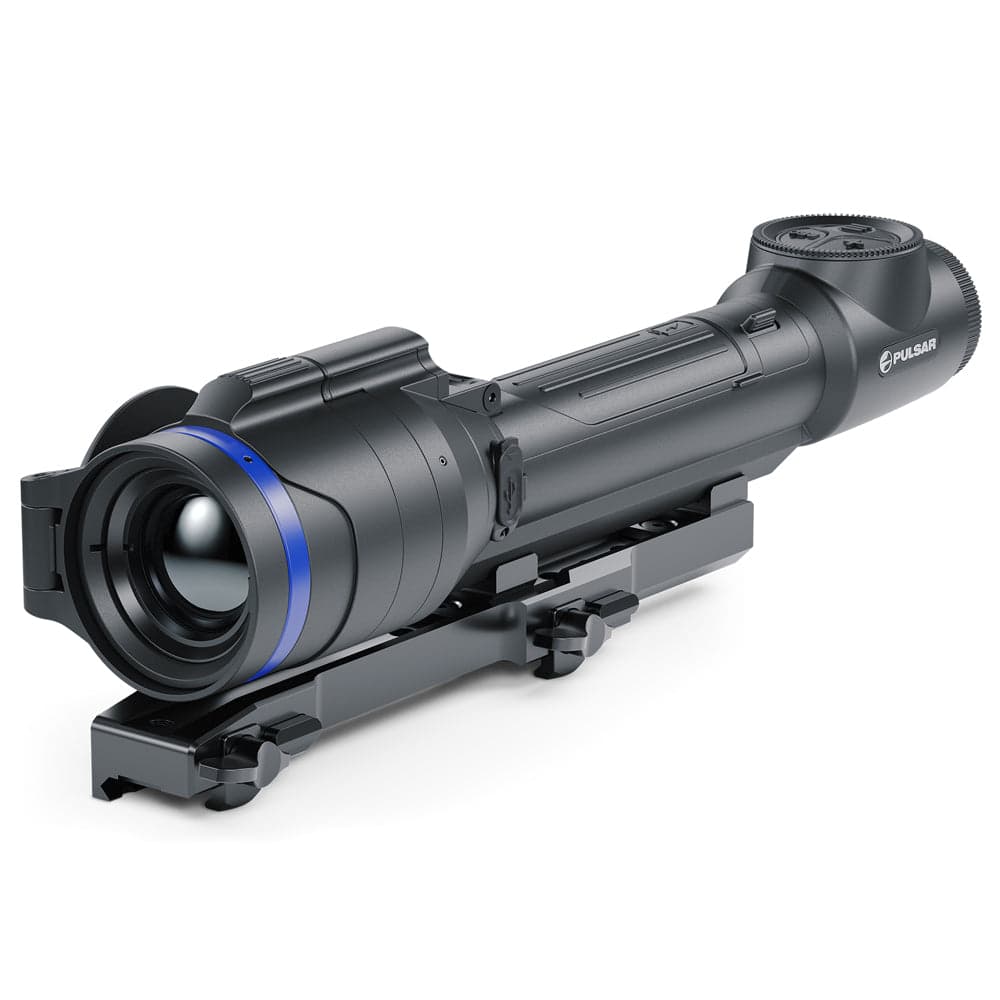
Pulsar Talion XQ35 Pro
- 384x288 sensor (17um, 50Hz, sNETD <15mK)
- 35mm f/1.0 lens, 1475 yd detection
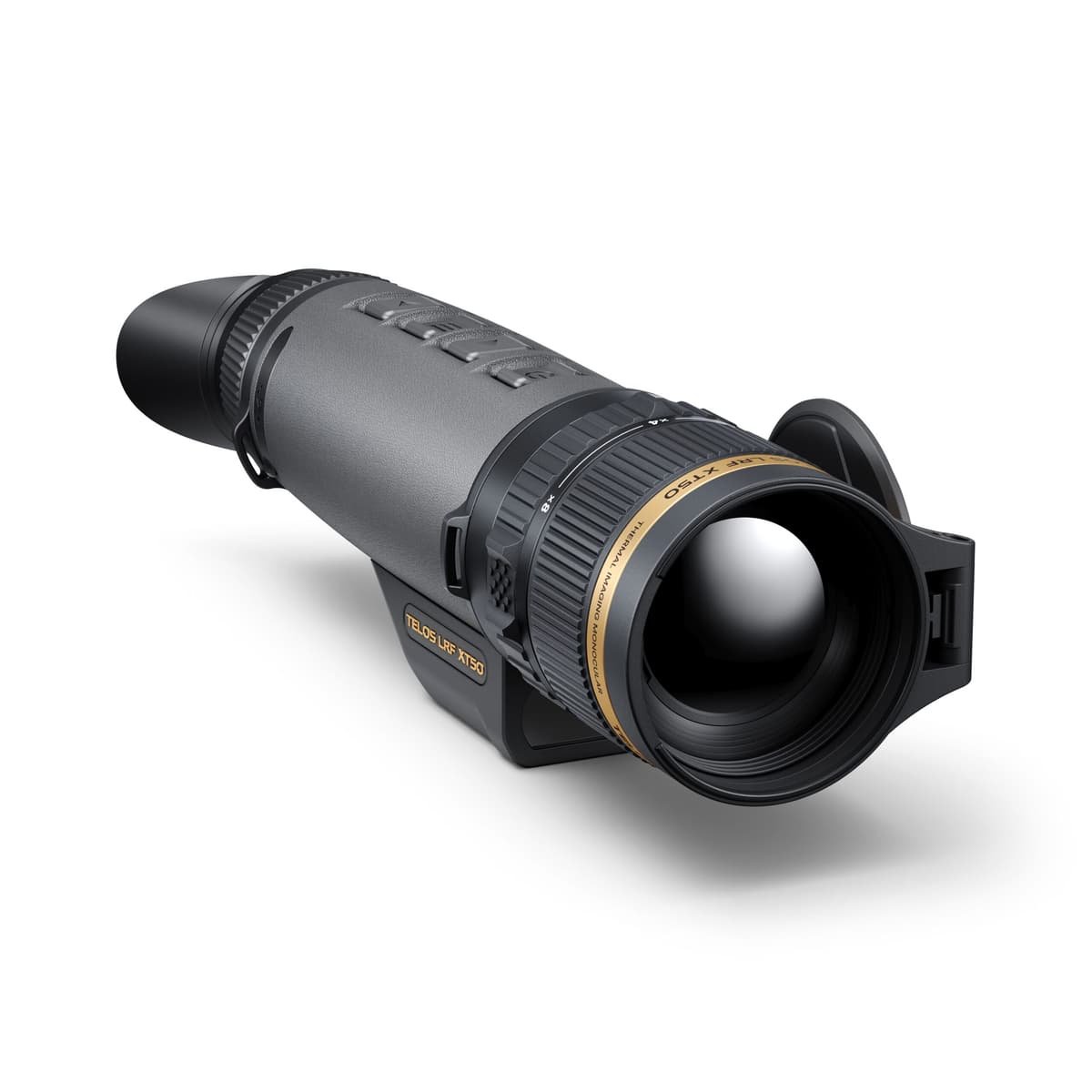
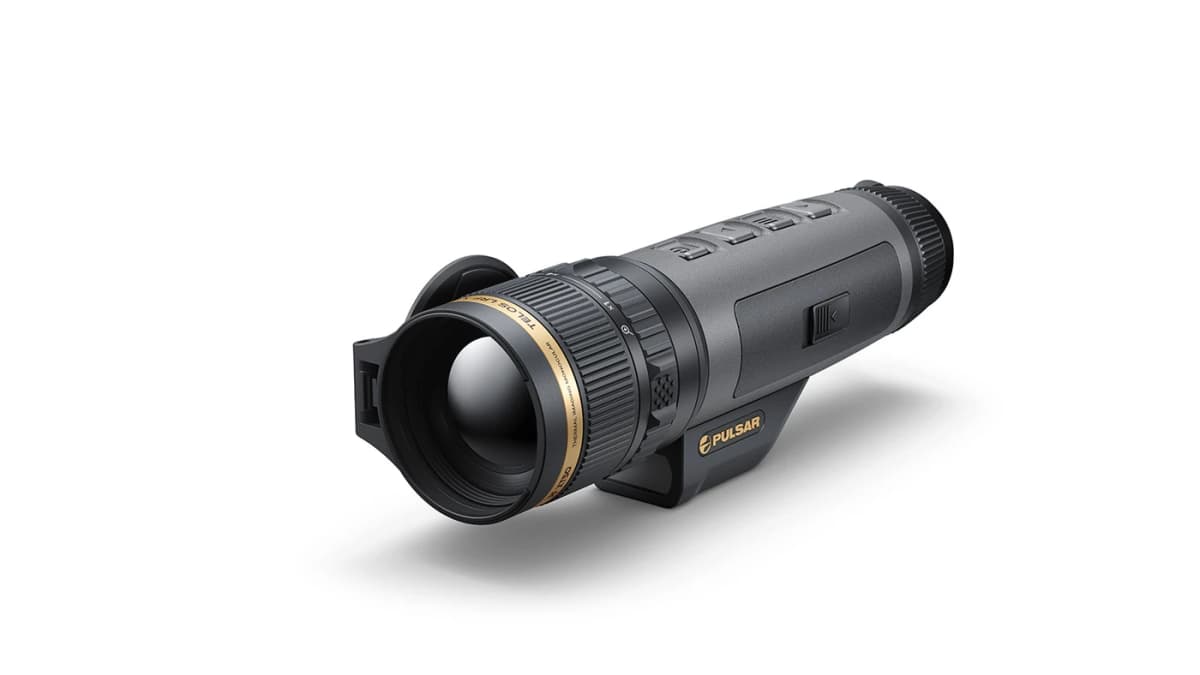
Pulsar TELOS LRF XT50
- 1280x1024 European-made sensor, 12-micron pitch, system NETD <20 mK
- 2-16x digital magnification with Zoom Boost to 24x
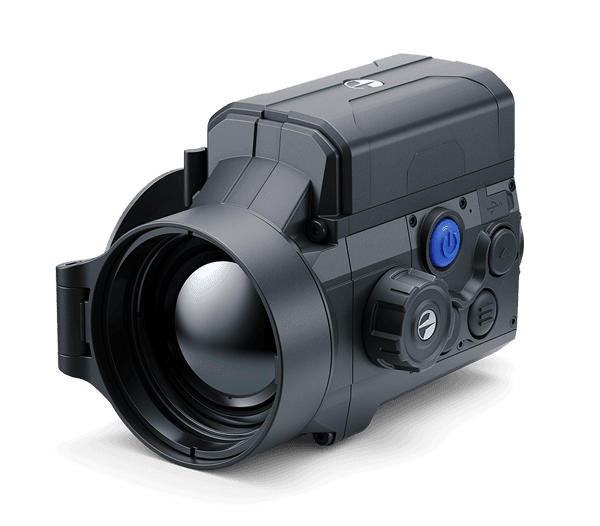
Pulsar Krypton FXG50
- 640x480 sensor (12um, 50Hz, <40mK)
- 50mm f/1.2 lens, 2300 m detection
Affiliate links (?)
Who the Thermion 3 Is For
The Thermion 3 is for hunters who want premium thermal on a rifle that still handles like it has a day scope: 30mm rings, a zoom ring, eye relief that suits magnum recoil. The XT60 fits hog and predator hunters who scan open ground and need to identify before they shoot. The XR60 fits long sits and longer shots, where 40x reach and a 14-hour battery count for more than width.
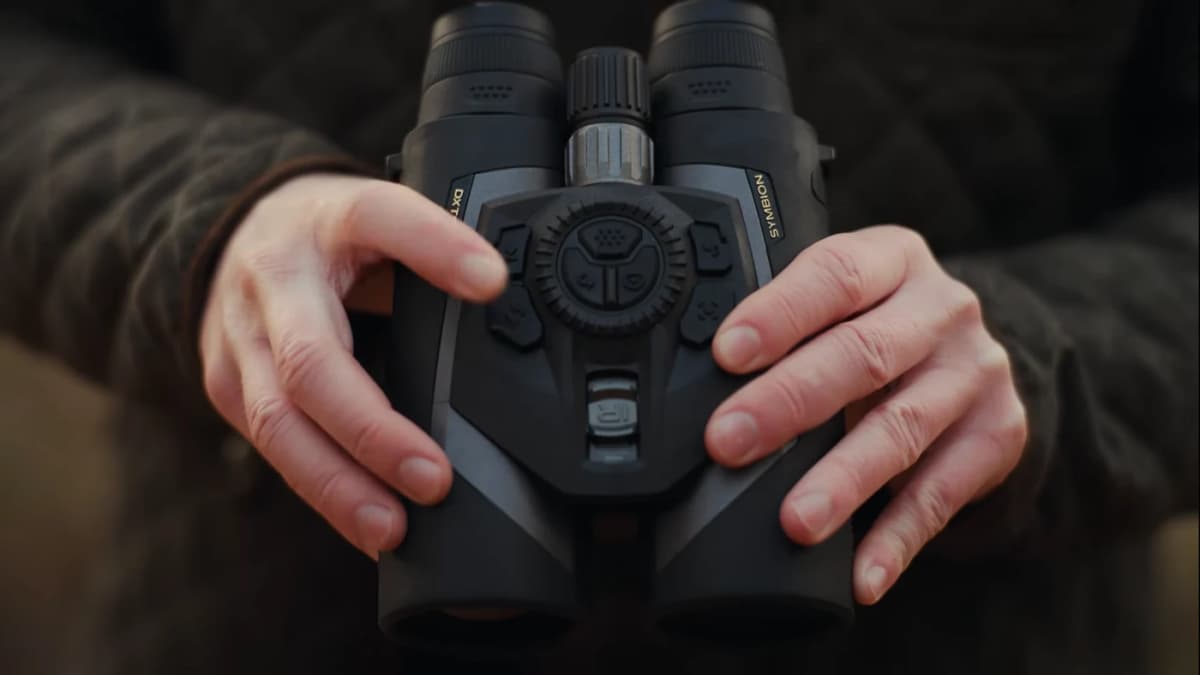
It also changes what you carry. With a 1200 m rangefinder and ballistics in the scope, a separate rangefinder drops out, and a handheld scanner like the Pulsar TELOS LRF XT50 or the thermal-plus-color Pulsar Symbion LRF binocular becomes optional rather than required. If you would rather keep your day optic and add thermal in front of it, the clip-on versus dedicated scope guide lays out that trade, and the best hog hunting rifle guide covers the hosts that carry a thermal scope at night. Night hunting rules vary by state, species, and season, so check local regulations before you hunt with thermal after dark.
Thermion 3 Specs, Price, and Availability
The Pulsar Thermion 3 LRF XT60 (SKU PL76590) lists at $6,499.97 and the Thermion 3 LRF XR60 (SKU PL76589) at $4,499.97 from US retailers. Both include the 1200 m rangefinder and are sold without a mount; they take standard 30 mm rings.
Pulsar Thermion 3 LRF XT60 (SKU 76590)
| Sensor | 1280x1024 / 12 um / system NETD <20 mK / 50 Hz |
| Objective | 60 mm / F1.0 |
| Magnification | 2-24x |
| Field of view | 14.6 deg / 25.7 m at 100 m |
| Click value at 100 m | 20 mm at 2x to 1.7 mm at 24x |
| Display | AMOLED 2560x2560 |
| Eye relief | 65 mm |
| Detection range | 2950 m |
| Laser rangefinder | 1200 m, 905 nm, +/-1 m |
| Battery | APS5 4900 mAh removable + built-in, up to 8.5 h |
| Recording | 128 GB, 1440x1080 MP4 + JPEG |
| Mounting | 30 mm tube, standard rings |
| Recoil rating | 6000 J (rifled) |
| Sealing | IP67 |
| Operating temperature | -25 to +50 C |
| Weight | 1.3 kg (45.9 oz) |
Pulsar Thermion 3 LRF XR60 (SKU 76589)
| Sensor | 640x480 / 12 um / system NETD <18 mK / 50 Hz |
| Objective | 60 mm / F1.0 |
| Magnification | 4-40x |
| Field of view | 7.3 deg / 12.8 m at 100 m |
| Click value at 100 m | 10 mm at 4x to 1 mm at 40x |
| Battery | APS5 4900 mAh removable + built-in, up to 14 h |
| Weight | 1.3 kg (45.9 oz) |