Key Takeaways
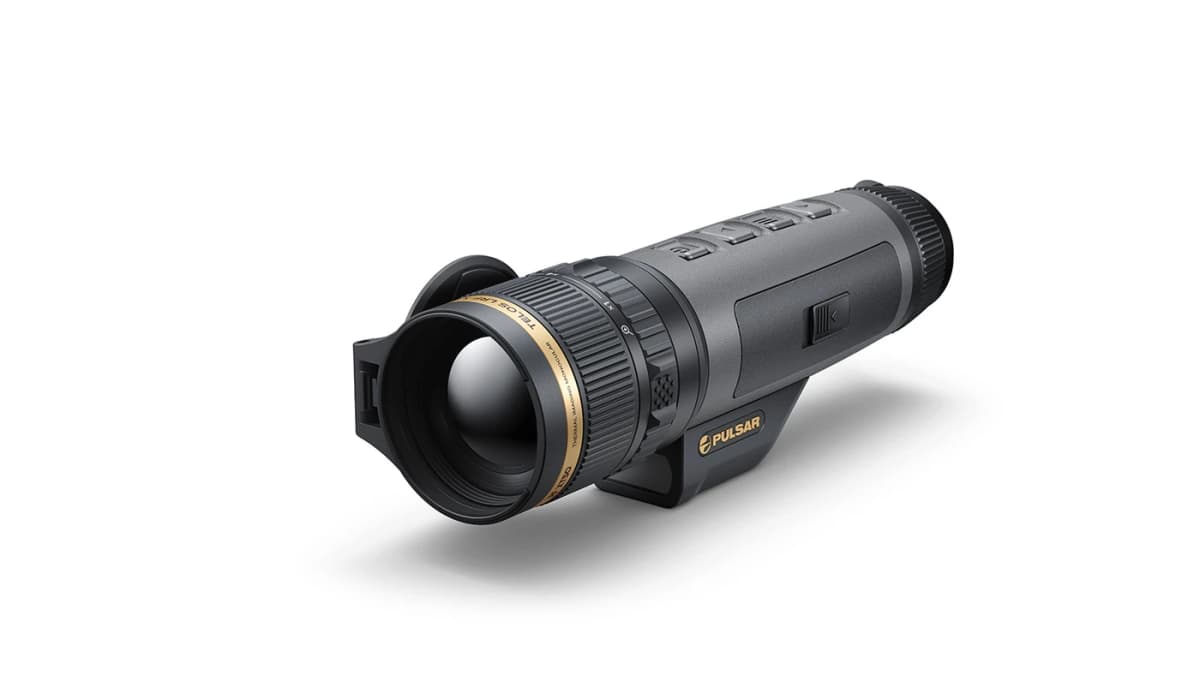
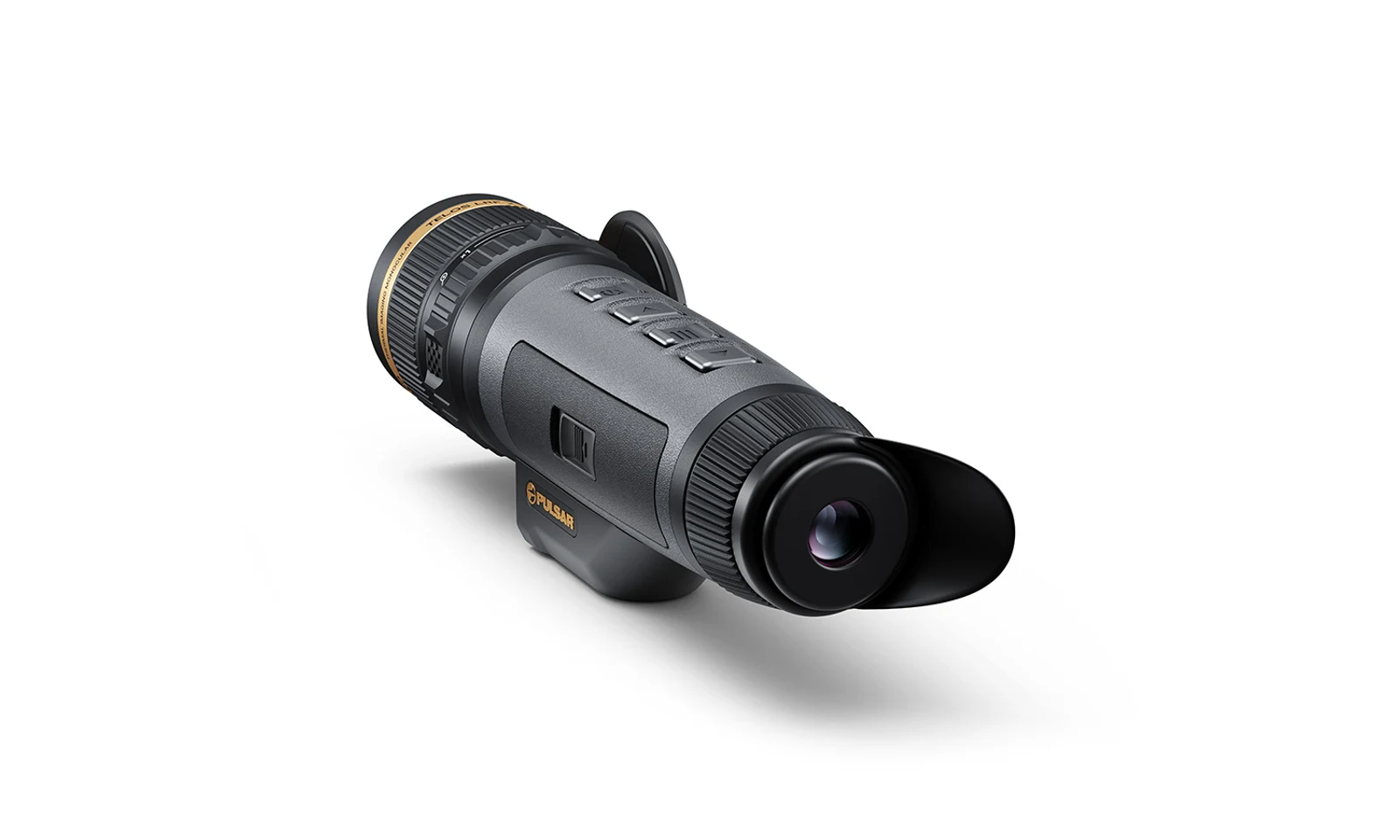
- →Handheld scanner: The Pulsar TELOS LRF XT50 (SKU 77524) is a thermal monocular you hold in the hand. It is not a riflescope and not a clip-on.
- →1280x1024 sensor: Pulsar rates a 12 micron core, sensitivity below 20 mK, and 50 Hz, behind a 50 mm F1.0 objective with a 17.5-degree view (30.7 m at 100 m).
- →Built-in LRF: The 905 nm laser rangefinder is rated to 1200 m (about 1,312 yards) in single-shot or scan mode, with Stream Vision Ballistics on the same body.
- →2300 m detection: Pulsar's published detection figure is a heat-signal distance, not a species identification distance. Zoom is digital, 2x to 16x, with Zoom Boost to 24x.
- →October 2026 snapshot: Thermal Bros listed SKU PL77524 in the US, and Pulsar UK posted a regional list the same month. The LPS 7i pack is rated about 8 hours and swaps out.
- Sensor
- 1280x102412 um, <20 mK, 50 Hz
- Field of view
- 17.5deg30.7 m at 100 m
- LRF
- 1200m905 nm laser
- Detection
- 2300mManufacturer heat-signal rating
A Thermal Monocular, Not a Riflescope
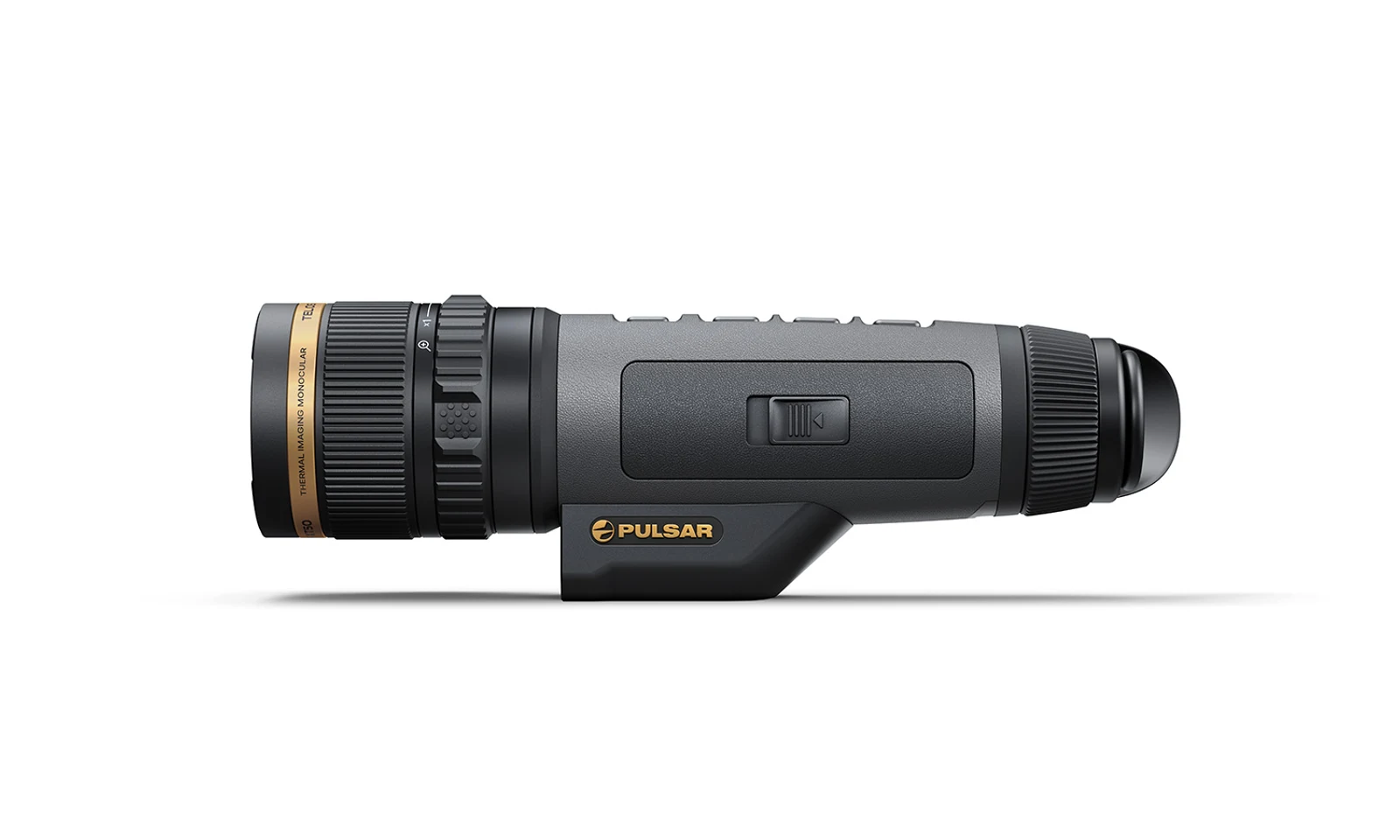
Buy the Pulsar TELOS LRF XT50 when you want a handheld thermal scanner with a 1280-class sensor and a laser rangefinder in one body. Put it to your eye, sweep a field or treeline, range what you see, and keep the rifle pointed in a safe direction until you are ready to aim. SKU 77524 is that tool.
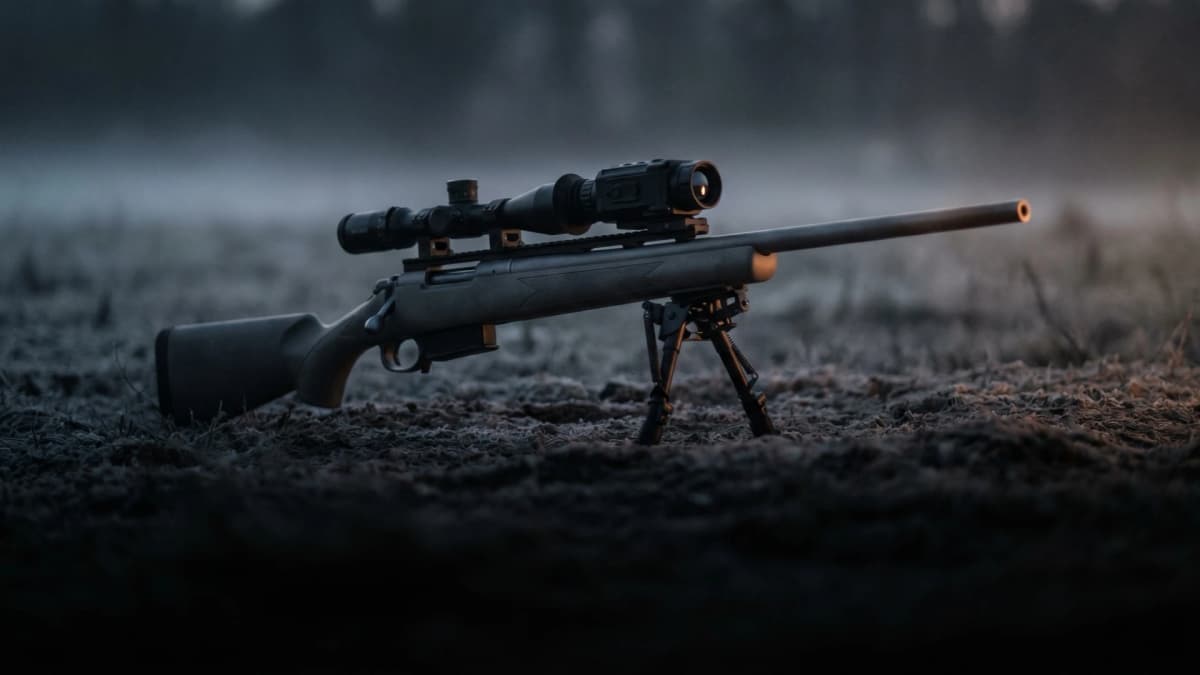
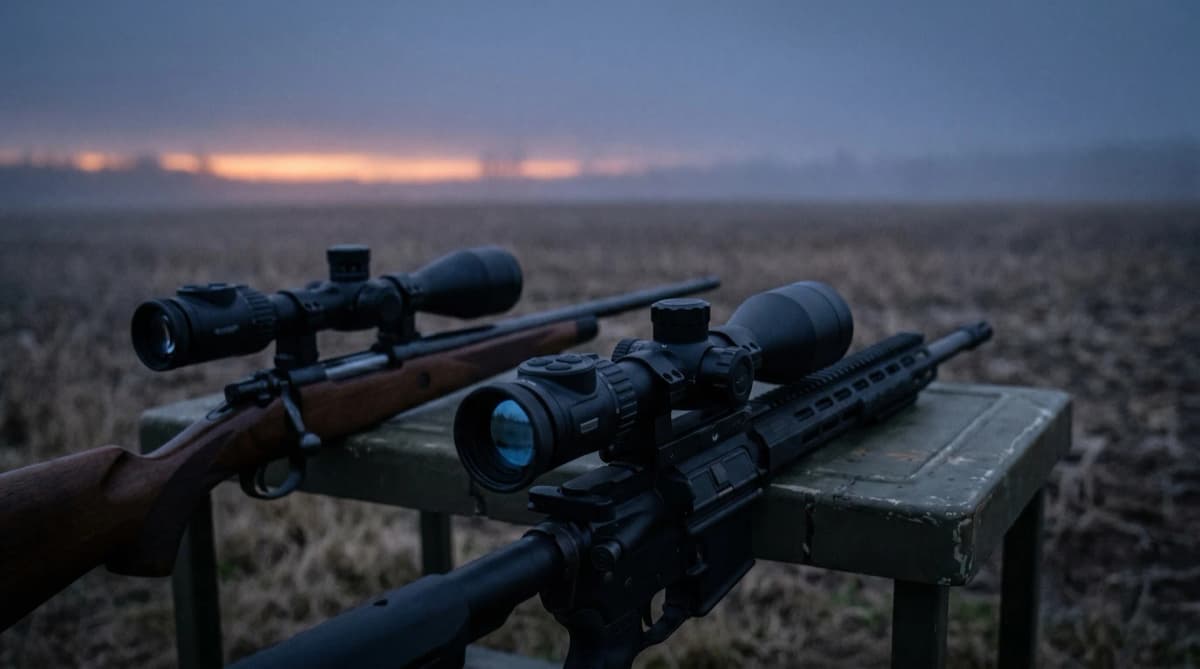
It is not a thermal riflescope. A riflescope carries a reticle and a zero and replaces the day optic; our thermal scope guide is the buying page for that job. It is not a clip-on either. A clip-on sits in front of a day scope so one rifle works day and night; that split lives in the clip-on versus scope guide. The XT50 stays in the hand.
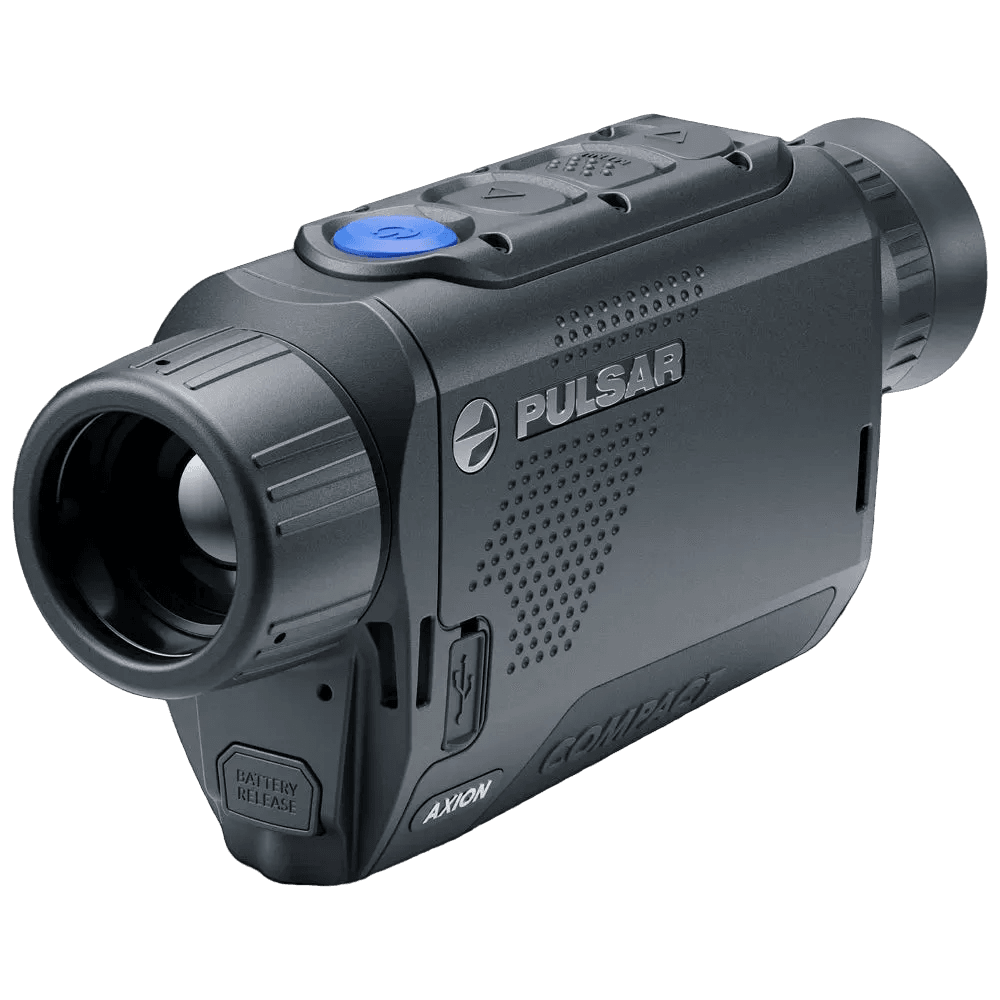
Pulsar builds the XT50 as the top of the upgradeable Telos monocular line: HD thermal image, a wide scan, integrated ranging, and a body meant for long sessions. The 1280x1024 core is the same resolution class Pulsar already used in the Merger LRF XT50 binoculars, moved into a single-eye scanner. If you already own a lighter 640-class Pulsar handheld such as the Axion XG30 Compact, this is the step up in pixels, view, and ranging, not a second aiming optic.
1280 Sensor and 17.5-Degree View
Pulsar rates the TELOS LRF XT50 with a 1280x1024 sensor on a 12 micron pitch, thermal sensitivity below 20 mK, and a 50 Hz refresh. That pixel count is the reason this monocular exists at the top of the Telos line: more native samples across the scene before you zoom.
The 17.5-degree field of view (30.7 m at 100 m) is the other half of that job. A wide view lets you cover a pasture, a cut, or a hillside in fewer sweeps. A high-magnification riflescope does the opposite: it shows a smaller slice in more detail. For handheld scanning you want the wide slice first, then you zoom on a heat source you already found. Compare that view against other handhelds in our thermal monocular buying guide; several 640-class scanners run a narrower horizontal view in exchange for less weight.
Magnification is digital: 2x to 16x, with Zoom Boost extending that to 24x. The zoom ring holds the last setting after shutdown. Digital zoom enlarges the display; it does not add sensor pixels. Picture-in-Picture keeps a magnified inset while the rest of the 17.5-degree view stays on screen. Electronic image stabilization is specified for higher magnification, where handshake shows up fastest.
The 50 mm F1.0 objective and 1920x1080 AMOLED display are the rest of the imaging stack. Pulsar lists three amplification levels (Normal, High, Ultra), nine palettes, and a smoothing filter for low-contrast scenes. Those are processing tools, not a substitute for the 1280x1024 core.
1200 m Laser Rangefinder
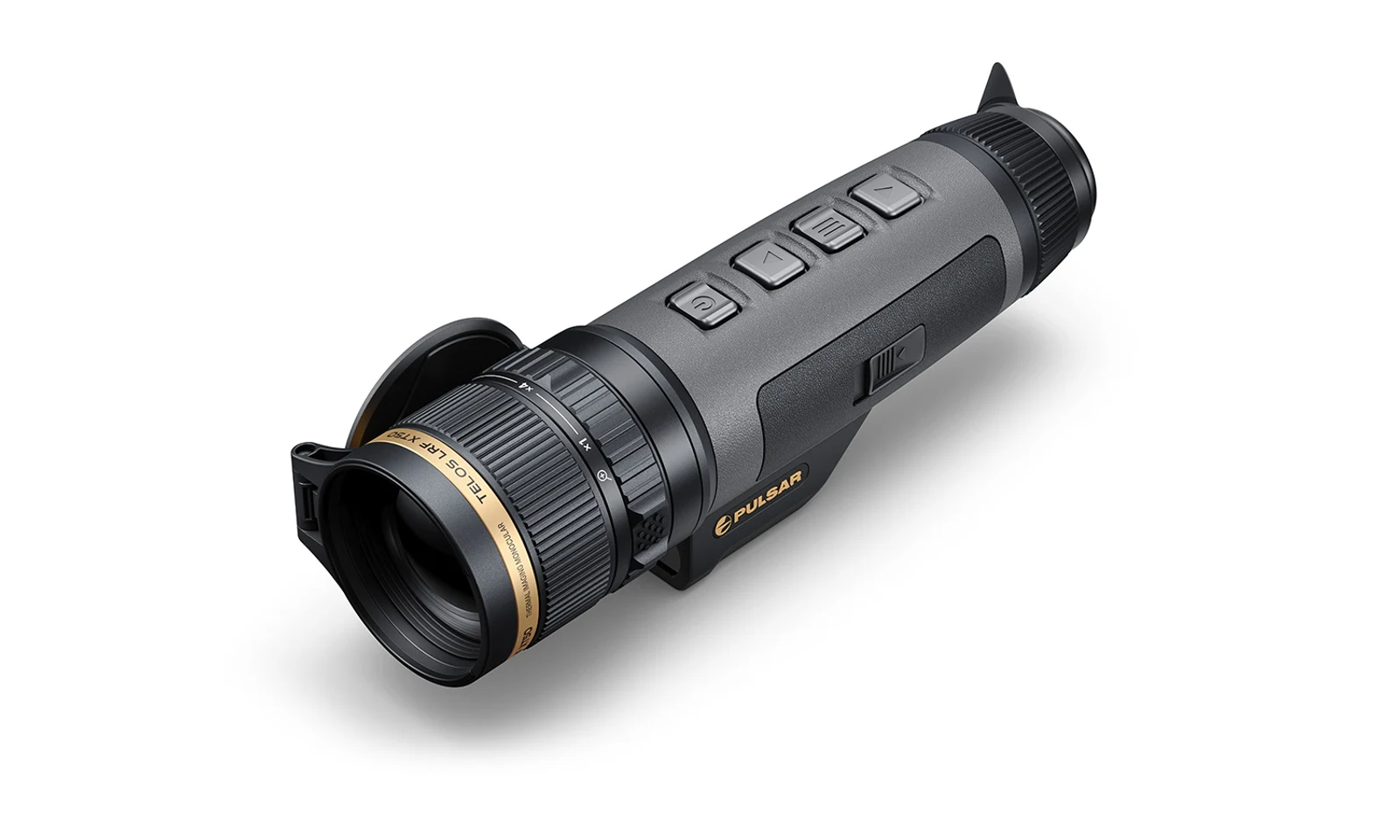
The built-in 905 nm laser rangefinder is rated to 1200 m (about 1,312 yards) in single-shot or scanning mode. That is the reason to pick the LRF XT50 over a Telos without a rangefinder: distance lives on the same device you are already using to scan.
Stream Vision Ballistics can hold personalized profiles and show corrections when you take a range. That does not turn the monocular into a riflescope. The correction is a number on the handheld; the shot still goes through whatever optic is on the rifle. Hunters who range with a separate 905 nm unit can leave that extra device in the pack.
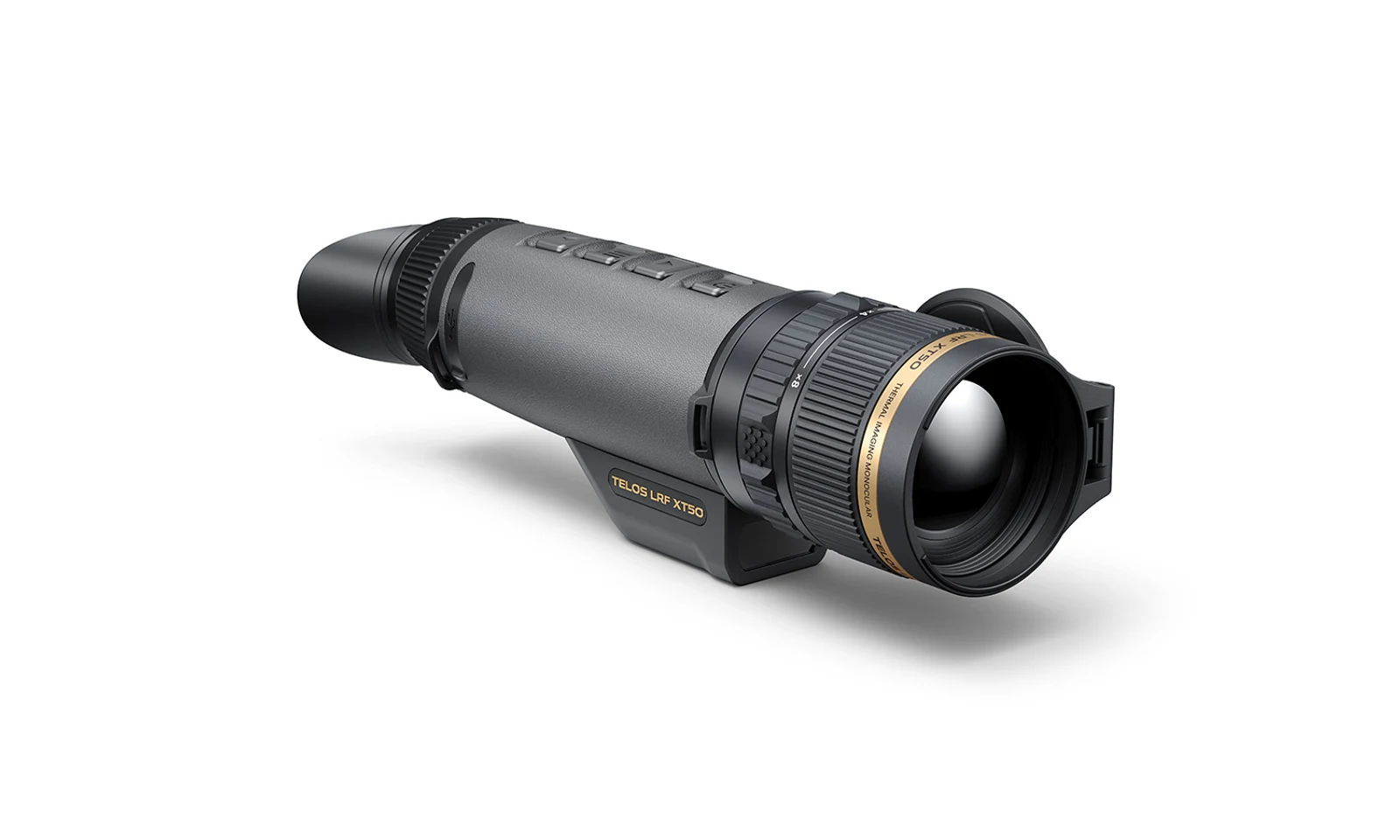
Pulsar moved the rangefinder into a low-profile housing under the body, with a 1/4-inch tripod thread built into that same block. You do not add a separate tripod adapter to put the XT50 on a stick for a long sit.
Upgradeable Telos Platform and Field Kit
The XT50 is a Telos, which means Pulsar designed the line so the body can take later sensors, lenses, or rangefinder hardware instead of forcing a full replacement. Pulsar describes this SKU as the highest current option on the Telos Upgrade Programme. If you already own a Telos, ask Pulsar what an XT50-class upgrade costs on your serial number before you buy a second unused housing.
Power is the LPS 7i pack: replaceable, USB-C charge, rated about 8 hours. A spare pack is the runtime plan for an all-night sit. The rubber-coated housing is IPX7 (rain, snow, and temporary submersion in 1 m of water for 30 minutes). Pulsar lists 0.73 kg (1.61 lb) with the battery, 243 x 72 x 77 mm, operating temperatures from -25 to +40 C, and haptic button feedback for gloved use. Eye relief is 13 mm, with diopter adjustment of +4 / -5.
Onboard storage is 128 GB for MP4 video with sound and JPEG stills. Stream Vision 2 handles live view, remote control, file transfer, and firmware on 2.4/5 GHz Wi-Fi, plus Bluetooth and NFC. USB-C also supports UVC camera output for a wired, lower-latency feed. Browse current Pulsar thermal in the catalog.
Pulsar TELOS LRF XT50 (SKU 77524)
| Sensor | 1280x1024 / 12 um / <20 mK / 50 Hz |
| Objective | 50 mm / F1.0 |
| Field of view | 17.5 deg / 30.7 m at 100 m |
| Magnification | 2-16x digital; Zoom Boost to 24x |
| Display | AMOLED 1920x1080 |
| Detection (mfr.) | 2300 m |
| Laser rangefinder | 1200 m, 905 nm |
| Battery | LPS 7i, ~8 h, USB-C, replaceable |
| Storage | 128 GB |
| Sealing | IPX7 |
| Weight with battery | 0.73 kg (1.61 lb) |
| Dimensions | 243 x 72 x 77 mm |
Shop Current Pulsar Thermal
Pulsar Axion XG30 Compact
- 640x480, 12-micron sensor at 50 Hz
- 2x base magnification and 30mm F/1.2 lens
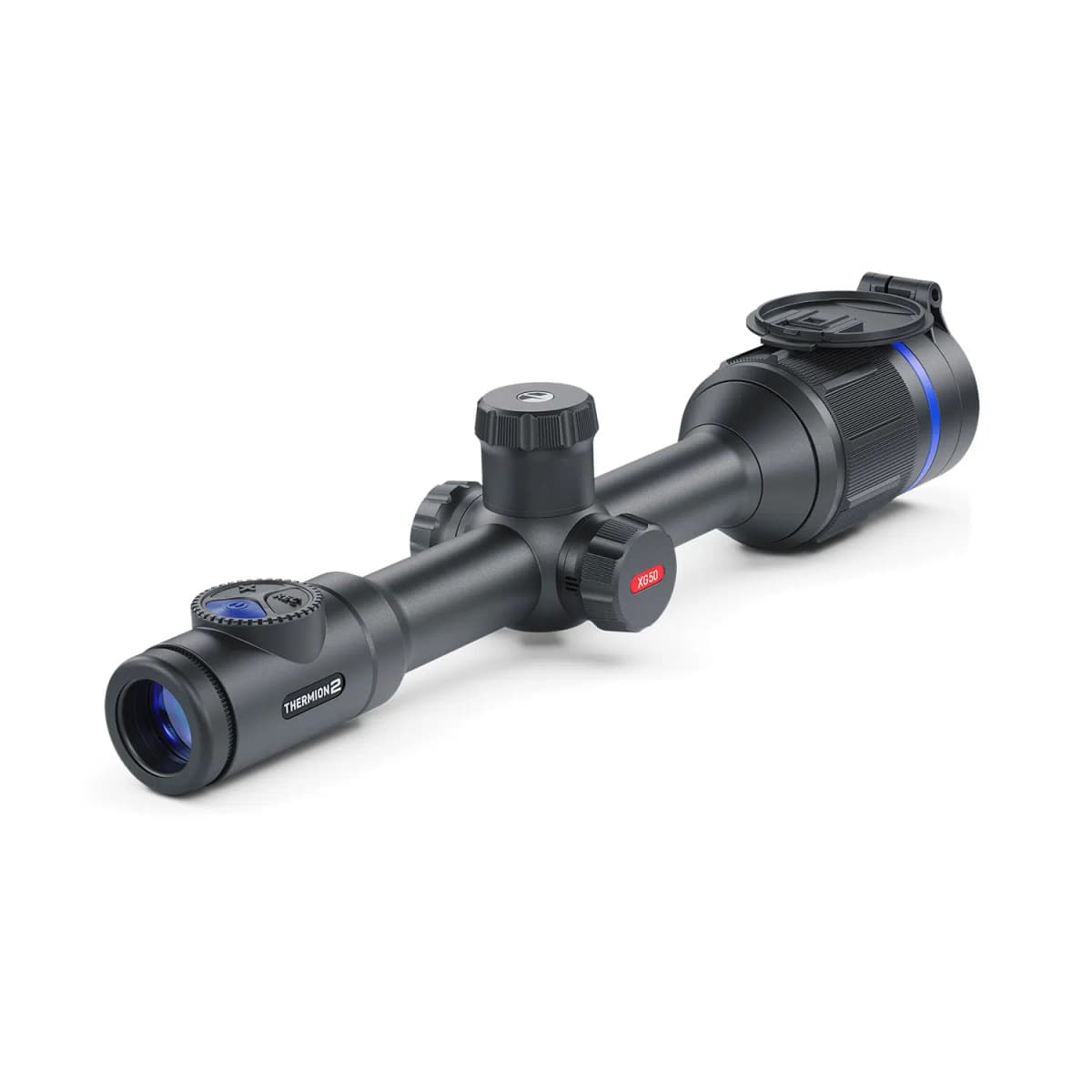
Pulsar Thermion 2 XG50
- 640x480 sensor (12um, 50Hz, <40mK)
- 50mm f/1.0 lens, 2500 yd detection
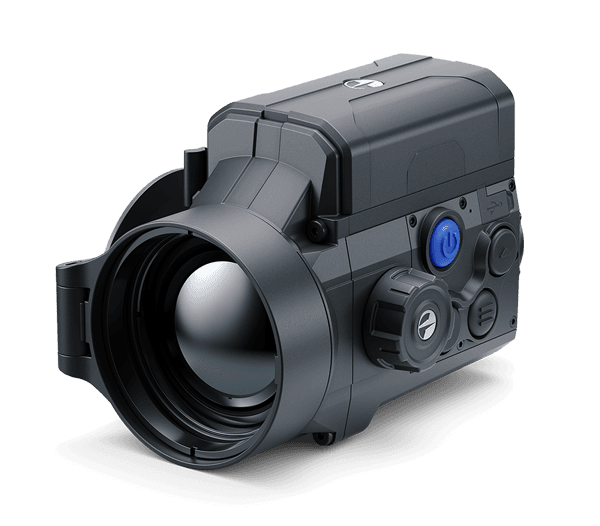
Pulsar Krypton FXG50
- 640x480 sensor (12um, 50Hz, <40mK)
- 50mm f/1.2 lens, 2300 m detection
Affiliate links (?)
Who Should Buy the TELOS LRF XT50
Buy it if you scan large ground (fields, cuts, mountains) and want 1280-class detail plus a rangefinder without carrying a second 905 nm unit. That is the hunter who already knows a handheld and a riflescope are two different purchases, and who will keep this body for years through Telos upgrades.
Skip it if the gap you actually have is an aiming optic. A dedicated thermal riflescope or a clip-on in front of a day scope is the right spend when the rifle needs to see at night. Skip it if you want a lighter, cheaper scanner for nearby work; the Axion XG30 Compact is that Pulsar, and the monocular guide ranks several 384- and 640-class options below this price.
Night hunting rules vary by state, species, and season. The XT50 is an observation device. Confirm local regulations before you use thermal to take game after dark.
Price and Where to Buy
As of October 2026, Thermal Bros listed the Pulsar TELOS LRF XT50 at $4,499.97 under SKU PL77524. That is a US retailer figure, not a Pulsar MSRP. Pulsar's UK store listed the same model at £3,849.95 that month.
Affiliate links (?)
Stay Updated on Thermal Optics
Get new thermal monocular, riflescope, and clip-on coverage as it ships.