Key Takeaways
- →Thermal plus 4K digital: The Pulsar Symbion LRF puts a thermal channel and a 4K color and IR night channel in one binocular, with picture-in-picture to show both at once.
- →Two models: The DXT50 (1280x1024 thermal, $7,999.97) scans a 17.5-degree view; the DXR50 (640x480 thermal, $5,999.97) zooms 4-32x.
- →1500 m rangefinder: A 905 nm laser ranges to plus or minus 1 m with true horizontal distance and an onboard ballistic calculator.
- →Built-in IR: A focusable 850 nm illuminator with three power levels lights the digital channel in total darkness.
- →Runtime and build: Up to 8 hours (DXT50) or 10 hours (DXR50) on two APS5 packs, in a 1 kg IP67 magnesium housing.
Pulsar Symbion LRF DXT50
Hunters and professionals who want to find game on thermal and identify it in color or IR without switching devices
Multispectral binocular pairing a 1280x1024 thermal core with a 4K color/night digital channel and a 1500 m rangefinder
- +Thermal detection plus color and IR digital identification in one binocular
- +1280x1024 thermal core with a wide 17.5-degree scanning view
- +1500 m rangefinder reaches farther than Pulsar's 1200 m Telos and Thermion 3 units
- −Up to 8 hours runtime trails the 10 hours of the DXR50
- −1 kg is heavy for a handheld compared with a thermal monocular
- −Premium price sits well above thermal-only handhelds
- Thermal
- 1280x102412 um, <20 mK, 17.5 deg
- Digital
- 4KCMOSColor day, 850 nm IR night
- LRF
- 1500m905 nm, +/-1 m
- Weight
- 1kgIP67 magnesium housing
What the Pulsar Symbion Is
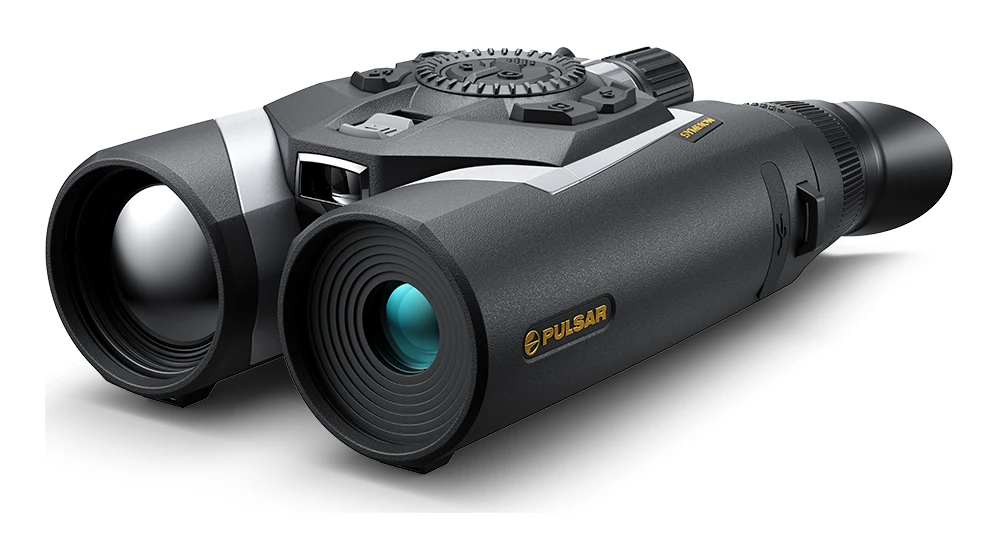
The Pulsar Symbion LRF is a multispectral binocular: a thermal imaging channel and a 4K digital channel in one two-eyed housing, with a 1500 m laser rangefinder. Thermal finds animals by their heat in darkness, fog, and cover. The digital channel then shows them in full color by day, or lit by the built-in infrared illuminator at night, so you can read markings, antlers, and body detail that a thermal image flattens out.
Pulsar sells it in two models. The DXT50 carries a 1280x1024 thermal sensor for the widest, most detailed thermal view; the DXR50 carries a 640x480 sensor with more magnification and longer runtime. Everything else, including the digital channel, the rangefinder, the display, and the housing, is shared.
Symbion DXT50 vs DXR50: Scan Width or Thermal Reach
Choose the Symbion DXT50 to scan wide and the DXR50 to reach far on thermal. Their thermal channels put the same detail on each degree of view: 1,280 pixels across 17.5 degrees and 640 pixels across 8.8 degrees both work out to about 73 pixels per degree. So at a given magnification the DXT50 does not show an animal sharper than the DXR50; it shows twice as much ground around it, which means fewer sweeps across a field and less chance of missing an animal between passes.
The DXR50 spends that difference on reach and endurance. Its thermal zoom starts at 4x and runs to 32x, its system NETD is slightly lower (below 18 mK versus below 20 mK), and its lower-resolution core draws less power: up to 10 hours against 8. For open fields and big clearings, the DXT50's width pays off. For glassing a far tree line from one stand all night, the DXR50 does the job for less money.
- Thermal sensorSymbion LRF DXT501280x1024 / 12 umSymbion LRF DXR50640x480 / 12 um
- System NETDSymbion LRF DXT50<20 mKSymbion LRF DXR50<18 mK
- Thermal magnificationSymbion LRF DXT502-24xSymbion LRF DXR504-32x
- Thermal field of viewSymbion LRF DXT5017.5 deg / 30.7 mSymbion LRF DXR508.8 deg / 15.4 m
- Digital sensorSymbion LRF DXT504K 3840x2160, 6.5-26xSymbion LRF DXR504K 3840x2160, 6.5-26x
- Digital field of viewSymbion LRF DXT505.8 deg / 10.2 mSymbion LRF DXR505.8 deg / 10.2 m
- RangefinderSymbion LRF DXT501500 mSymbion LRF DXR501500 m
- Thermal detectionSymbion LRF DXT502300 mSymbion LRF DXR502300 m
- Runtime (2x APS5)Symbion LRF DXT50Up to 8 hSymbion LRF DXR50Up to 10 h
- WeightSymbion LRF DXT501 kgSymbion LRF DXR501 kg
| Spec | Symbion LRF DXT50 | Symbion LRF DXR50 |
|---|---|---|
| Thermal sensor | 1280x1024 / 12 um | 640x480 / 12 um |
| System NETD | <20 mK | <18 mK |
| Thermal magnification | 2-24x | 4-32x |
| Thermal field of view | 17.5 deg / 30.7 m | 8.8 deg / 15.4 m |
| Digital sensor | 4K 3840x2160, 6.5-26x | 4K 3840x2160, 6.5-26x |
| Digital field of view | 5.8 deg / 10.2 m | 5.8 deg / 10.2 m |
| Rangefinder | 1500 m | 1500 m |
| Thermal detection | 2300 m | 2300 m |
| Runtime (2x APS5) | Up to 8 h | Up to 10 h |
| Weight | 1 kg | 1 kg |
The 4K Digital Channel: Color by Day, IR at Night
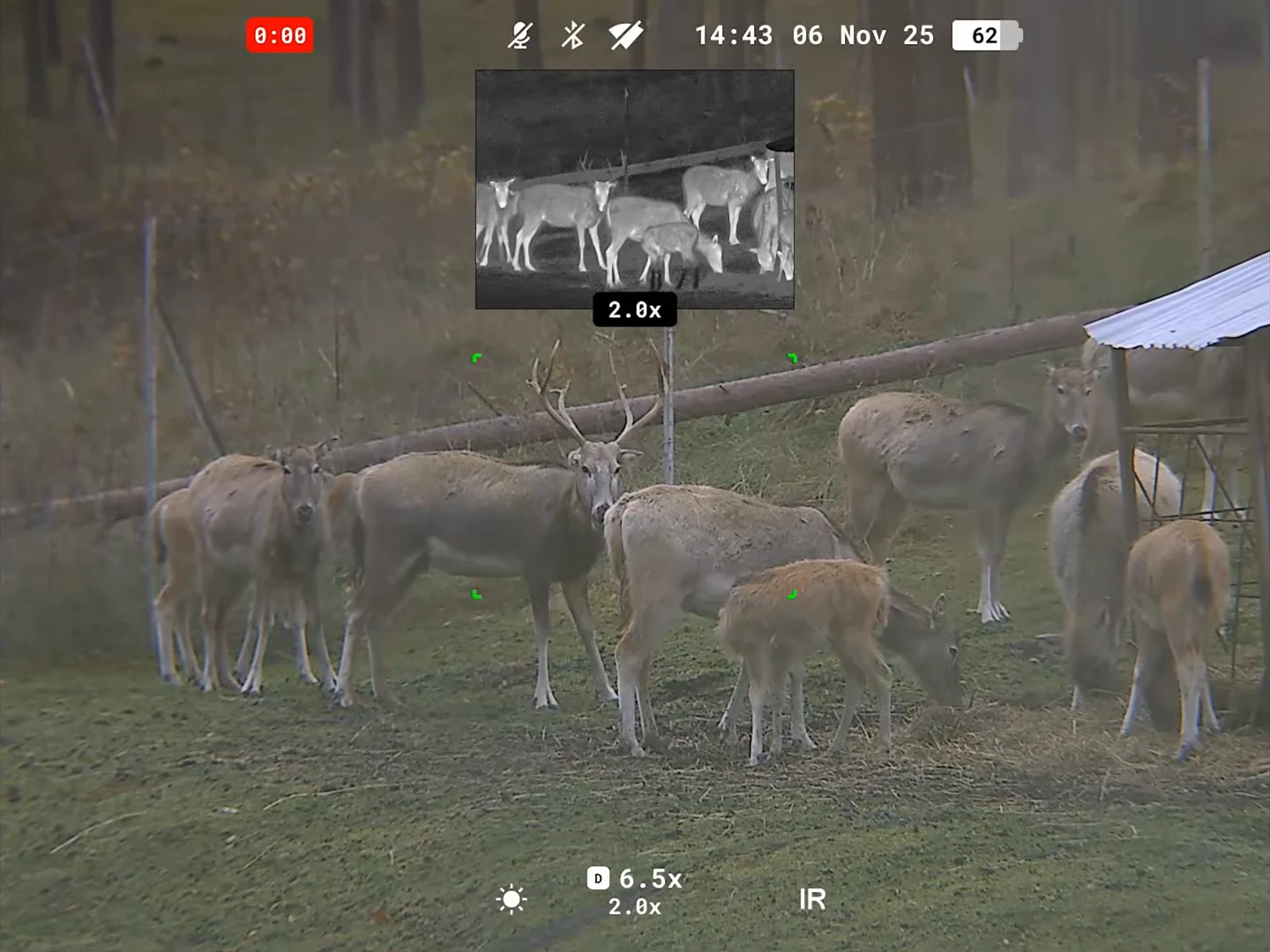
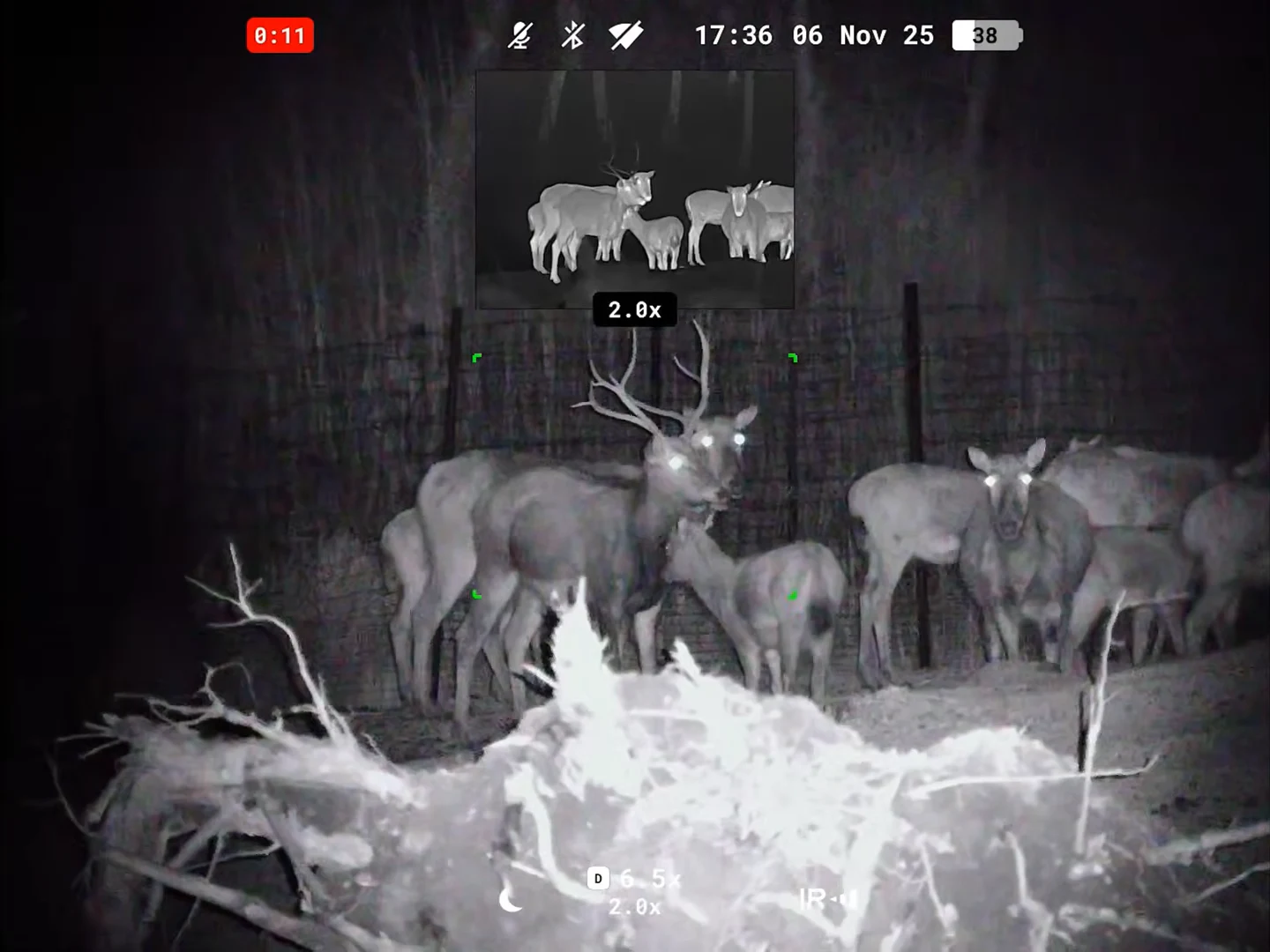
The Symbion's digital channel is a 4K (3840x2160) CMOS sensor behind a 50mm F1.8 lens, zooming from 6.5x to 26x with a 5.8-degree field of view at the low end. In daylight and twilight it shows full color. After dark it switches to night viewing, lit by a focusable 850 nm infrared illuminator with three power levels. The digital view is the identification channel: narrower than the thermal view, but it shows the color, markings, and texture that tell one animal from another.
Picture-in-picture modes combine the two, for example a thermal window over the full-screen digital view, so a heat signature picked up on thermal can be confirmed in color or under IR without lowering the binocular. Electronic image stabilization steadies the view at high magnification, and three sensitivity amplification levels tune the thermal image to conditions. Our thermal sensor cutaway explains why a thermal image shows shape and heat but not color.
Stay Updated on Thermal Optics
Get new thermal binocular, monocular, and riflescope coverage as it ships.
1500 m Rangefinder and Ballistics
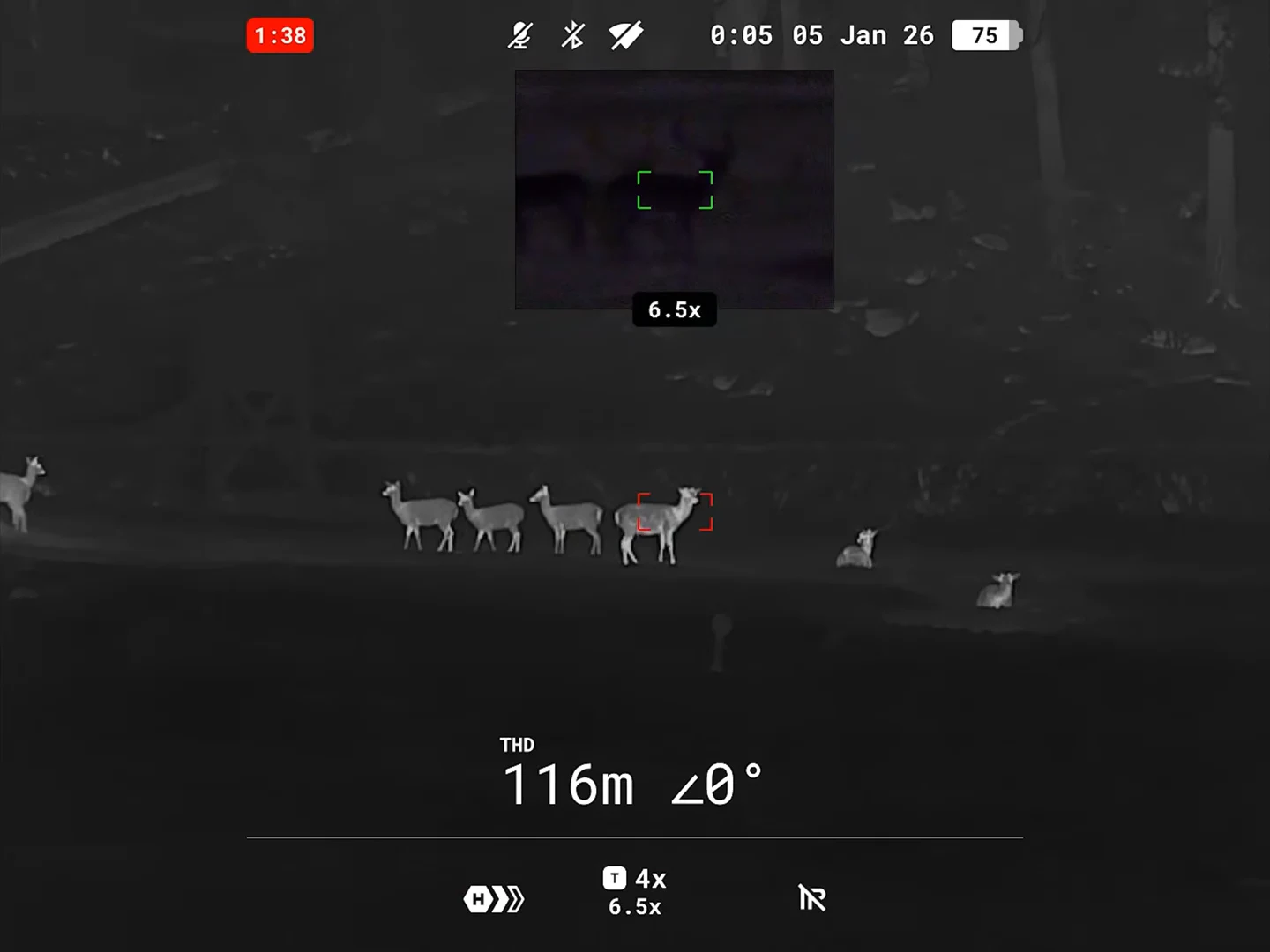
Both Symbion models range to 1500 m at plus or minus 1 m with a 905 nm Class 1 laser, in single-shot or scan mode, and show true horizontal distance for angled shots. That is 300 m more than the 1200 m rangefinders in Pulsar's TELOS LRF XT50 monocular and Thermion 3 riflescopes. An integrated ballistic calculator works with profiles from the Stream Vision Ballistics app, so the binocular hands you the range and the holdover together before you move to the rifle.
Handling, Battery, and Recording
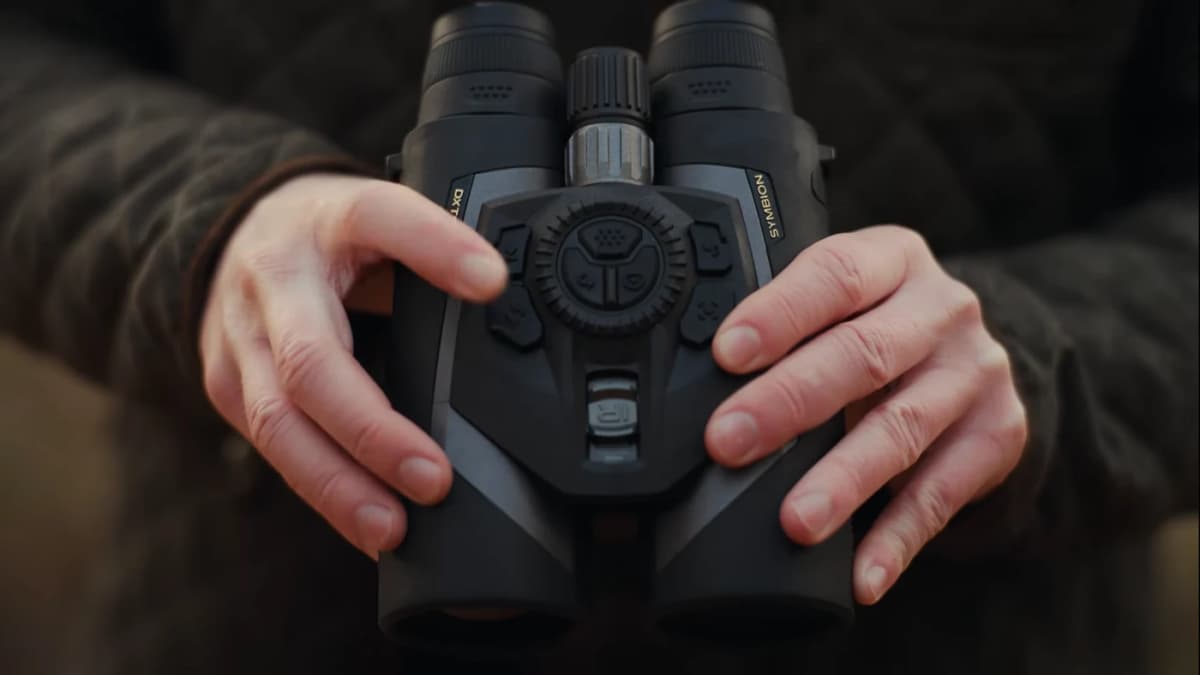
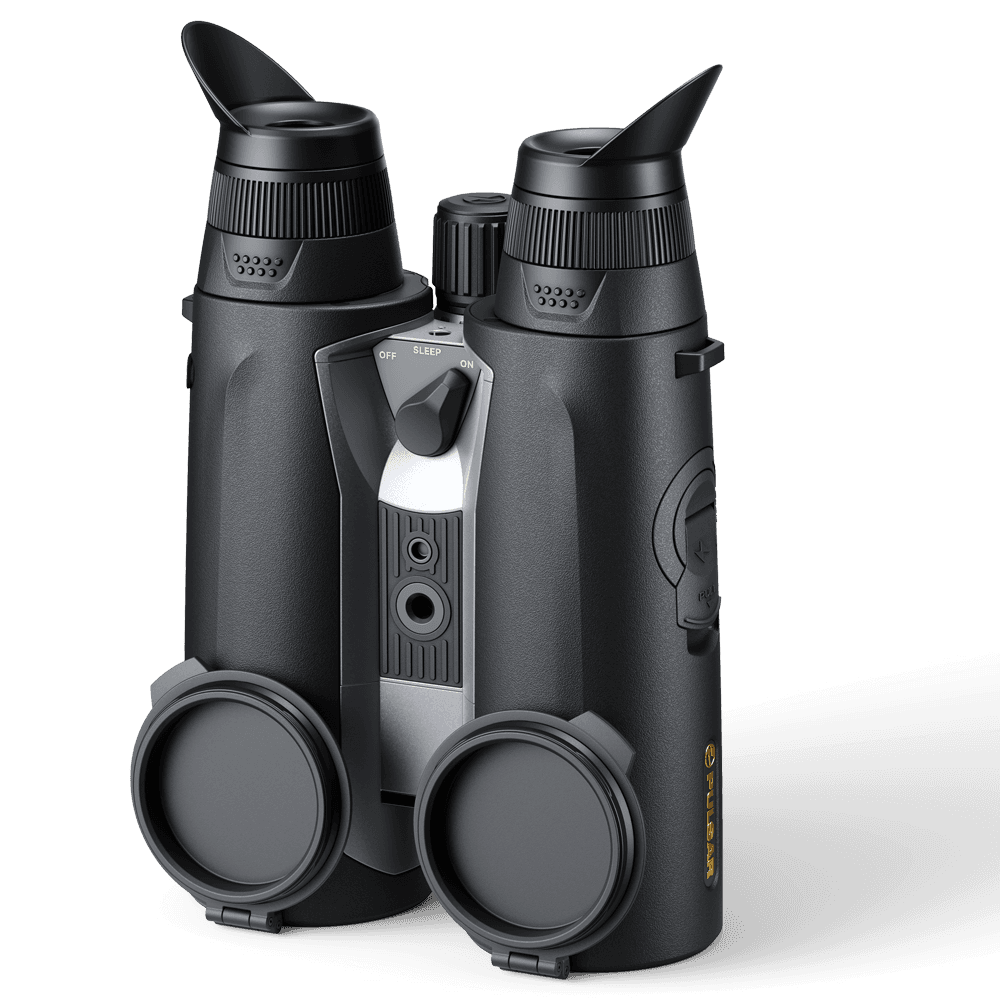
The Symbion is built for one-hand use, with dual focus wheels and controls laid out for either hand, a three-position power switch, and haptic feedback on the buttons. The magnesium alloy housing is IP67 rated, operates from -25 to +50 C, measures 207 x 132 x 72 mm, and weighs 1 kg with batteries. A 1/4 inch socket and an ARCA-Swiss-compatible tripod adapter put it on a tripod for long glassing sessions.
Power comes from two external APS5 packs, rated for up to 8 hours on the DXT50 and 10 hours on the DXR50, with 5 V or 9 V USB-C external power for longer sits. Video and photos record to 64 GB of memory at 1440x1080, and the Stream Vision 2 app streams live footage over 2.4/5 GHz Wi-Fi. A 1920x1080 AMOLED display sits behind 13 mm of eye relief with plus or minus 5 diopters of adjustment.
Symbion DXT50 vs TELOS LRF XT50
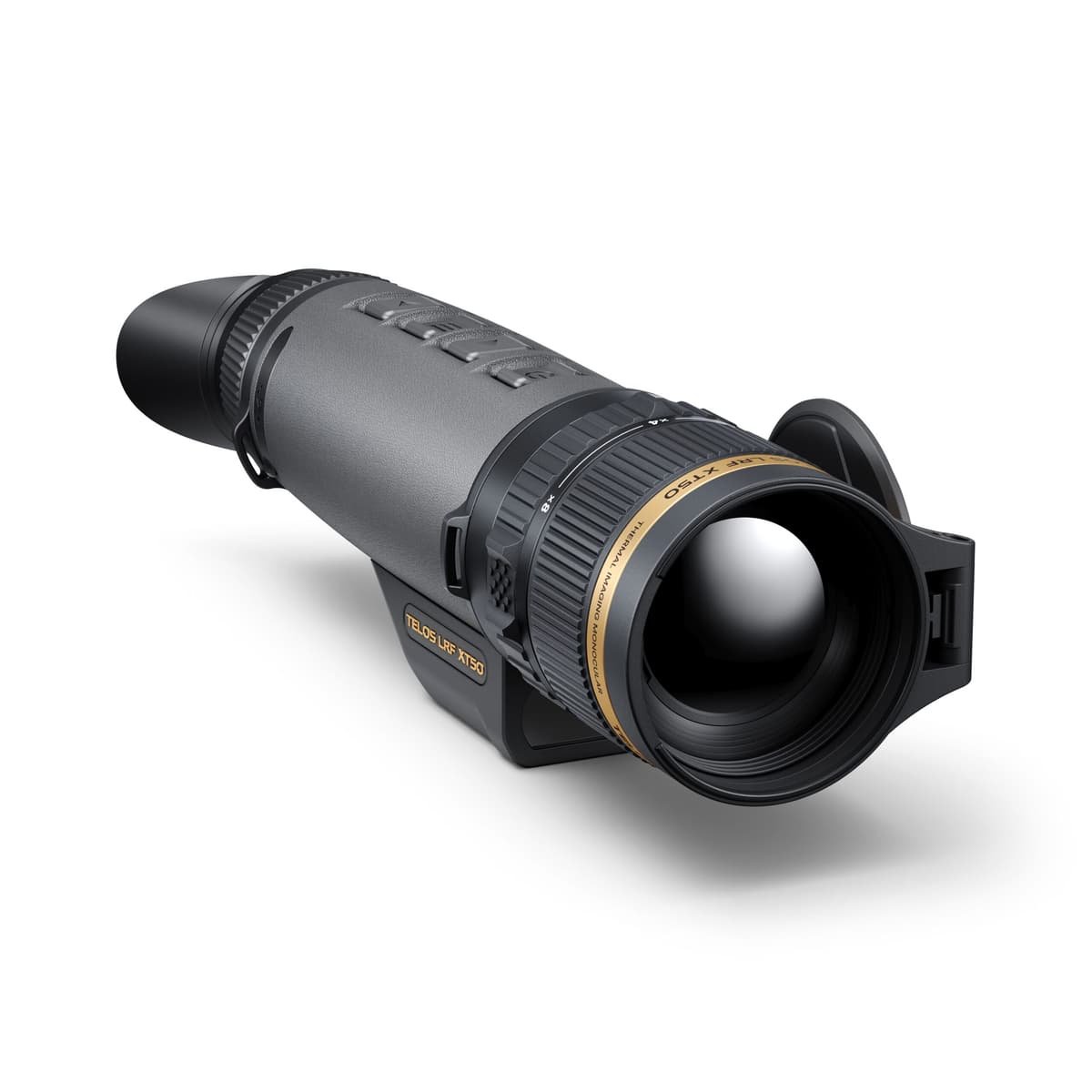
The Symbion DXT50's thermal channel matches Pulsar's TELOS LRF XT50 monocular: the same 1280x1024 sensor behind a 50mm F1.0 lens with a 17.5-degree view and a 2300 m detection rating. The Symbion adds the 4K color and IR digital channel, a longer 1500 m rangefinder, and two-eyed viewing that is easier on long sessions. The TELOS keeps the size advantage at 0.73 kg against 1 kg. If you only scan for heat, the TELOS covers it; if you want to identify in color or under IR on the same device, the Symbion is the one.
- FormSymbion LRF DXT50BinocularTELOS LRF XT50Monocular
- Thermal sensorSymbion LRF DXT501280x1024 / 12 umTELOS LRF XT501280x1024 / 12 um
- Thermal lens and viewSymbion LRF DXT5050 mm F1.0, 17.5 degTELOS LRF XT5050 mm F1.0, 17.5 deg
- Digital day/night channelSymbion LRF DXT504K color + 850 nm IRTELOS LRF XT50None
- RangefinderSymbion LRF DXT501500 mTELOS LRF XT501200 m
- RuntimeSymbion LRF DXT50Up to 8 h (2x APS5)TELOS LRF XT50Up to 8 h (LPS 7i)
- WeightSymbion LRF DXT501 kgTELOS LRF XT500.73 kg
| Spec | Symbion LRF DXT50 | TELOS LRF XT50 |
|---|---|---|
| Form | Binocular | Monocular |
| Thermal sensor | 1280x1024 / 12 um | 1280x1024 / 12 um |
| Thermal lens and view | 50 mm F1.0, 17.5 deg | 50 mm F1.0, 17.5 deg |
| Digital day/night channel | 4K color + 850 nm IR | None |
| Rangefinder | 1500 m | 1200 m |
| Runtime | Up to 8 h (2x APS5) | Up to 8 h (LPS 7i) |
| Weight | 1 kg | 0.73 kg |
Our TELOS LRF XT50 coverage breaks down the monocular, and the thermal monocular buying guide ranks it against other handheld scanners.
Pulsar TELOS LRF XT50
Thermal-only scanning and ranging in a lighter handheld
Flagship handheld thermal with a 1280x1024 sensor, wide scan view, and integrated laser rangefinder
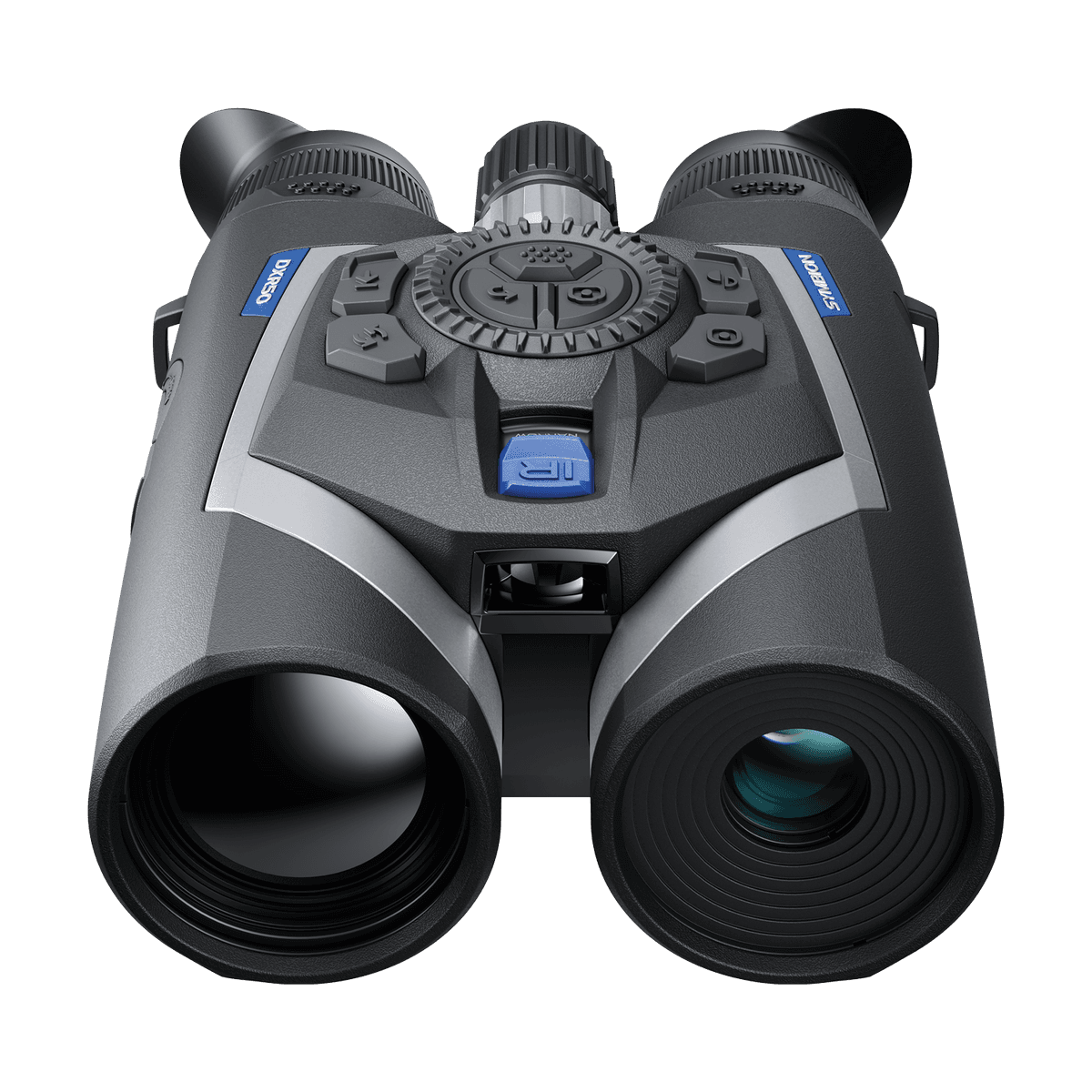
Pulsar Symbion LRF DXR50
Long glassing sessions and distant tree lines where thermal reach and runtime matter more than width
Multispectral binocular with a 640x480 thermal core, 4K color/night digital channel, 4-32x thermal zoom, and 10-hour runtime
- +Same 4K color and IR digital channel as the flagship DXT50
- +Up to 10 hours runtime, longest in the Symbion line
- +4-32x thermal reach for small, distant targets
- −640x480 thermal core has a quarter of the DXT50's pixels
- −8.8-degree thermal view is narrow for scanning open ground
- −1 kg is heavy for a handheld compared with a thermal monocular
Shop Current Pulsar Thermal
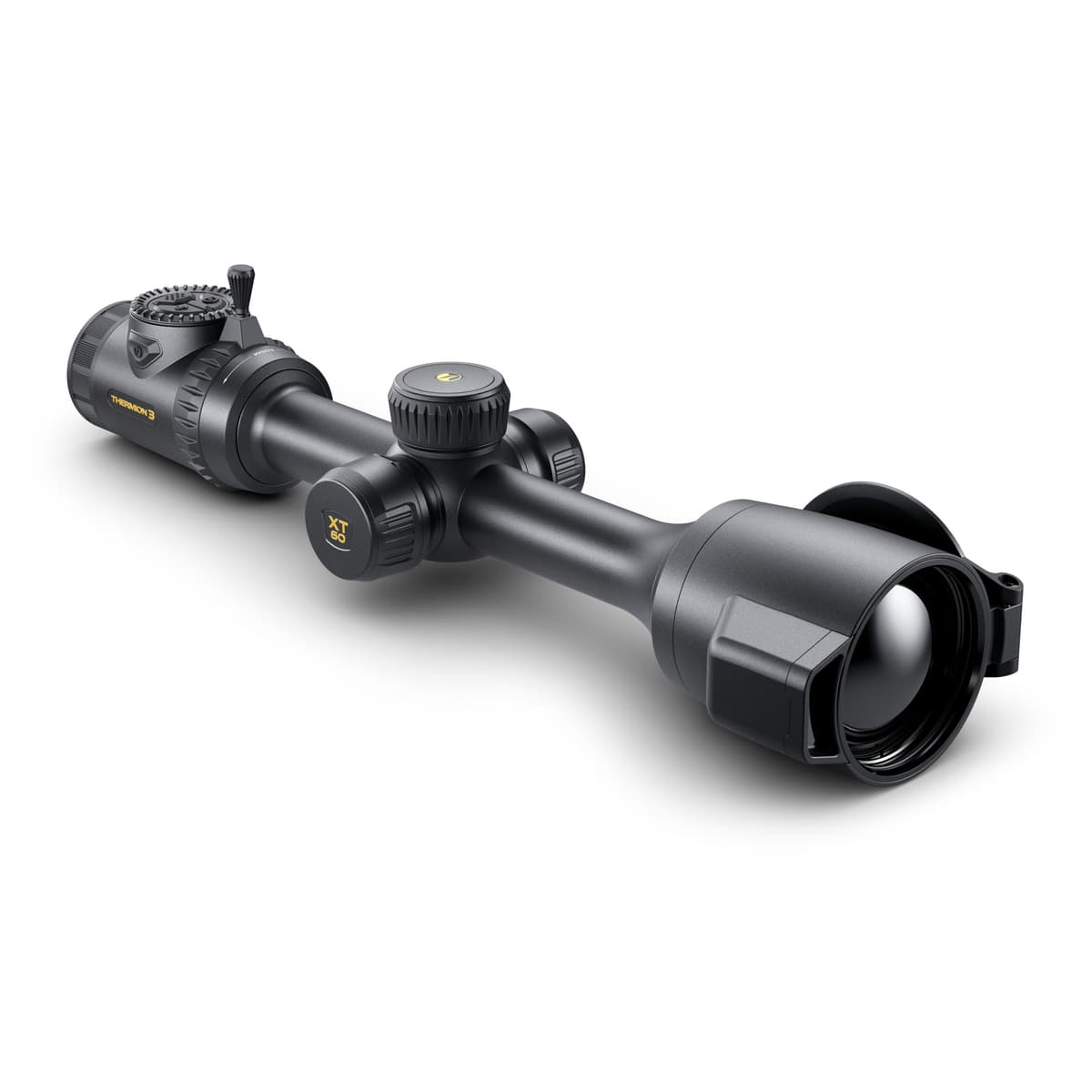
Pulsar Thermion 3 LRF XT60
- 1280x1024 sensor (12um, 50Hz, system NETD <20mK)
- 60mm F1.0 lens, 2-24x, 14.6 deg field of view
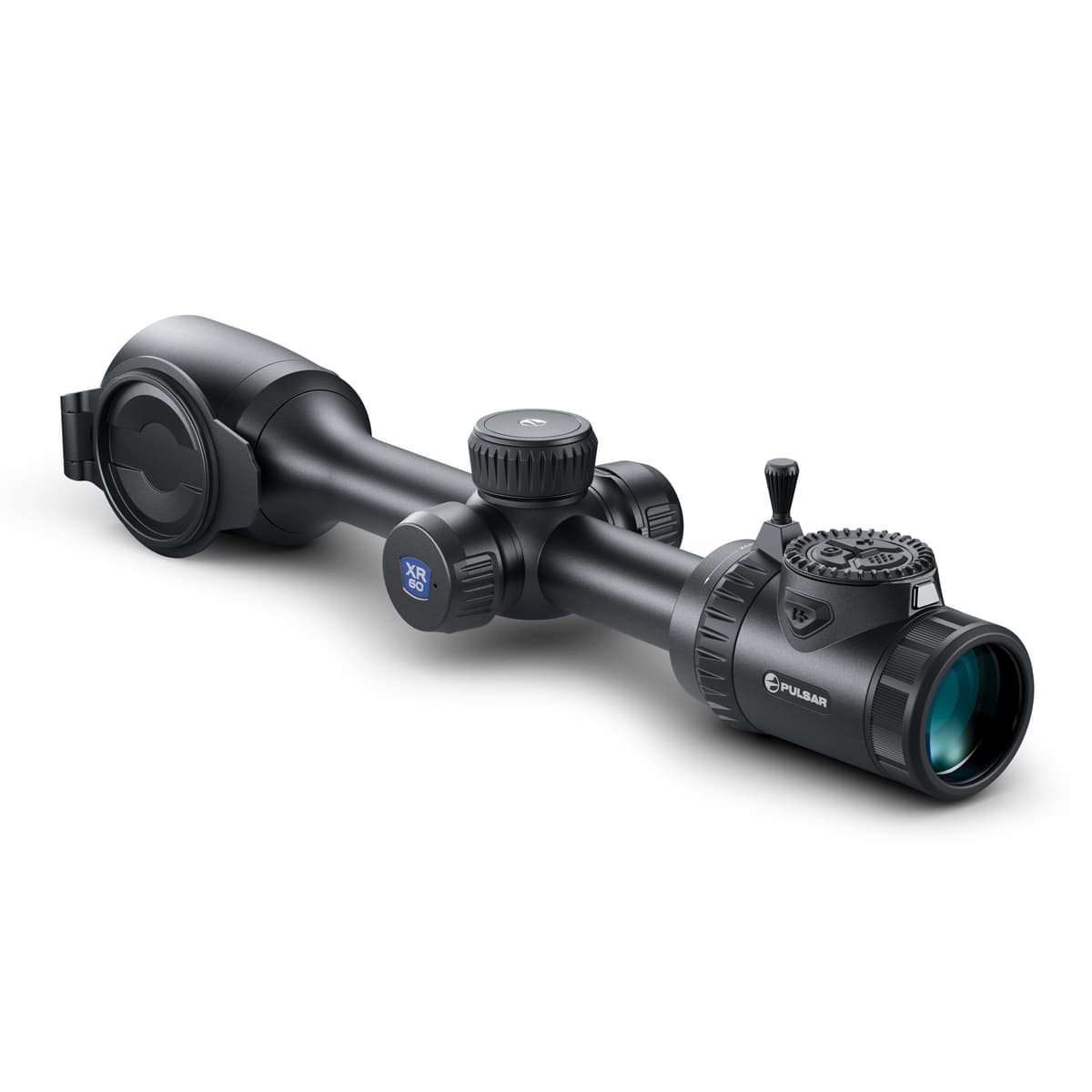
Pulsar Thermion 3 LRF XR60
- 640x480 sensor (12um, 50Hz, system NETD <18mK)
- 60mm F1.0 lens, 4-40x, 7.3 deg field of view
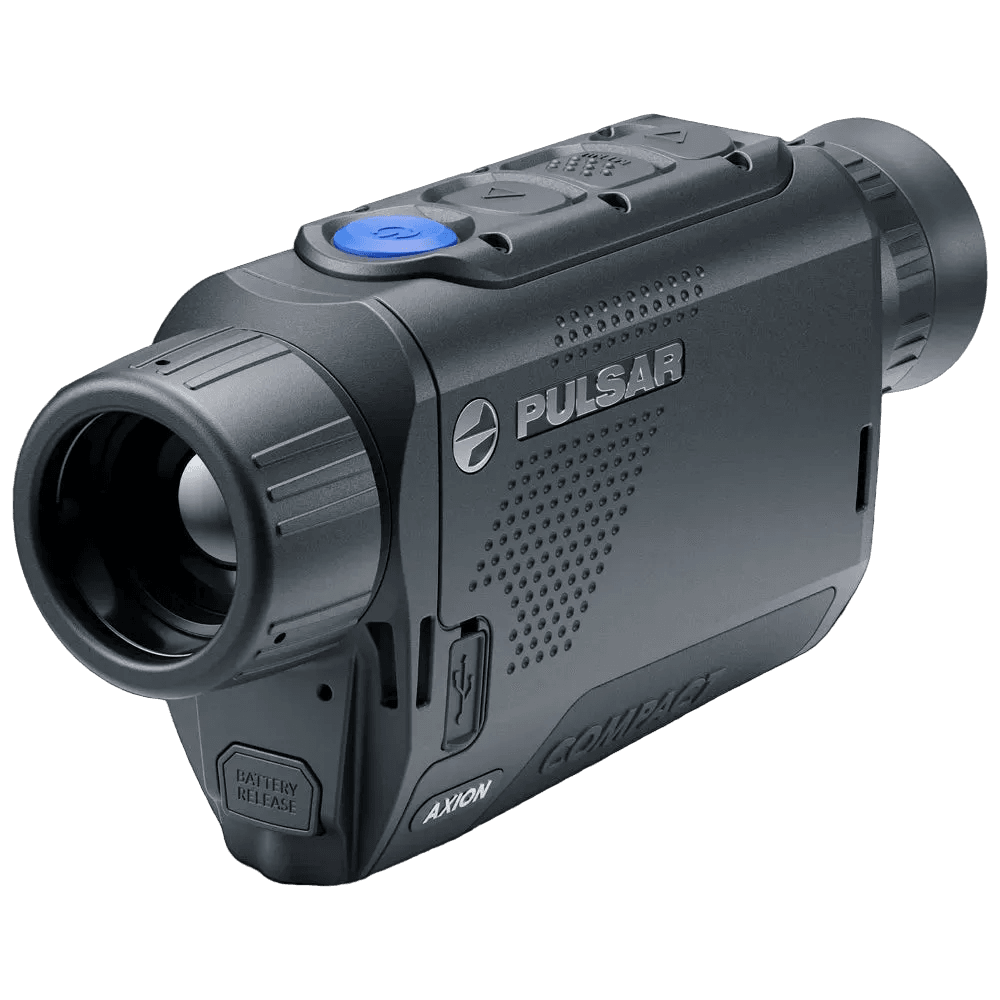
Pulsar Axion XG30 Compact
- 640x480, 12-micron sensor at 50 Hz
- 2x base magnification and 30mm F/1.2 lens
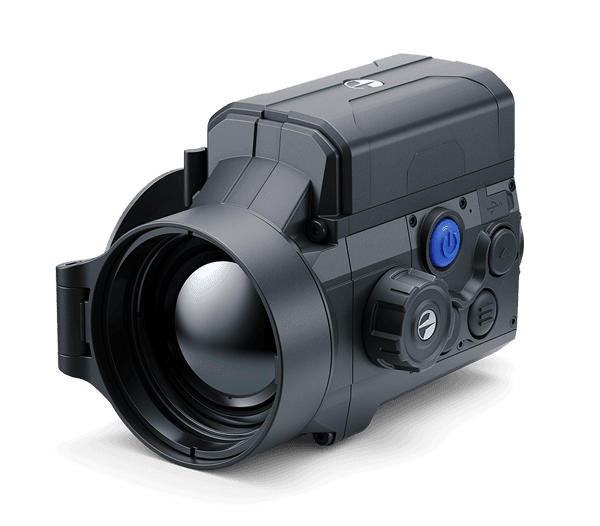
Pulsar Krypton FXG50
- 640x480 sensor (12um, 50Hz, <40mK)
- 50mm f/1.2 lens, 2300 m detection
Affiliate links (?)
Who the Symbion Is For
The Symbion is for hunters and land managers who glass at dawn, dusk, and through the night and want one device for finding and identifying. Thermal picks up the animal in cover or darkness; the digital channel confirms species, sex, and age in color or under IR; the rangefinder gives the distance. It also suits wildlife observers, search and rescue teams, and security work, where the color channel helps with identification that thermal alone cannot settle.
It is an observation device, not a rifle optic. Pair it with a thermal riflescope such as the Pulsar Thermion 3 LRF or another pick from our best thermal scope guide. For daytime-only glassing, a quality optical binocular from our hunting binocular guide does the job for a fraction of the price. Night hunting rules vary by state, species, and season, so check local regulations before you hunt with thermal or IR after dark.