Key Takeaways
- →What it is: a 1-8x30 first focal plane LPVO with a laser rangefinder, ballistic solver, environmental sensors, digital compass, visible and IR lasers, and a transparent display that projects the corrected aiming dot inside the scope.
- →Range results: six shooters went six for six with first-round impacts at 1,040 yards from an HK MR762 A1 in Hunter Constantine's September 2026 session, and Garand Thumb hit 699 yards first round in 2022.
- →The contract: Vortex won a 10-year, $2.7 billion ceiling award in January 2022 for up to 250,000 units; the Army had bought 50,161 for about $584.6 million through fiscal 2025.
- →The test reports: DOT&E said soldiers rated XM157 usability “below average/failing” in January 2025, and in March 2026 reported most M250-mounted units failed to hold zero.
- →Civilian path: no consumer version exists yet. The Maztech X4-FCS mount at $3,495 is the closest thing you can put on your own LPVO today.
What the Vortex XM157 Actually Is
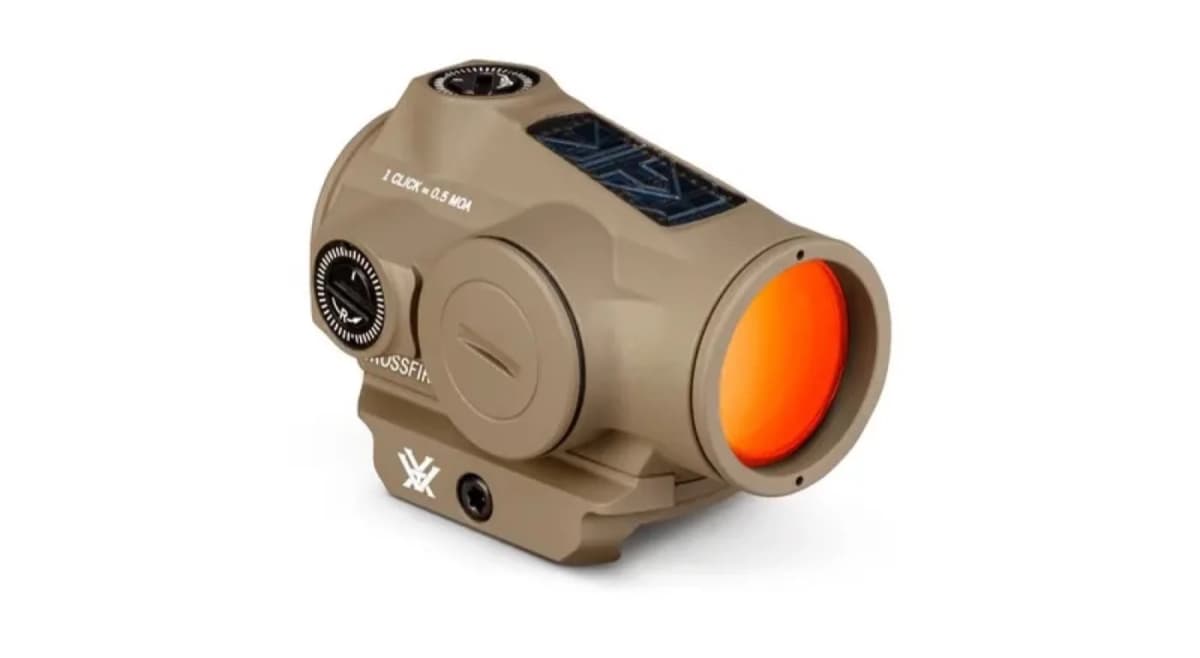
The Vortex XM157 is the U.S. Army's Next Generation Squad Weapon Fire Control, a 1-8x30 low power variable optic with a computer built around it. Press one button and the integrated laser rangefinder measures the target, onboard sensors read temperature, pressure, incline, and compass heading, the ballistic solver runs the weapon profile, and a transparent digital display puts a corrected aiming dot in the field of view. Vortex project manager Alexander Lewis says the whole sequence takes less than a second.
The glass underneath is a conventional scope. The reticle is etched in the first focal plane, so when the batteries die the shooter still has a fully functional 1-8x LPVO with holdover marks. That fallback was a program requirement and it is the reason Vortex built the display as an overlay rather than a screen. The lenses are made in the United States and the units are assembled at Vortex's plant in Barneveld, Wisconsin, which Lewis frames as a supply chain decision as much as a quality one. Vortex's design goal was a wide eyebox across the whole magnification range so a rifleman under stress can get behind it quickly at 8x, which is unusual for a 1-8 scope and one of the first things Hunter Constantine noticed on the range.
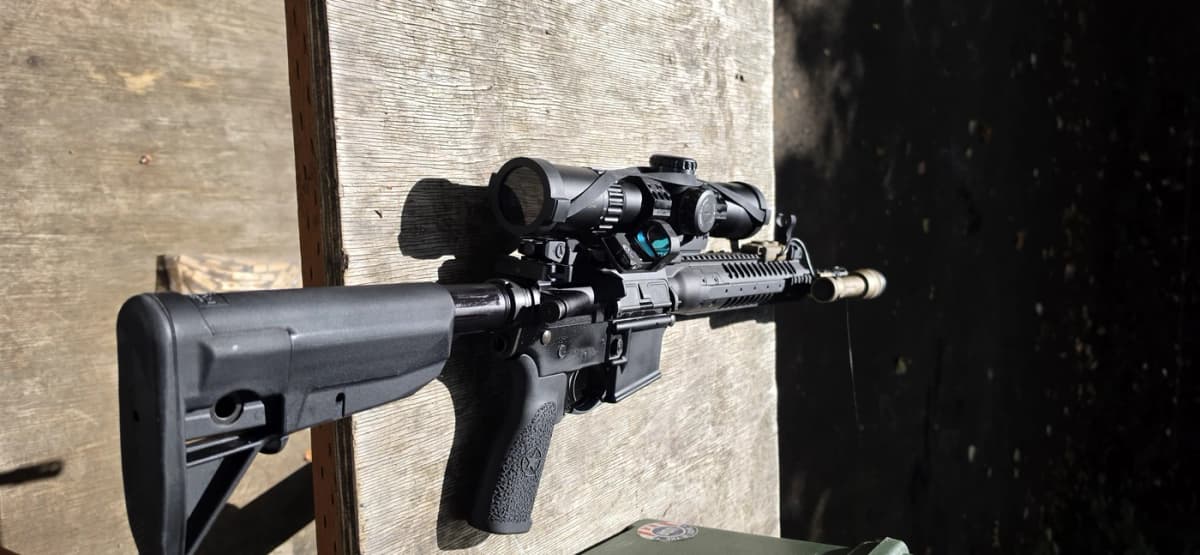
The Army designates it XM157 while it carries the experimental prefix; Vortex and the March 2026 test report already call it the M157. It mounts on a standard MIL-STD-1913 Picatinny rail, which is why it shows up on HK MR762s, SCAR 17s, and M240s in every demonstration video rather than only on the M7 and M250 it was designed for. The Army now lists the new XM8 carbine as a third supported host. If you want to understand the analog scope category it grew out of, our best LPVO guide covers the 1-6x through 1-10x market it will eventually compete in.
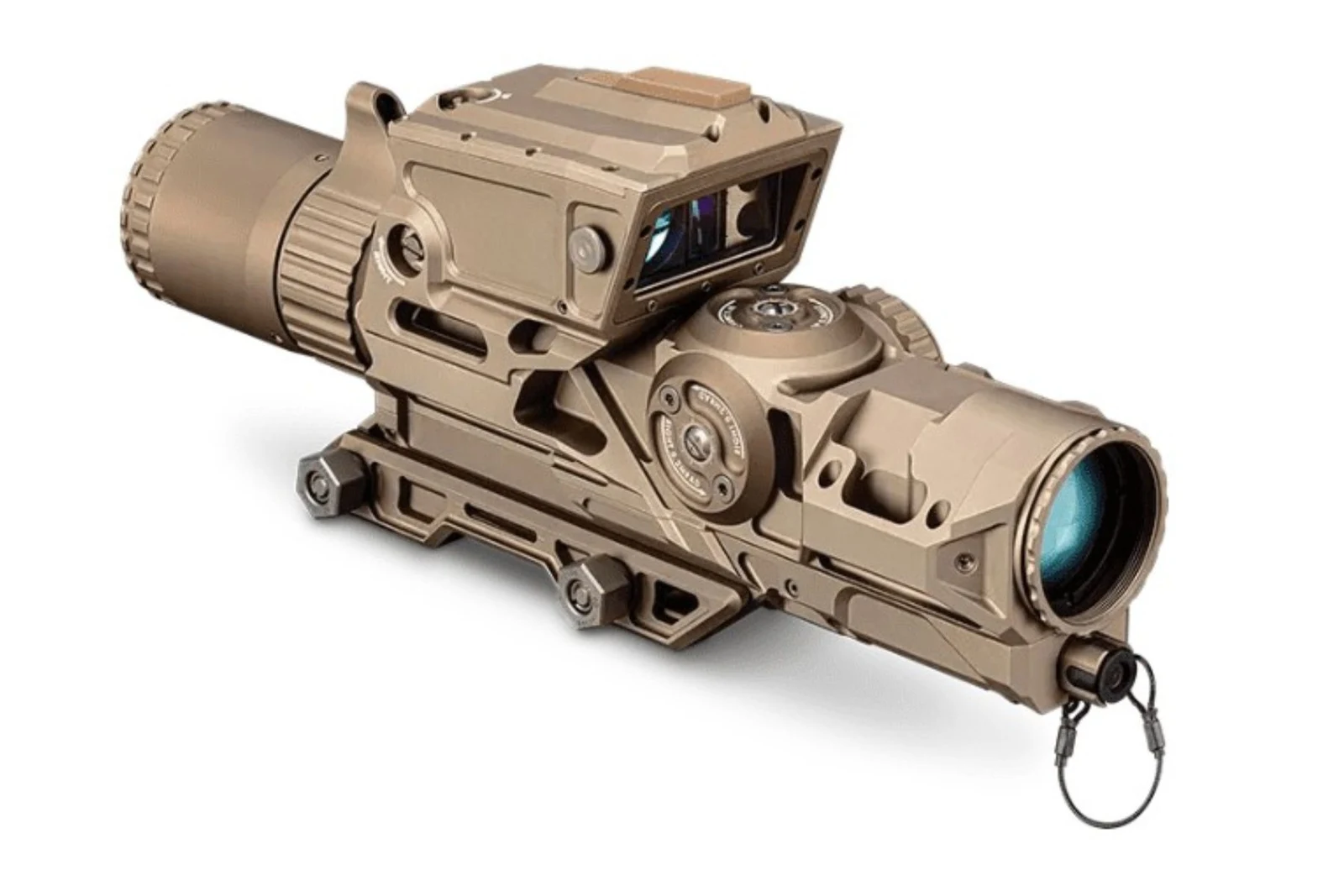
Vortex XM157 NGSW Fire Control (M157)
The Army's issued fire control for the M7, M250, and XM8; not sold to civilians
U.S. Army NGSW fire control with a 1-8x30 scope, laser rangefinder, and digital aiming display
- +Combines a variable scope, rangefinder, aiming lasers, and ballistic solver in one system
- +Etched reticle remains usable without battery power
- +Digital aiming display changes with magnification
- −DOT&E FY2024: soldiers rated XM157 usability below average/failing
- −DOT&E FY2024: the XM7 with XM157 had a low probability of completing a 72-hour wartime mission without a critical failure
- −DOT&E FY2025: most M250s equipped with M157s lost zero during the operational assessment or airborne test
How the Smart Reticle Works
The XM157 aims for you by moving a dot, not by touching the trigger. Alexander Lewis draws the distinction on Garand Thumb's channel: military “fire control” means the aiming solution, not the trigger group a civilian would call fire control. The shooter puts the etched reticle's center on the target, presses the range button on the remote, and a bright dot appears at the corrected holdover with 10 mph wind holds to the left and right. Hold the dot where you want the bullet to go and shoot.
Because the overlay is a full display rather than a set of fixed illuminated points, it can show alphanumerics, menus, elevation angle, and cant, and it can put the dot anywhere in the reticle at fine resolution rather than snapping to mil increments. The display tracks magnification: at 1x it shows a bold red-dot-style circle for close work, and from 2x up it switches to a fine center aiming point. The solver runs the Army's Government Ballistic Software for Small Arms with pre-loaded profiles for the weapons Vortex expected soldiers to carry, including the M4, M110, and M240, plus a profile for the M2 .50 caliber, and it accepts custom profiles with your own sight height and load data. For shooters who want the math behind those profiles, our ballistics chart and calculator guide walks through drop, drift, and how the inputs interact.
Cant correction is the feature that separates it from a scope with a rangefinder bolted on. The sensors know which way is down, so when the rifle is tilted the dot stays on the correct vertical line through the target instead of following the reticle. Hunter Constantine tested it at 45 degrees and then fully inverted, hitting a 700-yard target with the rifle upside down. The solver also stores up to 10 ranged targets; as the shooter pans across the field, an icon appears over each saved target with its own live correction, and a squad can share those tags over the wireless link so six rifles ranging ten targets builds one common picture.
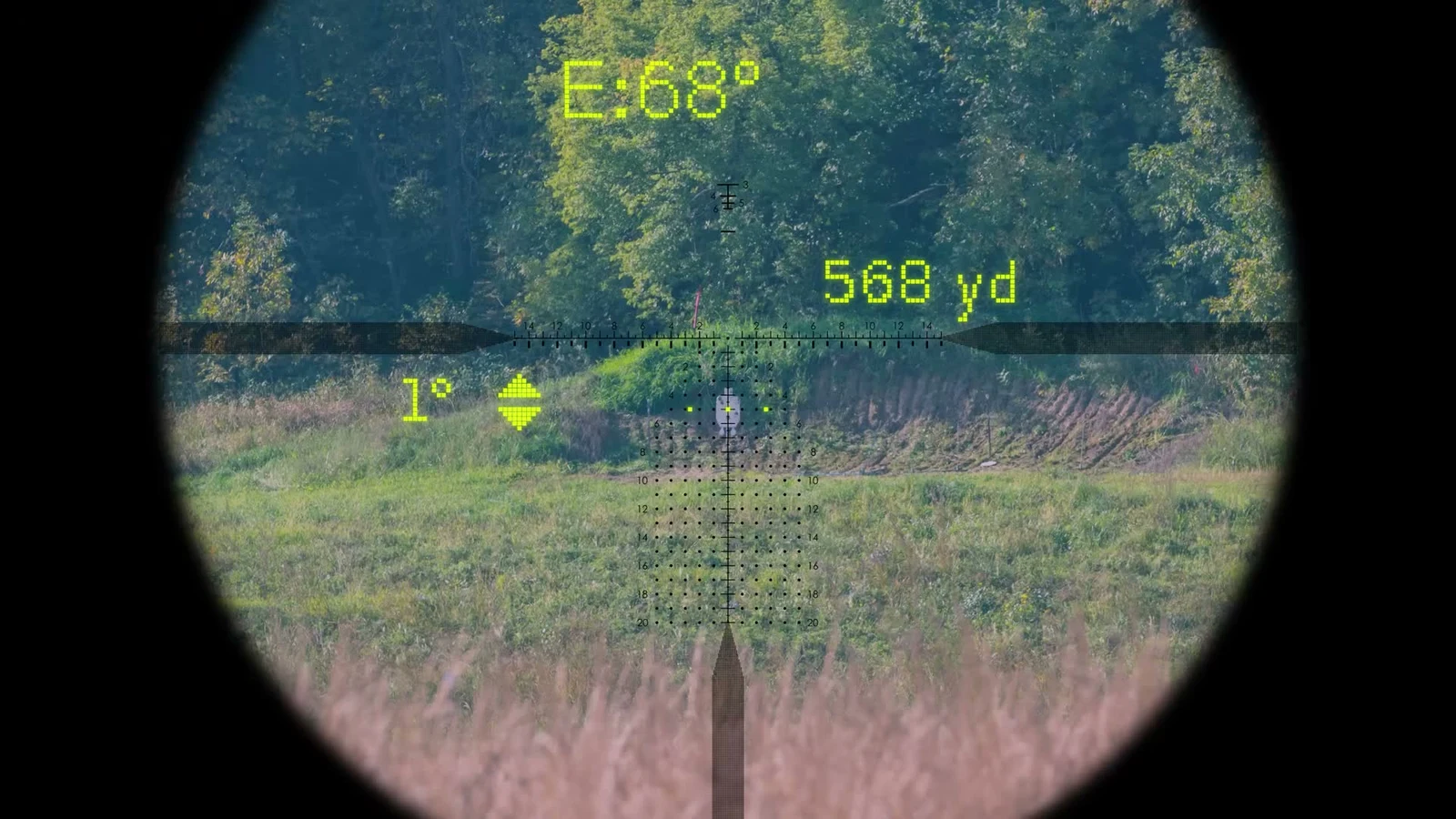
Range Results: 1,040 Yards, Six for Six
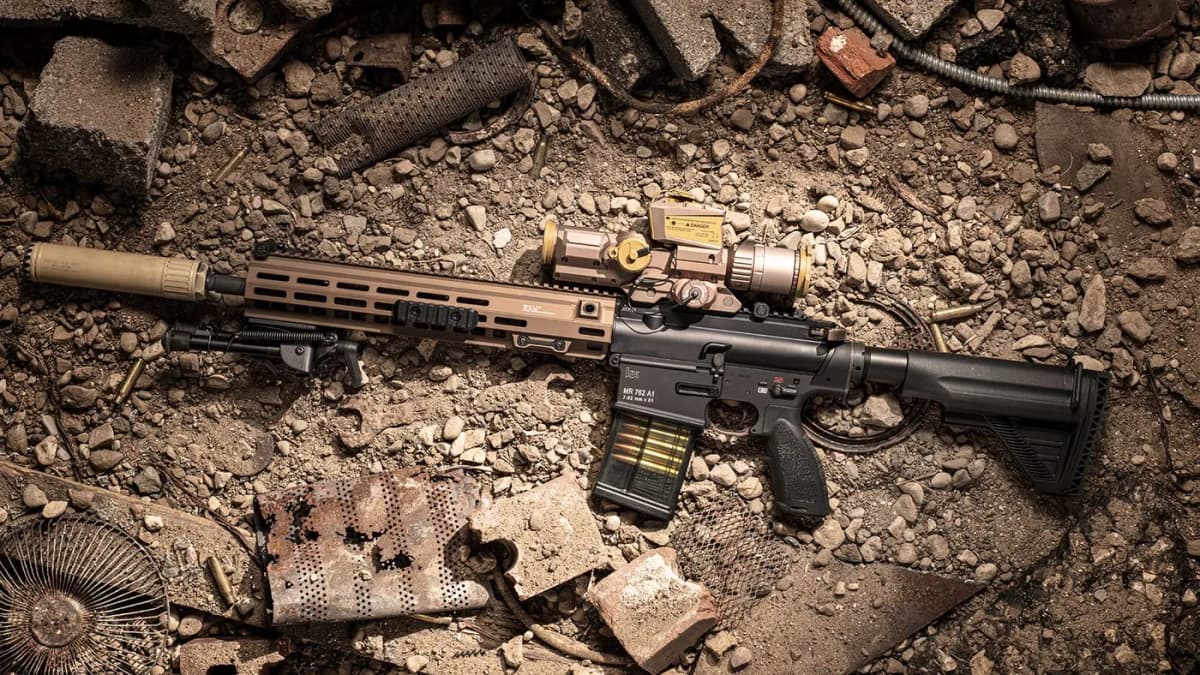
Every shooter in Hunter Constantine's September 2026 session hit a 1,040-yard target on their first round, including people with little long-range experience. The rifle was an HK MR762 A1 in 7.62 NATO with the XM157 at 8x. Constantine then ran Bill Drills at 1x and transitioned straight to a 935-yard target, and a former law enforcement sniper on the crew walked ten targets from 100 to 1,040 yards in 20 rounds. Garand Thumb's 2022 session produced the same headline: a first-round hit at 699 yards, after which he joked about selling his other optics.
The honest caveat both videos land on is wind. The display shows 10 mph holds, but the shooter still reads mirage and scales the hold. Constantine's misses in the walk-back were wind calls, not solver errors, and the crew repeatedly said the fundamentals still apply. What the optic removes is the range estimation and the drop math, which is where most first-round misses come from. Our long range shooting for beginners guide covers the wind reading and position skills the XM157 does not do for you.
Vortex's own October 2025 demonstration pushes the same point on smaller cartridges: the company claims precise first-round hits from a 5.56 carbine at 600 to 1,000 meters, and shows the optic on belt-feds with dispersion reticles that draw the beaten zone for a machine gunner. A 300 Blackout profile can hold a supersonic and subsonic zero at once, displayed in different colors and swapped with a button.
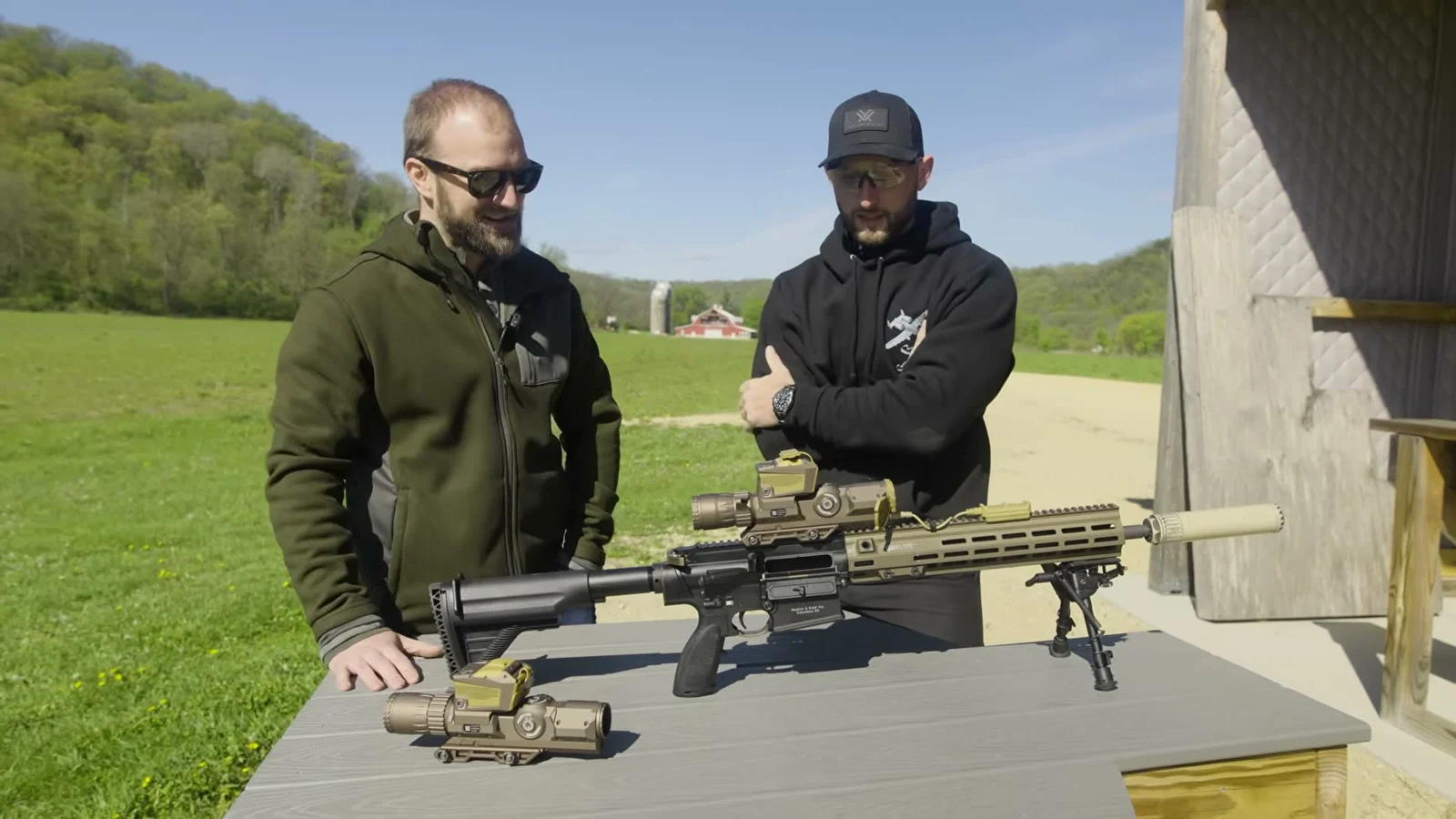
Hardware: Lasers, Power, and Expansion Ports
The rangefinder lives in a removable enabler on top of the scope that also houses co-aligned visible and infrared aiming lasers, so zeroing one laser aligns all three. Because the lasers sit in the optic body on the receiver rather than on a forward rail segment, they do not shift with handguard flex the way a PEQ-style box can. The Army lists the M157 at 2.67 pounds and 10.5 inches long, which Vortex says is lighter than the legacy stack of scope, mount, weapon-mounted rangefinder, and separate laser it replaces. Vortex staff put the optical centerline about 1.6 inches above the rail with just under 3.5 inches of eye relief, and the magnification ring turns 135 degrees from 1x to 8x on a built-in throw lever.
Power is two CR123A batteries in a twist-off compartment, and Vortex quotes runtime in weeks rather than hours, with the actual number depending on how often the laser fires. The optic passed military-standard temperature and vibration testing and survived tens of thousands of rounds on a SCAR 17, a rifle with a reputation for killing optics. Three enabler interfaces are built into the housing: a front pogo-pin port for the remote, a covered front-top port that shipped unused, and the rear port that the rangefinder occupies. In 2022 Vortex was already developing an offset thermal module that pipes its image directly into the existing display, so a thermal overlay would not need its own screen and would not go black when the thermal battery dies.
Vortex LPVOs You Can Buy Today
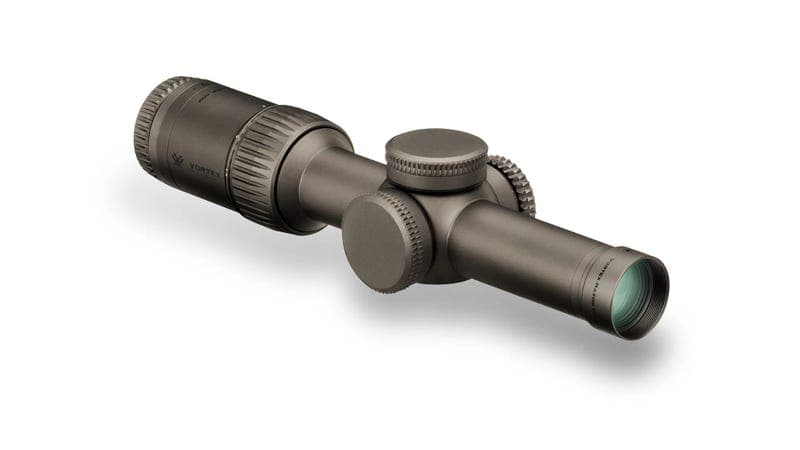
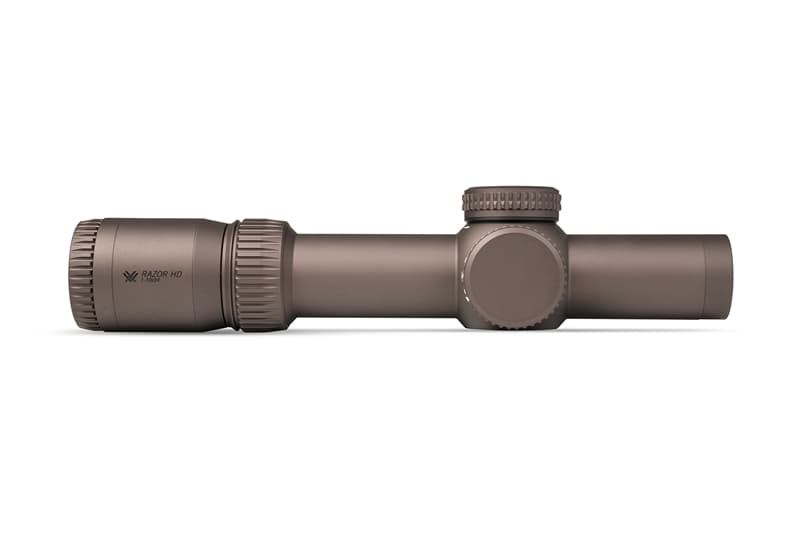
Vortex Razor HD Gen II-E 1-6x24
- 1-6x magnification
- Second focal plane
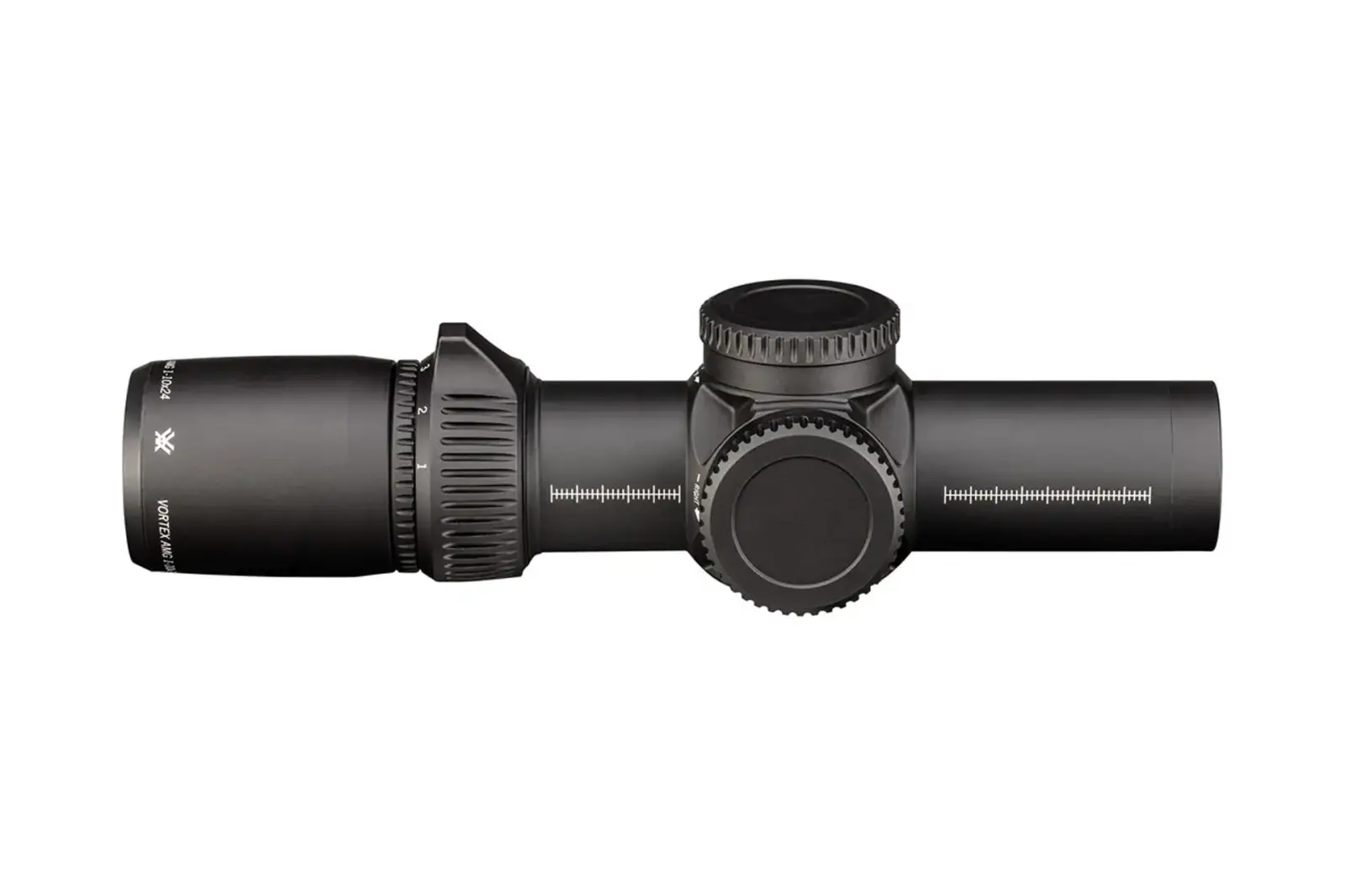
Vortex Razor HD Gen III 1-10x24
- 1-10x magnification
- First focal plane
Vortex AMG 1-10x24 FFP
- 1-10x magnification
- First focal plane
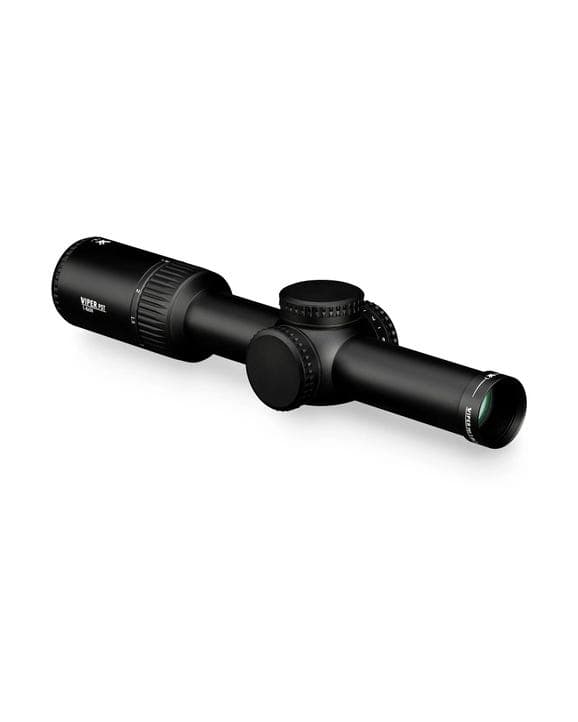
Vortex Viper PST Gen II 1-6x24
- 1-6x magnification
- VMR-2 reticle
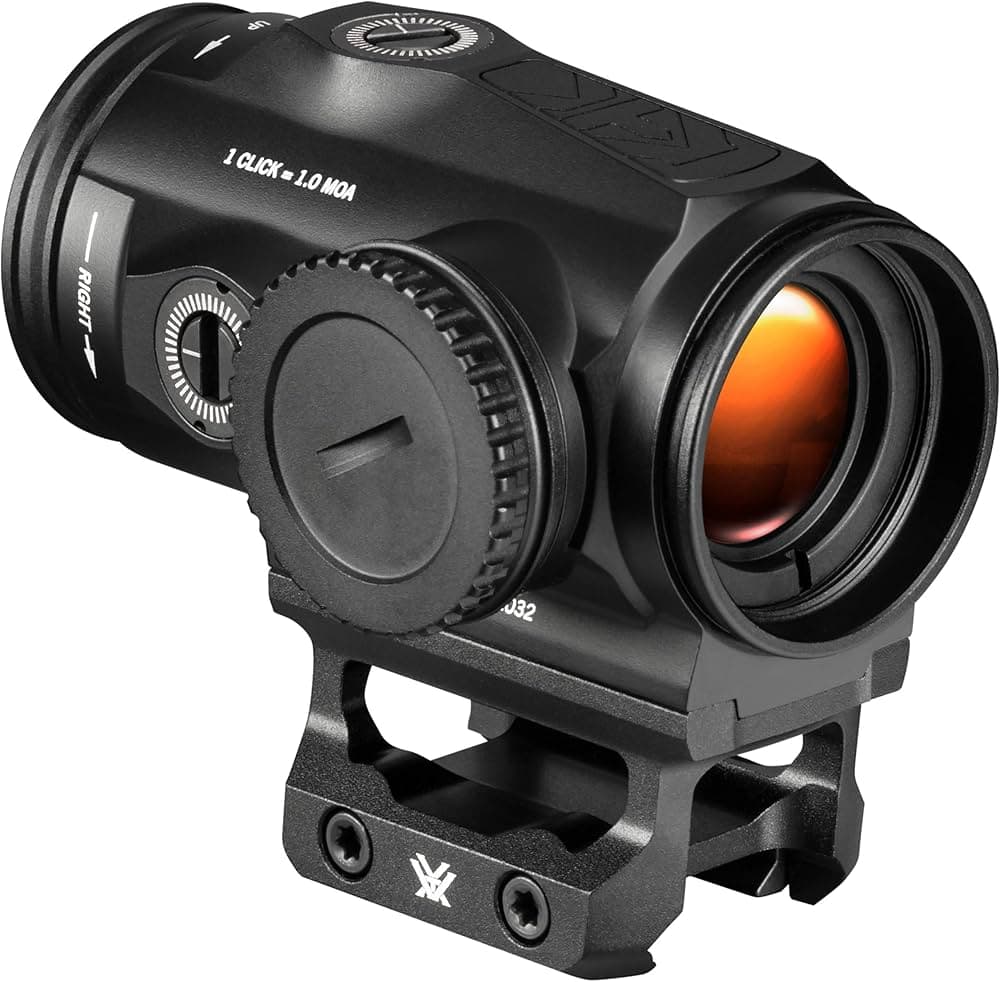
Vortex Spitfire HD Gen II 3x Prism Scope
- Fixed 3x
- AR-BDC4 etched reticle
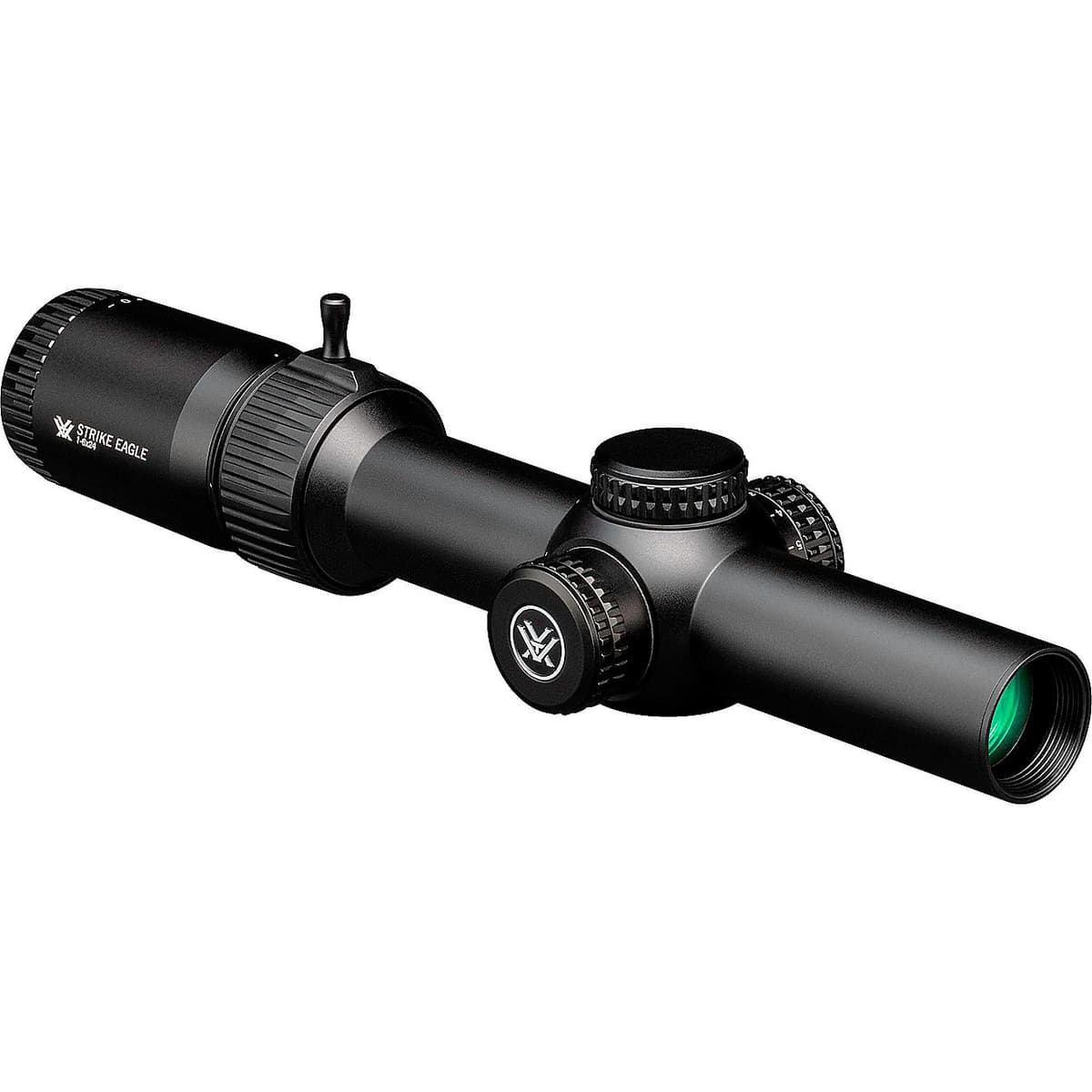
Vortex Strike Eagle 1-6x24 Gen II
- 1-6x magnification
- AR-BDC3 SFP reticle
Affiliate links (?)
What Civilians Can Buy Instead
There is no consumer XM157 and no published price. Vortex told Garand Thumb in 2022 that it intends to bring the technology to civilian and PRS shooters once it has satisfied the Army contract, and on Constantine's range the crew agreed hunting is the obvious civilian use case for a scope that solves angle, temperature, and unknown distance in one press. Until that happens, two paths get you most of the way.
The Maztech X4-FCS is the closest analog on the market. It replaces the mount under a 30mm or 34mm LPVO you already own, reads temperature, humidity, pressure, pitch, roll, and heading, runs the Applied Ballistics solver, and projects a corrected green aimpoint through the scope, with an optional rail rangefinder feeding it range data over a cable. It costs $3,495 before the scope and rangefinder, and it adds 22.6 ounces, so it is a heavier and more modular version of the same idea.
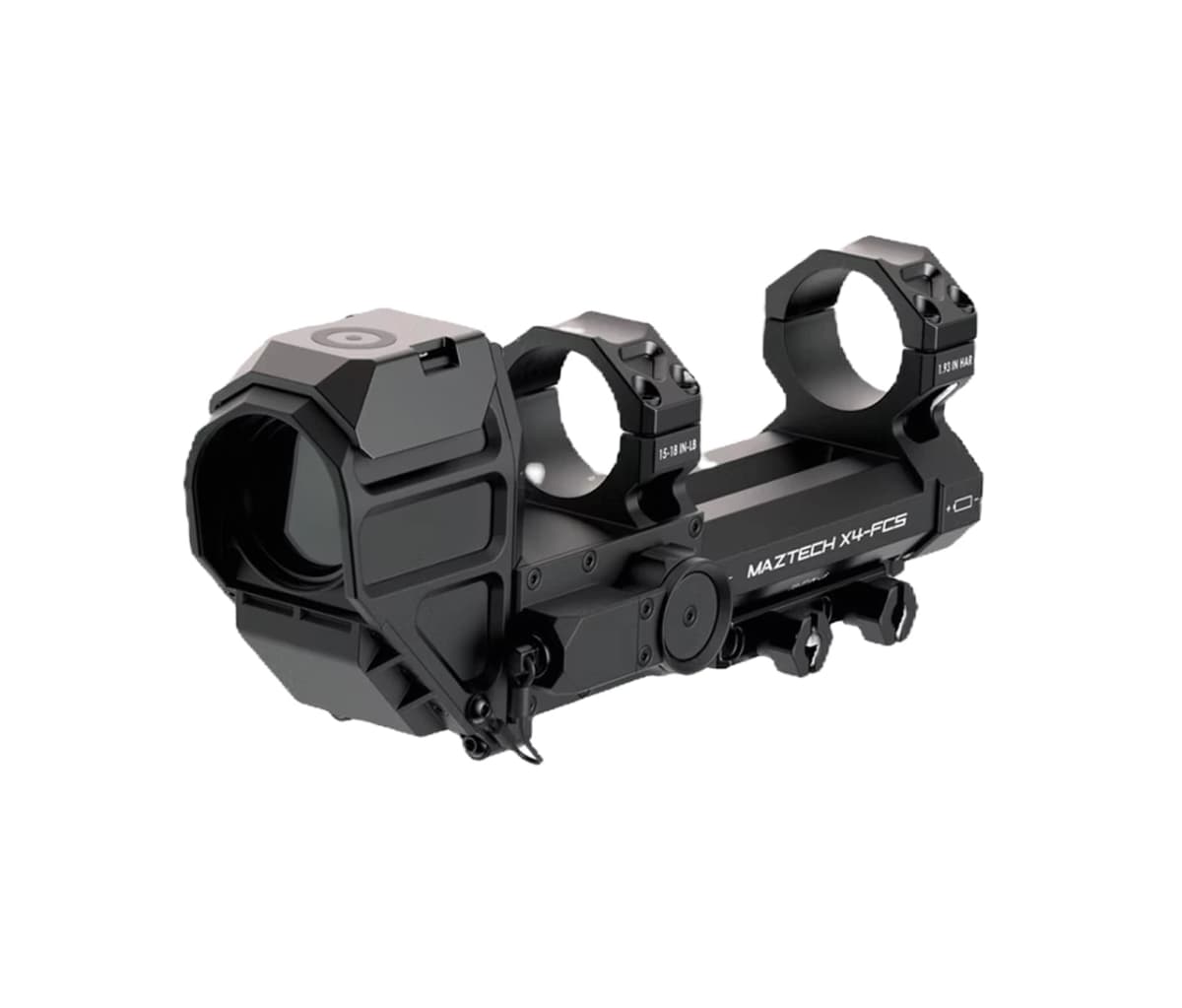
Maztech X4-FCS 30mm Fire Control System
Shooters who want XM157-style corrected holds on a 30mm LPVO they already own
Integrated 30mm LPVO mount with an Applied Ballistics solver and a projected ballistic-compensated aimpoint.
- +Combines the LPVO mount, sensors, solver, and corrected aimpoint in one unit
- +Keeps the installed LPVO usable when the electronics lose power
- +Accepts independent X4-LRF range data through the optional cable
- −Adds 22.6 ounces before the LPVO is installed
- −Requires checking the Maztech fit guide for exact scope-body clearance
- −The X4-LRF and interconnect cable are separate purchases
Affiliate links (?)
The Glass-Only Route
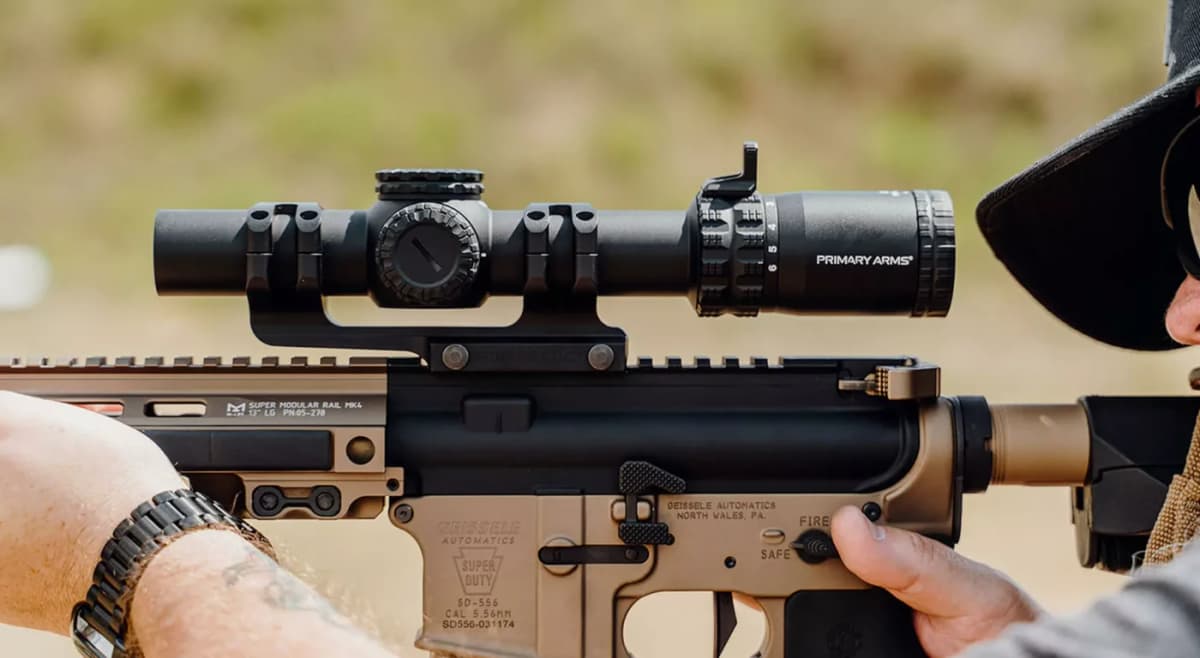
Constantine's parting suggestion was that Vortex strip the electronics and sell the 1-8 on its own. The nearest thing Vortex sells is the Razor HD Gen III 1-10x24, a first focal plane LPVO at $2,119 with daylight-bright illumination and the EBR-9 reticle, which gives you the holdover grid the XM157 uses as its fallback. Pair it with a ballistic handheld rangefinder and you get the range and the solution, just not projected into the scope. Our best rangefinder guide ranks the units with onboard solvers, including Vortex's Razor HD 4000 GB, and you can line the Razor Gen III up against other 1-10x scopes in our optic comparison tool.
Vortex Razor HD Gen III 1-10x24
A conventional Vortex LPVO with the holdover reticle and eyebox the XM157 is built around
Top-tier LPVO with exceptional glass clarity and 1-10x magnification range
- +10x magnification extends effective range to 750+ yards
- +True daylight-bright illumination rivals quality red dots
- +First focal plane reticle accurate at any magnification
- −Premium pricing at $2,899 MSRP (~$1,999-2,200 street)
- −Eyebox less forgiving than 1-6x scopes at 1x
- −Noticeable fish-eye effect at 1x
Affiliate links (?)
What the Army's Testers Found
Soldiers rated the XM157 badly in the Pentagon's own testing. The Director of Operational Test and Evaluation's fiscal 2024 report, released in January 2025, said soldiers “assessed the usability of the XM157 as below average/failing” and that “the XM7 with mounted XM157 demonstrated a low probability of completing one 72-hour wartime mission without incurring a critical failure.” The same report found the 6.8mm ammunition does provide increased lethality over M855A1, so the criticism landed on the optic, not the cartridge.
The fiscal 2025 report, released March 13, 2026, was narrower but not kinder. It found that “most M250s equipped with M157s did not retain zero during the OA or the airborne test,” that “ergonomic complaints about the M157 persisted,” and that improvements to reliability, safety, and cold weather compatibility are still needed. It also confirmed the NGSW program is no longer under DOT&E developmental or operational test oversight, which happened in July 2025 after the Army's operational assessment wrapped. Army program officials say the required developmental and operational testing was completed, while live-fire testing of the 6.8mm ammunition continued under DOT&E oversight. The fire control is moving from the rapid fielding pathway to a full major capability acquisition program, planned in the March 2026 report for the third quarter of fiscal 2026 and carried in the Army's fiscal 2027 budget request as a fiscal 2027 transition.
The gap between the YouTube range days and the test reports is explainable. The demonstrations are run by Vortex staff on a sunny Wisconsin range with the settings already dialed; the operational assessment put the optic on machine guns, in the cold, and through airborne drops with soldiers who had a few days of new equipment training. The Army also posted a sources-sought notice in January 2025 for modules and software to enhance the XM157, which reads as a program that intends to keep iterating rather than one about to be cancelled. Through fiscal 2025 the Army had bought 50,161 units for about $584.6 million against a planned total of 124,749.
Stay Updated on Fire Control Optics
New smart-optic launches, civilian XM157 news, and price drops on LPVOs and ballistic rangefinders, once a week.