Key Takeaways
- →Glass above its class: At $549 the Continental x6 delivers image quality that reads like a considerably more expensive scope across its full 2-12x range.
- →Rings are in the box: Vector ships 34mm Picatinny rings, a sunshade, a spare elevation turret, a plastic wrench, and clear bikini-style lens covers with the scope. A 34mm tube usually means buying a mount separately.
- →Reticle does two jobs: The first focal plane VET-RAR 2 shows an illuminated rapid ring at low power and opens into a christmas-tree hold grid as magnification climbs.
- →Plan on an offset dot: The low end stops at 2x, not 1x, and the eye box tightens as you zoom. Vector's X-ACCU ring kit mounts a dot on the scope ring, on top or at 45 degrees. Skip the bundled Frenzy FM for a Holosun or Osight.
- →Travel costs weight: 0.1 MIL clicks, locking zero-stop turrets, and at least 63 MIL of elevation on a 34mm tube, but at 27.1 ounces it is heavy for a 2-12x.
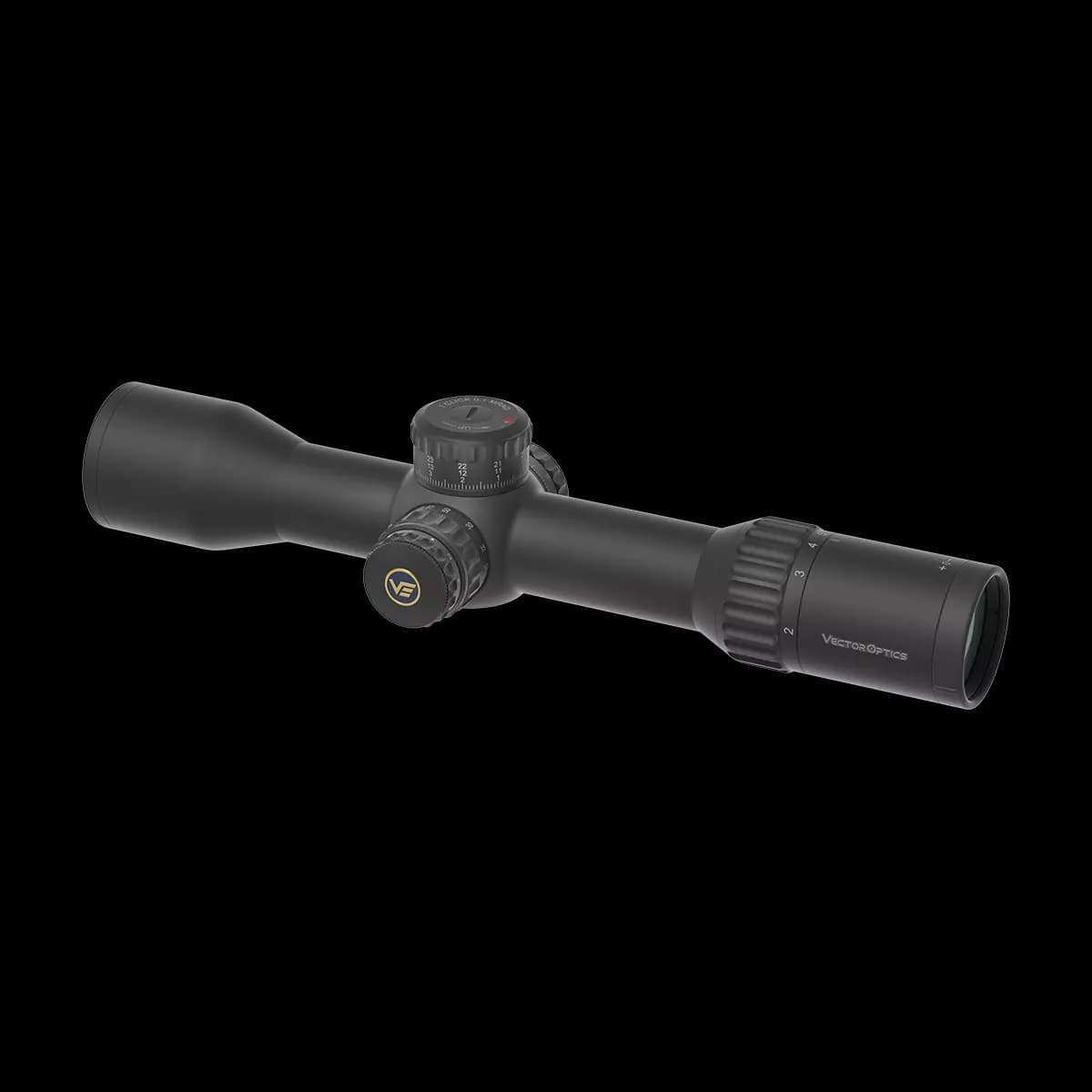
Vector Optics Continental 2-12x44 RAR FFP
Shooters who want a first focal plane 2-12x with real elevation travel and glass that outruns its price
DMR-oriented 2-12x MPVO with an illuminated rapid ring and Christmas-tree RAR2 reticle
- +Broad 2-12x range
- +Large adjustment range
- +Four-inch eye relief
- −Heavy at 27.1 ounces
- −2x minimum is slower than a true 1x LPVO
- −34mm mount required
Vector Puts Real Value in the Box
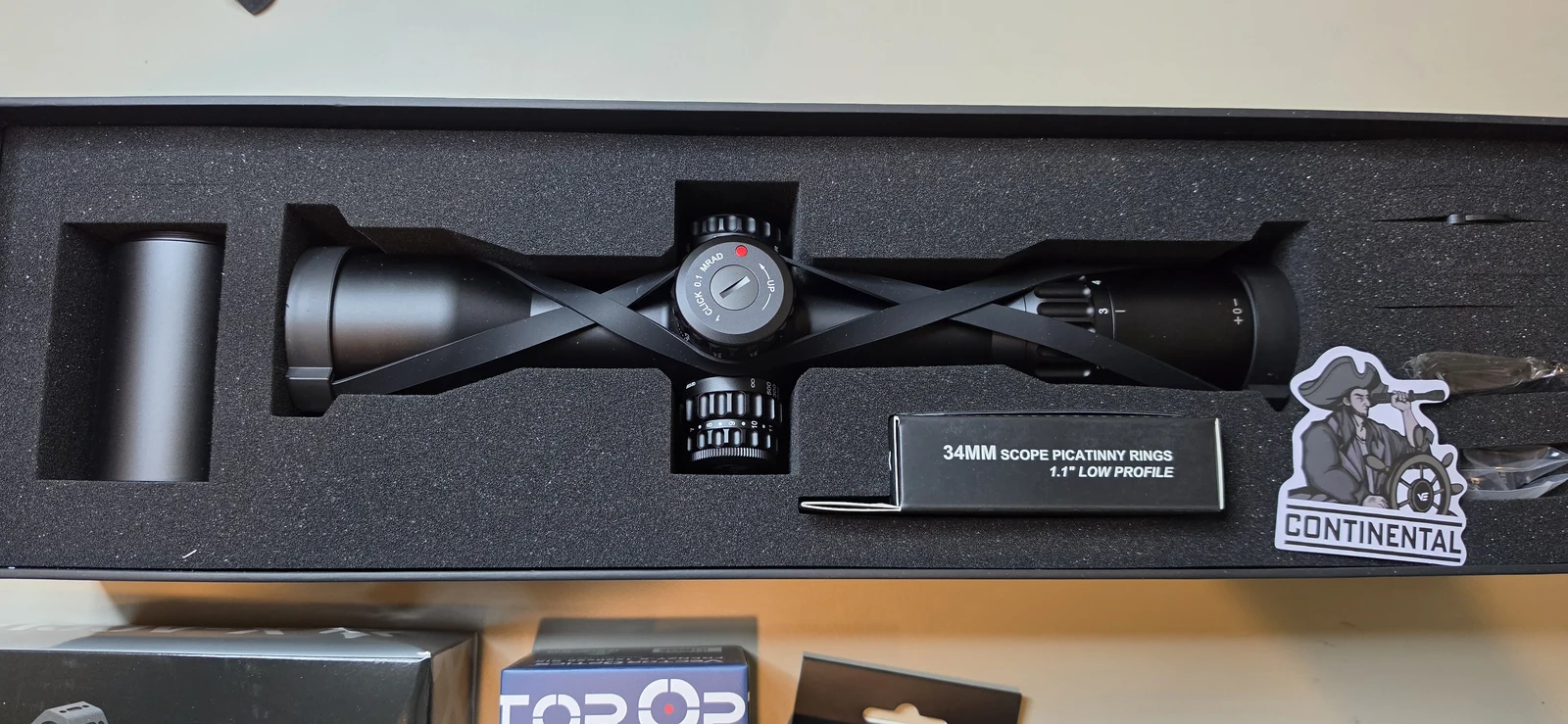
The Continental x6 ships with 34mm Picatinny rings, a sunshade, a spare elevation turret, a plastic wrench, a cleaning cloth, and clear bikini-style lens covers. That accessory list matters more than it sounds. A 34mm tube normally forces a separate mount purchase, and decent 34mm rings are rarely cheap, so a set of 1.1 inch low-profile rings in the box removes a real line item from the total cost of getting this scope onto a rifle.
The clear lens covers are the small touch that stands out. They are a bikini-style pair, two cups joined by a strap across the tube that pulls off as one piece, not hinged flip caps. Because they are transparent you can leave them on and still get a sight picture, so there is no moment where you shoulder the rifle and find yourself looking at opaque plastic.
The spare elevation turret is not a breakage spare, which is the easy assumption to make. The turret fitted to the scope carries the zero stop; the spare is the same turret without that mechanism, for shooters who would rather have the full sweep of the erector than a hard stop at their zero. That also explains the plastic wrench: after zeroing you pull the elevation turret with it, rotate the inner ring clockwise until it stops so the locating pin seats, then reinstall the turret at zero.
The Glass Punches Well Above the Price
The optic itself is the reason to buy this package. The glass looks genuinely good, not good-for-the-money good, with a bright flat image and color that holds together from 2x to 12x. Nothing about looking through it suggests a budget scope, which is not something you can say about most optics that land near the $549 mark. If you have been shopping this segment and found the glass uniformly disappointing, this is the one that breaks the pattern.
The published field of view runs 62.4 feet at 100 yards at 2x down to 10.8 feet at 12x, with 100mm of eye relief and side focus that racks from 10 yards to infinity. Vector rates the housing IP67.
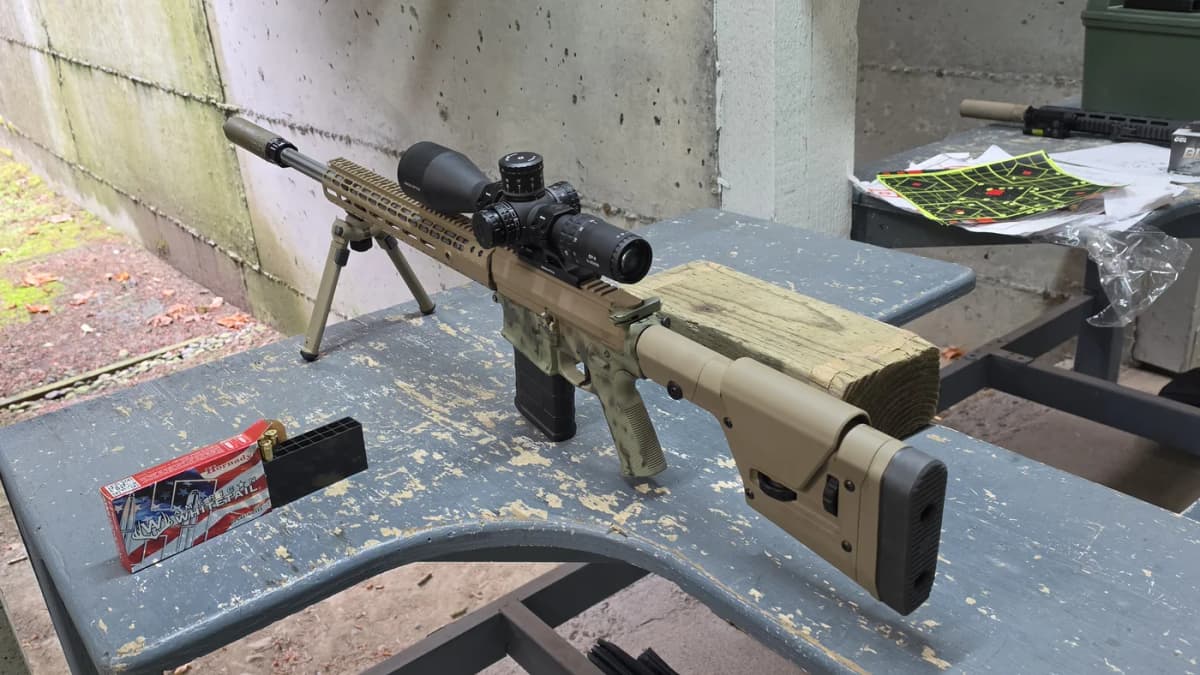
The Continental is heavy for its class. Vector lists it at 767 g, or 27.1 ounces. The Primary Arms PLxC 1.5-12x36 is 19.7 ounces and the Arken OUTRIDER 2-12x42 is 23.8 ounces, both on 30mm tubes. The closest match is the Vortex Strike Eagle 3-18x44 at 26.6 ounces, which also uses a 34mm tube, so most of the extra weight comes from the bigger tube and the elevation travel it makes room for. That puts the Continental in DMR and hunting territory rather than on a lightweight carbine.
Stay Updated on Optics Reviews
Hands-on reviews, reticle breakdowns, and price drops on the optics we actually shoot. One email a week.
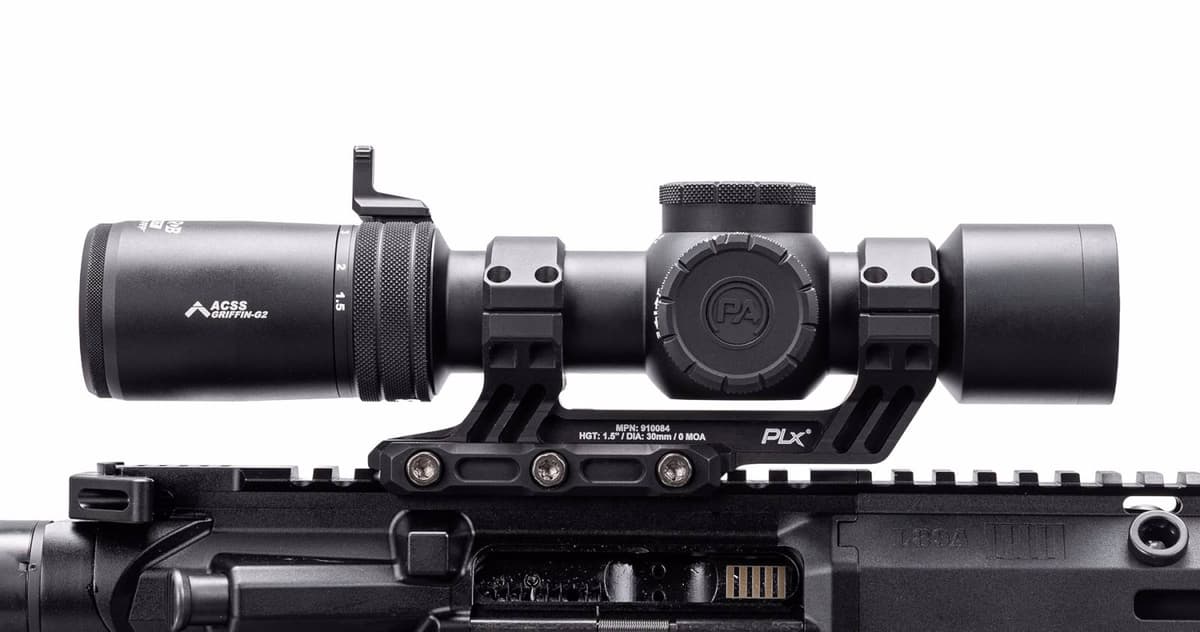
Primary Arms PLxC 1.5-12x36 FFP RDB
A 12x top end in a 19.7-ounce, 30mm-tube body
Compact 1.5-12x FFP scope with Japanese ED glass and RDB diffractive ACSS Raptor reticle
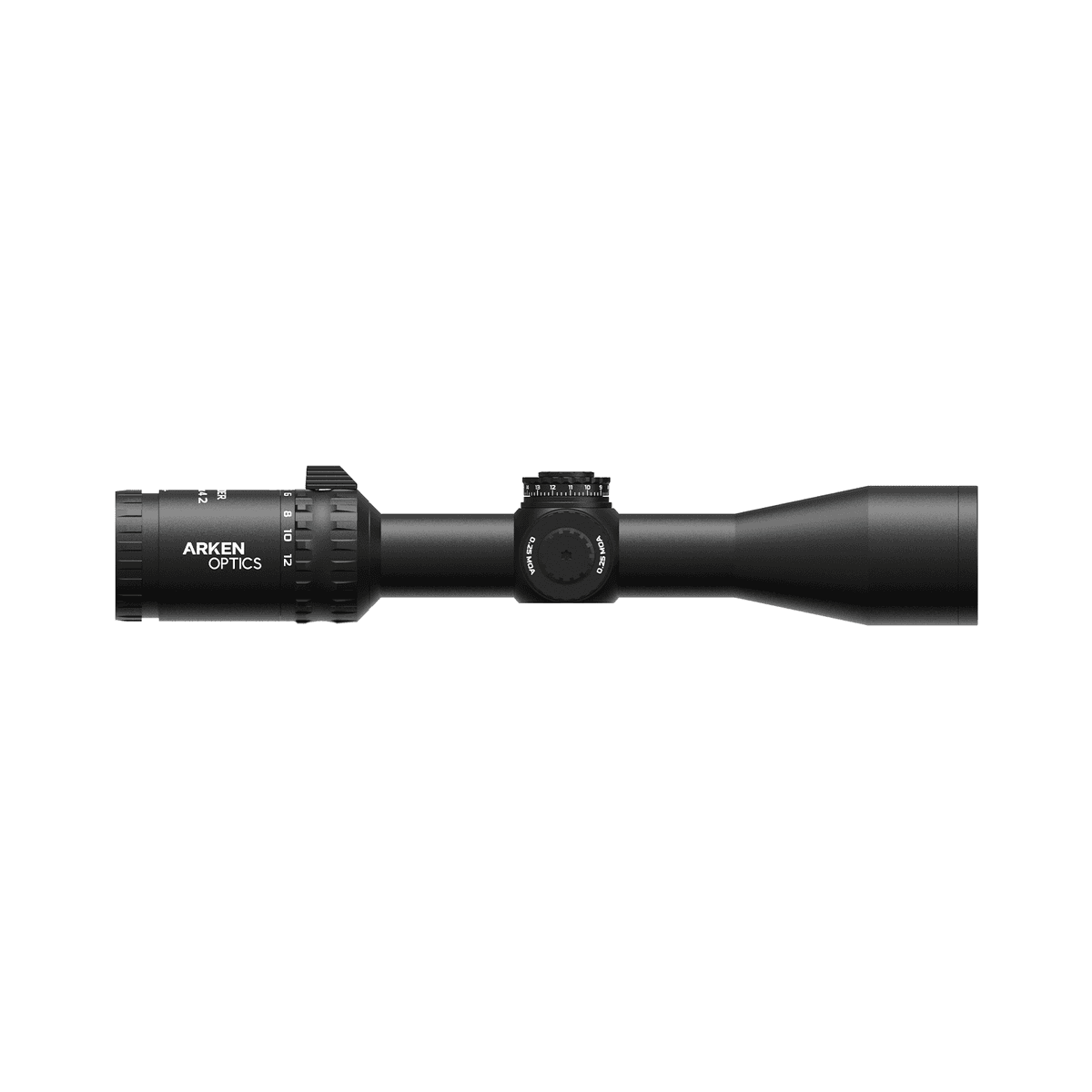
Arken OUTRIDER 2-12x42 SFP
The same 2-12x range on a 30mm tube at 23.8 ounces
2-12x hunting MPVO with a 30mm tube and illuminated FDR or non-illuminated DLR duplex reticle
Vortex Strike Eagle 3-18x44 FFP
A 34mm-tube FFP alternative at 26.6 ounces
3-18x FFP scope with an illuminated EBR-7C reticle, RevStop zero system, and 34mm tube
The VET-RAR 2 Reticle Is the Best Design Decision Here
The reticle does two different jobs well. At low power you get a large illuminated rapid ring, a donut that is fast to find and easy to shove onto a target without hunting for a center dot. As you climb through the magnification range, the christmas-tree hold grid opens up underneath the center and you switch from a fast aiming reference to a precision holdover tool. Most reticles in this price bracket pick one of those jobs and do it adequately. This one does both.
Because the Continental is first focal plane, the mil subtensions stay true at every power setting, so a hold that works at 6x works at 12x. That is the correct choice for a scope meant to stretch, and it is the reason the reticle shrinks to a fine wire at 2x. The illumination helps you find the ring, but be clear about what it is: daylight visible, not daylight bright. You can see that it is lit in full sun, and it does not overpower the target the way a red dot does. It is an aid to picking the reticle up against a busy background, not a substitute for a red dot. The illumination has 11 brightness levels and a 6-hour auto shut-off, so a scope put away with the illumination still on does not drain its CR2032 battery.
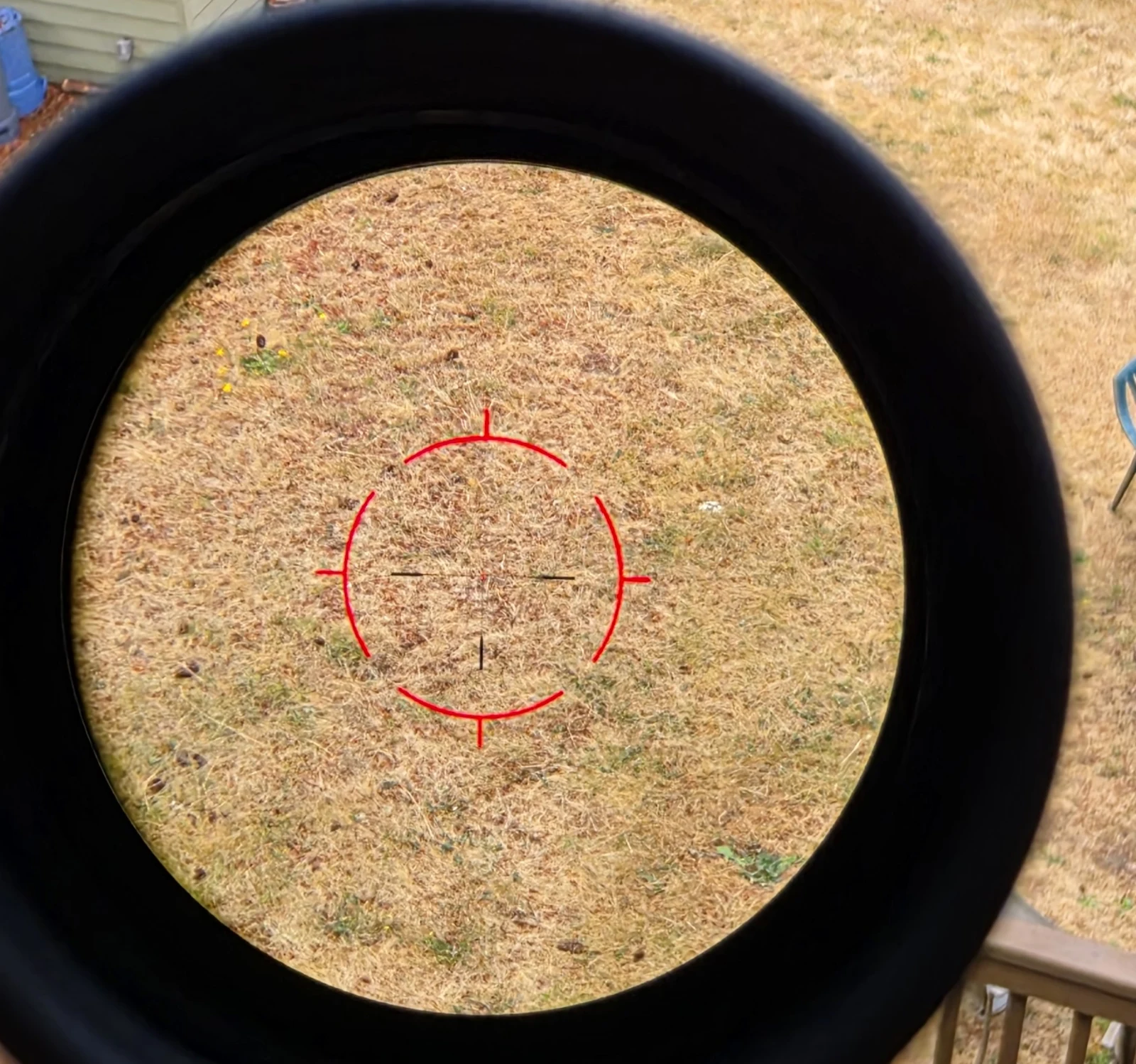
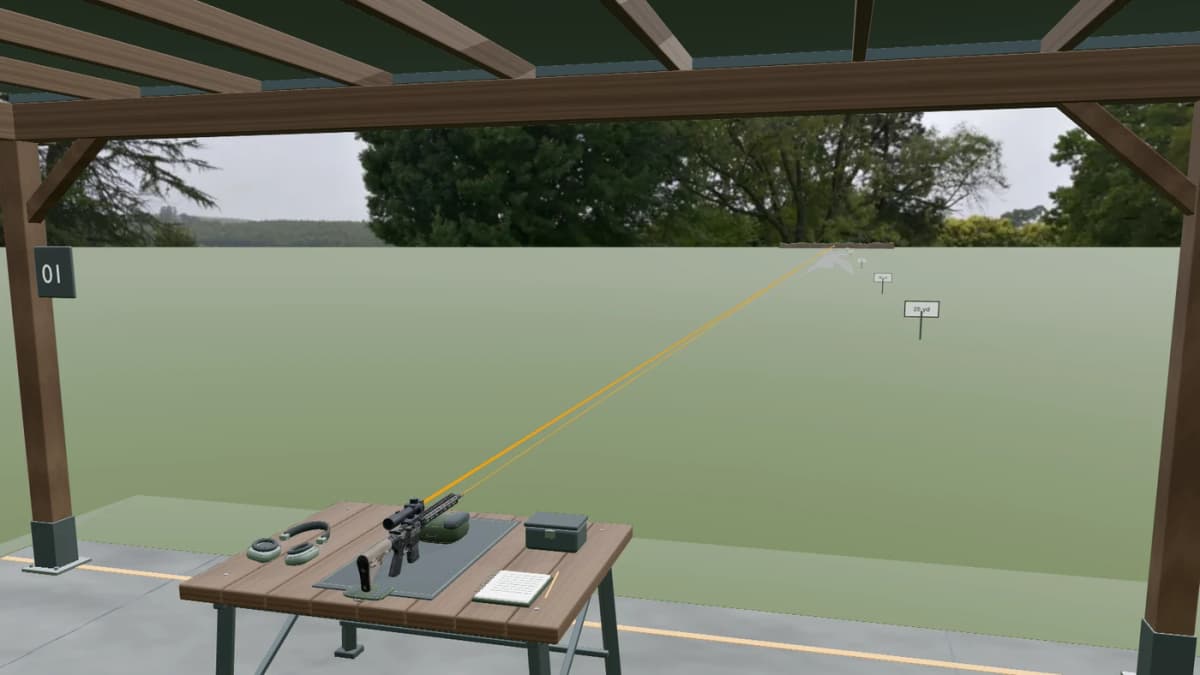
Through-scope video is coming soon. In the meantime the range simulator below puts the 2-12x first focal plane picture in front of you, so you can watch the rapid ring frame the target at 2x and slide out of the field as you climb toward 12x. To change the distance, target, load, or zero, open the same scene in the full range explorer.
Try the 2-12x view on the range
Put the Continental x6 on a target at distance and walk the magnification from 2x to 12x. The VET-RAR 2 is drawn from Vector's reticle sheet at the scope's published field of view, so the 65 mil ring frames the target at 2x and leaves the field above 6x, the way a first focal plane reticle behaves.
Letters are 36, 24, 18, 12 and 8 cm tall. Compare how much detail fits in the view as you zoom.
Advanced
Each optic at its own highest setting: compare the detail you can see.
First focal plane · product specification
21.6 ft across the view
Published field of view
Reticle drawn from the subtensions on this sheet; holds and the BDC table come from it.
How much fits in the view?
Top-down · fits the selected distanceAlong the range and across it use the same scale. The short center mark shows the object’s width.
A · 12× · 21.6 ft wide
Published field of view
B · 18× · 13.4 ft wide
Published field of view
A covers 61% more width at this distance. The narrower view makes the object fill more of an equal-size lens window.
Reticle drawn from the manufacturer's published subtensions. Housing, glass, brightness and eyebox are simulated.
Open the full range simulatorTurrets Are Tactile and Zeroing Took One String
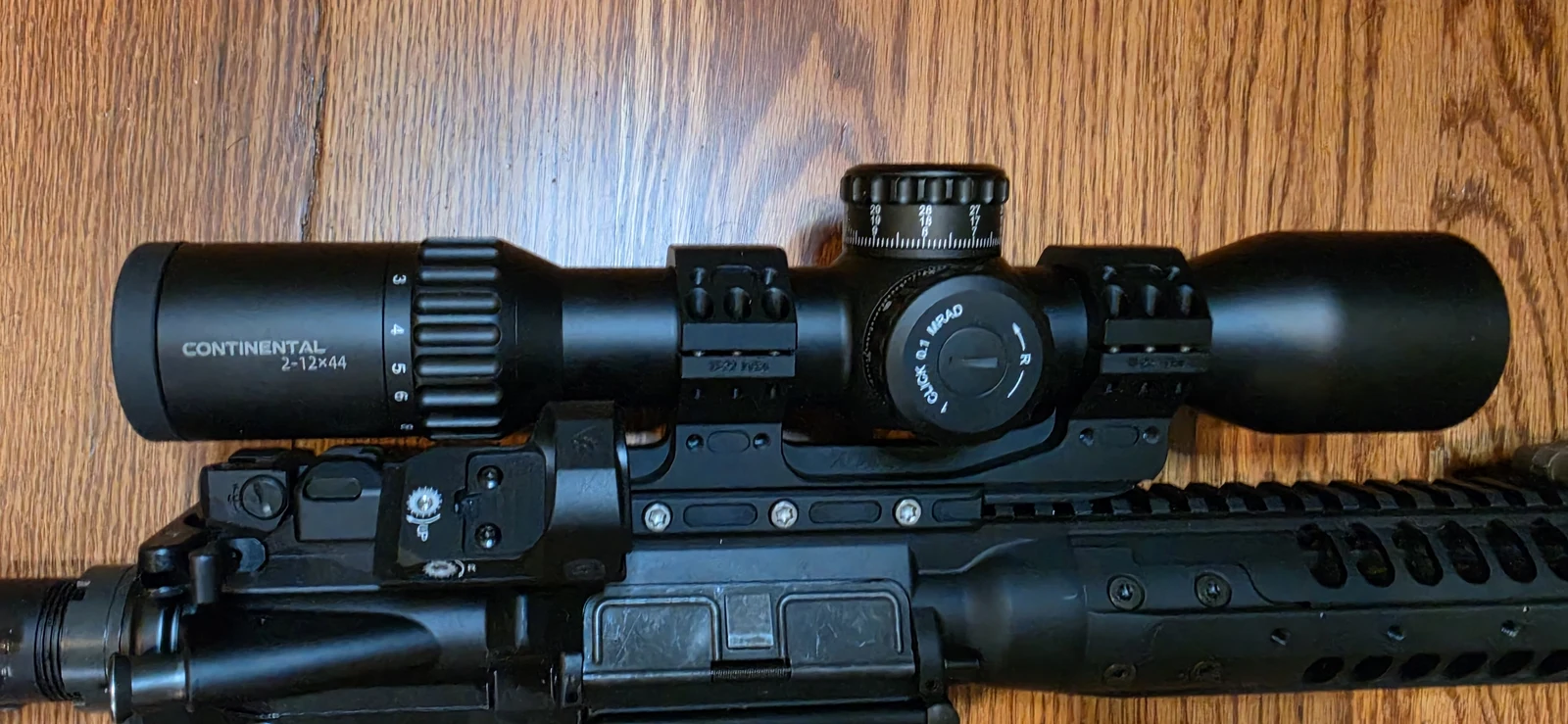
Zeroing was uneventful, which is the highest compliment you can pay a turret. The clicks are 0.1 MIL, they are tactile enough to count without looking, and the adjustments went where they were told. The turrets lock and carry a zero stop, and the 34mm tube gives you at least 63 MIL of elevation and more than 30 MIL of windage to work with, which is more travel than most shooters on an AR-pattern rifle will ever need.
If you are setting one of these up for the first time, our AR-15 zeroing guide covers the click math and printable targets, and the optic mounting guide covers torque values and eye relief placement for a scope this size.
The Eye Box Tightens as You Zoom
At 2x the eye box is reasonable and forgiving enough for general use. It gets meaningfully tighter as magnification climbs, which is expected behavior for a variable in this class but worth planning around. By the time you are at 12x you want to be in a stable position with a consistent cheek weld, on a bipod or a bag rather than standing unsupported. That is not a defect, it is the honest reality of running high magnification on any scope near this price.
Practically this means the Continental rewards a deliberate mount job. Get the eye relief set correctly for your most common shooting position and the tighter high-power eye box stops being something you notice.
The magnification lever is a little stiff, so changing power quickly takes more effort than it should. A throw lever gives you the leverage to snap between 2x and 12x without breaking your grip, and it is worth adding to this scope.
Run an Offset Red Dot With This Scope
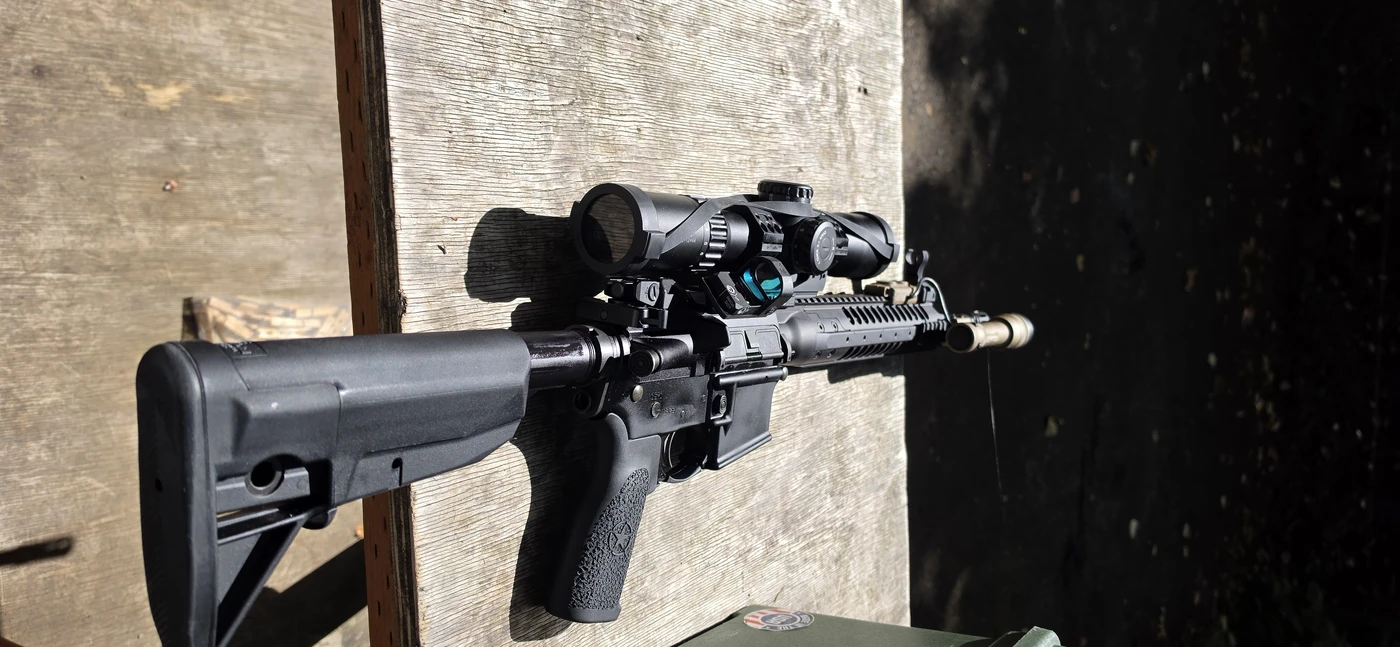
The Continental bottoms out at 2x, not 1x, and that single fact drives the recommendation. Combine the 2x floor with a first focal plane reticle that goes fine and small at the low end, a tightening eye box, and no daylight-bright red dot center, and you have an optic that is poorly suited to anything happening inside 25 yards. A 45-degree offset red dot fixes all of it for a modest amount of money and about two ounces.
The contrast worth understanding is with a second focal plane scope carrying a daylight-bright center. A Primary Arms PLxC 1-8x24 in second focal plane with the fiber wire reticle stays perfectly usable at its low end for close work, because the illuminated center behaves like a red dot and does not shrink with magnification. This scope is the opposite design, and it needs the offset dot to cover that ground. Our offset red dot mount guide ranks the 45-degree and wing options, and the optic selection matrix covers when a magnified primary needs a secondary sight at all.
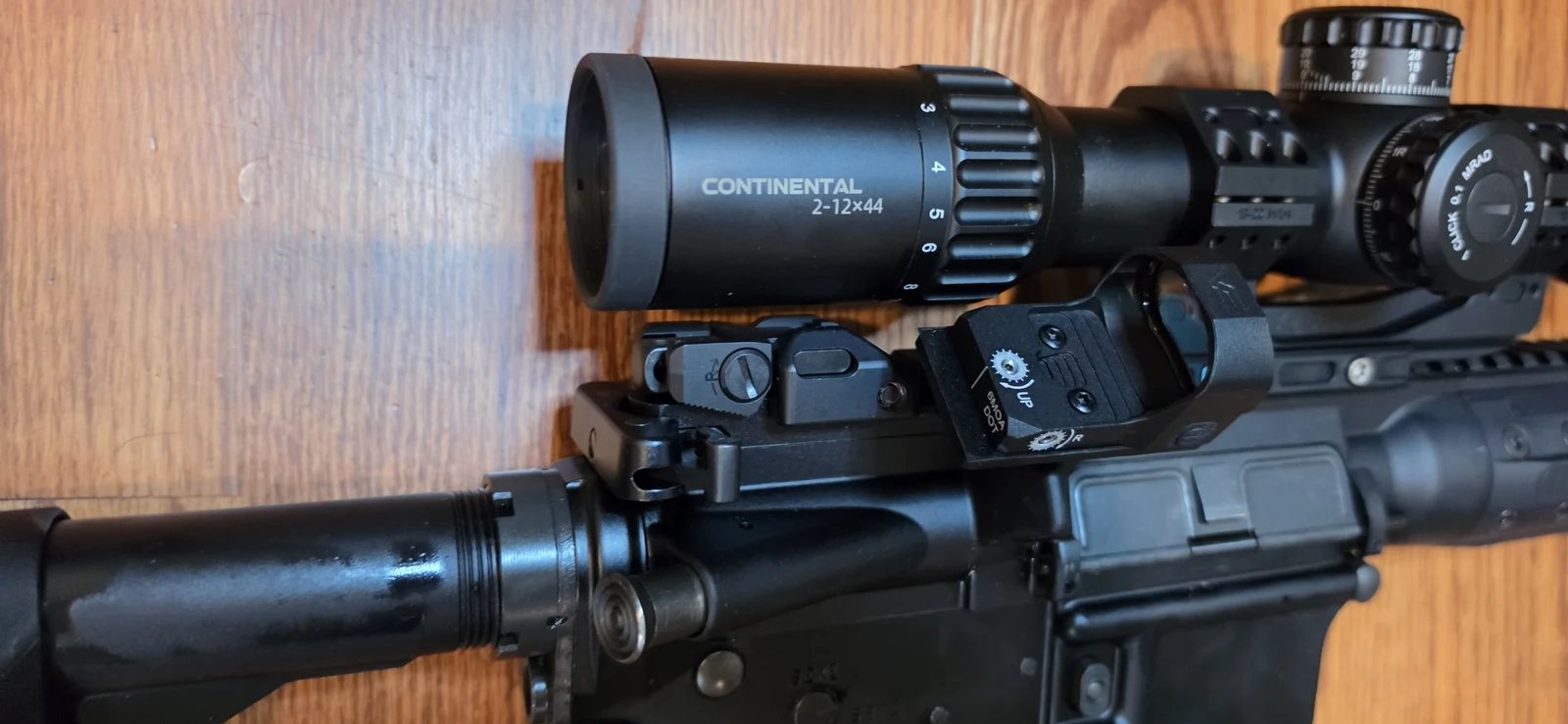
Skip the Bundled Frenzy FM
The Frenzy FM 1x20x28 that comes in the bundle is a pass. Save the money and put a Holosun or Osight dot next to this scope instead. The Frenzy works: it is a 6 MOA dot in a 20x28mm window on a TEK footprint, with eight daylight and two night vision brightness settings, a 6061-T6 housing, an IPX6 rating, and a claimed 50,000 hours on a CR2032. Nothing about those numbers is bad, but nothing about them earns a place on a rifle with a scope this good.
Two things date it. Vector does not document a motion sensor or auto shut-off, so the dot stays on until you turn it off, and the CR2032 loads from the bottom of the housing, which means dismounting the sight to change a battery. The optic also needs a sealing plate sandwiched between it and the offset mount as part of the assembly. None of this stops it working, but it is the kind of design you stopped seeing on new red dots several years ago. In bright sunlight we also picked up some odd reflections in the window.
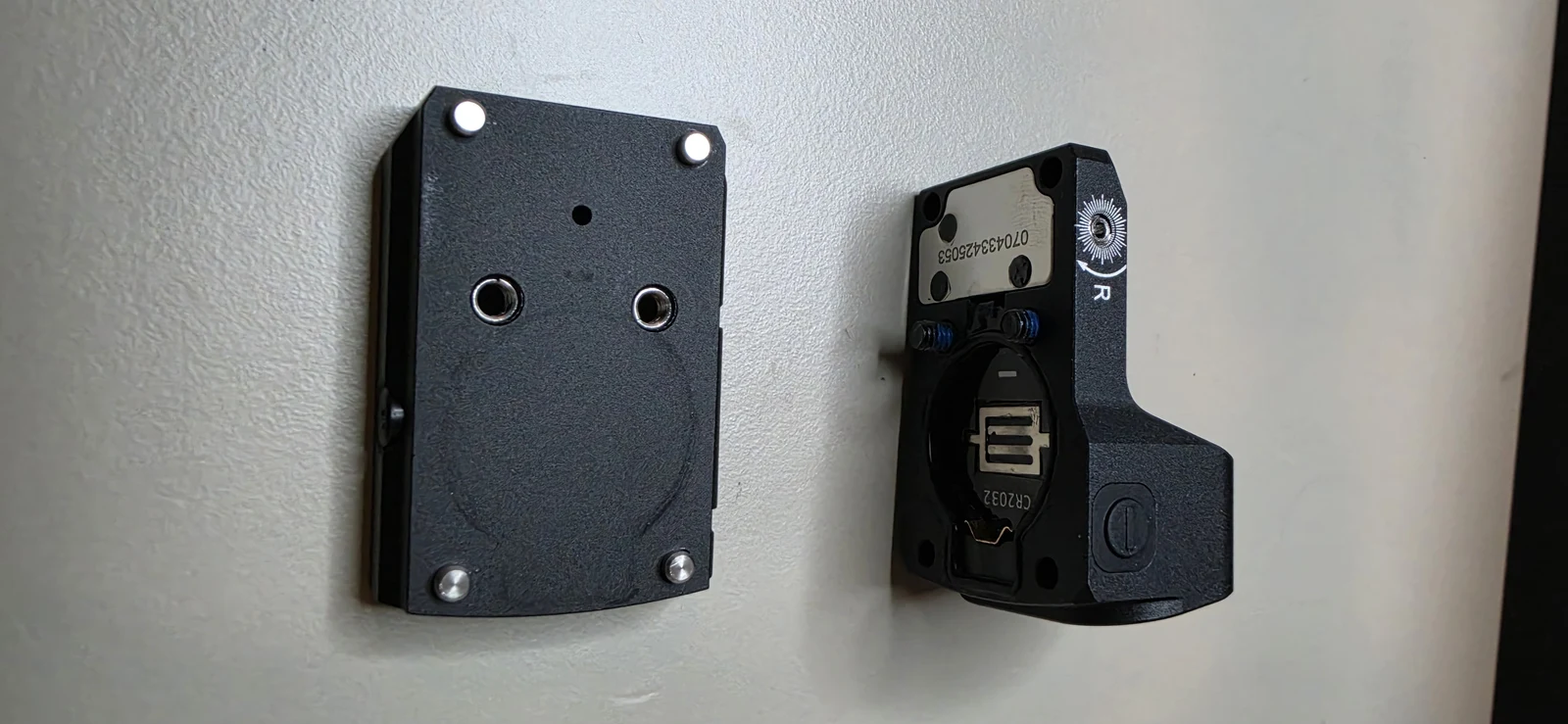
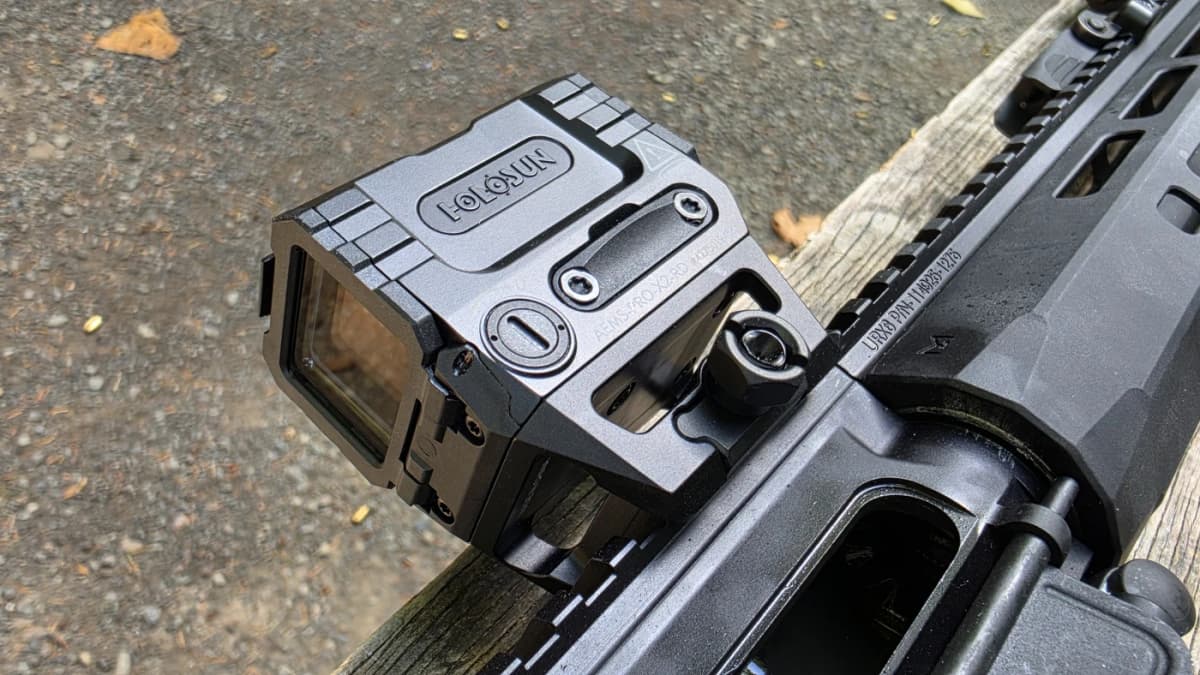
Both of the Frenzy's dated points are solved problems on the alternatives. The Holosun 507C X3 loads its CR1632 from the side and uses Shake Awake motion sensing, and the enclosed Osight XR recharges through a magnetic charging cover with the sight still mounted. Both sit on the RMR footprint, which the X-ACCU ring kit covered below takes directly.
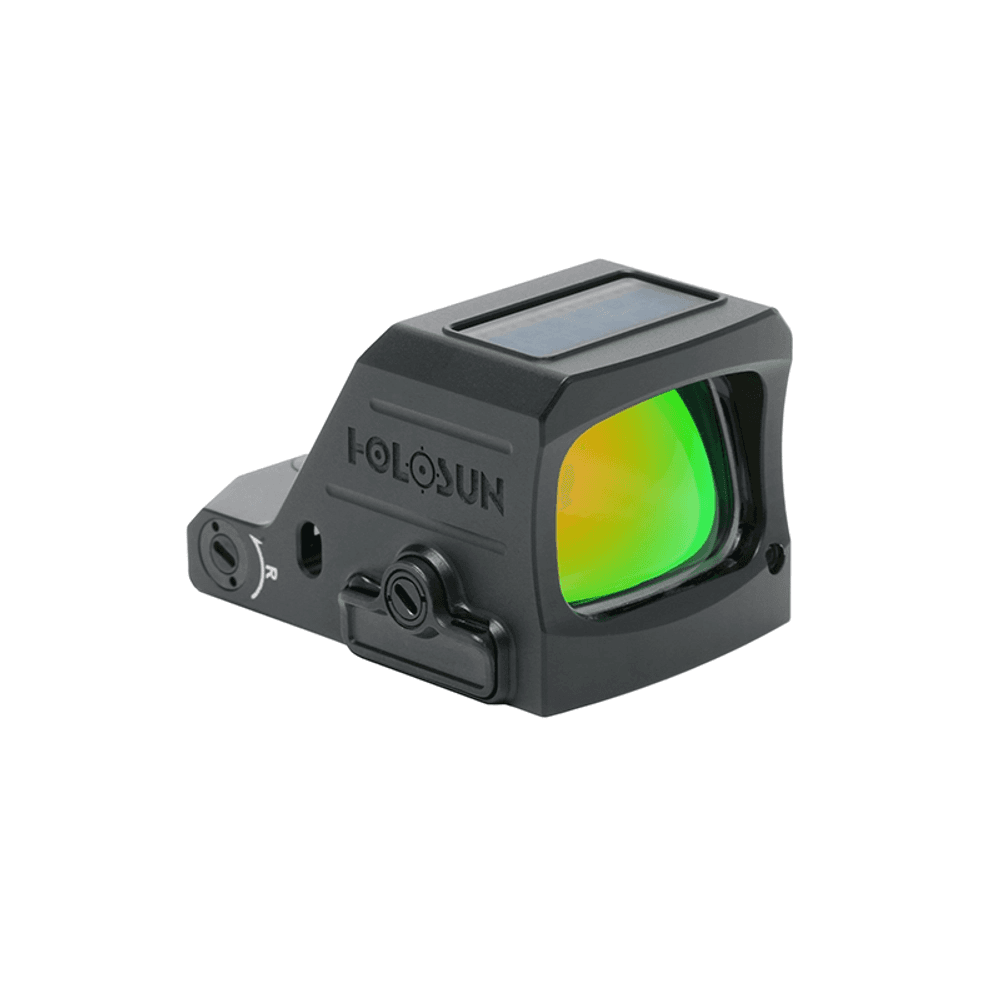
Holosun 507C X3
An RMR-footprint dot with a side-loading battery and Shake Awake, in place of the bundled Frenzy FM
Third-gen multi-reticle pistol dot with photodiode sensor, Solar Failsafe, and RMR footprint
- +Updated X3 housing and lens package over the X2 generation
- +Three reticle color options (red, green, gold) from launch
- +Forward light sensor speeds up auto brightness in changing light
- −Modest price increase over outgoing 507C X2
- −Open emitter design still vulnerable to debris
Affiliate links (?)
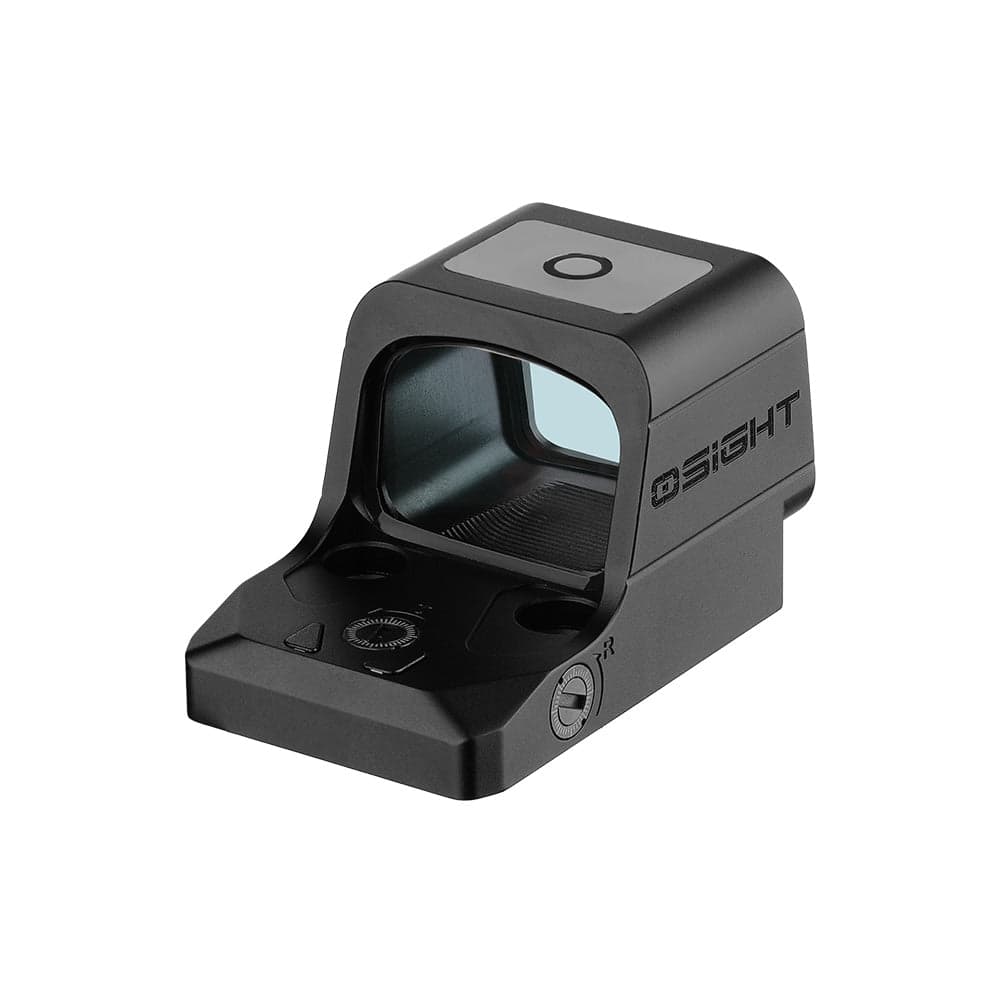
Osight XR Enclosed (RMR Footprint)
An enclosed RMR-footprint dot with a magnetic charging cover, in place of the bundled Frenzy FM
Duty-rated enclosed-emitter red dot on the RMR footprint with a 2/6+32 MOA multi-reticle system and a magnetic charging cover.
- +Multi-reticle system matches the Holosun 509T at roughly $250 less
- +Magnetic charging cover replaces traditional battery doors
- +Integrated fold-out backup rear sight eliminates suppressor sights
- −Rechargeable battery means no field swap with off-the-shelf cells
- −Osight has a shorter duty-cycle reliability record than Trijicon or Aimpoint
- −1.69 oz is heavier than the Holosun EPS (1.5 oz) and Trijicon RCR (1.45 oz)
The X-ACCU Kit Mounts the Dot on the Scope Ring
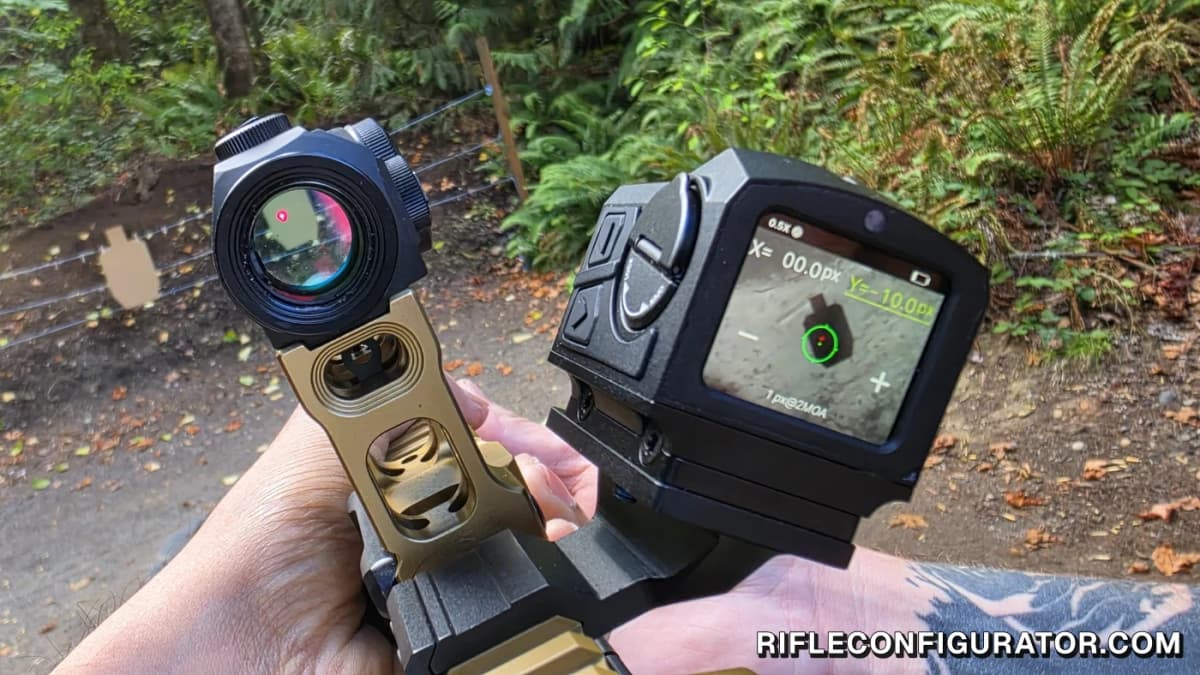
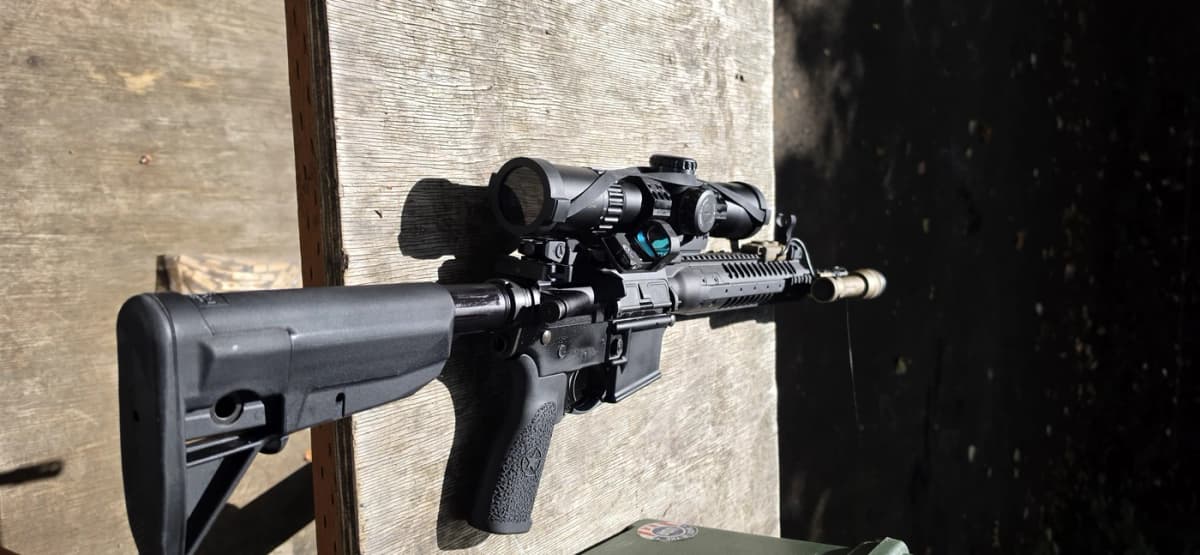
The best place for a red dot on this scope is the scope mount itself, and Vector makes the parts to do it. Alongside the scope, Vector sent its 34mm X-ACCU Mount Assembly Kit (XASR-A01): a replacement ring top, a short Picatinny rail, a riser, two red dot footprint adapter plates, and a Picatinny mount. It bolts to the ring of an X-ACCU 34mm mount and carries a red dot either on top of the scope or at 45 degrees off the side, so the dot rides on the scope mount instead of taking its own slot on the receiver rail.
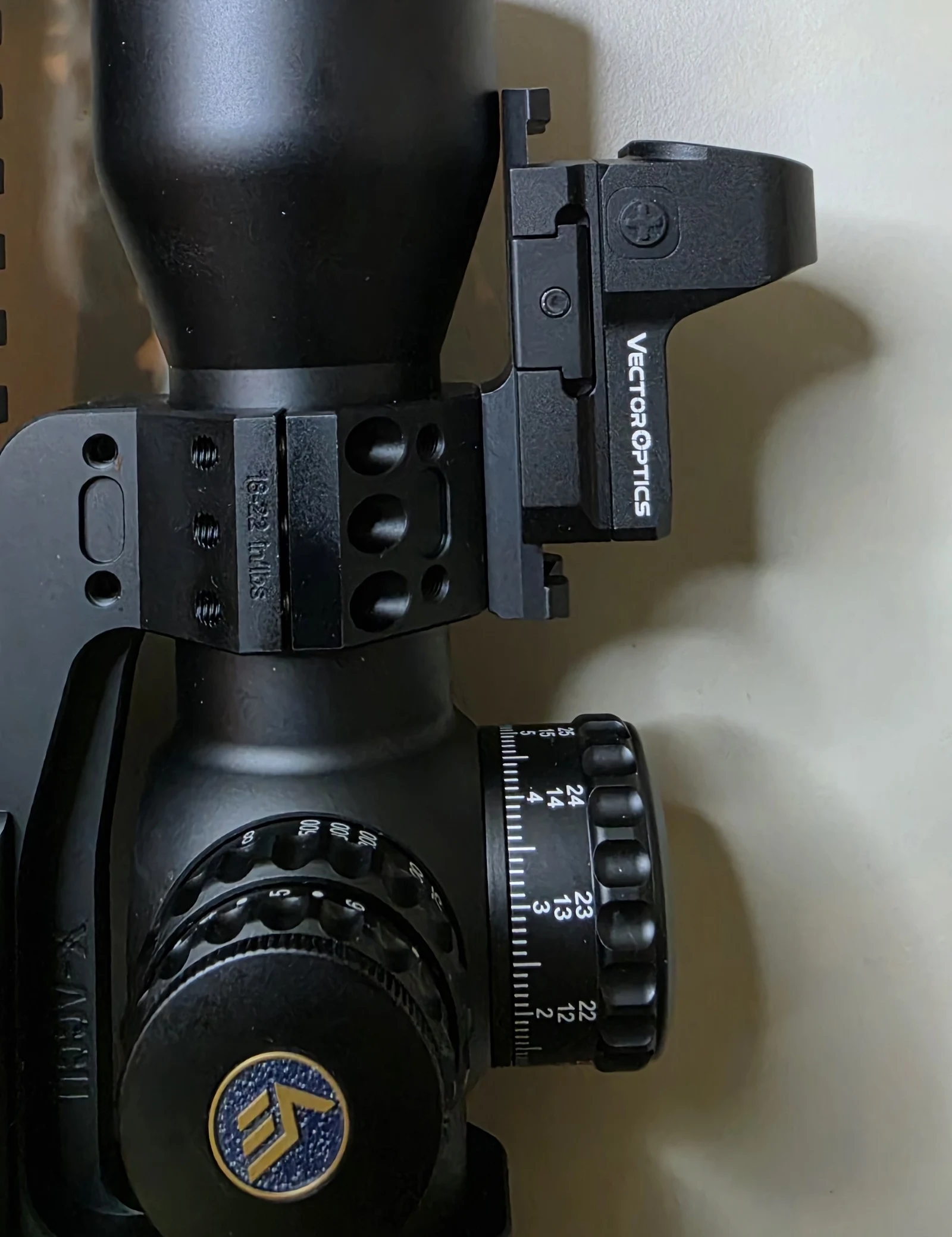
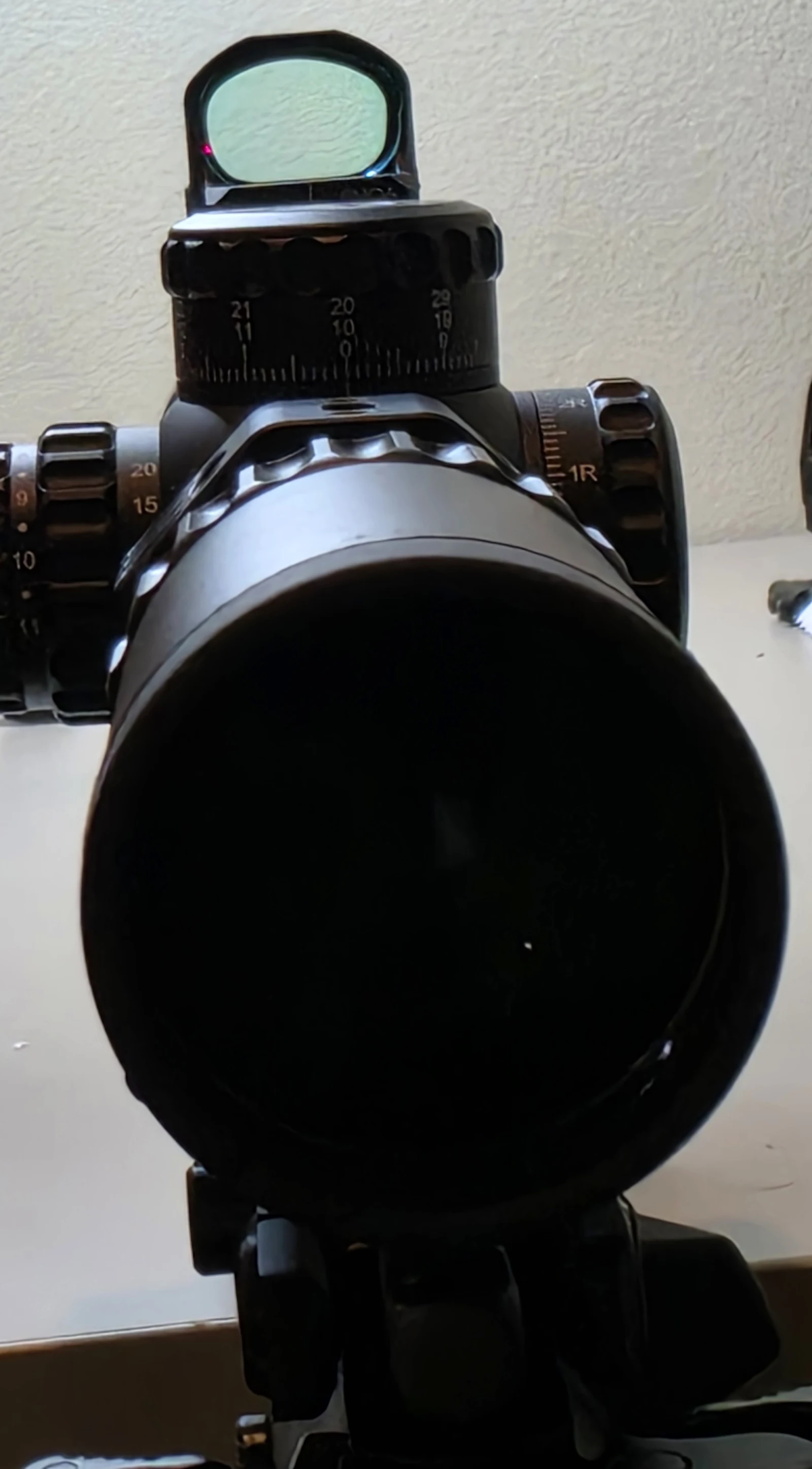
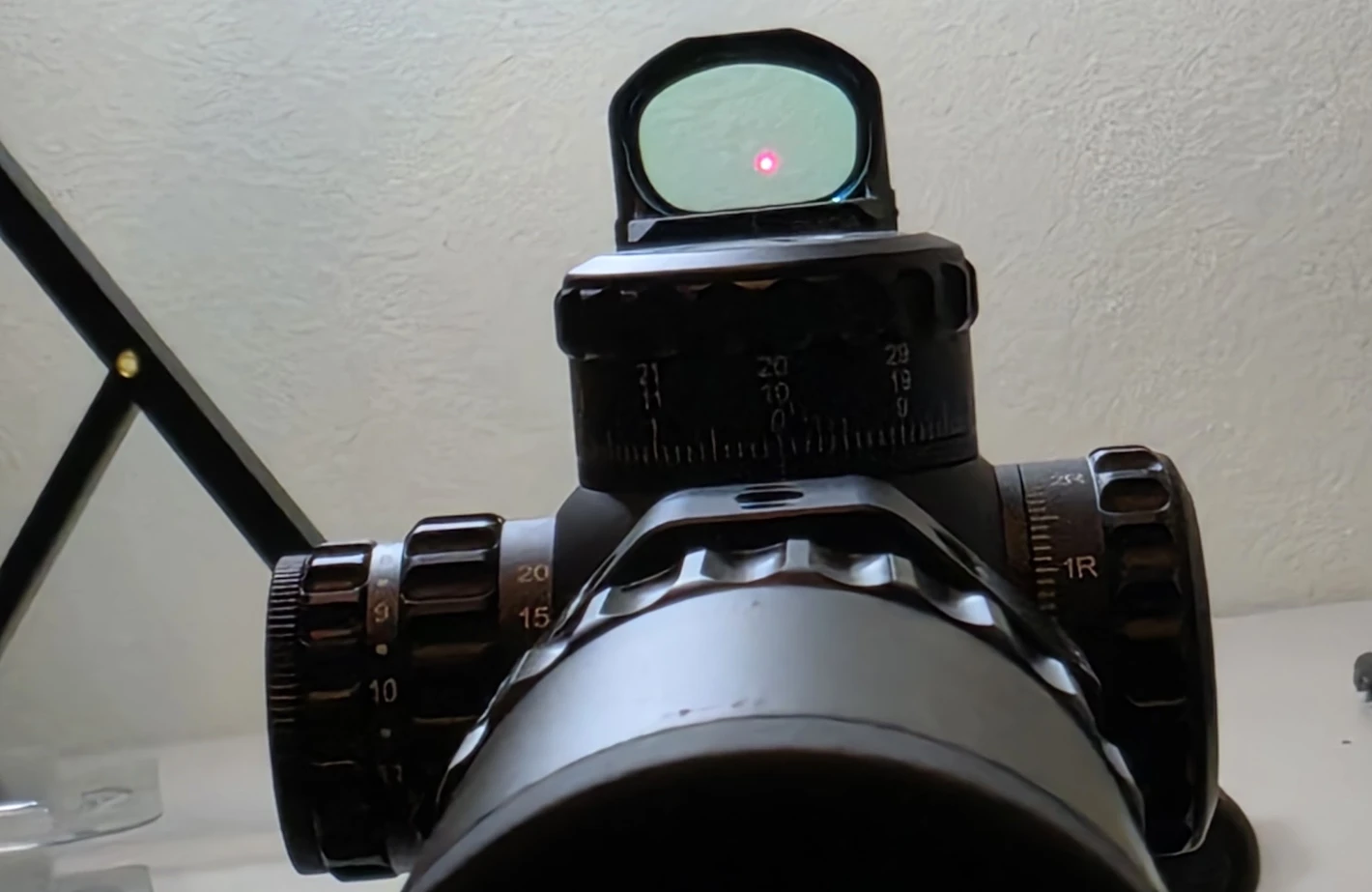
The one snag is footprints. The kit's two adapter plates are Vector's MOJ and MAG patterns, and neither fits the TEK footprint of the Frenzy FM that came with the scope. We skipped the plates, bolted the short Picatinny rail to the ring, and clamped the Frenzy on top of it. That works in both positions. One oddity in the hardware: the screws that attach the red dot mount and Picatinny rail to the ring are hex head, while the rest of the scope mount uses Torx, so keep both drivers on hand. If you are buying a dot to pair with this kit, match its footprint to a plate: MOJ is Vector's name for the RMR pattern, so an RMR-footprint dot like the Holosun 507C X3 or Osight XR bolts straight to the ring.
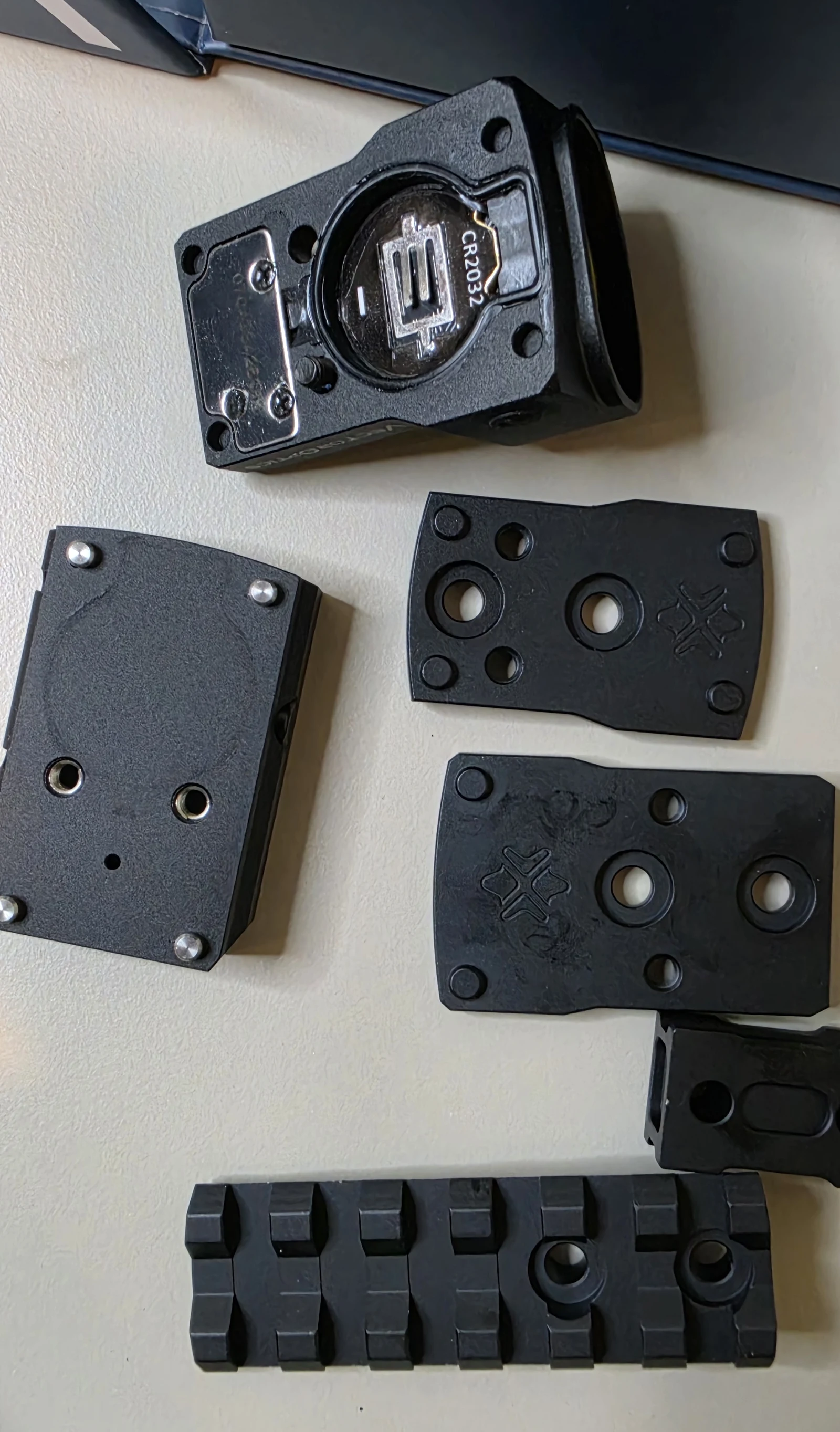
The ring top is machined for this: it is faceted, with a flat top face and an angled 45-degree face on each side, and each face is drilled so the rail can bolt to it. Getting both positions in one kit is the best part of it, because each earns its place. On top of the scope, the dot is the setup we prefer for longer-range scopes and for night vision use. At 45 degrees it is more ergonomic: roll the rifle and the dot comes to your eye with your head still on the stock. The ring also has extra drilled holes that look intended for a canted dot on its lower side, but we have not tested that position.
Bundle or Scope Only?
Bought separately the three pieces run $549 for the scope, $99.89 for the Frenzy FM, and $24.90 for the offset mount. The Vector Optics store also lists all three as a single bundled variant, which came to roughly twenty dollars under the separate total when we checked in September 2026.
Buy the scope on its own. Twenty dollars off does not make the Frenzy FM worth owning. Put that money toward a Holosun or Osight dot and mount it on a standard 45-degree offset mount, or on the scope ring with the X-ACCU kit, in which case the rail-clamped offset mount in the bundle is redundant too. The scope and the ring mount are what you are actually paying for here.
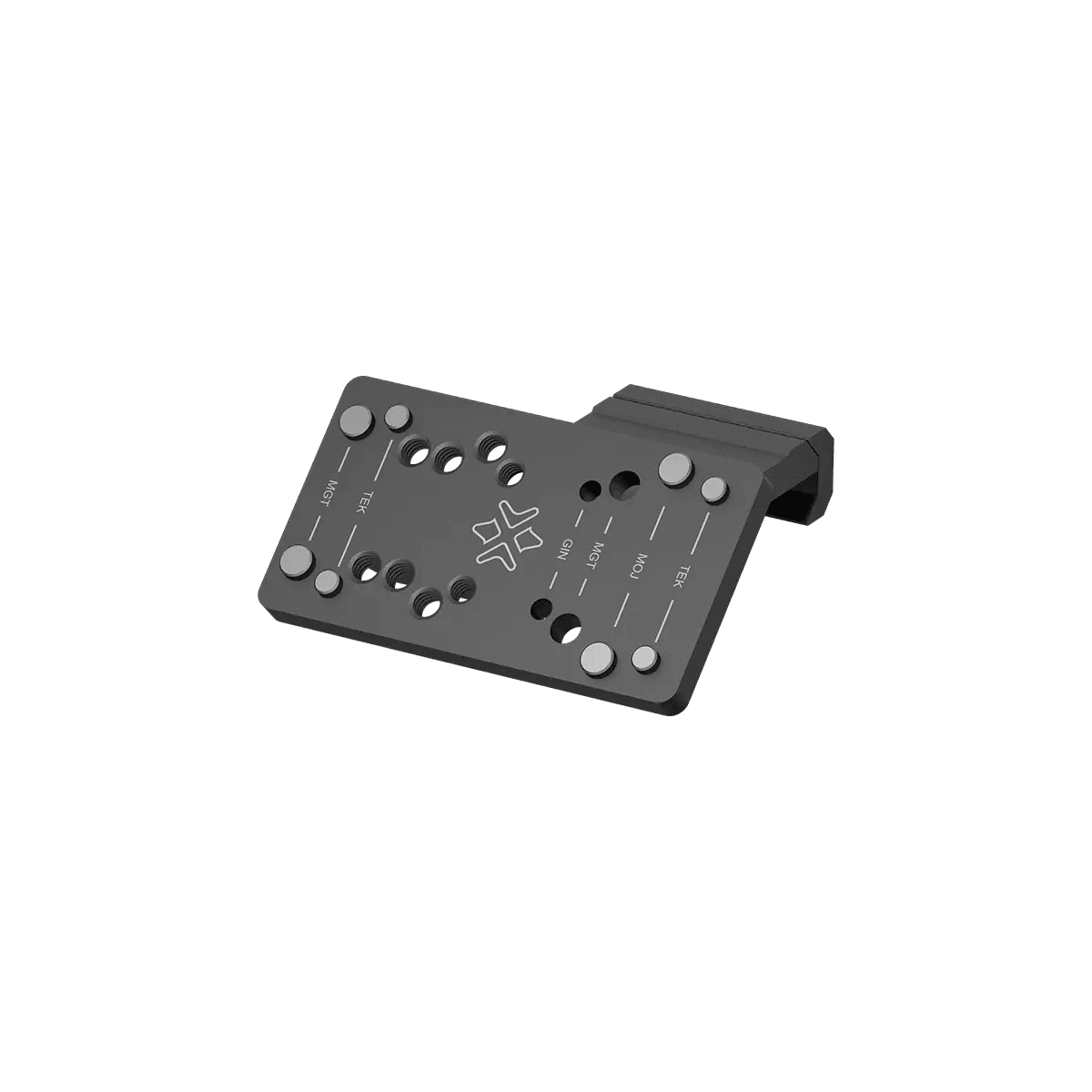
Vector Optics Universal 45° Offset Red Dot Sight Mount (SCFRM-29)
Putting an RMR, RMSc, Docter, or C-More footprint dot at 45 degrees on a Picatinny rail
Standalone 45° rail mount drilled for RMR, RMSc/SMS, Docter/Noblex, and C-More RTS/STS footprints
- +Standalone base works independently of the primary optic mount
- +One plate covers the RMR, RMSc, Docter, and C-More footprints
- +Light 1.27-ounce construction
- −Fixed 45° offset
- −No Aimpoint ACRO pattern on the plate
- −Standalone clamp requires space on the host rail
Shop Vector Optics
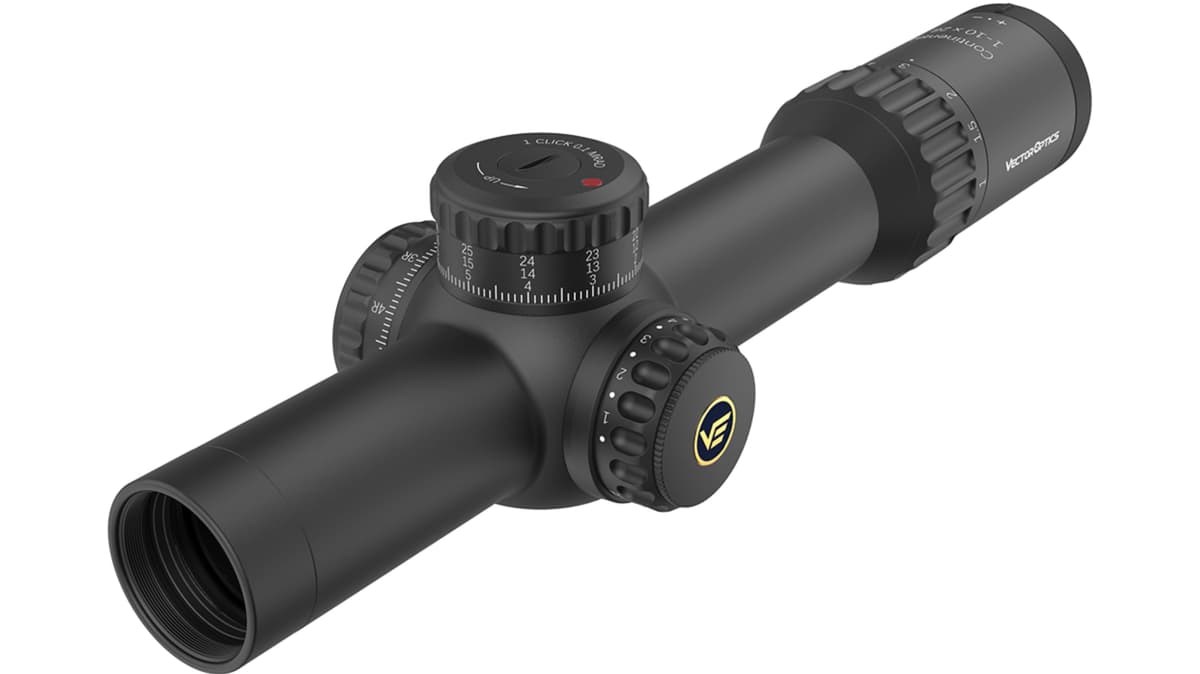
Vector Optics Continental 1-10x28 ED RAR FFP
- 1-10x28 FFP
- VET-RAR2 reticle
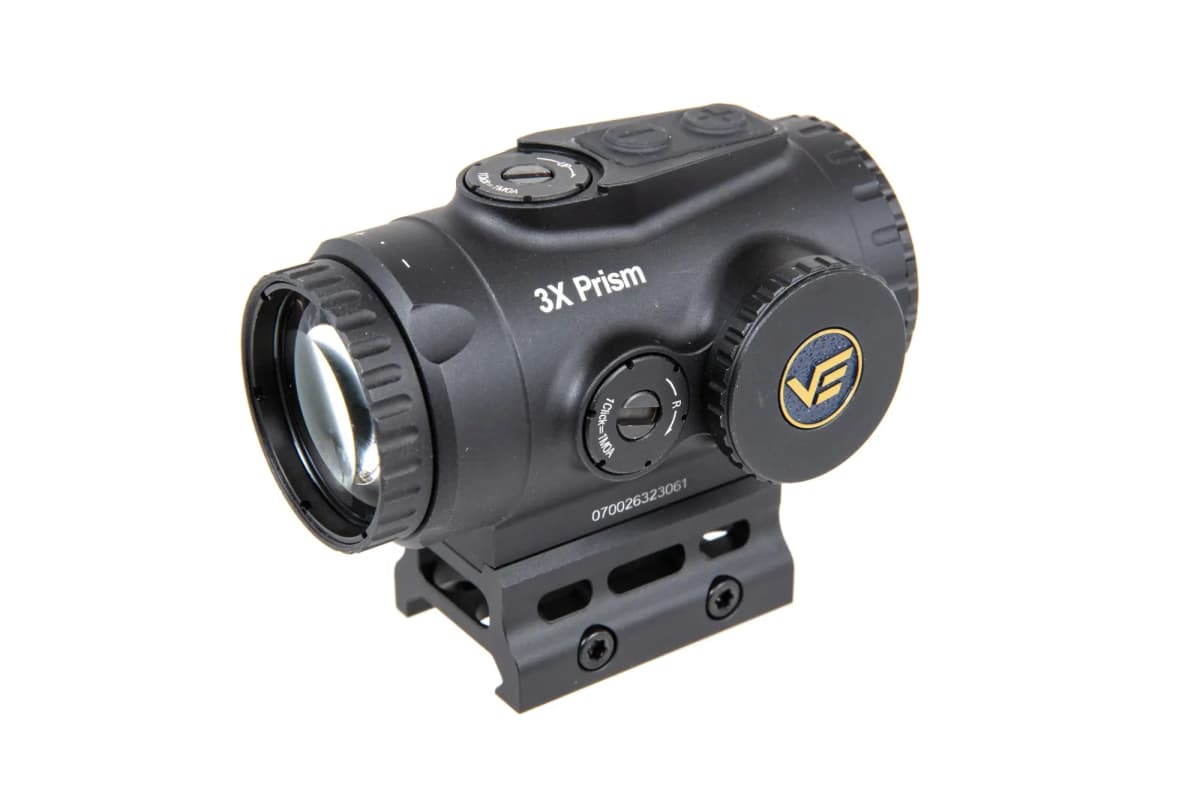
Vector Optics Paragon 3x18 Prism
- 3x18 prism
- VEPS-MBR .223 BDC
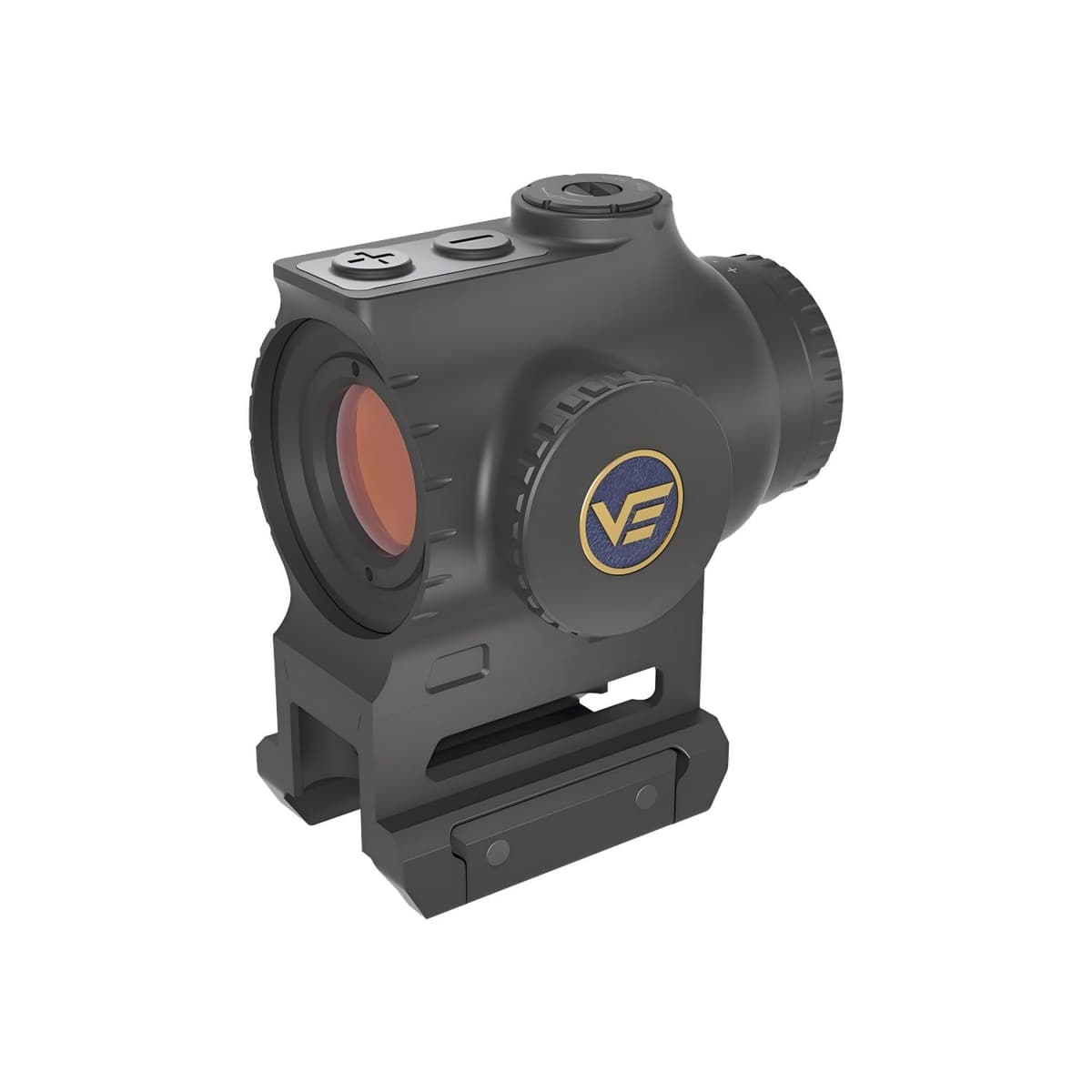
Vector Optics Paragon 1x18 Mini Prism
- 1x18 prism
- 2 MOA dot / 68 MOA ring
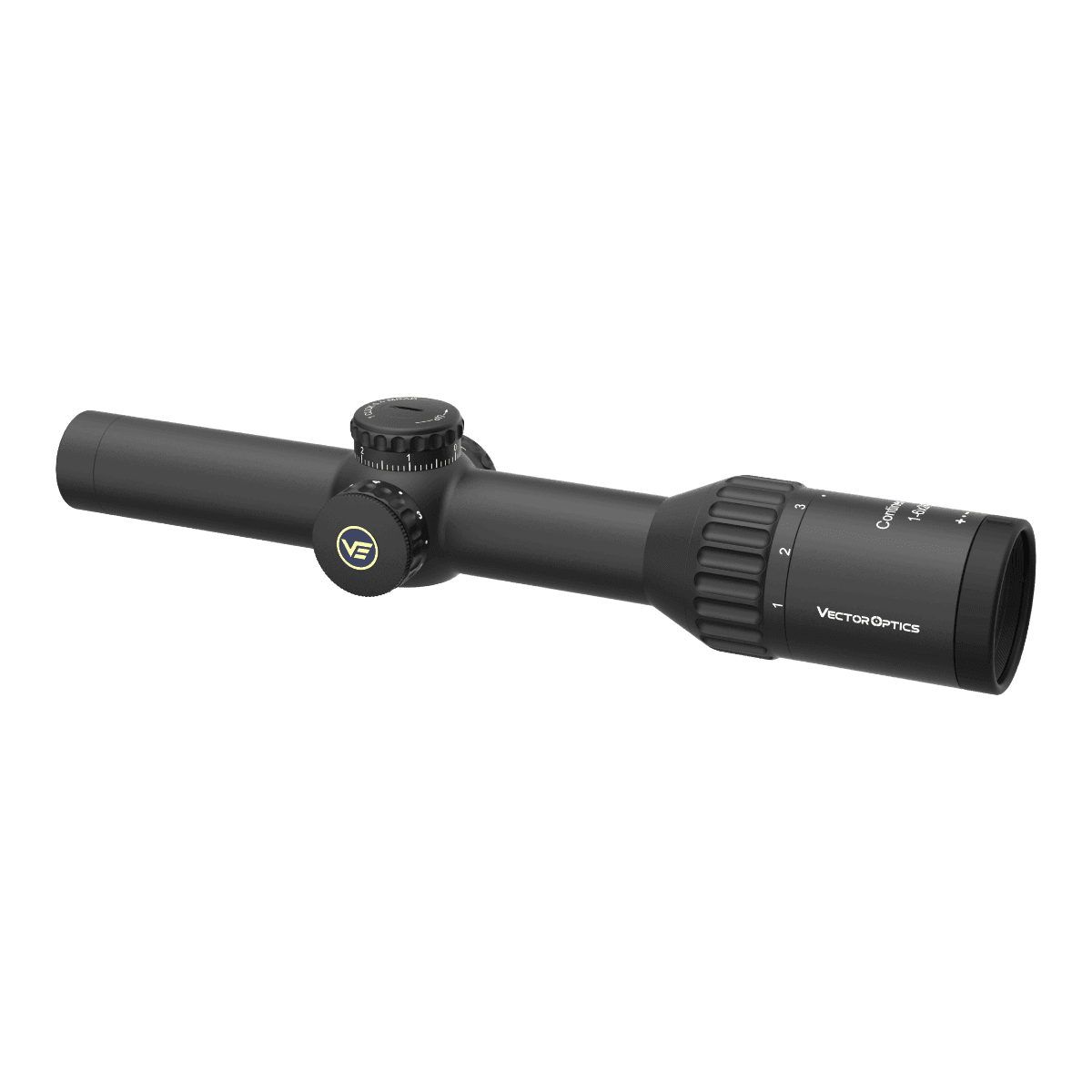
Vector Optics Continental 1-6x24i Fiber SFP
- 1-6x24mm SFP
- Fiber G4 BDC reticle
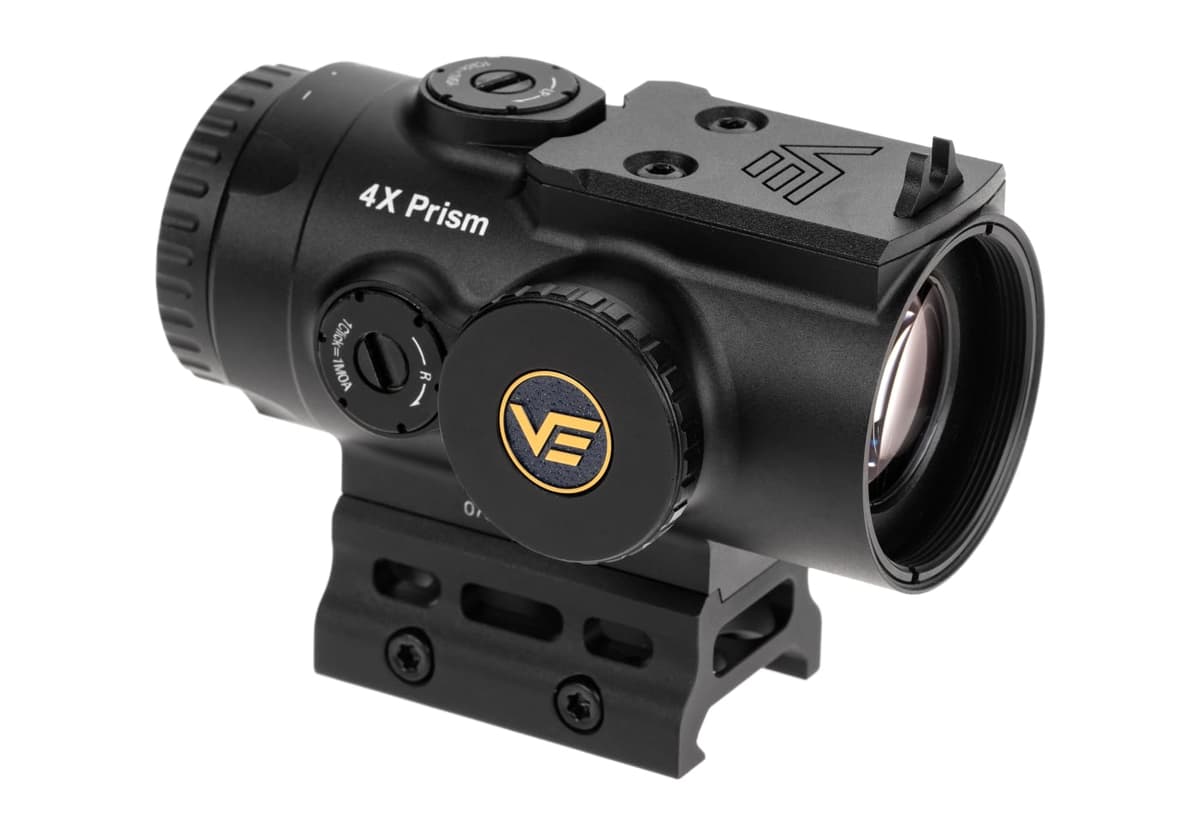
Vector Optics Paragon 4x24 Prism
- 4x24mm prism
- VEPS-MBR etched BDC
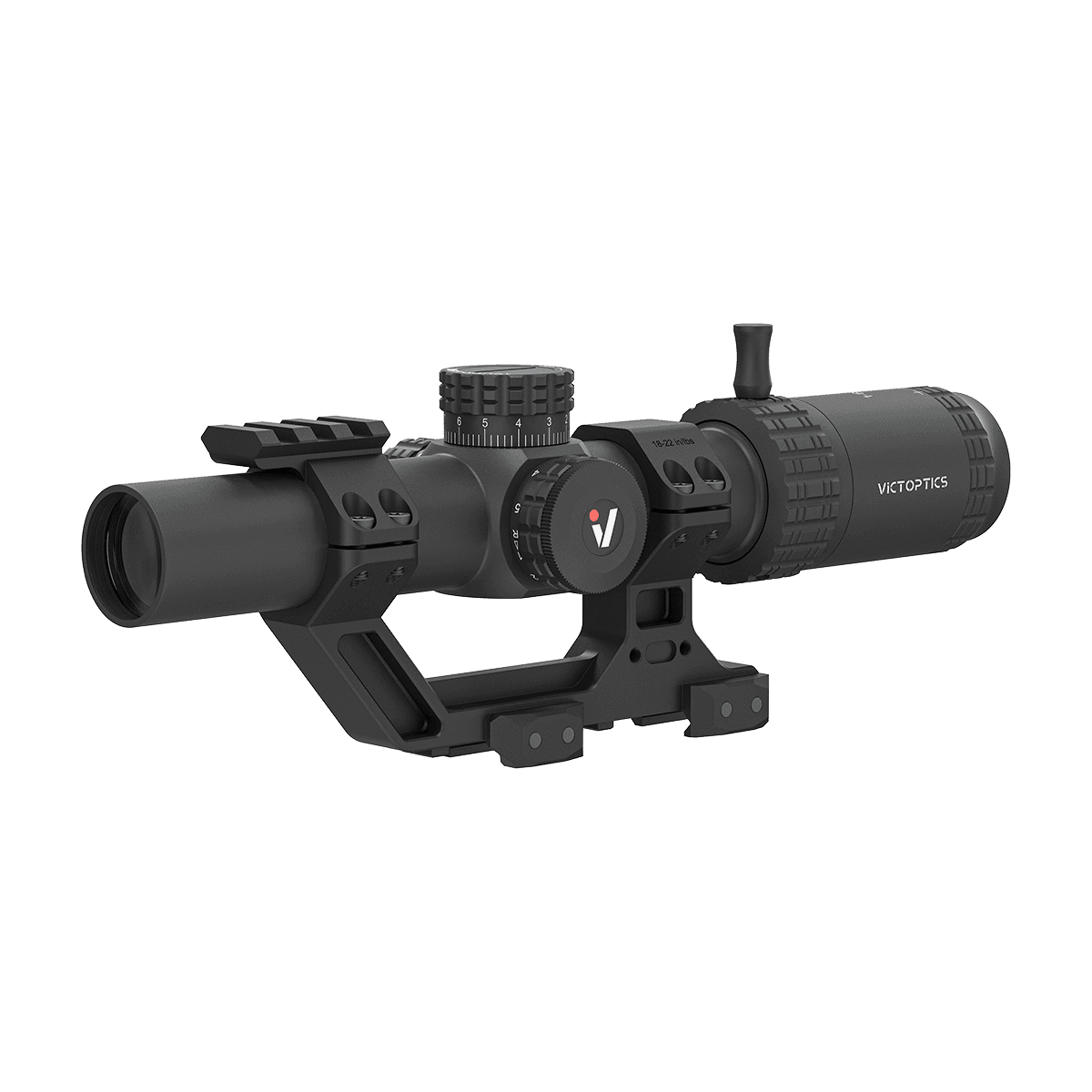
Vector Optics S6 1-6x24i Fiber LPVO Mount Kit
- 1-6x24mm SFP
- VIS-F1 fiber-optic reticle
Affiliate links (?)
Frequently Asked Questions
▶Are vector continental scopes any good?
▶Are vector optics any good?
▶What comes in the box with the Vector Optics Continental 2-12x44?
▶Do you need an offset red dot with a 2-12x scope?
▶What distance is a 12x scope good for?
▶Is the Vector Optics Continental 2-12x44 first or second focal plane?
Bottom Line
Four and a half out of five. The Continental x6 2-12x44 is an exceptional scope for what it costs, and the accessories Vector includes make it a better deal still. The half point is the weight: at 27.1 ounces it is heavy for a 2-12x, mostly because of the 34mm tube.
Buy it for the glass, the reticle, and the turrets, all three of which behave like a considerably more expensive optic. Budget for the fact that it starts at 2x and not 1x, which means an offset red dot is part of the build rather than an upgrade. The scope and the X-ACCU ring mount are solid. The bundled Frenzy FM is a pass: buy the scope by itself and put the difference toward a Holosun or Osight dot. For how this scope ranks against the rest of the 1.5-12x through 4-16x field, see our best MPVO scopes guide.