Key Takeaways
- →Digital Zero: A fixed 15x15 LED matrix provides 225 selectable aiming points with no moving zeroing assembly.
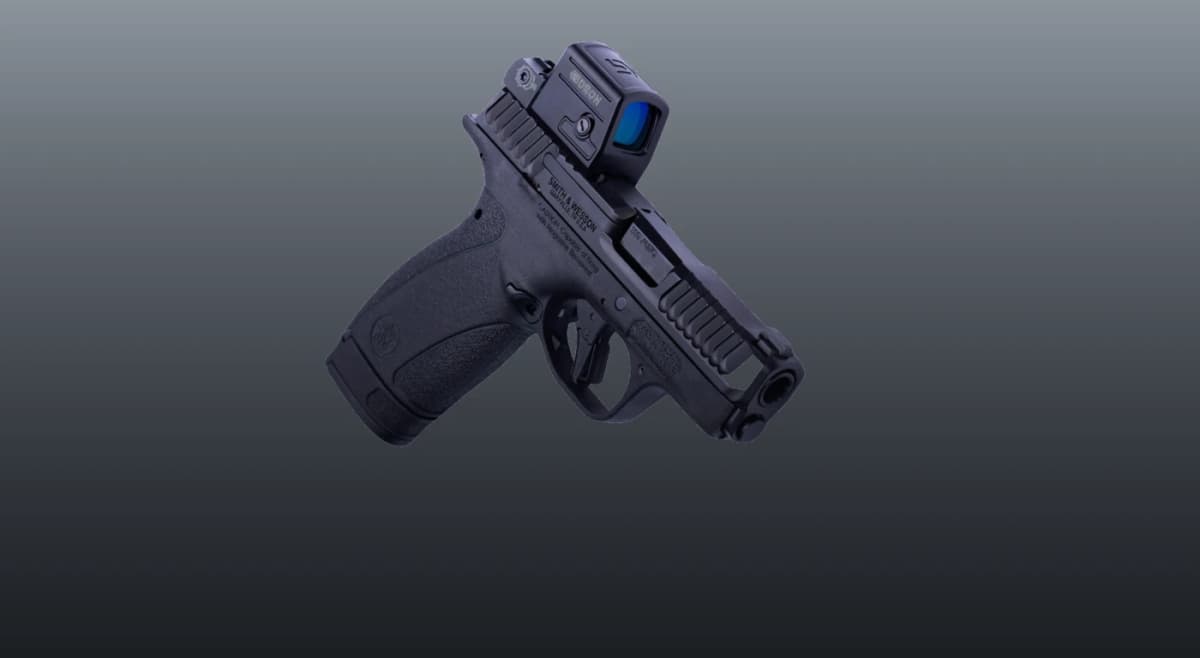
- →Four mounts: DeltaPoint Pro, Shield RMSc, SIG-LOC PRO, and SIG-LOC COMPACT versions cover several current pistols, while SIG's own FAQ names the unannounced P385 as a SIG-LOC PRO host.
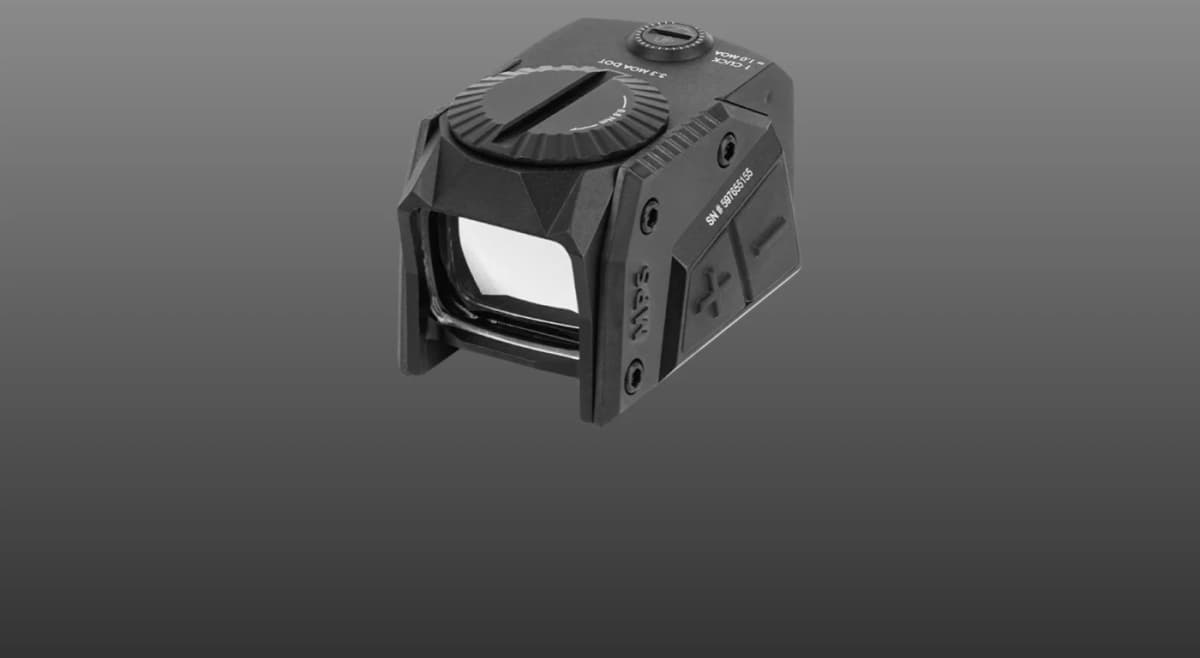
- →ZDO optics: A roof-mounted aspheric collimator sits above the sight picture and reflects the dot through a flat front window.
- →Sealed construction: Every version is enclosed, argon purged, fogproof, and rated IPX8 to 40 meters.
- →Connected features: The app saves zero profiles, tracks rounds, controls settings, and links the dot to a compatible FOXTROT weapon light.
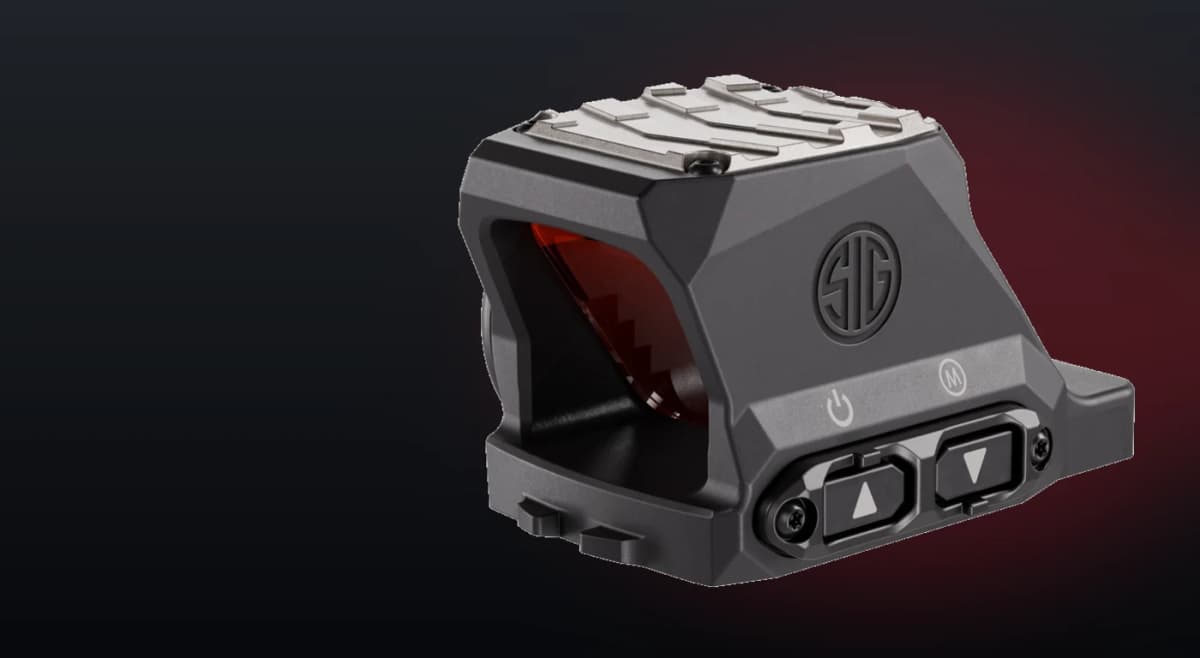
SIG Sauer's XRAY5 red dot replaces the usual mechanical windage and elevation system with a fixed grid of 225 LEDs. Zeroing the sight selects a different point in that 15x15 matrix. The emitter carrier, adjustment screws, and springs found in a normal pistol optic disappear from the design.
SIG's own iPhone app listing and a hidden block inside the company's live FAQ expose far more than a product name. They describe four mounting versions, a sealed optical system, saved zero profiles, a shot counter, and LightFight integration that raises dot brightness when a paired weapon light turns on. The same FAQ directly identifies the unannounced P385 as a SIG-LOC PRO host.
SIG has not placed the XRAY5 in its visible product catalog or announced a release date. The FAQ material is present in the page source but hidden from visitors, while the public App Store listing identifies Sig Sauer, Inc. as the developer. The hardware details below come from those first-party materials and matching patent filings, not a hands-on test.
- Emitter grid
- 15x15Fixed LED matrix
- Zero positions
- 225Digitally selected
- Dot size
- 3.5MOAEach aiming point
SIG XRAY5 Published Specifications
| Optic type | Enclosed reflex sight |
| Reticle | 3.5 MOA red dot |
| Emitter system | Fixed 15x15 LED matrix |
| Digital zero positions | 225 |
| Mechanical zeroing assembly | None |
| Adjustment controls | Two optic buttons or XRAY5 app |
| Advertised runtime | More than 10,000 hours |
| Environmental protection | Argon purged, fogproof, IPX8 |
| Water resistance | 40 meters / 132 feet |
| Standard footprints | DeltaPoint Pro and Shield RMSc |
| SIG footprints | SIG-LOC PRO and SIG-LOC COMPACT |
| Wireless features | Bluetooth app and LightFight |
| App features | Zero profiles, round counter, MOTAC, MAGNETAC, auto-off, battery status |
Digital Zero Selects One of 225 Fixed LEDs
Most pistol dots zero by physically moving part of the optical system. Turning an adjustment screw shifts an emitter carrier or changes the relationship between the emitter and lens. The springs and threaded parts that hold that setting must survive the slide stopping and changing direction on every shot.
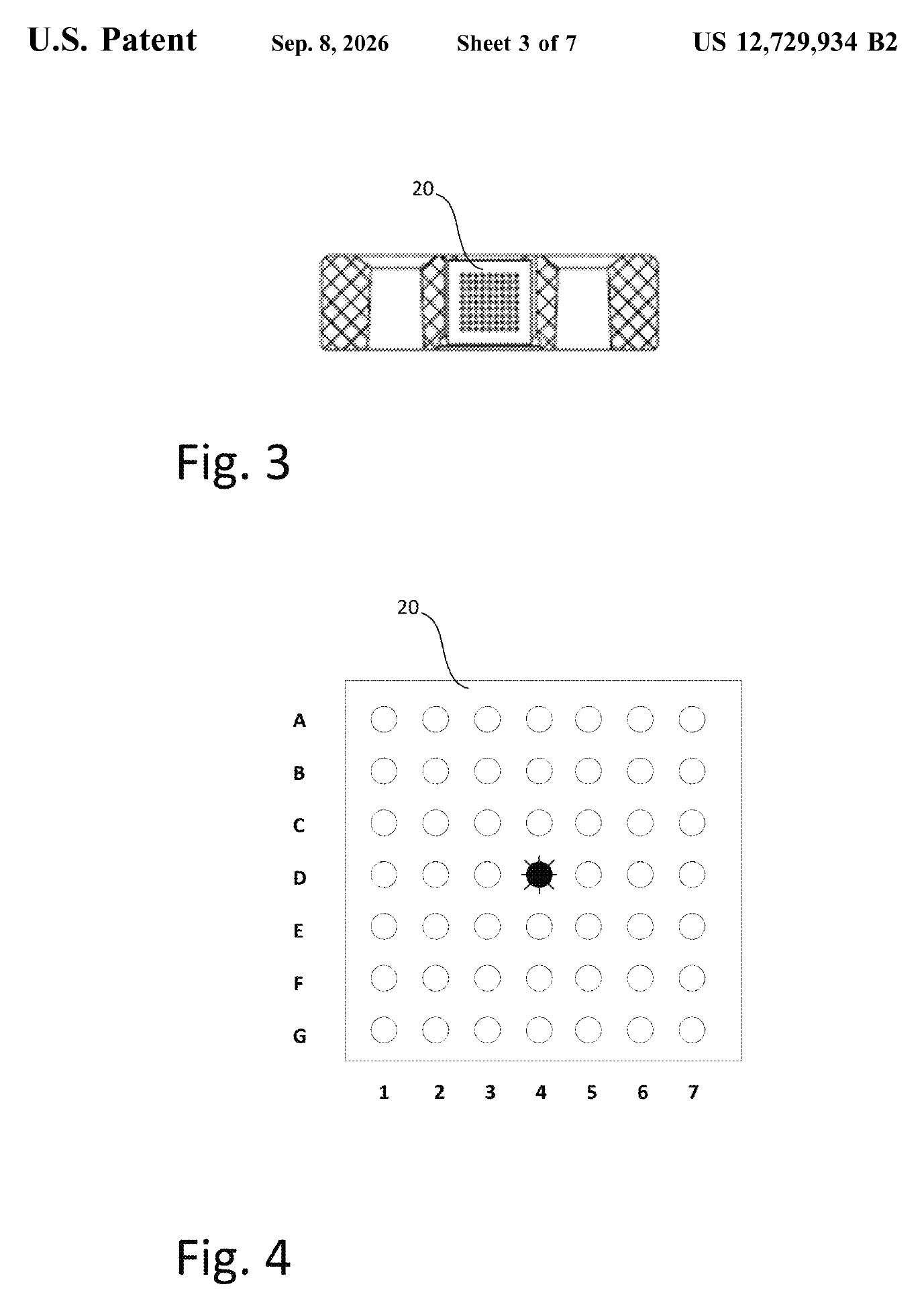
XRAY5 takes a different route. Its 225 LEDs stay fixed in a 15 by 15 grid. A windage or elevation input tells the sight which LED to illuminate, moving the visible 3.5 MOA dot without moving hardware. The same change can be made with the two buttons on the optic or through the app's Digital Zero screen.
That architecture removes the mechanical zeroing assembly as a possible point of failure. It also makes saved zero profiles practical because the sight can return to a known digital coordinate. Real recoil testing will determine whether the complete optic is tougher than established enclosed dots, but its zero no longer depends on a carrier staying in the same physical position.
This is a selectable emitter array, not a tiny general-purpose screen. SIG's production description promises one 3.5 MOA dot. A related patent covers more ambitious patterns and multiple illuminated emitters, but those patent examples are design options, not advertised XRAY5 modes.
ZDO Moves the Curved Collimator Into the Roof
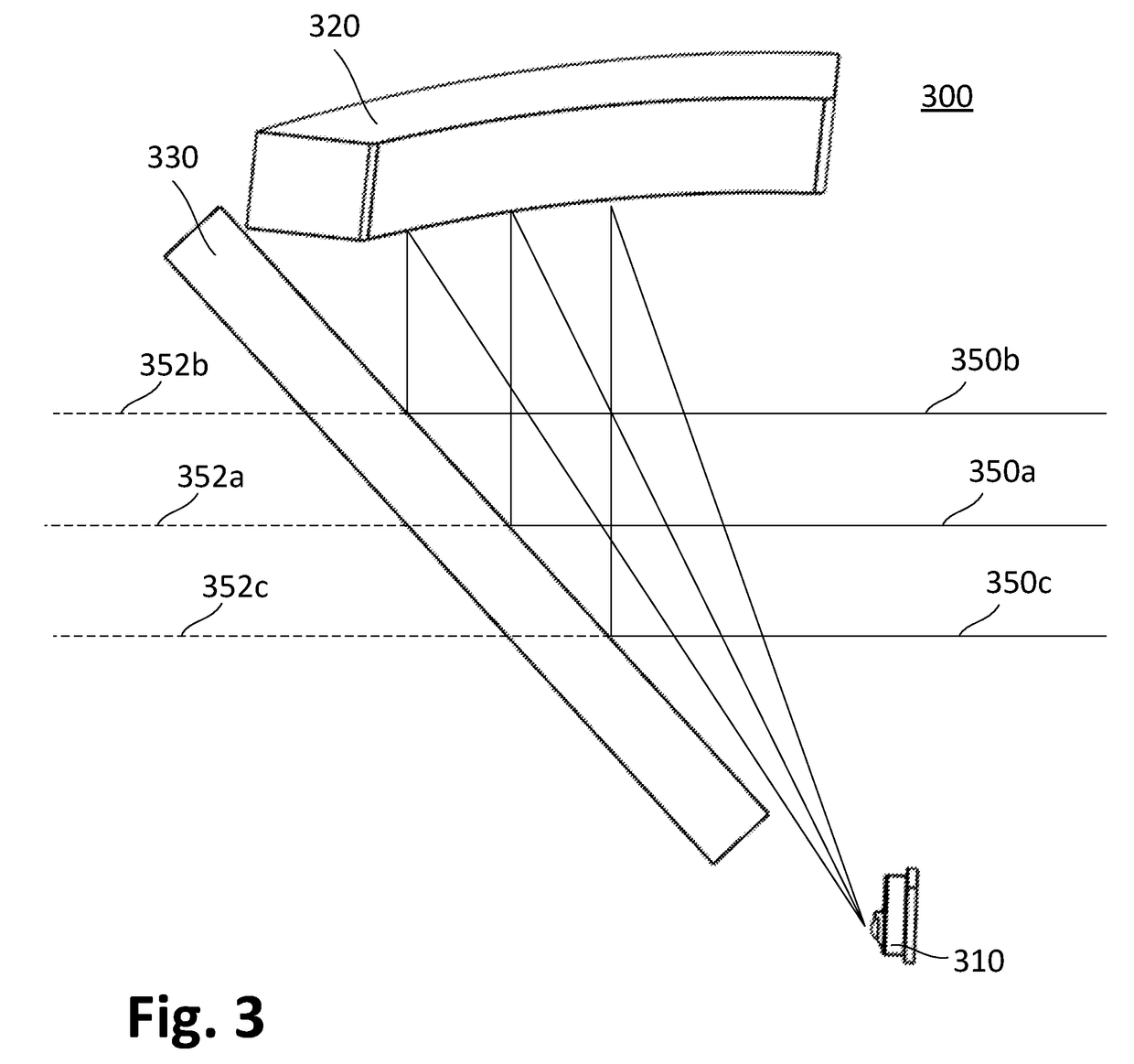
The emitter array is only half of the unusual layout. SIG calls the optical system ZDO, short for Zero Distortion Optical System. The LED sends the reticle upward into an aspheric collimator mounted in the roof of the housing. That curved optical surface reflects the collimated dot forward, through a flat front window, and back to the shooter's eye.
A conventional reflex sight normally uses a curved front lens to both collimate and reflect the dot. Looking through that curved element can bend straight lines or change the apparent scale of the scene, especially near the edge. XRAY5 moves the curved element out of the direct sight picture. The shooter looks through a flat front window instead.
SIG's 2026 patent application for a sight with a reflective collimating surface describes the same path: an emitter, a collimator outside the target-viewing path, and a planar transparent window with a reflective coating. The practical promise is a cleaner view with less lens distortion, though optical clarity and parallax still need to be measured on production units.
Every XRAY5 Version Is Enclosed and IPX8 Rated
SIG describes all four XRAY5 versions as enclosed sights. A rear window seals the optical path, the body is argon purged to resist internal fogging, and the published waterproof rating is IPX8 at 40 meters, or 132 feet.
That matters on a carry or duty pistol because lint, rain, mud, and snow cannot land directly on the emitter. An open-emitter optic can lose its dot when debris blocks the light path between the LED and front lens. An enclosed housing protects that path while still allowing a compact slide-mounted sight.
SIG also claims more than 10,000 hours of battery runtime. The FAQ does not publish the test brightness or battery type, so the useful comparison will come when the product page and manual disclose the complete power specifications. Buyers comparing the layout with current options can start with our pistol red dot guide.
Two SIG Patents Match the Production Architecture
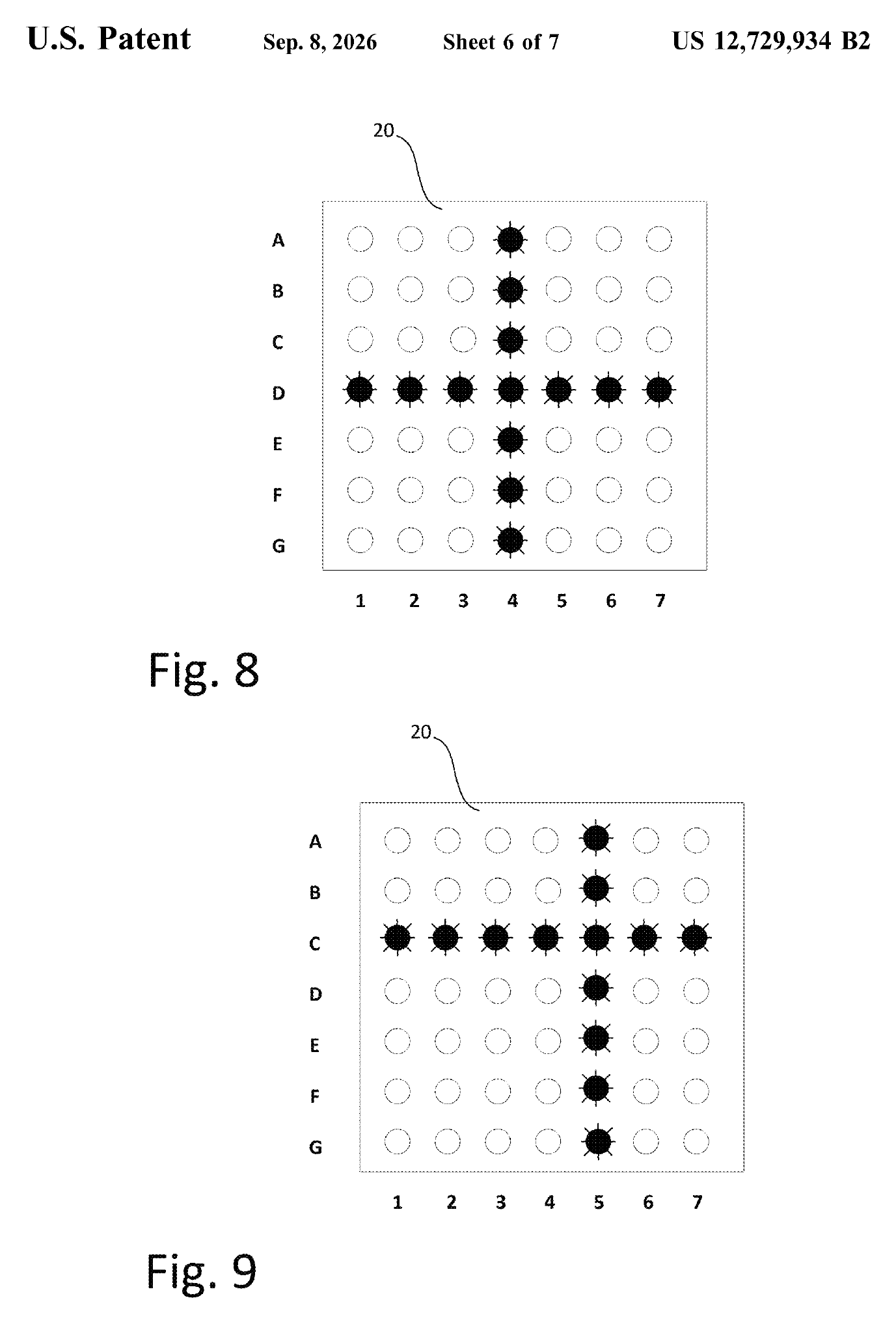
The first patent family covers the digital adjustment system. U.S. Patent 12,729,934, issued to SIG on September 8, 2026, describes a target sight with an array of individually controlled emitters. Selecting an emitter changes the apparent position of the aiming mark while the array remains stationary.
The patent explains the problem SIG wanted to remove. It describes conventional carrier plates as complex, tolerance-sensitive parts that can wear, break, shift under shock, or produce nonlinear travel and dead adjustment clicks. Selecting another fixed emitter removes that carrier from the zeroing process.
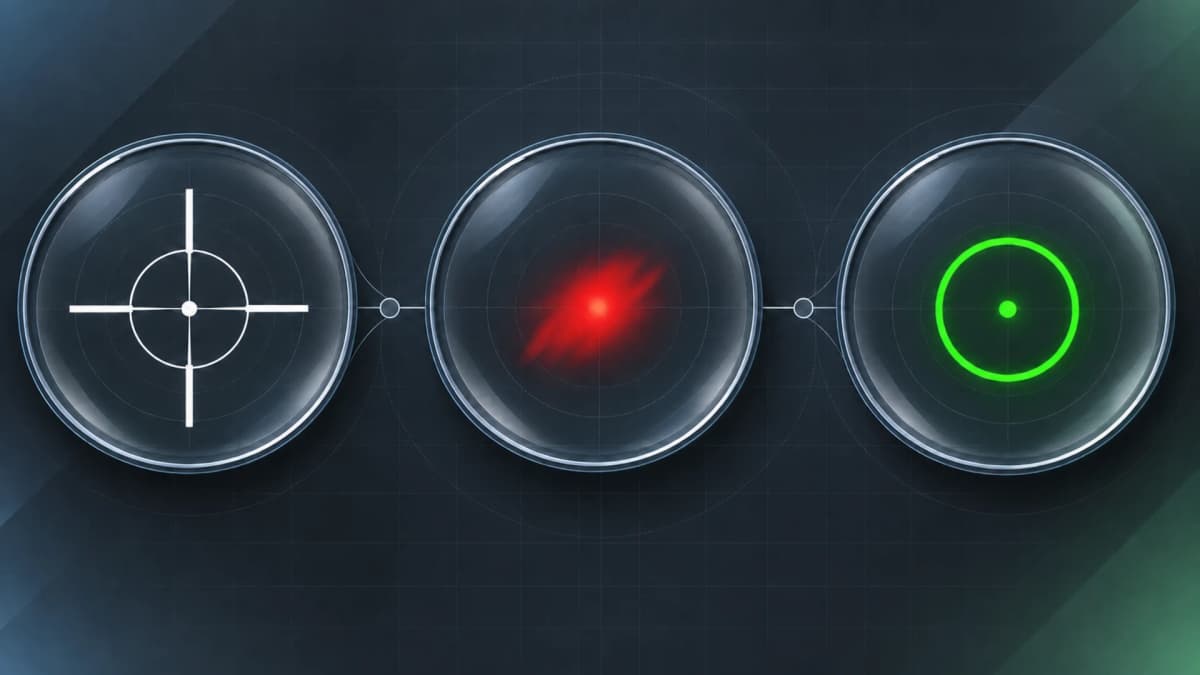
The same filing is broader than the first XRAY5. It covers uneven emitter spacing, several illuminated emitters, alternate reticles, ballistic hold points, mobile control, and even OLED or backlit LCD arrays. SIG's launch description is narrower: one 3.5 MOA dot on a fixed 15x15 LED matrix.
The second family covers the roof-collimator layout. International application WO2026072865A1 claims priority to September 26, 2024, was filed on September 25, 2025, and was published on April 2, 2026. Its drawings and abstract place the collimating surface outside the target-viewing path and use a flat transparent window to return the reflected aiming mark to the eye. Together, the two patent families map closely to the two features SIG names Digital Zero and ZDO.
The 15x15 Grid Still Needs a Published Adjustment Range
The distance between adjacent LEDs will decide how well Digital Zero handles real pistol tolerances. SIG has published 225 aiming points, but it has not published the MOA value of each step or the total windage and elevation range.
A centered 15-position axis leaves seven moves in either direction. At 0.5 MOA per move, that would provide only about ±3.5 MOA. A 1 MOA step would provide about ±7 MOA. A 4 MOA step would reach about ±28 MOA but make small corrections much coarser. Those are examples, not XRAY5 specifications.
SIG's patent allows uneven spacing, which could place fine steps near the center and larger corrections near the edges. The product page or manual still needs to supply that answer, along with window dimensions, weight, battery type and access, night-vision settings, shock rating, battery-change zero retention, and where saved zero profiles are stored.
The App Saves Zeros Without Owning Basic Controls
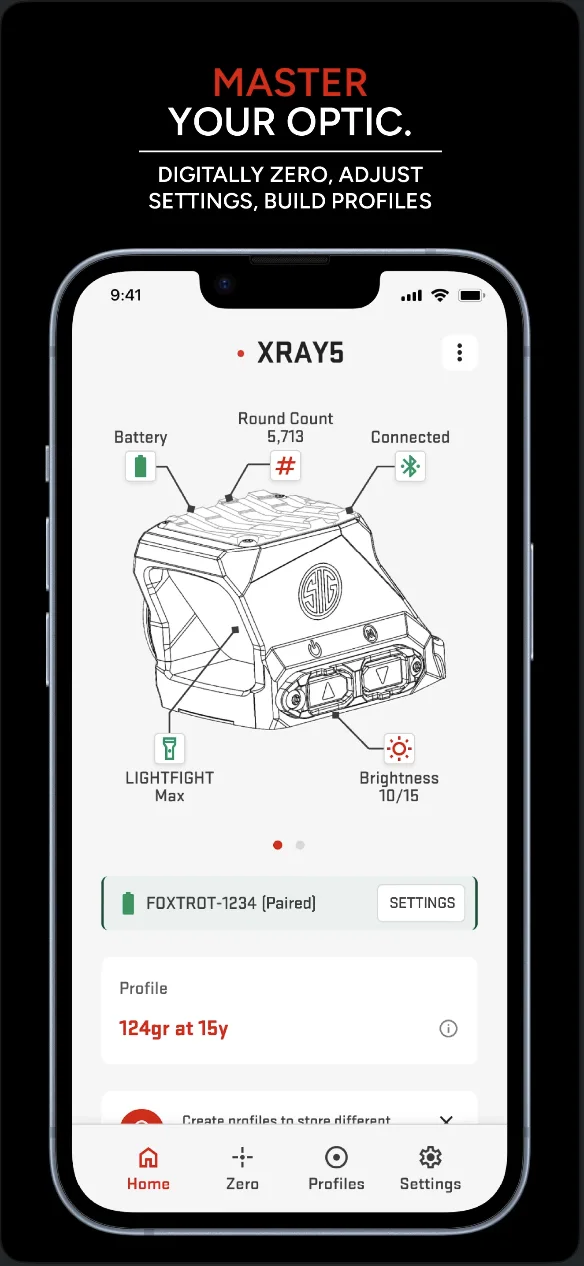
The XRAY5 app turns the digital architecture into something more useful than button-free adjustment. Shooters can save multiple zero profiles, name them, and switch among them. SIG's App Store images show profiles organized by ammunition and distance, which could let one pistol keep separate settings for practice, defensive, or suppressed loads.
The app is already listed for both iPhone and Android. The Android package uses the name com.sigsauer.xray, another sign that the hardware and software were staged together for launch.
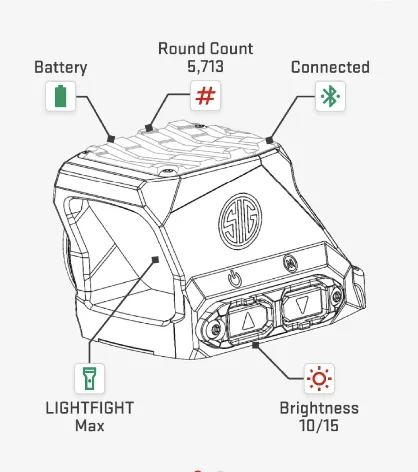
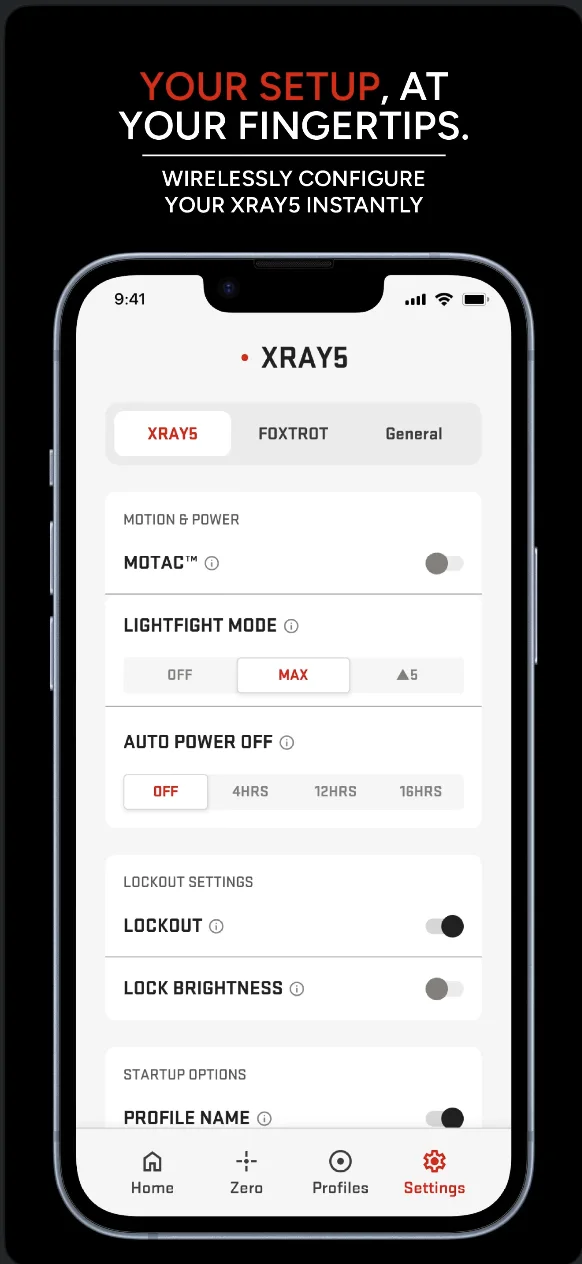
The app also exposes brightness, MOTAC motion activation, MAGNETAC, auto-off timing, battery status, control lockout, and Bluetooth settings. The listing shows 15 brightness levels and selectable four, 12, or 16-hour auto-off timers. Bluetooth can be disabled from the optic. More importantly, the sight can still handle power, brightness, windage, elevation, and lockout through its two physical buttons. A phone is an extra control surface, not a requirement for basic operation.
Current SIG Pistol Optics
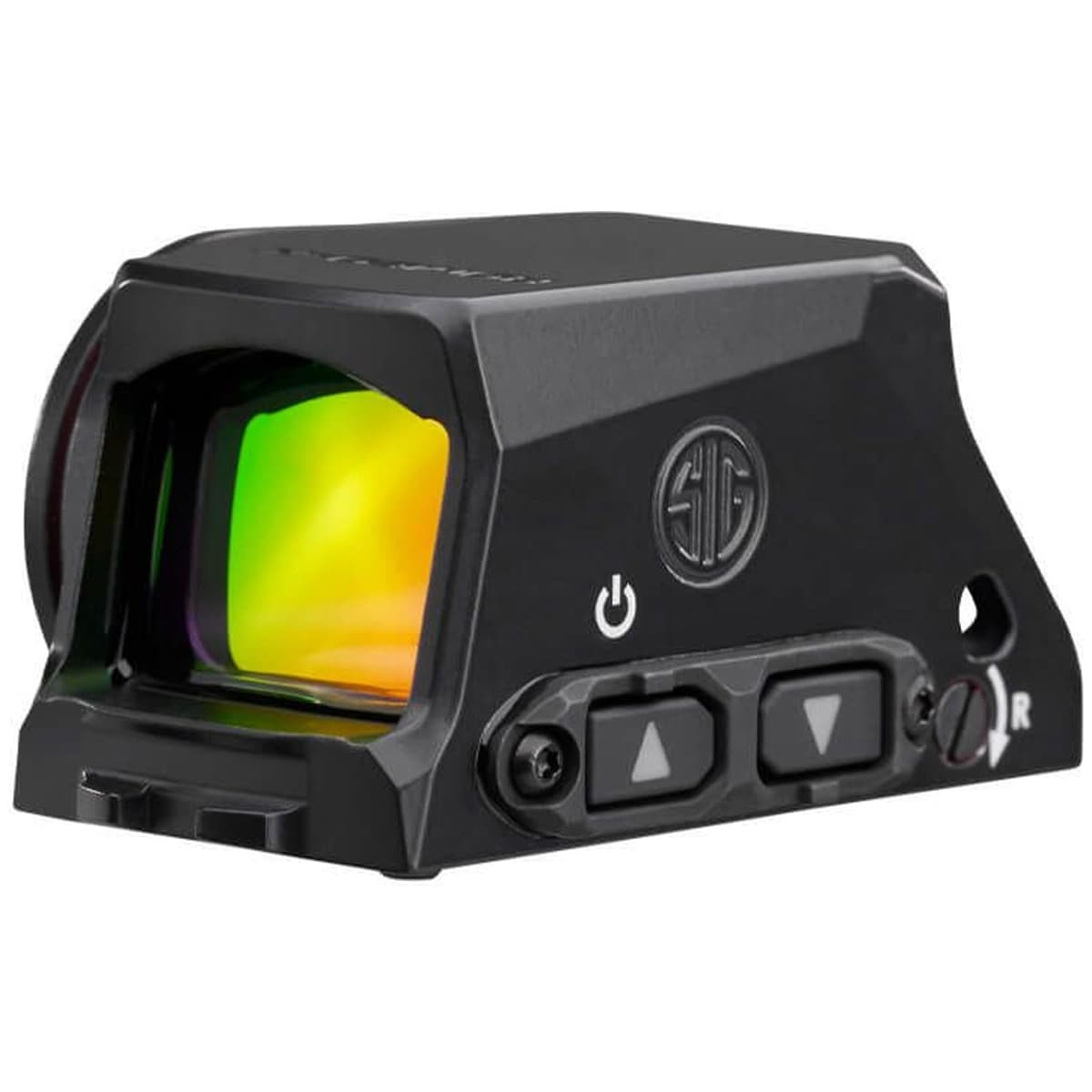
SIG ROMEO-X SIG-LOC PRO
- SIG-LOC PRO footprint
- Enclosed emitter, 24mm aperture
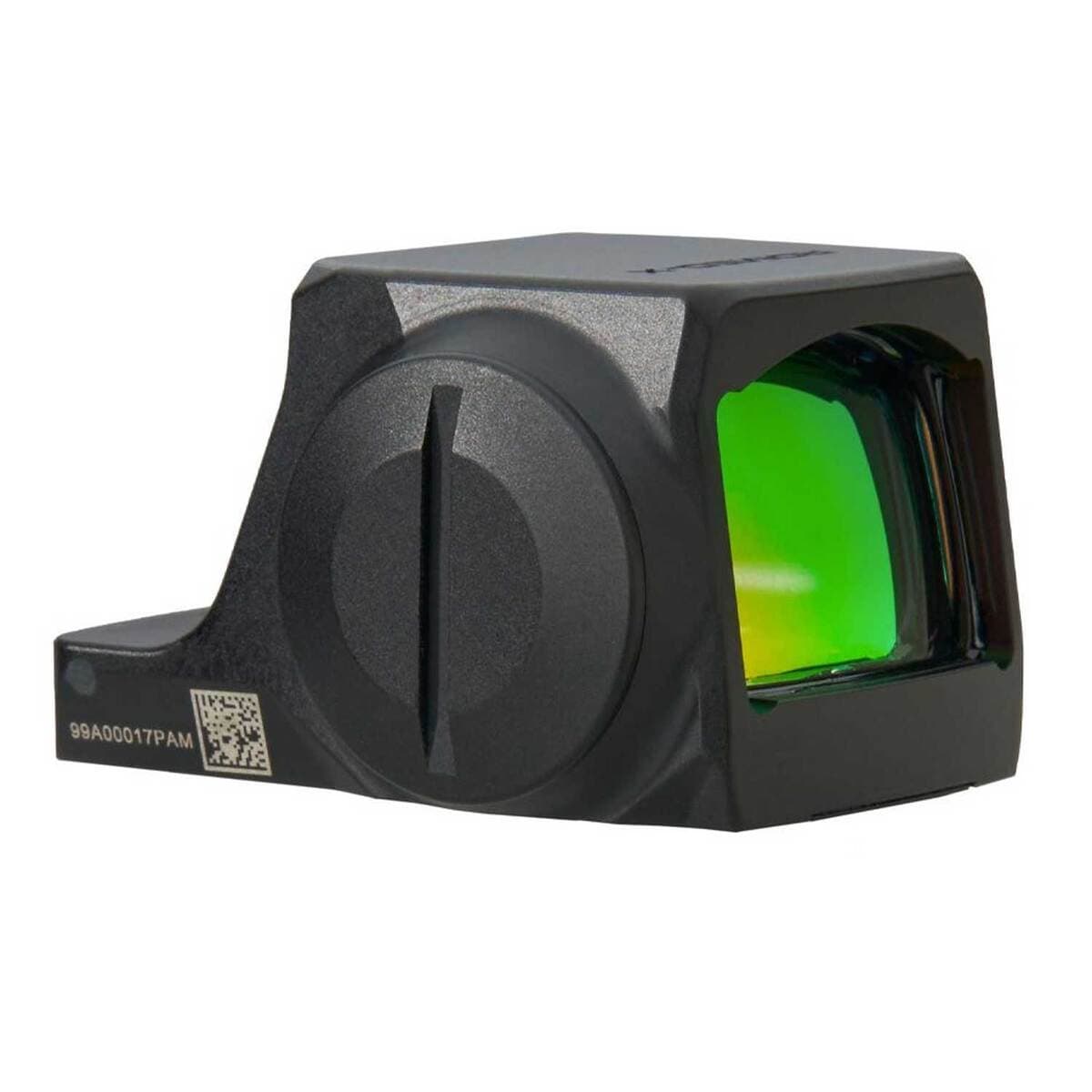
SIG ROMEO-X Compact Enclosed
- 3 MOA / 6 MOA / Circle Dot
- Enclosed emitter
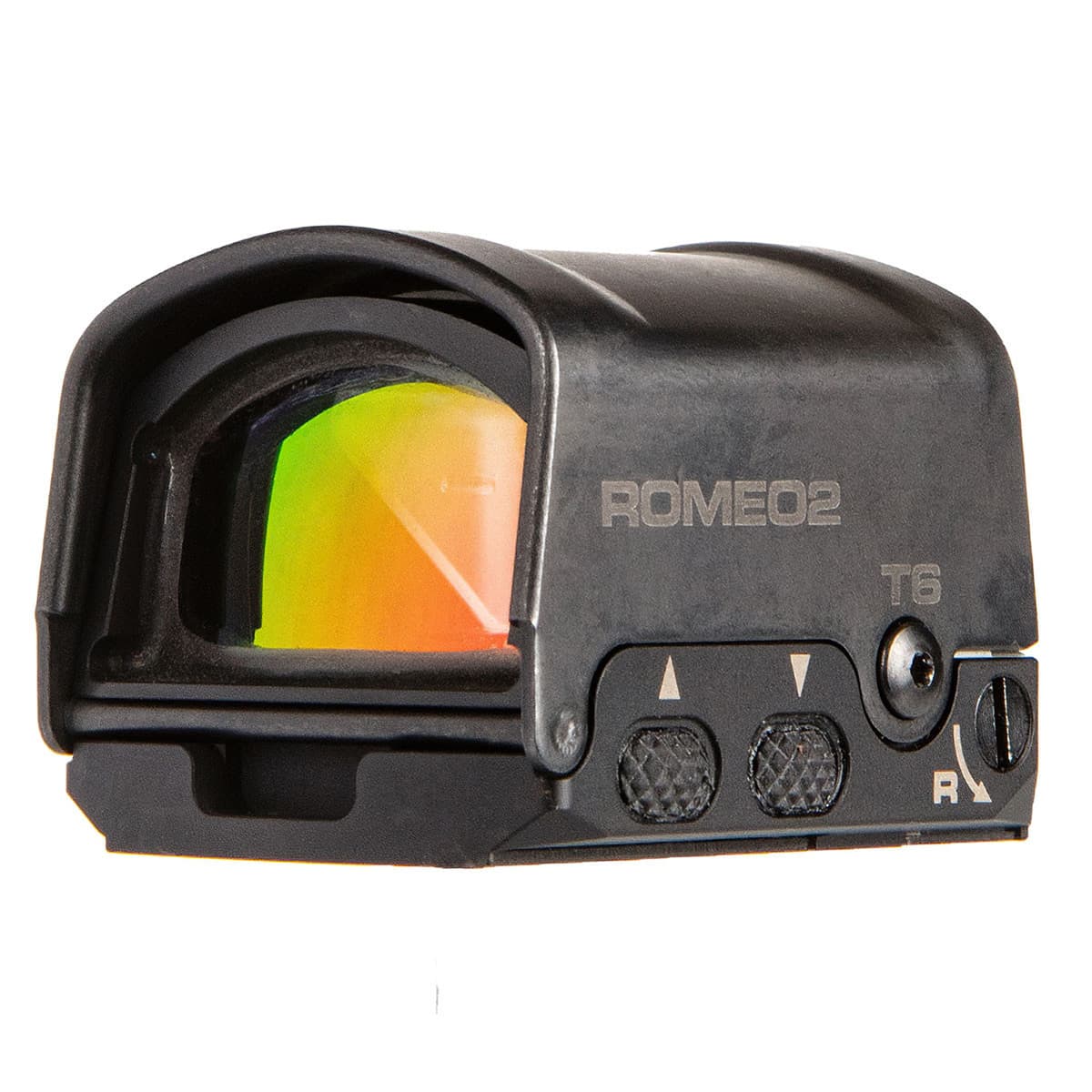
SIG SAUER ROMEO2 Circle/Dot (SOR21000)
- Circle/Dot reticle
- Full enclosure included
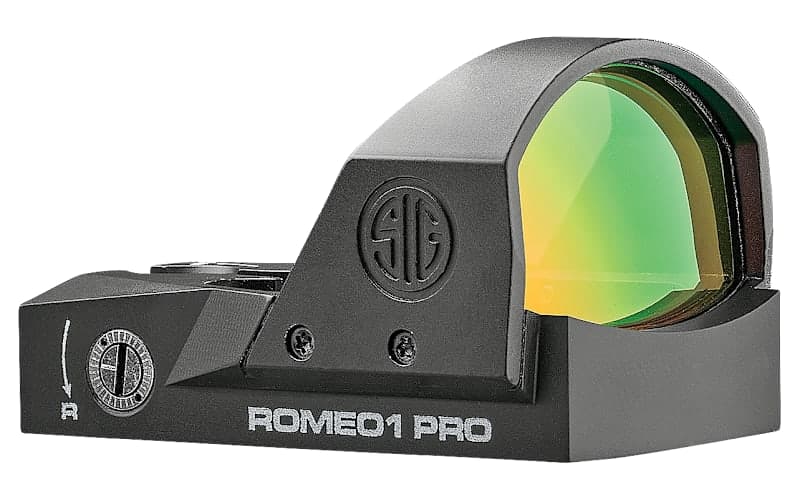
SIG Romeo1 Pro
- 3 MOA or 6 MOA dot
- Steel shroud
SIG Romeo Zero Elite
- 3 MOA dot
- Shield RMSc footprint
Affiliate links (?)
LightFight Raises Dot Brightness With the Weapon Light
A pistol dot that looks right in a dark room can wash out when a high-output weapon light suddenly paints a pale wall. LightFight addresses that transition by pairing XRAY5 with a compatible FOXTROT light. When the light turns on, the optic raises reticle brightness so the aiming point remains visible against the lit target area.
SIG's app listing specifically names the FOXTROT2R. The hidden FAQ describes two LightFight response modes and makes clear that the feature is tied to the weapon light, not an ambient-light sensor making continuous automatic brightness changes.
The Round Counter Uses the Optic's Accelerometer
XRAY5 also counts firing events through its accelerometer and stores session history in the app. The system needs a five-shot calibration so it can learn the recoil signature of the host pistol and ammunition. The counter can be reset at any time, and SIG says to recalibrate it when the optic moves to another firearm.
That calibration step sets a clear boundary. SIG warns that cycling the slide or bolt during the five-shot sequence may be recorded and reduce accuracy. The counter should be useful for recoil-spring schedules, rental or training-gun maintenance, and optic durability logs. It remains a recoil-event estimate rather than a mechanical record of ammunition passing through the chamber.
Four XRAY5 Versions Cover Conventional and SIG-LOC Slides
SIG's hidden FAQ names two top-mounted versions and two underside-mounted SIG-LOC versions. The conventional models attach to common footprint cuts. SIG-LOC places its fasteners below the optic, allowing the housing to sit lower and leaving no screw heads in the sight's top surface.
Dealer preload pages also expose the model numbers and price ladder. As of September 15, 2026, the conventional Compact is listed at $499.99, both the conventional PRO and SIG-LOC Compact are $549.99, and the SIG-LOC PRO is $599.99. These are early dealer prices, not a SIG-published MSRP. Each version has its own SKU and UPC, which separates the four records from duplicate dealer entries.
SIG XRAY5 Dealer Preload Lineup
| XRAY5 PRO | SOX53300 · UPC 798681746972 · DeltaPoint Pro · $549.99 |
| XRAY5 COMPACT | SOX54300 · UPC 798681746989 · Shield RMSc · $499.99 |
| XRAY5 SIG-LOC PRO | SOX55300 · UPC 798681746996 · P211/P385/P320/P226X · $599.99 |
| XRAY5 SIG-LOC COMPACT | SOX56300 · UPC 798681747009 · P365 · $549.99 |
Two packages pair a conventional XRAY5 with the FOXTROT2R-LF weapon light. The PRO package is listed at $699.99, while the Compact package is $649.99. These are also early dealer prices, not SIG-published MSRPs.
XRAY5 + FOXTROT2R-LF Packages
| XRAY5 PRO + FOXTROT2R-LF | SOXF53320 · UPC 798681755509 · $699.99 |
| XRAY5 COMPACT + FOXTROT2R-LF | SOXF54320 · UPC 798681755523 · $649.99 |
The biggest news inside that list is the unannounced SIG P385. SIG's own hidden text directly names the pistol as a SIG-LOC PRO host. It also confirms XRAY5 support for the P211, including the competition-focused platform covered in our SIG P211 upgrades guide, and a compact version for newer SIG-LOC P365 models.
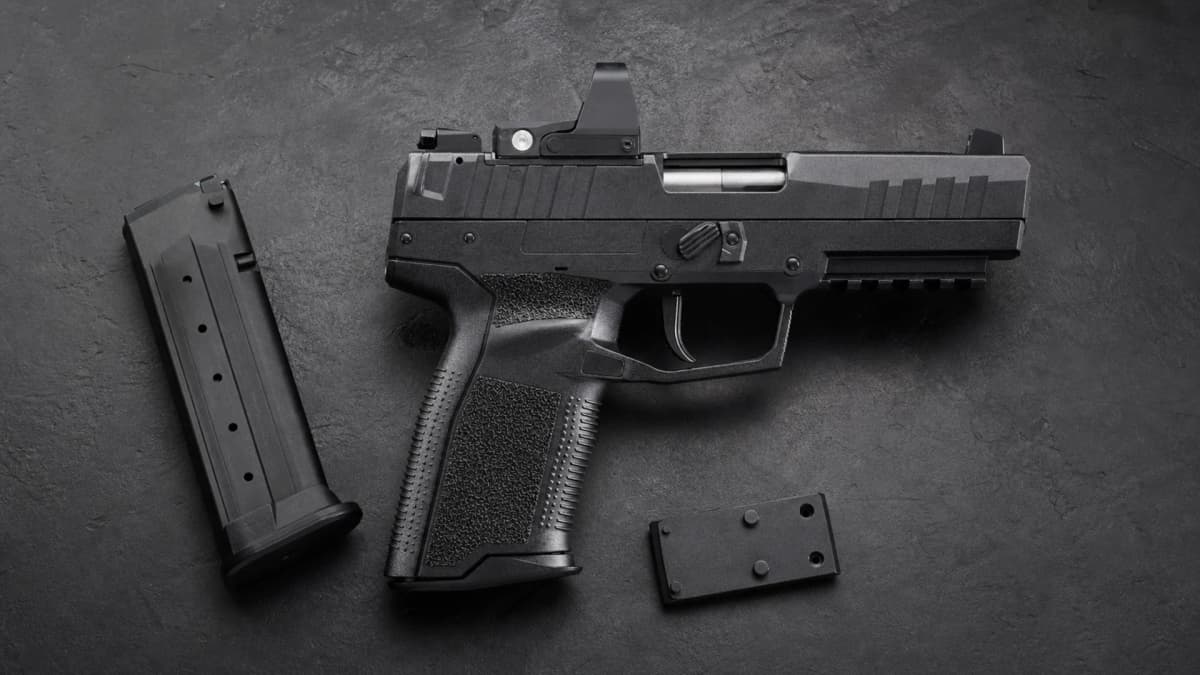
The footprint name still matters when the conventional PRO and COMPACT models arrive. A DeltaPoint Pro cut and an RMSc cut are not interchangeable, and SIG-LOC is a separate underside-mounted system. Match the exact slide to the exact XRAY5 version rather than choosing by housing size alone. Our parts catalog can help compare current optic options while SIG completes the XRAY5 launch.
Follow the XRAY5 Launch
Get the product-page release, final specifications, and first independent tests when SIG takes the XRAY5 public.
Frequently Asked Questions
▶Is the SIG XRAY5 a reflex sight or a holographic sight?
▶How does Digital Zero work on the SIG XRAY5?
▶What footprints will the SIG XRAY5 use?
▶Does the SIG XRAY5 require the app?
▶What does XRAY5 LightFight do?
▶How much adjustment range does the SIG XRAY5 have?
What Makes XRAY5 Different
XRAY5 is not just another enclosed pistol dot with an app. The fixed emitter matrix changes how the sight holds and recalls zero, while the roof-mounted collimator changes the optical path in front of the shooter. Those are hardware choices with clear practical goals: remove a moving adjustment assembly, look through a flat window, and let one optic store more than one known zero.
The four-version lineup also shows that SIG intends XRAY5 to work across both common footprints and its own SIG-LOC ecosystem. Digital Zero, ZDO, LightFight, and the round counter now need the test that matters: production optics on reciprocating slides over thousands of rounds.