Best Thermal Binoculars 2026: Pulsar, Nocpix & ATN Ranked
The Pulsar Symbion LRF DXT50 ($7,999.97) is the best thermal binocular for finding, identifying, and ranging an animal with one device: it is the only pick here that pairs a 1280x1024 thermal core with a 4K color/IR digital channel and a 1500 m rangefinder. The Nocpix QUEST S50R ($4,999) is the best value 1280 thermal binocular, and the ATN BinoX 6 Dual 640 ($2,895) is the best value multispectral pick. All nine thermal binoculars below carry a laser rangefinder, so the real choices are sensor resolution, field of view, a day/night channel, and runtime.
Key Takeaways
- →Best overall: The Symbion LRF DXT50 combines 1280x1024 thermal, a 4K color/IR channel, and a 1500 m rangefinder for $7,999.97.
- →1280 for less: The Merger LRF XT50 ($5,499.97) keeps the same sensor, 17.5° view, and 1500 m rangefinder without a digital channel; the QUEST S50R ($4,999) adds 60 Hz but ranges to 1000 m.
- →Multispectral value: The BinoX 6 Dual 640 pairs a ≤15 mK 640x512 core with a 4K day/night channel at 730 g for $2,895.
- →Longest runtime: The Symbion LRF DXR50 is rated for up to 10 hours on two APS5 packs.
- →Lowest price: The Guide TN430 brings a 1000 m rangefinder and GPS to a 400x300 thermal binocular for $1,221.49.
Best Thermal Binoculars Ranked
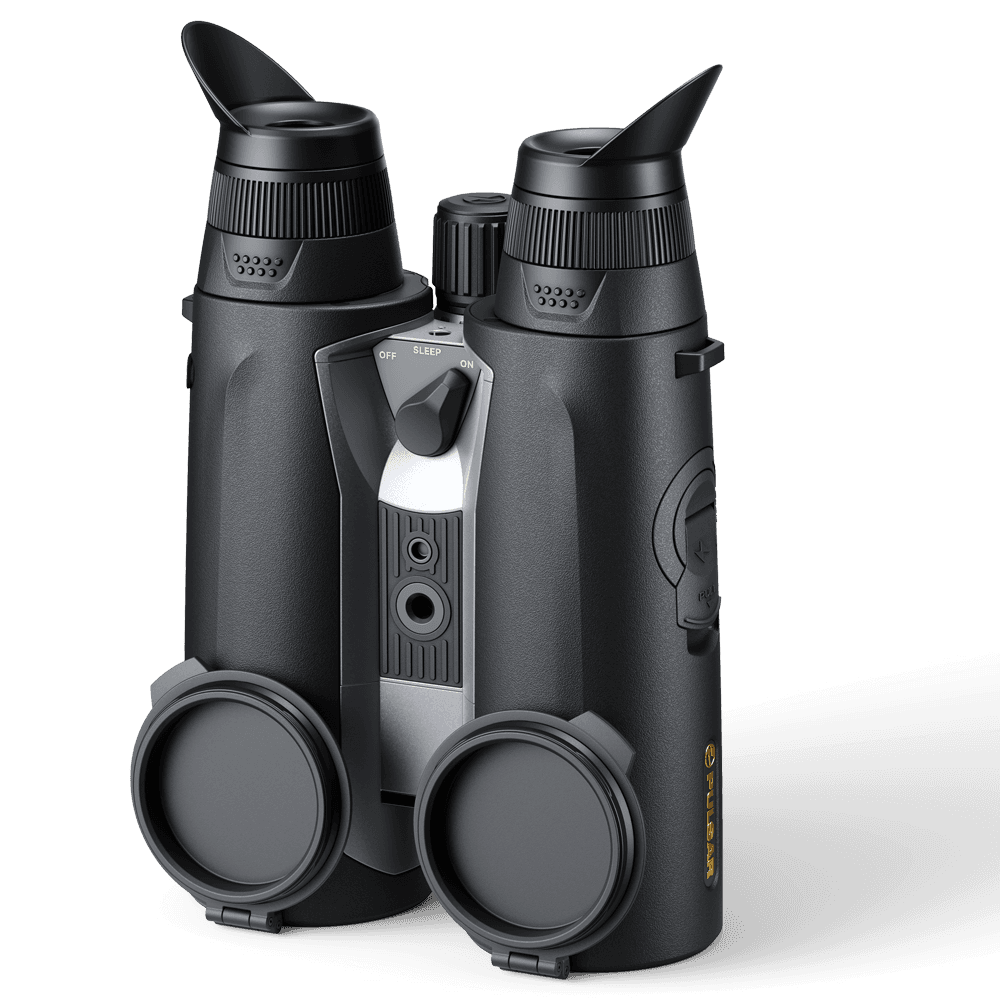
Pulsar Symbion LRF DXT50
Best overall: 1280 thermal plus 4K color/IR in one binocular
- +Only pick here pairing a 1280x1024 thermal core with a 4K color/IR digital channel
- +1500 m rangefinder ties the longest reach in this group
- +17.5-degree thermal view for wide scanning
- −Most expensive pick here
- −1 kg with batteries, tied with the DXR50 as the heaviest pick here
- −Up to 8 hours trails the DXR50's 10 hours
Nocpix QUEST S50R
Best value 1280 thermal binocular
- +Cheapest 1280x1024 binocular in this guide
- +60 Hz refresh rate, faster than the 50 Hz Pulsar units
- +Separate 1920x1200 AMOLED per eye with 25 mm eye relief
- −1000 m rangefinder trails the 1500 m Pulsar Merger and Symbion
- −Thermal only; no color or IR digital channel
Pulsar Merger LRF XT50
Best 1280 thermal binocular for 1500 m ranging
- +Same 1280x1024 sensor, 17.5-degree view, and 1500 m rangefinder as the Symbion DXT50 for less money
- +1500 m rangefinder reaches 500 m farther than the Nocpix QUEST S50R
- +Removable APS3 plus built-in battery allows pack swaps
- −Thermal only; no color or IR digital channel
- −Up to 6 hours is the shortest runtime among the Pulsar picks
- −Costs more than the 1280-class Nocpix QUEST S50R
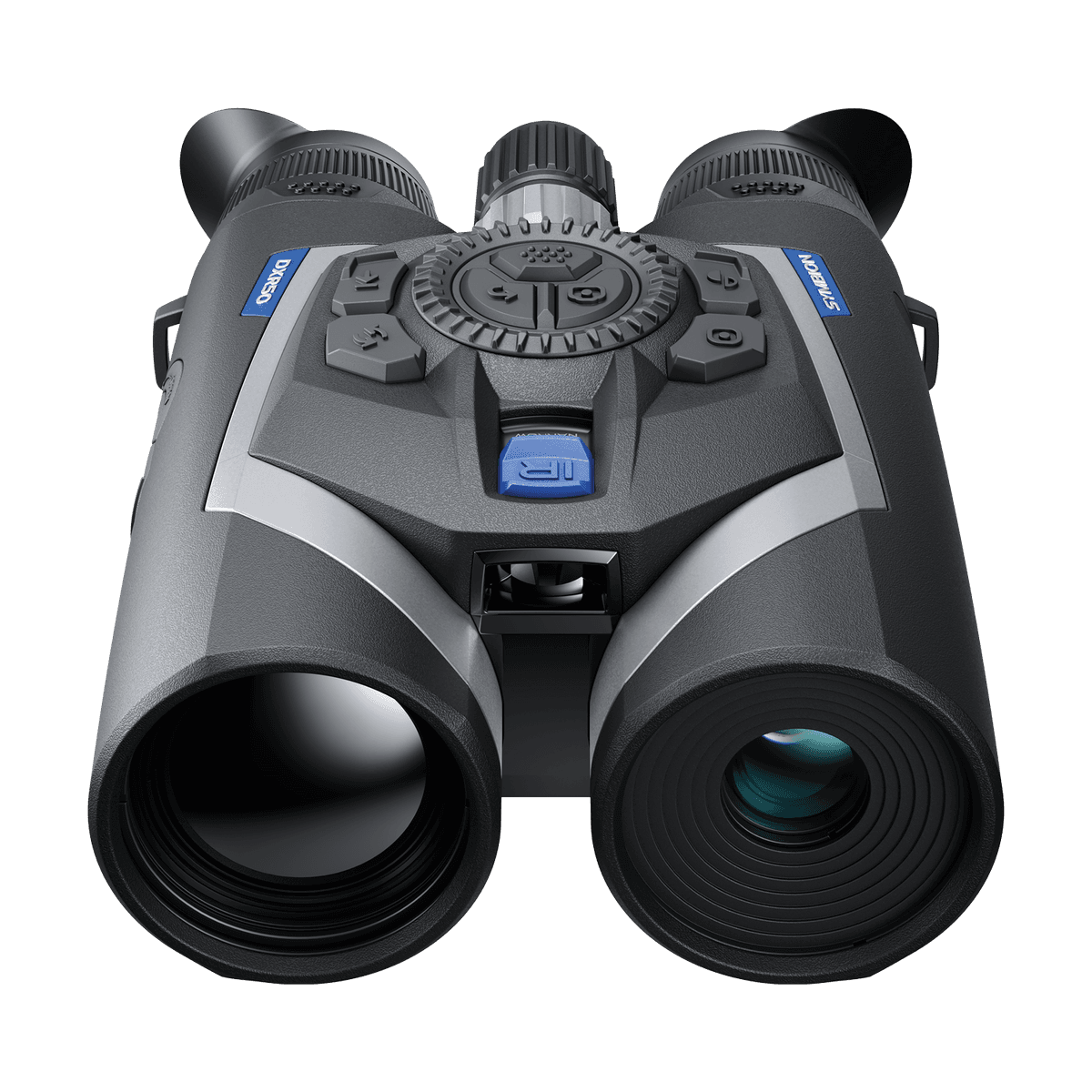
Pulsar Symbion LRF DXR50
Best multispectral for long range and long nights
- +Same 4K color/IR digital channel and 1500 m rangefinder as the DXT50 for less money
- +Up to 10 hours, the longest runtime here
- +4-32x thermal zoom for small, distant targets
- −640x480 thermal core has a quarter of the DXT50's pixels
- −8.8-degree thermal view is narrow for scanning
- −1 kg, heavier than the ATN and AGM multispectral units
ATN BinoX 6 Dual 640
Best value multispectral binocular
- +Lowest price here for a 640 thermal plus 4K day/night binocular
- +730 g, lighter than the AGM ObservIR and Pulsar Symbion
- +NETD ≤15 mK and a 3100 m detection rating
- −1000 m rangefinder trails the 1500 m Symbion
- −1920x1080 OLED display trails the per-eye 1920x1200 displays in the Nocpix QUEST
AGM ObservIR LRF 35-640
Best multispectral kit with spare batteries in the box
- +Ships with four 18650 cells, a charger, and a tripod adapter
- +Integrated GPS module
- +12.5 x 10.1 degree thermal view for scanning
- −2.01 lb (about 910 g), heavier than the ATN BinoX 6 Dual 640
- −1000 m rangefinder trails the 1500 m Symbion
- −1800 m detection rating is the lowest among the 640 picks
Nocpix QUEST H50R
Best 640 thermal-only binocular for open-country distance
- +4x base magnification, tied with the Symbion DXR50 for the highest base view among the 640 picks
- +60 Hz refresh and per-eye 1920x1200 AMOLED displays
- +2600 m detection rating, same as the 1280-class S50R
- −8.8 x 7.0 degree view is narrow for close cover
- −Thermal only; no color or IR digital channel
- −Costs more than the multispectral ATN BinoX 6 Dual 640
ATN BinoX 6 Dual 256
Best budget multispectral binocular
- +Cheapest thermal plus 4K day/night binocular with a rangefinder here
- +Same day/night channel, IR illuminator, and 1000 m rangefinder as the BinoX 6 Dual 640
- +710 g, the lightest multispectral pick here
- −256x192 thermal sensor shows far less detail than 640-class cores
- −7.0-degree thermal view is narrow for scanning
- −6x base magnification makes close-range scanning harder
Guide TN430
Lowest-cost thermal binocular with a rangefinder
- +Lowest price in this guide
- +Built-in 1000 m rangefinder plus GPS and compass
- +11.1 x 8.33 degree view, wider than the ATN BinoX 6 Dual 256
- −17-micron pitch and ≤30 mK NETD trail every other pick
- −1-4x digital zoom is limited for distant targets
- −IP66 sealing and 16 GB storage trail the IP67/IPX7 and 64 GB of every other pick
Affiliate links - purchases support this site at no extra cost to you. (?)
Why the Pulsar Symbion LRF DXT50 is the best thermal binocular
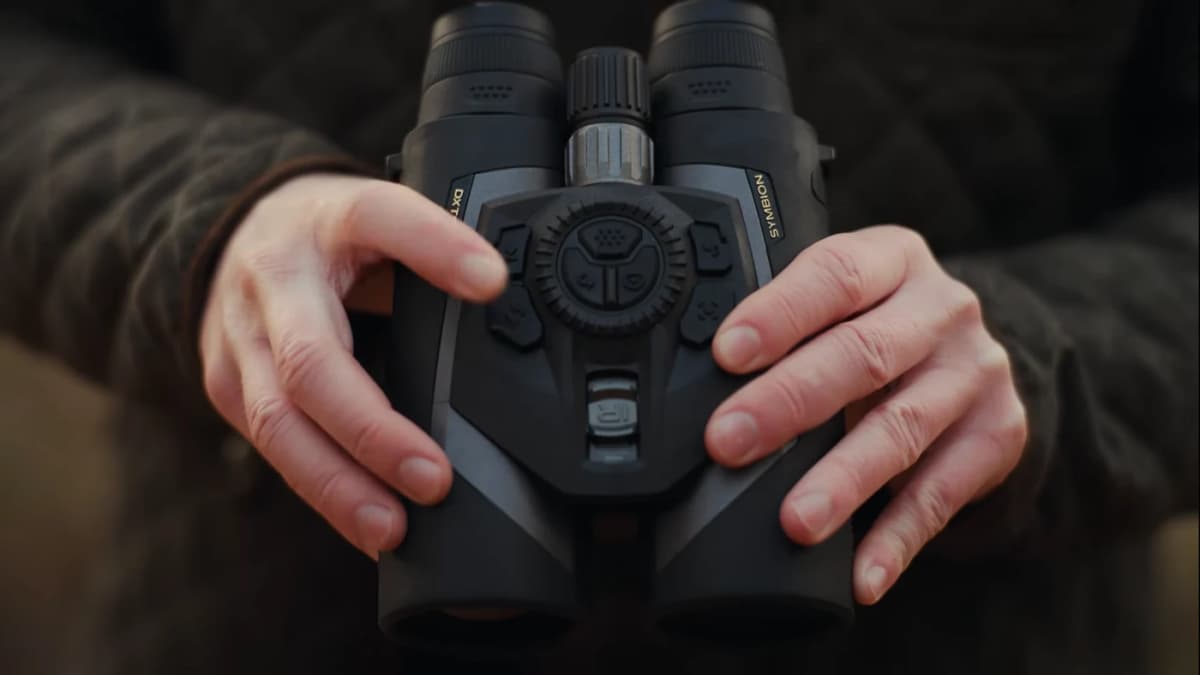
The Symbion LRF DXT50 ranks first because no other binocular here matches it on all three specs that decide a night of glassing: a 1280x1024 thermal sensor with system NETD below 20 mK, a 4K (3840x2160) digital channel, and a 1500 m laser rangefinder. Thermal finds the heat signature across a 17.5-degree view at 2x. The digital channel shows it in full color by day or under the focusable 850 nm IR illuminator at night, and the combined picture-in-picture mode puts both on screen so you confirm what you found without lowering the binocular.
The costs are real. At $7,999.97 it is the most expensive pick, it weighs 1 kg with batteries, and its rating of up to 8 hours trails the DXR50's 10. Pulsar's day and night picture-in-picture views are in our Symbion LRF launch coverage.
The Symbion LRF DXR50 ($5,999.97) ranks fourth, below two cheaper 1280-class thermal-only binoculars. It keeps the same 4K color/IR channel and 1500 m rangefinder, but its 640x480 core has a quarter of the DXT50's pixels and its 8.8-degree view is about half as wide. For heat detection alone, the Merger LRF XT50 and QUEST S50R show more of the scene in more detail. The DXR50 earns its slot with the digital channel, 4-32x thermal zoom for small, distant targets, and up to 10 hours of runtime, the longest here.
Follow new thermal optics
Get new thermal binocular, scanner, and scope comparisons.
Best 1280 thermal binoculars: QUEST S50R vs Merger LRF XT50
The Nocpix QUEST S50R ($4,999) is the best thermal-only 1280 binocular for most buyers, and the Pulsar Merger LRF XT50 ($5,499.97) is the pick when you range past 1000 m. Both use a 1280x1024 sensor with a 17.5-degree horizontal view and 2-16x magnification, so on the core thermal image they start level.
Buy the Merger for ranging reach. Its 1500 m rangefinder matches the Symbion DXT50, and its removable APS3 pack plus built-in cell let you swap power in the field. It weighs 0.95 kg with batteries and is rated for up to 6 hours at 22°C, the shortest runtime among the Pulsar picks.
Buy the QUEST S50R for the image and the price. It refreshes at 60 Hz against the Pulsars' 50 Hz, gives each eye its own 1920x1200 AMOLED with 25 mm eye relief, and pairs an internal battery with a replaceable 18650 for hot swaps. Its rangefinder stops at 1000 m. Nocpix rates each replaceable 18650 at 3.5+ hours and the built-in battery at 2.5+ hours. If you want a 1280x1024 sensor in a one-eyed scanner instead, read our coverage of Pulsar's flagship 1280 handheld.
Best multispectral binoculars: thermal plus 4K day/night
The ATN BinoX 6 Dual 640 ($2,895) is the best value multispectral binocular. A multispectral binocular carries two cameras: a thermal channel that finds heat and a digital channel that shows full color by day and an IR-illuminated image at night, so a heat signature can be identified without switching devices. The ATN pairs a 640x512, ≤15 mK sensor with a 3840x2160 day/night channel, a 1000 m rangefinder, and two replaceable 18650 cells rated for about 8 hours, in a 730 g body with a 5-year warranty.
The AGM ObservIR LRF 35-640 ($2,995) is the kit pick. It matches the ATN on a 640x512 core and a 4K day/night channel, adds an integrated GPS module, and ships with four 18650 cells, a charger, and a tripod adapter. It weighs 2.01 lb (about 910 g) against the ATN's 730 g, and AGM's 1800 m detection rating is the lowest among the 640 picks.
Step up to the Symbion line for a 1500 m rangefinder and Pulsar's combined picture-in-picture: the DXR50 at $5,999.97 for 4-32x reach and 10 hours, or the DXT50 at $7,999.97 for the 1280 core and a 17.5-degree view.
The ATN BinoX 6 Dual 256 ($1,495) is the budget way into multispectral. It shares the 640 model's day/night channel, IR illuminator, and 1000 m rangefinder at 710 g, the lightest multispectral pick here. Its 256x192 sensor shows far less thermal detail than the 640 cores, and its 7.0-degree view at 6x base magnification makes close-range scanning harder, so treat it as a heat spotter that hands identification to the digital channel.
Thermal binoculars with rangefinder: 1000 m or 1500 m?
Choose 1000 m unless you range targets past 1000 m: the Pulsar Merger LRF XT50 and both Symbion LRF models reach 1500 m, and the Nocpix QUEST S50R and H50R, the ATN BinoX 6 Dual 640 and 256, the AGM ObservIR LRF 35-640, and the Guide TN430 stop at 1000 m.
The Symbion pairs its 1500 m unit with a ballistic calculator that works with Stream Vision Ballistics, and the QUEST S50R supports ballistic calculation and N-Link data sharing with a compatible Nocpix riflescope. If ranging past 1000 m is not part of how you hunt, the 1000 m units save money: the QUEST S50R ($4,999) undercuts the Merger LRF XT50 at 1280, and the BinoX 6 Dual 640 ($2,895) undercuts the Symbion DXR50 among multispectral binoculars.
Sensor resolution, field of view, and base magnification
Native sensor resolution sets how much thermal detail a binocular captures before digital zoom enlarges it. The three 1280x1024 picks have about four times the pixels of the 640 cores (640x512 or 640x480), and the 640 cores in turn far outresolve the 400x300 Guide TN430 and the 256x192 BinoX 6 Dual 256.
Field of view decides how much ground each look covers. The three 1280 picks show 17.5 degrees horizontally; the ATN BinoX 6 Dual 640 shows 12.52 degrees, the AGM ObservIR 12.5, the Guide TN430 11.1, the Symbion DXR50 and QUEST H50R 8.8, and the BinoX 6 Dual 256 7.0. The Nocpix QUEST H50R ($3,499) shows why the narrow end exists: its 4x base magnification and 4-32x zoom suit watching a distant field, while a 17.5-degree view at 2x suits sweeping a tree line.
Sensitivity figures need care. Pulsar quotes system NETD (below 20 mK on its 1280 units, below 18 mK on the DXR50), while Nocpix, AGM, and the ATN BinoX 6 Dual 640 list 15 mK figures without that split, so compare them loosely. Detection ratings are each maker's own figure: Pulsar rates the Merger and Symbion models at 2300 m, Nocpix rates both QUEST models at 2600 m, ATN rates the BinoX 6 Dual 640 at 3100 m, and AGM rates the ObservIR at 1800 m. A detection distance is where a heat signal may appear, not where you can tell what animal it is.
Runtime and batteries for long glassing sessions
The Pulsar Symbion LRF DXR50 runs longest, up to 10 hours on two external APS5 packs. The DXT50 is rated for up to 8 hours on the same packs. The ATN BinoX 6 Dual models run about 8 hours and the AGM ObservIR up to 8 hours on two 18650 cells, the Guide TN430 runs at least 5.5 hours on two 18650s, and the Merger LRF XT50 is rated for up to 6 hours at 22°C.
How you swap power matters as much as the rating. The ATN, AGM, Nocpix QUEST, and Guide units take common 18650 cells, and the AGM ships with four of them plus a charger. The QUEST models and the Merger pair a built-in battery with a removable one, so you can change the removable cell while the internal one keeps the binocular running. These are maker ratings under their own test conditions, so treat them as planning figures rather than a promise for every temperature or with recording on.
Thermal binoculars vs thermal monoculars and scopes
Choose a thermal binocular when you glass for long stretches: two-eyed viewing is less tiring than holding one eye to a monocular over a long session. The trade is weight and price. The picks here run from about 700 g to 1 kg, and the cheapest, the Guide TN430, costs $1,221.49.
For a lighter one-eyed scanner, our thermal monocular rankings cover handheld scanners from budget models to 1280-class flagships. For daylight glass on the same hunt, see the best hunting binoculars. Once the binocular finds the animal, rifle-mounted thermal is covered in our thermal scope rankings and our coverage of Pulsar's rangefinding thermal riflescope. For lower-cost entry points, read the budget thermal and night vision guide.
Compare thermal binocular specifications
Sort Thermal by horizontal field of view, LRF by rated reach, or Carry by weight. Runtime figures keep each maker's test conditions.
- Pulsar Symbion LRF DXT50Thermal1280x1024; system NETD <20 mK; 50 Hz; 17.5°; 2-24xDay/night4K color by day, 850 nm IR at nightLRF1500 mPower2x APS5; up to 8 hCarry1 kg with batteries; IP67
- Nocpix QUEST S50RThermal1280x1024; NETD ≤15 mK; 60 Hz; 17.5°; 2-16xDay/nightNone (thermal only)LRF1000 mPowerBuilt-in battery 2.5+ h plus replaceable 18650, 3.5+ h eachCarry700-750 g across the QUEST series; IP67
- Pulsar Merger LRF XT50Thermal1280x1024; system NETD <20 mK; 50 Hz; 17.5°; 2-16xDay/nightNone (thermal only)LRF1500 mPowerAPS3 plus built-in cell; up to 6 h at 22°CCarry0.95 kg with batteries; IPX7
- ATN BinoX 6 Dual 640Thermal640x512; NETD ≤15 mK; 50 Hz; 12.52°; 3-24xDay/night4K day/night, 850/940 nm IRLRF1000 mPower2x 18650; about 8 hCarry730 g; IP67
- AGM ObservIR LRF 35-640Thermal640x512; NETD <15 mK; 50 Hz; 12.5°; 3-22xDay/night4K day/night, built-in IR illuminatorLRF1000 mPower2x 18650 (four included); up to 8 hCarry2.01 lb (about 910 g); IP67
- Guide TN430Thermal400x300 (17 µm); NETD ≤30 mK; 50 Hz; 11.1°; 2.3x optical, 1-4x digitalDay/nightNone (thermal only)LRF1000 mPower2x 18650; ≥5.5 hCarry≤860 g; IP66
- Pulsar Symbion LRF DXR50Thermal640x480; system NETD <18 mK; 50 Hz; 8.8°; 4-32xDay/night4K color by day, 850 nm IR at nightLRF1500 mPower2x APS5; up to 10 hCarry1 kg with batteries; IP67
- Nocpix QUEST H50RThermal640x512; NETD ≤15 mK; 60 Hz; 8.8°; 4-32xDay/nightNone (thermal only)LRF1000 mPowerInternal battery plus replaceable 18650Carry700-750 g across the QUEST series; IP67
- ATN BinoX 6 Dual 256Thermal256x192; NETD ≤20 mK; 50 Hz; 7.0°; 6-48xDay/night4K day/night, IR illuminatorLRF1000 mPower2x 18650; about 8 hCarry710 g; IP67
| Product | Day/night | Power | Buy | |||
|---|---|---|---|---|---|---|
| Pulsar Symbion LRF DXT50 | 1280x1024; system NETD <20 mK; 50 Hz; 17.5°; 2-24x | 4K color by day, 850 nm IR at night | 1500 m | 2x APS5; up to 8 h | 1 kg with batteries; IP67 | Buy |
Nocpix QUEST S50R | 1280x1024; NETD ≤15 mK; 60 Hz; 17.5°; 2-16x | None (thermal only) | 1000 m | Built-in battery 2.5+ h plus replaceable 18650, 3.5+ h each | 700-750 g across the QUEST series; IP67 | Buy |
Pulsar Merger LRF XT50 | 1280x1024; system NETD <20 mK; 50 Hz; 17.5°; 2-16x | None (thermal only) | 1500 m | APS3 plus built-in cell; up to 6 h at 22°C | 0.95 kg with batteries; IPX7 | Buy |
ATN BinoX 6 Dual 640 | 640x512; NETD ≤15 mK; 50 Hz; 12.52°; 3-24x | 4K day/night, 850/940 nm IR | 1000 m | 2x 18650; about 8 h | 730 g; IP67 | Buy |
AGM ObservIR LRF 35-640 | 640x512; NETD <15 mK; 50 Hz; 12.5°; 3-22x | 4K day/night, built-in IR illuminator | 1000 m | 2x 18650 (four included); up to 8 h | 2.01 lb (about 910 g); IP67 | Buy |
Guide TN430 | 400x300 (17 µm); NETD ≤30 mK; 50 Hz; 11.1°; 2.3x optical, 1-4x digital | None (thermal only) | 1000 m | 2x 18650; ≥5.5 h | ≤860 g; IP66 | Buy |
| Pulsar Symbion LRF DXR50 | 640x480; system NETD <18 mK; 50 Hz; 8.8°; 4-32x | 4K color by day, 850 nm IR at night | 1500 m | 2x APS5; up to 10 h | 1 kg with batteries; IP67 | Buy |
Nocpix QUEST H50R | 640x512; NETD ≤15 mK; 60 Hz; 8.8°; 4-32x | None (thermal only) | 1000 m | Internal battery plus replaceable 18650 | 700-750 g across the QUEST series; IP67 | Buy |
ATN BinoX 6 Dual 256 | 256x192; NETD ≤20 mK; 50 Hz; 7.0°; 6-48x | 4K day/night, IR illuminator | 1000 m | 2x 18650; about 8 h | 710 g; IP67 | Buy |
Affiliate links - purchases support this site at no extra cost to you. (?)
Frequently Asked Questions
▶What are the best thermal binoculars?
▶What are the best thermal binoculars for the money?
▶Are thermal binoculars worth it?
▶Do thermal binoculars work during the day?
▶Which is better, thermal or night vision?
▶Do I need a rangefinder in thermal binoculars?
▶What is the difference between thermal binoculars and multispectral binoculars?
The Verdict
Buy the Symbion LRF DXT50 ($7,999.97) to find, identify, and range from one binocular; buy the QUEST S50R ($4,999) for 1280 thermal at the lowest price.
For multispectral on a mid budget, the ATN BinoX 6 Dual 640 at $2,895 gives you a 640 core, a 4K day/night channel, and a 1000 m rangefinder at 730 g. Pay for the Merger LRF XT50 or a Symbion only if 1500 m ranging is part of how you hunt.