Key Takeaways
- →1.34 inches over the rail: two tenths of an inch lower than Reptilia's own AUS carbine mount, and below both AR height conventions. This is a bolt-gun number.
- →20 MOA of forward cant: the launch configuration is 34mm with 20 MOA, which biases the scope's internal elevation toward the top of its range for long-range dialing.
- →Symmetric and non-cantilever: both rings sit over the mounting surface instead of reaching forward of it, keeping the optic load centered on the receiver.
- →Three diameters, two cants: 30mm, 34mm, and 35mm rings, in 0 MOA or 20 MOA, all at $349.95.
- →148 grams of billet 7075-T6: 17 grams under the 34mm AUS, with the same MIL-STD Type III hardcoat anodize and the same spring-loaded steel clamp.
What Reptilia Announced
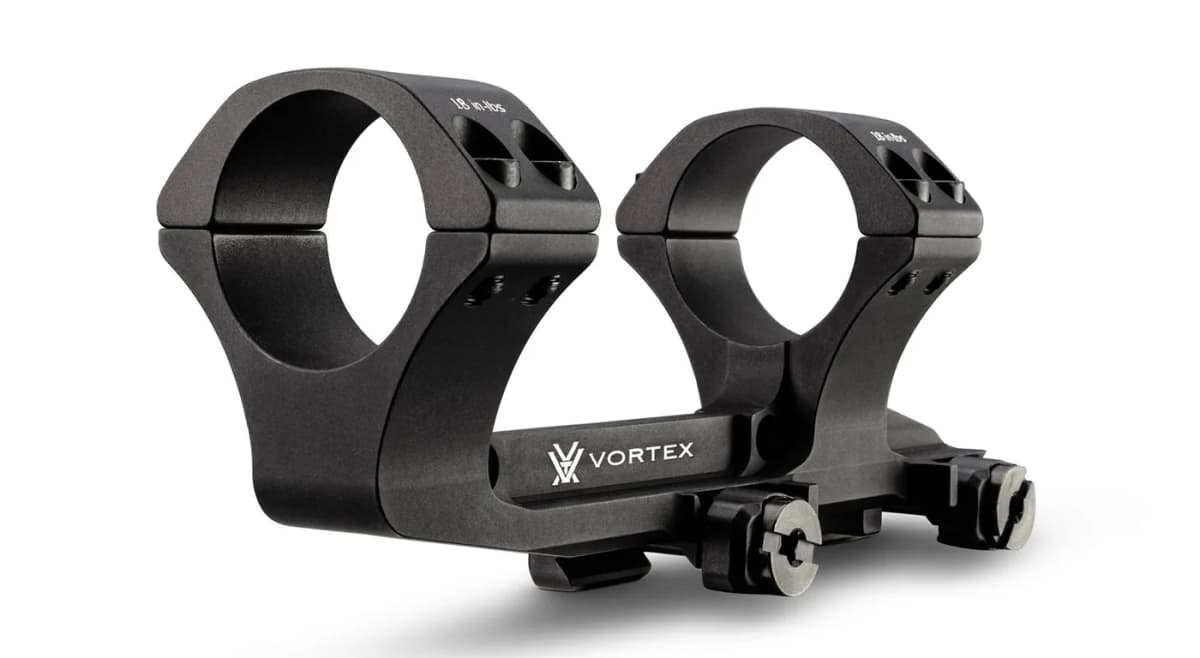
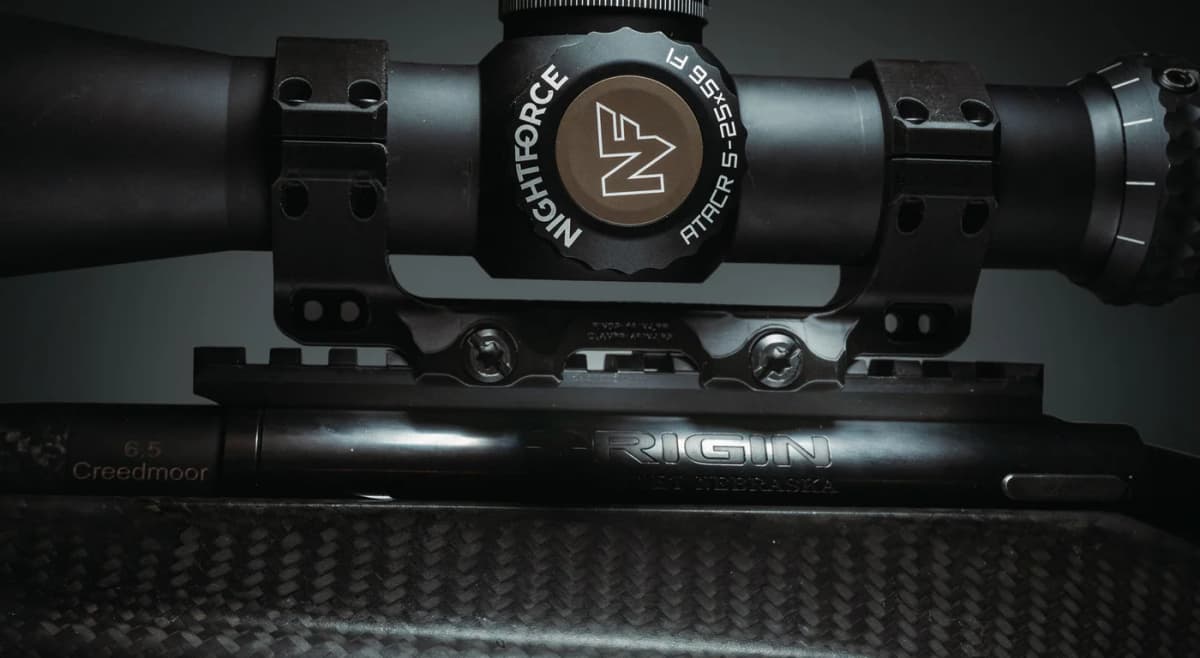
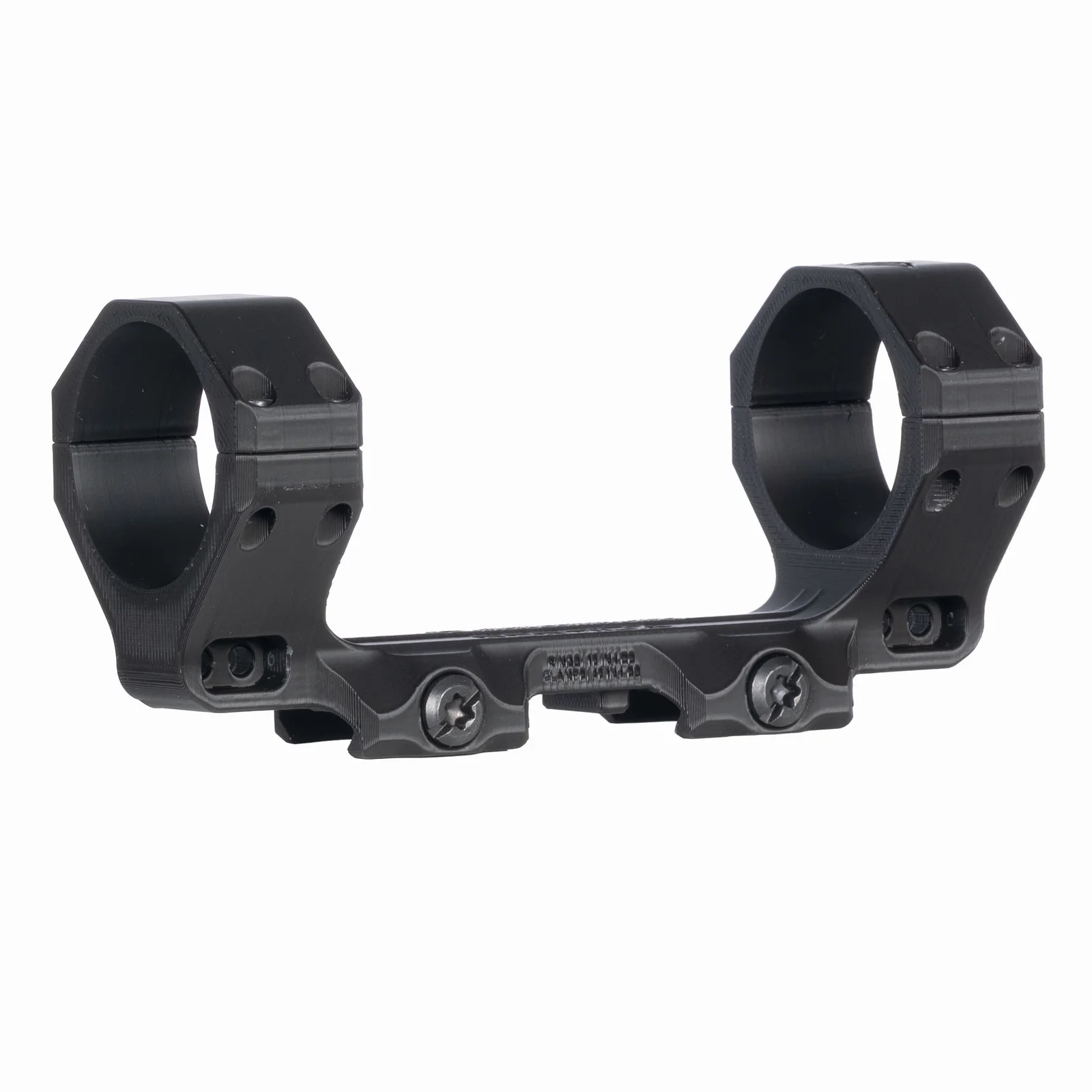
Reptilia introduced the AGS mount in 34mm with 20 MOA of elevation on August 27, 2026, a one-piece optic mount aimed at bolt-action and precision rifles rather than the carbines its existing mounts serve. It carries the scope at a 1.34-inch optical centerline over an M1913 Picatinny rail, weighs 148 grams, and is machined from a single piece of billet 7075-T6 aluminum finished in MIL-STD Type III hardcoat anodize.
Two design decisions separate it from the rest of the Reptilia lineup. The first is the geometry: the AGS is symmetric and non-cantilever, so both rings sit above the mounting surface instead of one or both reaching forward of the receiver. A cantilever exists to push a scope forward on an AR-pattern rifle, where the optic has to clear a charging handle and reach the shooter's eye from a receiver-length rail. A bolt gun has neither problem, and a symmetric body puts the clamping load directly under the rings.
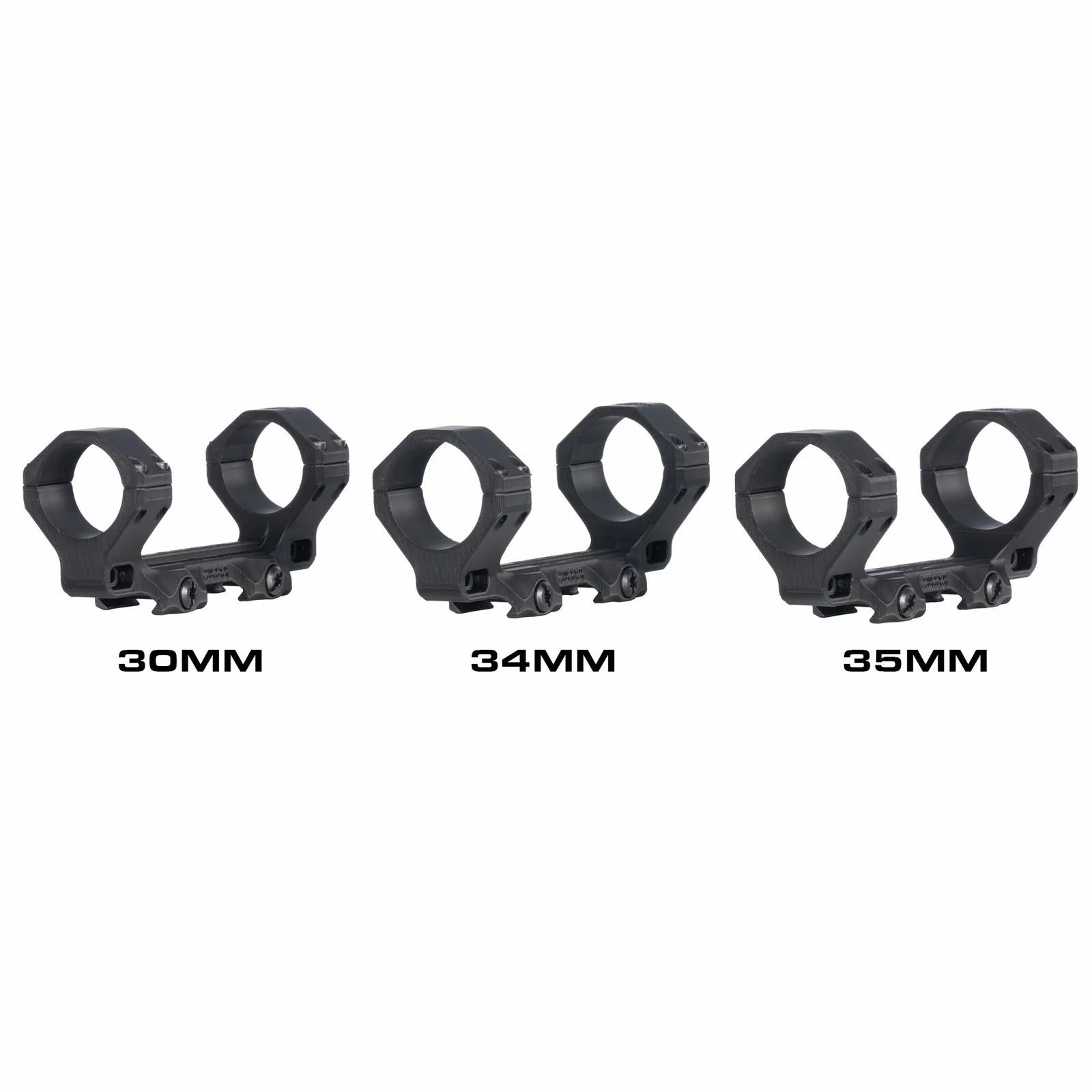
The second is elevation. The AGS is offered in 0 MOA and 20 MOA, and the canted version is the one Reptilia led with. The mount attaches with a spring-loaded nitrided steel clamp and flush-fit hardware, and it is made in the USA.
- Height
- 1.34in over rail
- Cant
- 20MOA
- Weight
- 148g
- Diameters
- 330 / 34 / 35mm
Reptilia AGS Specifications
The AGS is one product with two variables: ring diameter and cant. Everything else, including the price, is constant across the family.
Reptilia AGS Mount
| Type | One-piece symmetric, non-cantilever |
| Optical centerline | 1.34 in over rail |
| Cant options | 0 MOA or 20 MOA |
| Ring diameters | 30mm, 34mm, 35mm |
| Weight | 148 g (approx. 5.2 oz) |
| Material | Billet 7075-T6 aluminum |
| Finish | MIL-STD Type III hardcoat anodize |
| Rail interface | M1913 Picatinny |
| Clamp | Spring-loaded nitrided steel, flush-fit hardware |
| Origin | Made in USA |
What 20 MOA of Cant Actually Buys You
A 20 MOA mount does not add elevation to your scope. It changes which half of the scope's existing travel you get to use. A riflescope zeroed on a flat base sits close to the middle of its elevation range, so roughly half the total internal travel is left above the zero and the other half is wasted below it. Tilting the whole optic nose-down by 20 MOA moves the split: on a scope with 100 MOA of total travel, about 50 MOA of usable up-elevation becomes about 70.
That matters at a specific distance and not before it. Inside about 600 yards almost no modern scope runs out of elevation, so the cant is dead weight. Past it, running out of dial is the common failure, and 20 MOA is the difference between holding over on a reticle and dialing a solution you can trust. Our scope rings and mounts guide works through the 0 versus 20 MOA decision across the wider field, including the case where the cant is already in your receiver rail and stacking a second 20 MOA on top of it costs you a 100-yard zero.
The reason Reptilia sells both versions is that cant is not free. A scope with limited total travel, or one mounted on a rifle that also shoots at close range, can end up unable to come down far enough to zero. If you are choosing an optic and a mount at the same time, the scope's published elevation travel is the number that decides this, and our long-range scope rankings list it for each pick.
Why 1.34 Inches Is a Bolt-Gun Number
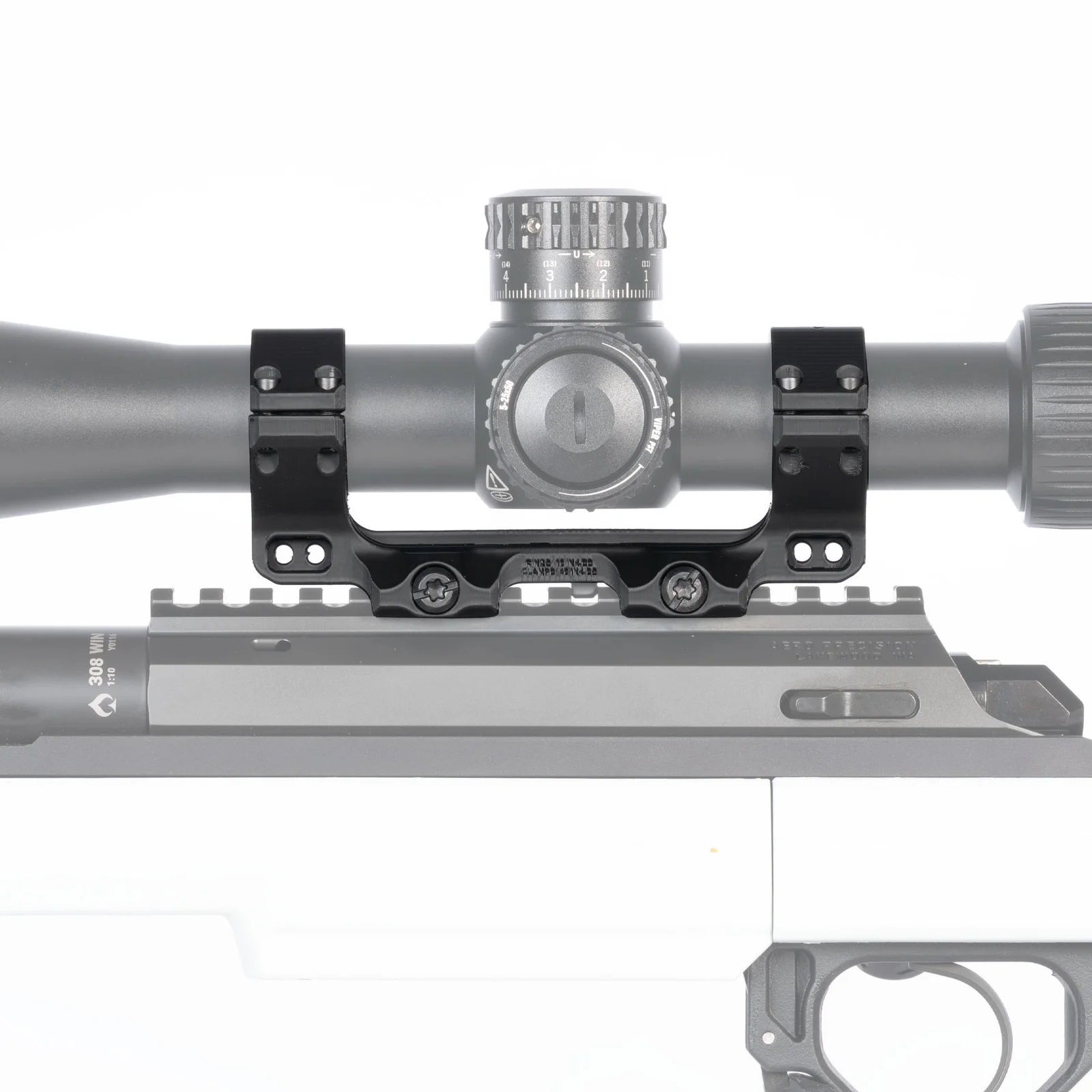
At 1.34 inches the AGS sits below every common AR-pattern mounting height, which is the clearest signal of what it is for. The AR lower-1/3 co-witness standard is 1.54 inches, or 39mm, and the taller carbine convention that grew out of night-vision and plate carrier use is 1.93 inches. The AGS is two tenths of an inch under the lower of those two.
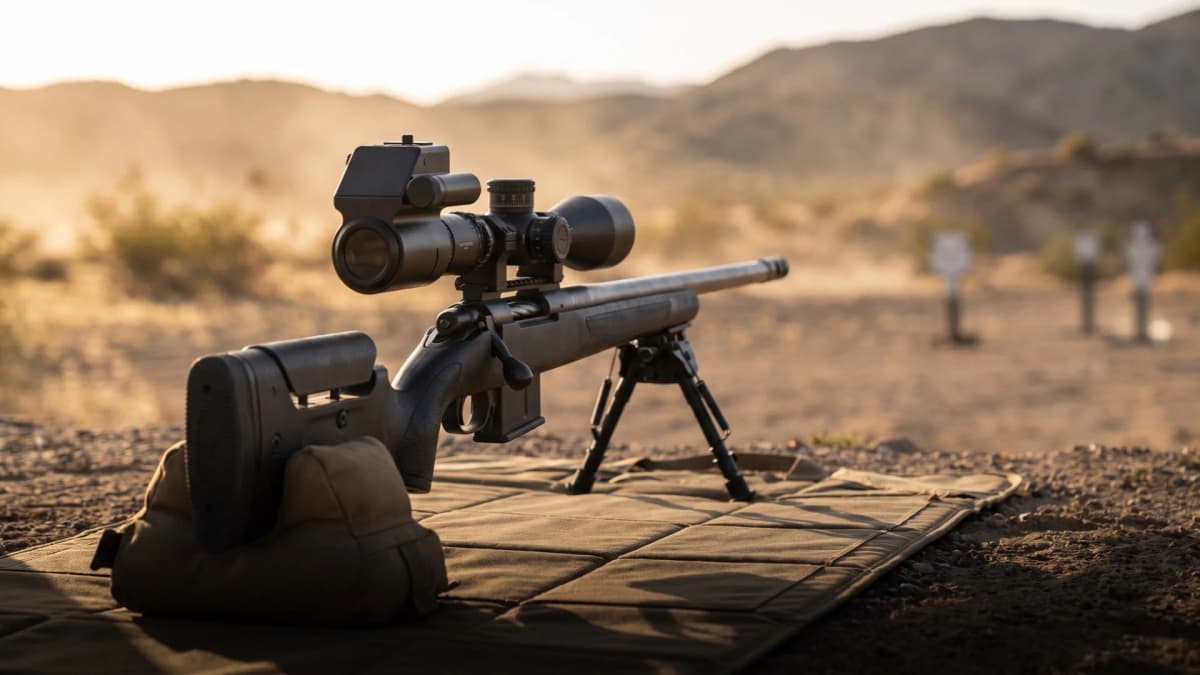
On a bolt-action rifle that inversion is correct. There is no charging handle to clear, no folding front sight, and no reason to lift the optic away from the bore beyond what the objective bell requires. A lower scope means a smaller offset between line of sight and line of bore, which shrinks the close-range holdover correction, and it means the shooter's head sits down on the comb rather than floating above it. Chassis rifles and modern hunting stocks with adjustable cheekpieces can meet a low optic; a flat-combed classic sporter usually cannot, which is the fit question to settle before ordering. Our optic mounting guide covers ring height, comb height, and leveling as one problem rather than three.
The one hard constraint at this height is objective clearance, and for the AGS the boundary sits close to a 50mm objective. Clearance is the centerline height minus half the bell's outside diameter, and the bell is always wider than the advertised lens: a 50mm scope estimates to a 58mm bell, which needs a 1.27 inch centerline to keep the 0.125 inch of bell-to-barrel gap manufacturers ask for. The AGS has that. A 56mm scope estimates to a 64mm bell and wants 1.39 inches, which it does not.
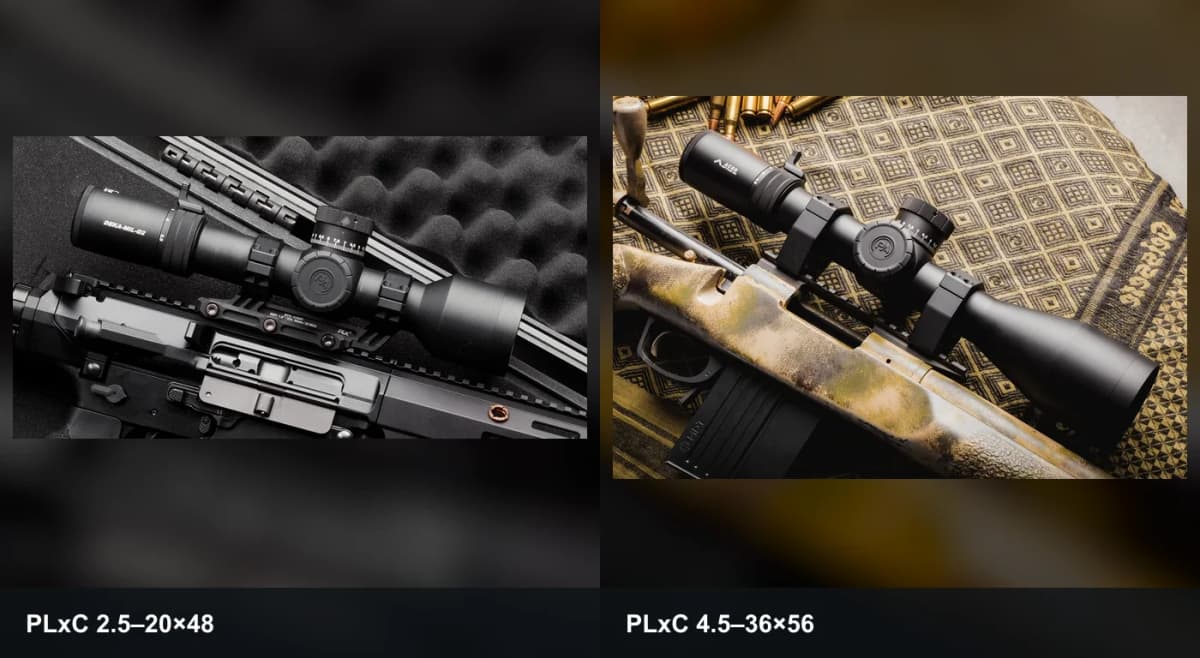
Read that as a prompt to measure rather than a verdict. The estimate adds a flat 8mm to the lens diameter, and observed housings run anywhere from 6 to 10mm over, so a real 56mm scope can land either side of the line. Reptilia's own product photography shows the AGS holding a 56mm-objective riflescope, which tells you the tight cases are real and the conservative estimate is what it says it is. Put calipers on the bell and run the actual number through our scope ring height calculator before you order a big-objective scope onto this mount.

Reptilia AGS Optic Mount
Bolt-action and precision rifles that need a low, canted one-piece mount
Symmetric one-piece precision mount at a 1.34" centerline, offered in 0 or 20 MOA. Lower and lighter than the AUS, with no accessory wings.
- +Lower and lighter than the Reptilia AUS at the same build quality
- +20 MOA option buys back scope elevation for long-range dialing
- +Symmetric body keeps the optic load centered over the receiver
- −No accessory wings for offset red dots, unlike the AUS
- −1.34 inch height sits below the 1.54 inch lower-1/3 AR co-witness standard
- −Not quick-detach
Affiliate links (?)
Related Optic Mounts
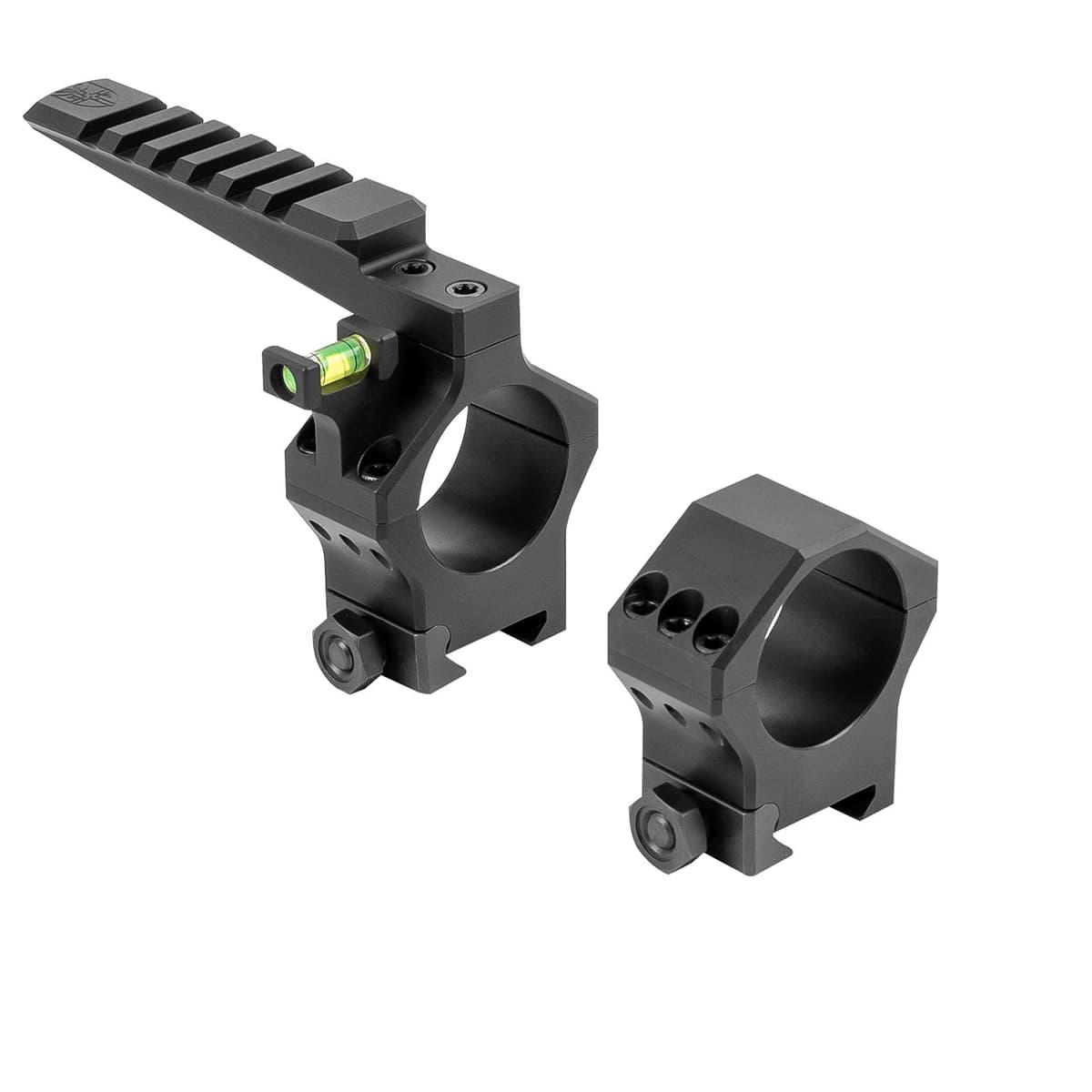
Hawkins Precision Heavy Tactical 34mm Rings
- 34mm scope tube
- 1.0" or 1.15" heights
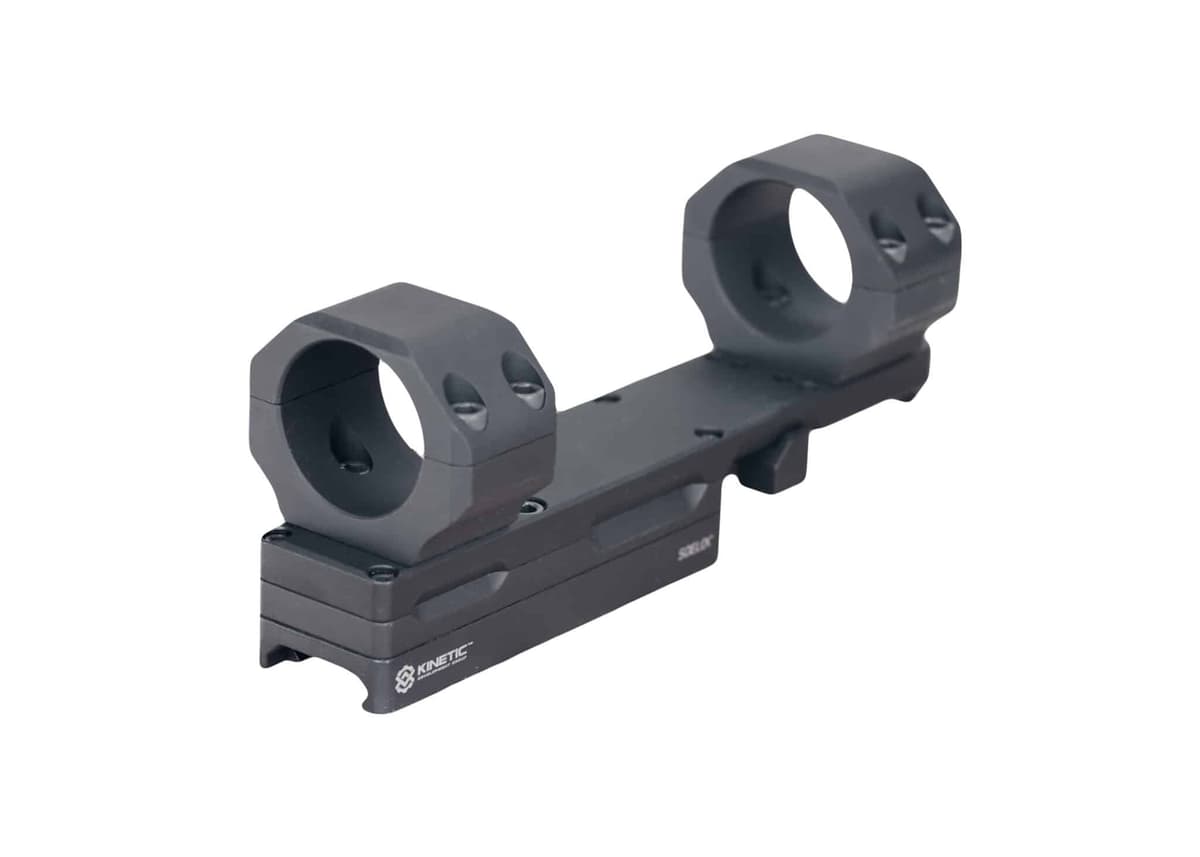
KDG SIDELOK 34mm Scope Mount
- 34mm scope rings
- Push-button QD with secondary safety
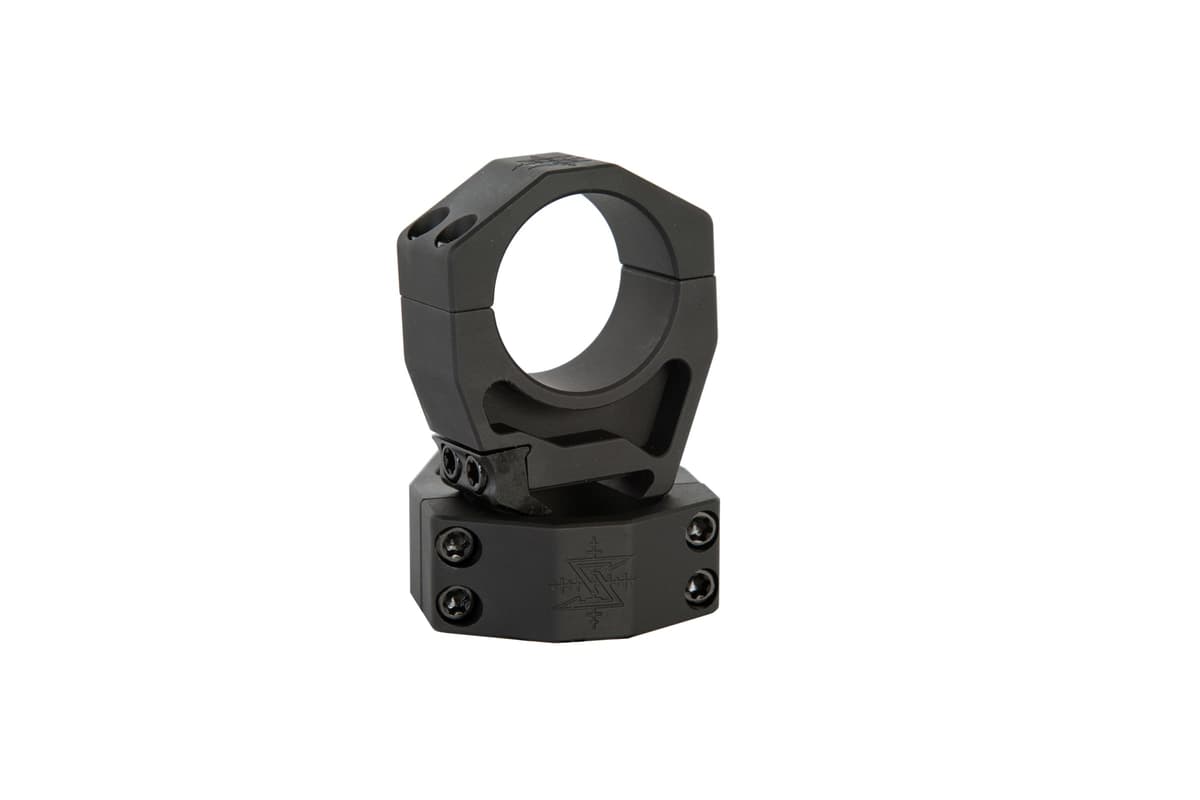
Seekins Precision Scope Rings
- 30mm and 34mm tube options
- Heights from 0.82 in low to 1.45 in AR-high
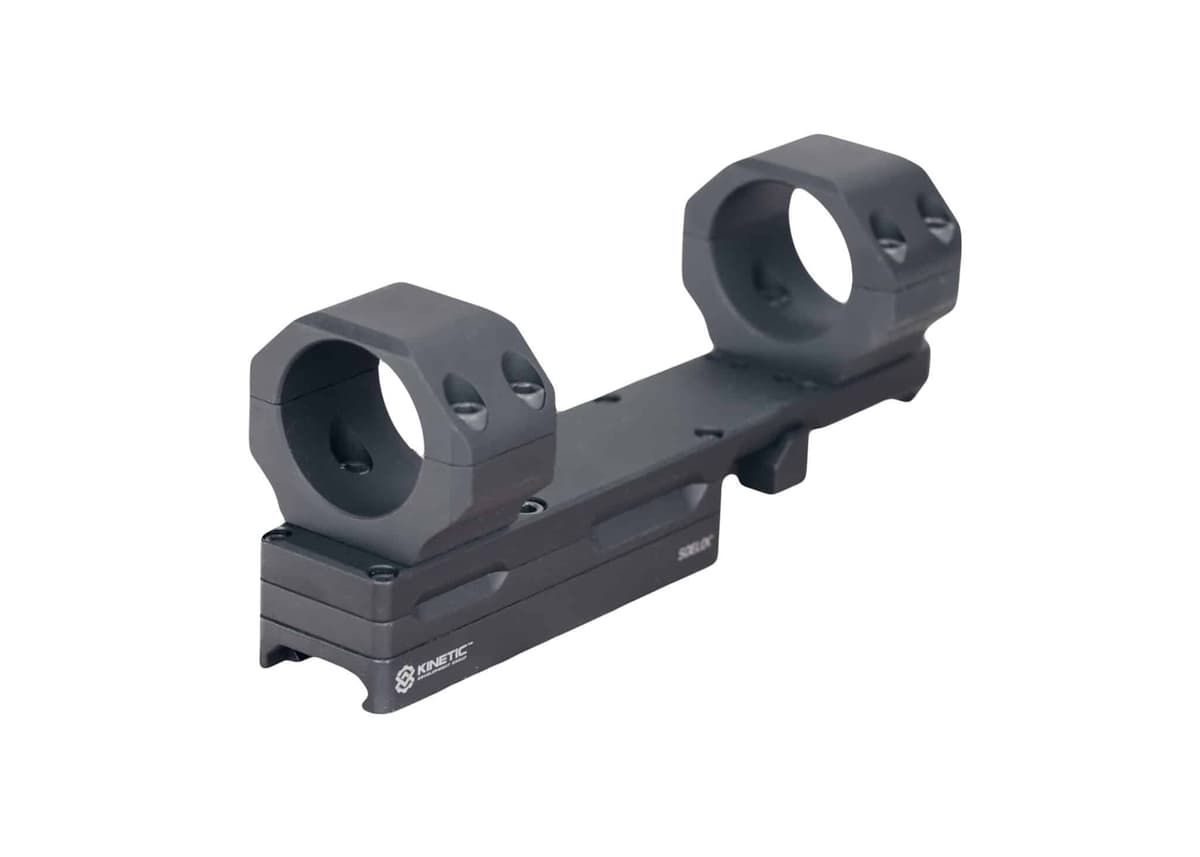
KDG SIDELOK 30mm Scope Mount
- 30mm scope rings
- Push-button QD with secondary safety
Vortex Pro Cantilever Mount 34mm 1.54in
- 34mm scope tube
- 1.54-inch optical centerline
Vortex Pro Cantilever Mount 34mm 1.93in
- 34mm scope tube
- 1.93-inch optical centerline
Affiliate links (?)
AGS Versus AUS: Reptilia's Own Split
The AUS is the carbine mount and the AGS is the precision mount, and the spec sheets say so before the marketing does. The 34mm AUS holds the optic at 1.54 inches and weighs 165 grams. The AGS holds it at 1.34 inches and weighs 148. The AUS accepts Reptilia's modular accessory wings, which carry offset red dots and lights alongside an LPVO; the AGS has no wings and no mounting points for them. The AUS comes in 0 MOA only, while the AGS adds the 20 MOA option.
Read as a pair, the two mounts describe two different rifles. The AUS is built for a gun that gets shot at 1x as often as at 8x, where a second aiming device matters more than the last gram and the optic needs to sit high enough for a plate carrier and a helmet. The AGS is built for a gun that gets shot from a bipod at magnification, where the optic is the only sighting system on board and elevation travel is the scarce resource. Our LPVO mount rankings cover the carbine side of that split, including where the AUS lands against the Badger Condition One and the Scalarworks LEAP.
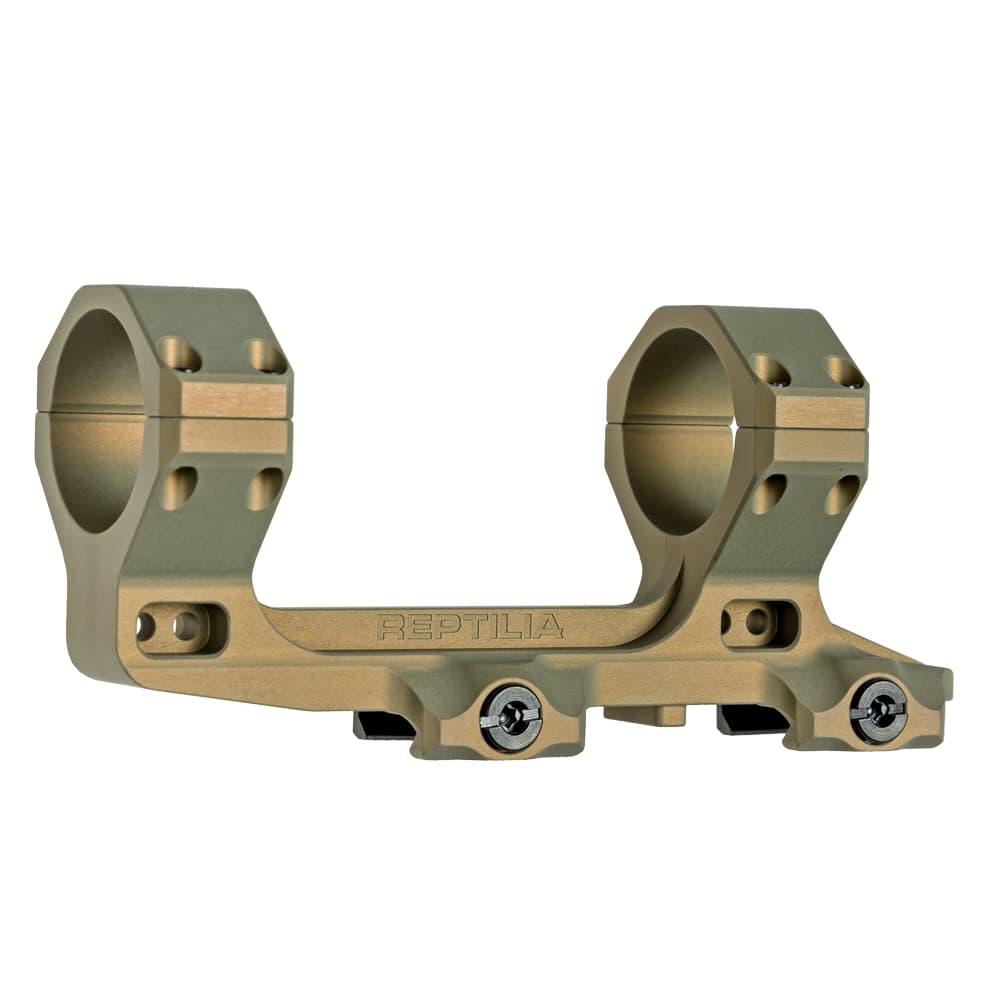
Reptilia AUS Optic Mount
The carbine and LPVO counterpart, at 1.54 inches with accessory wings
Modular billet LPVO mount at a 1.54" centerline with accessory wings for offset dots. Lighter than the Badger Condition One.
- +Lighter than the Badger Condition One at a similar height
- +Modular accessory wings support a full fighting-optic setup
- +Billet 7075-T6 construction handles duty-grade recoil and abuse
- −Accessory wings are sold separately and add cost
- −Premium pricing near the top of the LPVO mount market
- −No quick-detach option in this fixed configuration
Affiliate links (?)
Who Should Buy It
Buy the 20 MOA AGS if you have a bolt gun with a flat-top receiver rail, a scope you dial past 600 yards, and a stock whose comb can meet a low optic. That is a narrow description, and it is the one the mount was designed against. Buy the 0 MOA version if your receiver rail already carries cant or your shooting stays inside 600 yards, since the body, height, and weight are otherwise identical.
Skip it if the rifle is an AR. At 1.34 inches you will be pressing your face into the stock to find the eyebox, and Reptilia already makes the right mount for that gun at 1.54 and 1.70 inches. If the AR's job is a tripod rather than a scope mount, that is the ARCA-S handguard, which machines a 2.8-inch ARCA-S section at the receiver. Skip it also if you want to hang an offset red dot off the mount body; that is an AUS feature and it did not carry over. You can put the AGS next to other precision mounts in our comparison tool or browse the full mount field in the catalog.
One practical note on ordering. The AGS is a family of six combinations, three diameters against two cants at a height that never changes, and every one of them shares the same name, the same price, and the same body. Confirm the diameter and the cant on the listing before you buy, because a 34mm scope will not clamp in 30mm rings and a canted mount cannot be un-canted.
Stay Updated on Precision Rifle Optics
We cover new mounts, rings, and long-range optics as they ship, with specs checked against the published product data.